

Whichever corner of Spain has caught your eye – a terrace looking out over golf greens on the Costa del Sol or a quiet village square a few hours inland – there’s one thing that changes more than the view: the tax you’ll pay to get the keys.
Property transfer tax or the Impuesto de Transmisiones Patrimoniales (ITP) is one of the biggest one-off costs of buying a resale home in Spain, and how much you pay depends heavily on where in the country you buy. It’s worked out as a percentage of the purchase price, but that percentage isn’t set in Madrid – each autonomous community decides its own rate, which is why the same €300,000 villa can carry a very different tax bill depending on where it sits. New-build homes work differently: they’re taxed at 10% national VAT (7% IGIC in the Canary Islands), plus a separate regional stamp duty, rather than ITP.
Some of the most popular regions with overseas buyers happen to charge among the most competitive rates in the country – but not all of them. Keep reading to find out how your favourite region compares.
Download the Spain Buying Guide
Contents
How does property tax compare in Spain’s most popular regions?
Costa del Sol
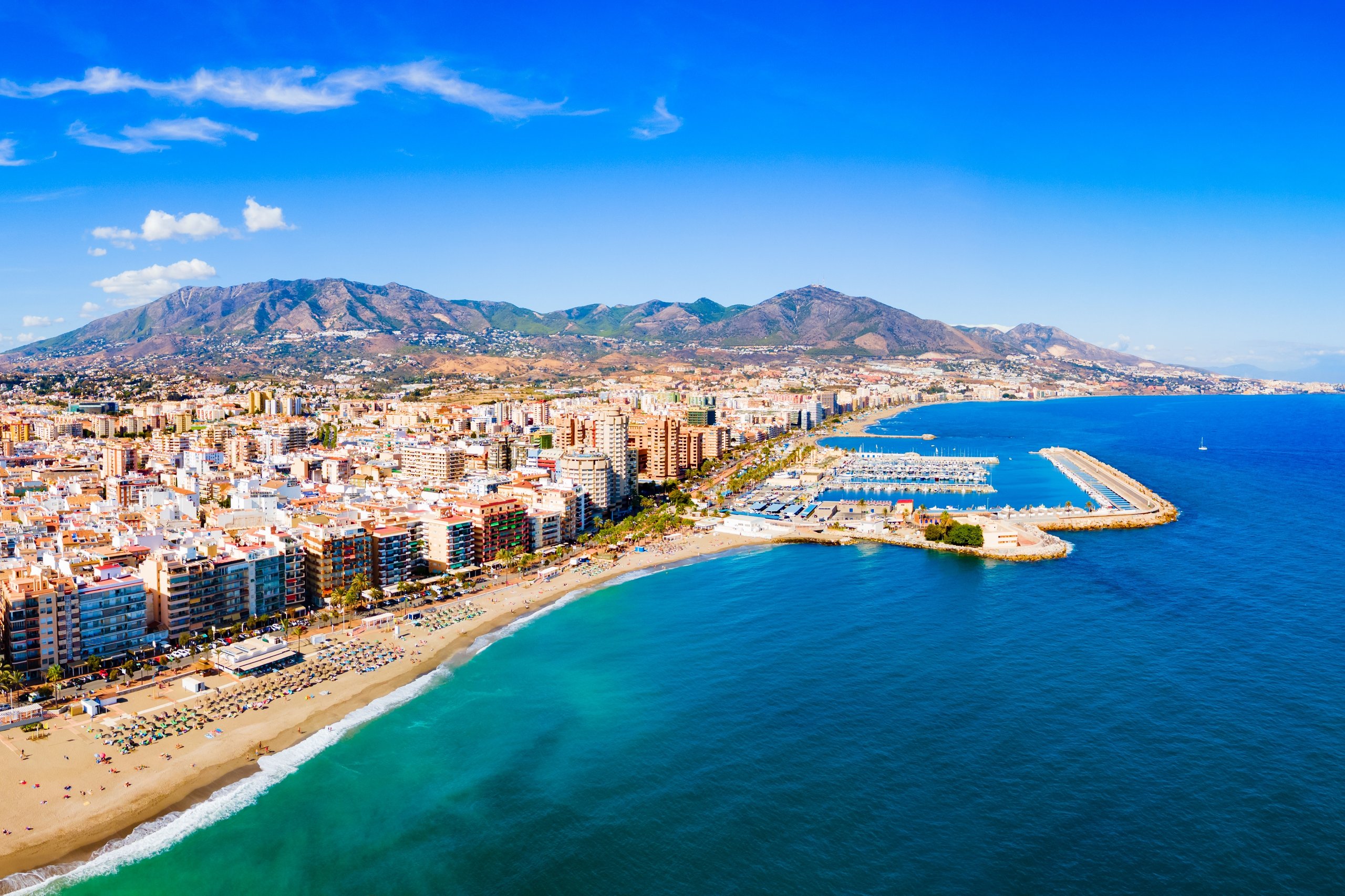
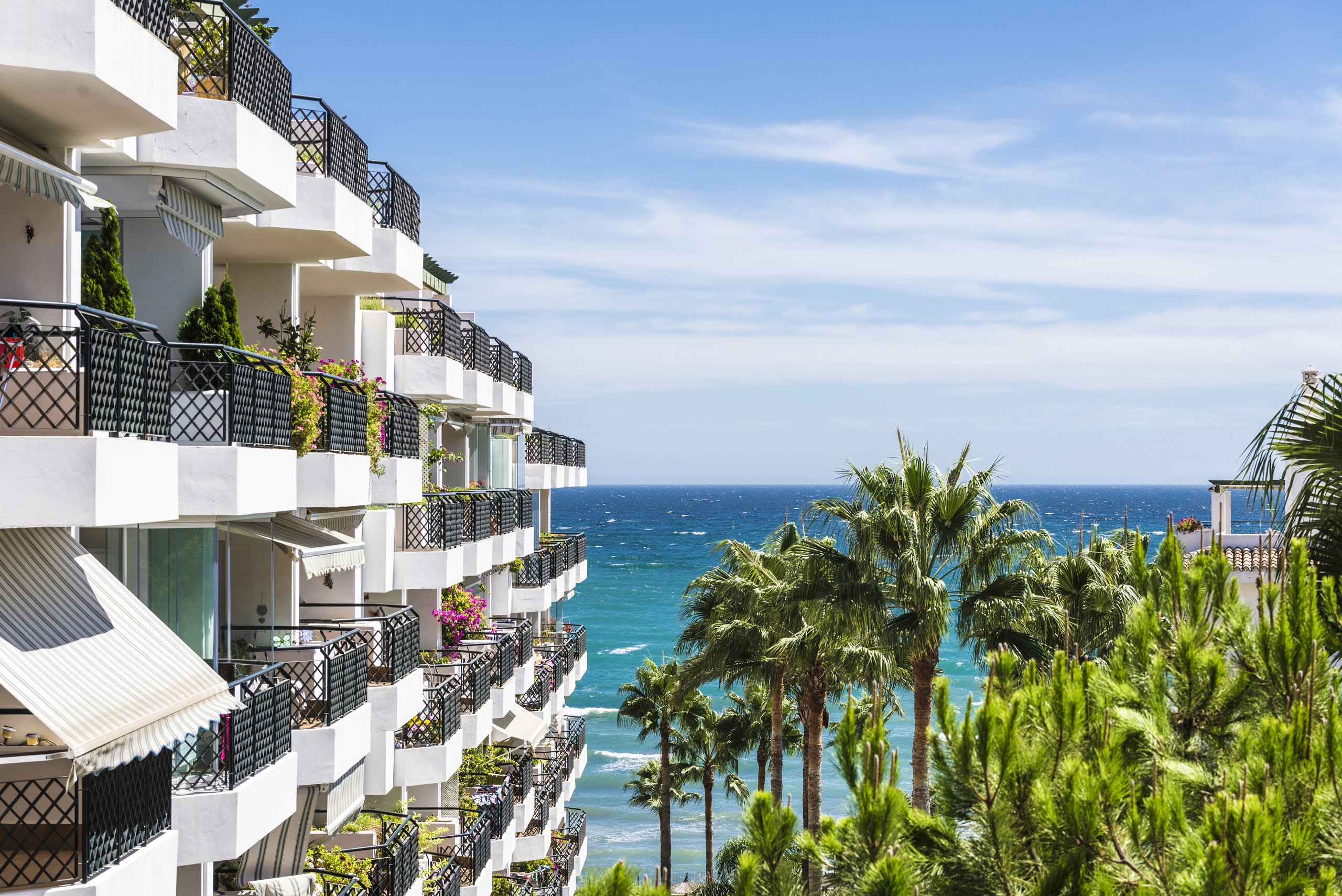
The Costa del Sol is the single most popular region for overseas buyers, with 21% of respondents to our 2026 buyer survey naming it their top location. It’s easy to see why: some of Spain’s best-known resort towns sit along a coastline that’s kept its appeal for decades, with marinas, golf courses and a stretch of beach for every taste, from the buzz of Marbella to quieter fishing towns further along the coast.
Another reason to buy there: property tax is the joint-lowest rate among the five regions our readers ask about most. The Costa del Sol falls under Andalucía‘s tax rules, which apply a flat 7% ITP (property transfer tax). For context, that’s €21,000 on a €300,000 villa.
Costa Blanca
Close behind in popularity is the Costa Blanca. Inland, it delivers what draws people here in the first place: long lunches on shaded terraces, walkable towns and a slower pace than the coastal resorts a short drive away. Almond blossom in February, quiet reservoirs for walking in spring, and towns like Jalón and Alcalalí that keep their working character even as more overseas buyers arrive.
Property here falls under the Comunidad Valenciana’s tax rules, where the general ITP has just dropped from 10% to 9% for anyone completing from 1 June 2026. On our €300,000 villa, that’s €27,000 – rather than the €30,000 you’d have paid before June. That timing shift is worth €3,000 on a purchase this size, so it’s worth checking your own completion date against it.
Andalucía inland
A different pace of life to the coast just a short drive away, inland Andalucía is also a popular choice among our readers. Almería and its surrounding villages offer some of the best value in mainland Spain, with life here running around the local bar, the weekly market and long, dry summers that make it one of the sunniest corners of Europe.
The same 7% ITP applies here as on the Costa del Sol, since both sit within Andalucía. On a €300,000 villa, that’s the same €21,000.
Murcia
Murcia‘s Costa Cálida stretch is another firm favourite among the readers we surveyed. It offers the same year-round sun as its more famous neighbours, with a lower cost of living to match. Towns here tend to be smaller and less built up, with agriculture as much a part of the landscape as tourism, and the coastline runs from quiet fishing ports to family-friendly resorts without the density of the Costa del Sol.
The region cut its general ITP from 8% to 7.75% from 25 July 2025. On our €300,000 villa, that works out at €23,250 – a little more than Andalucía, but still comfortably below the two Comunidad Valenciana regions.
Valencia
Rounding out the top five is the Valencia region – built around the city itself, with its own beaches, markets and a slower pace once you’re away from the centre.
Like the Costa Blanca, this falls under the Comunidad Valenciana’s tax rules: the same 9% ITP (11% above €1 million), and the same €27,000 on our €300,000 example. It makes this, alongside the Costa Blanca, the highest-taxed of the five.
How much ITP will you pay in these regions?
Work out your Spanish property tax
Enter your budget and choose a region to see roughly how much property transfer tax (ITP) you’d pay.
Costa del Sol, Andalucía
7% property transfer tax (ITP) on a €300,000 property
Estimate only, based on the general ITP rate. Reduced rates may apply for main-home purchases; always confirm with a Spanish tax adviser before budgeting. This does not include notary, registry, legal or ongoing local costs.
How the rest of Spain compares
The table below shows the general ITP rate for every one of Spain's 17 autonomous communities, from lowest to highest, alongside the tax due on a €300,000 villa. Where a region charges different rates at different price bands, the figure shown reflects a €300,000 purchase specifically.
| Region | General ITP (resale) | Tax on €300,000 villa |
|---|---|---|
| Basque Country (Bizkaia/Gipuzkoa/Araba) | 4% | €12,000 |
| Madrid | 6% | €18,000 |
| Navarra | 6% | €18,000 |
| Canary Islands | 6.5% | €19,500 |
| Andalucía (Costa del Sol / Andalucía inland) | 7% | €21,000 |
| La Rioja | 7% | €21,000 |
| Región de Murcia | 7.75% | €23,250 |
| Aragón | 8% (up to €400,000) | €24,000 |
| Asturias | 8% (up to €300,000) | €24,000 |
| Galicia | 8% | €24,000 |
| Balearic Islands | 8% (up to €400,000, rising to 13%) | €24,000 |
| Castilla y León | 8% up to €250,000, 10% above | €25,000 |
| Extremadura | 8%–11% (banded) | Not confirmed – see note |
| Comunidad Valenciana (Costa Blanca / Valencia region) | 9% (11% above €1m) | €27,000 |
| Cantabria | 9% (up to €300,000, 10% above) | €27,000 |
| Castilla-La Mancha | 9% | €27,000 |
| Catalonia | 10% (up to €600,000, rising to 13%) | €30,000 |
Two things stand out. The Basque Country has the lowest tax in the country by some distance, thanks to a separate foral system where each of its three provinces (Bizkaia, Gipuzkoa and Araba) sets its own rate. And Madrid is a reminder that price and tax don't always move together: it's one of the most expensive places in Spain to buy per square metre, yet its transfer tax is among the lowest.
Reduced ITP rates also exist in most regions for buyers under a certain age, large families or buyers with a disability – but these almost always require the property to be your main home, so they typically won't apply if you're buying a second home or retirement property. But it's worth checking with a Spanish tax adviser if you think you might qualify.
When do you pay ITP?
You have 30 working days from the date you sign the escritura (the notarised deed of sale) to declare and pay ITP. Weekends and Spanish public holidays don't count towards that total, so it's a slightly longer window than 30 calendar days suggests.
Payment works as a self-assessment, using form 600 (or 620 in some regions), submitted to the tax office of whichever autonomous community the property sits in. Many buyers never handle the paperwork themselves, since notaries and lawyers commonly deal with it as part of completion – but it's worth confirming who's responsible for it in your case, since the deadline is yours, not theirs.
Miss it and the penalties build quickly: a surcharge starting at 1% of the tax due, rising by a further 1% for each month you're late, for up to 12 months. After that, the surcharge jumps to 15% plus interest, and if the tax office has to chase you rather than you coming forward voluntarily, a formal fine can follow on top.
Beyond the transfer tax
ITP isn't the only cost to budget for, though it's the one that varies most by region. Notary and land registry fees are set nationally, so they barely change wherever you buy – together they typically add up to around €1,000–€1,700. Legal fees usually run to 1–1.5% of the price plus VAT, and most buyers also budget for an annual local property tax (IBI), which is set by the town hall rather than the region.
One more thing worth knowing: Spain calculates ITP on whichever is higher, the price you actually paid or the property's official "reference value." On a fairly priced home this rarely makes a difference, but it's worth being aware of before agreeing a figure with a seller.
You might also like: