


Could you really live in Spain without owning a car? Our writer Sally looks at how practical it is to rely on trains, buses, taxis, walking and cycling, particularly if you’re planning to retire or spend longer periods there.
We are all fond of the open road, but if you are keeping a car in Spain just for the occasional visit to a holiday home, it can end up being more hassle than it’s worth. Insurance, the annual ITV inspection, a vehicle sitting idle for months at a time under cover – ownership adds up in ways that aren’t always obvious until you are the one paying for them.
Hiring a car for every visit isn’t necessarily simple either, once you factor in the time spent on booking, paperwork and collection.
For retirees making the move to Spain full time, going without a car altogether is worth serious consideration. The country’s huge tourist industry means getting around near the coasts is generally straightforward, but head away from the resorts and a fair question arises: how far can you realistically get on buses, trains, bicycles and taxis? Is it enough to make life without a car actually work? In principle, living in Spain without a car is certainly possible, but how easy it is will depend heavily on where you choose to live.
YOH Emigration Guide
Planning your move overseas?
Keep the Emigration Guide handy as you work through your plans.
Alternative ways to get around
Buses
Larger towns have good, regular bus services covering all suburbs, but also have heavy traffic, making journeys longer than expected. Intercity buses connect towns and cities not served by the extensive rail network. These vary from regular coaches with reclining seats, air conditioning and adequate legroom to others with Wi-Fi and power outlets.
One large suitcase is stored in the undercarriage for free, but be aware that cabin baggage is limited. Bikes and pets are allowed on some routes but might be an additional expense. Some buses cross the Spanish border and travel to international destinations.
It’s a good idea to book in advance, particularly if travelling at weekends or on holiday routes. Look out for discounts for seniors and young people, as these can significantly reduce the price.
Rural bus services are much less frequent than urban services, perhaps just one or two trips a day, and cash is the preferred payment method. The schedules are based around school and market hours. Hailing the bus is generally required. In areas with a low population, there might be an on-demand service, which you access by calling a hotline or using a local app 24 hours beforehand.
Trains
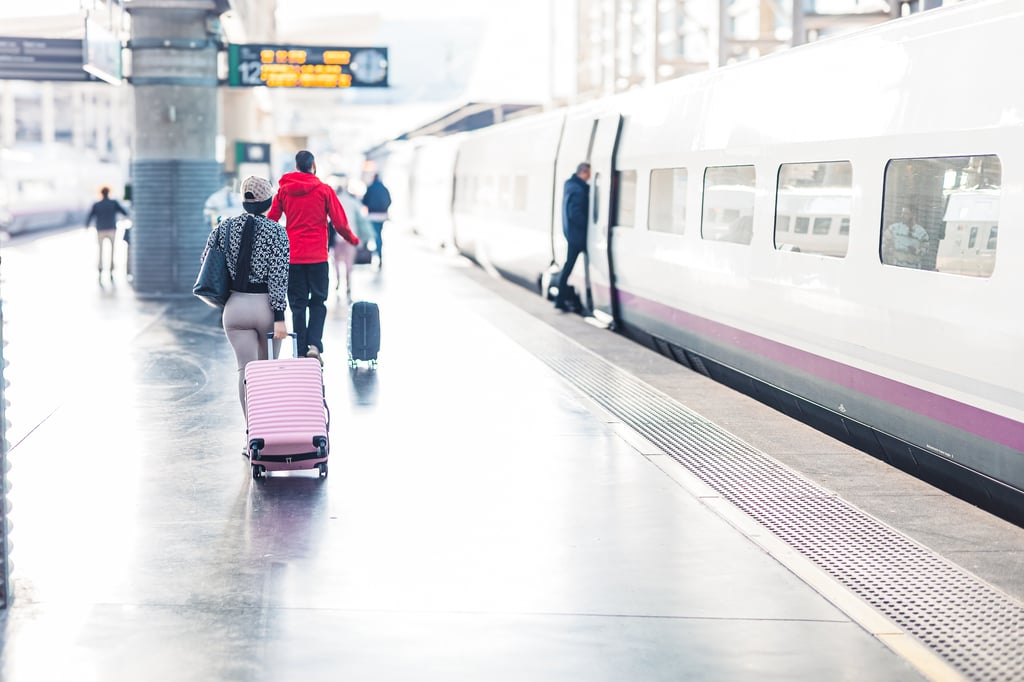
Trains in Spain are punctual (usually!), sophisticated and generally considered part of one of the best rail networks in Europe. There are three types of trains:
- High-speed: AVE, Avlo, Ouigo and Iryo are the operators. These are modern and comfortable trains connecting major cities. Dynamic pricing is used.
- Mid-distance: Alvia and Avant. These connect regional hubs and intermediate cities.
- Regional and commuter: Cercanías and Rodalies. Slower local trains make frequent stops and serve rural areas.
The advantage of trains is that they take you close to the city or town centre, from where you can catch a bus, take the metro, hail a taxi or walk. If you live in one of Spain’s big cities, transport links are very good. In smaller towns and rural areas, your local station might be a good distance away and not always served by buses. You will have to take a taxi or rely on friends and family to get there.
If using the AVE high-speed trains, you might find you have a long walk from the station entrance to the platform, reminiscent of the miles we now walk in many airports. At weekends there is usually a reduced service, with fewer trains, especially on local routes.
Note: Owing to the high cost of taxis in rural areas and smaller towns, many private individuals offer a taxi service, mainly to and from airports and train stations. They are cheaper than official taxis and payment is always in cash. However, be aware that they are neither licensed nor insured to take paying customers.
Uber and Cabify operate in large cities and can be cheaper than regular taxis. You could also use BlaBlaCar, a popular intercity carpooling platform that connects drivers with empty seats with passengers travelling to the same destination. Drivers cannot make a profit, and prices are capped to cover only petrol and tolls.
Walking and cycling
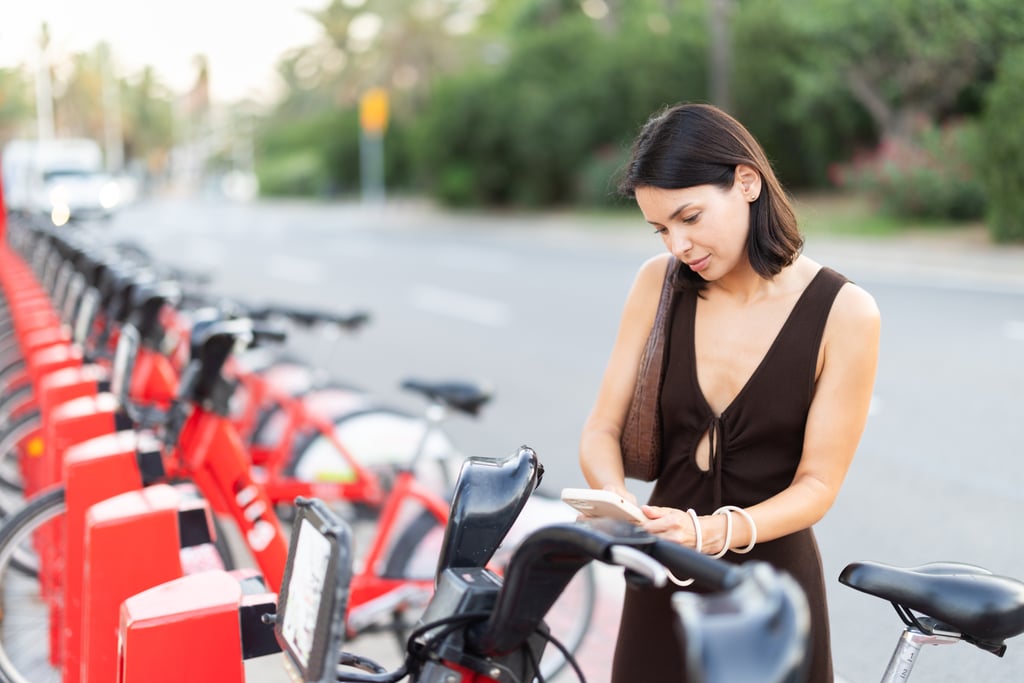
Most Spanish towns have hills, some steeper than others, so walking might be uncomfortable, especially in the heat of summer. The same goes for cycling, but if you can afford an e-bike, much of the effort is taken away. Larger cities offer public bike schemes, where you pick up a bike and return it to a designated spot at the end of your trip.
Older districts might have very narrow, sloping pavements, so you end up walking in the road and moving to the pavement every time a vehicle passes. I have this problem in my town on some roads that were never built for cars.
Property near train stations
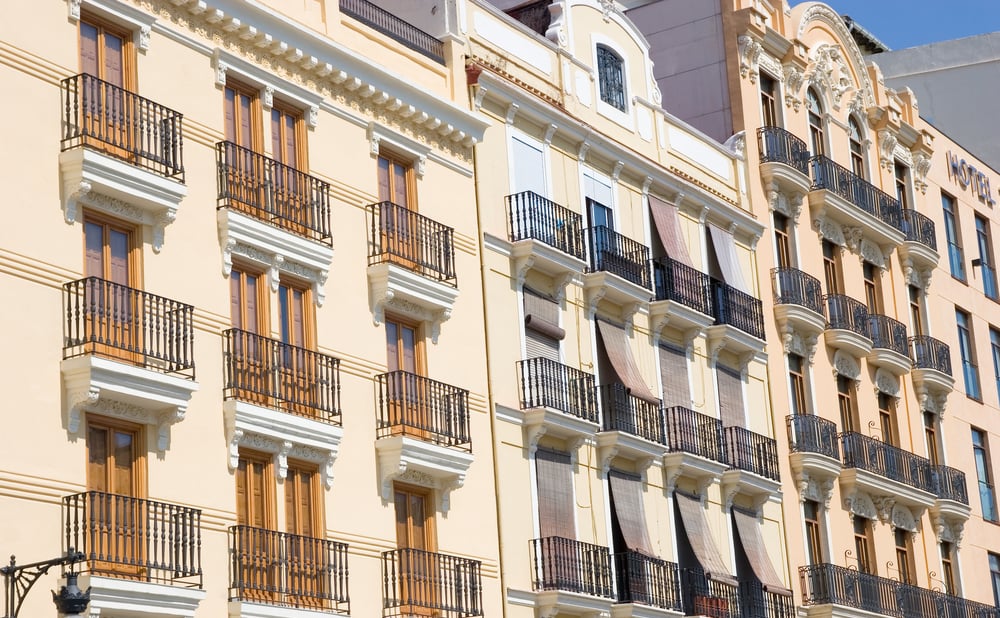
Property close to railway stations commands a higher price than similar property some distance away. However, flats or houses right next to stations are not considered desirable because of the noise, traffic, vibration, visual impact and pollution.
For example, in Catalonia, where I live, towns on the Girona to Barcelona rail corridor are particularly sought after, allowing residents to walk to a station for their daily commute. In Madrid, homes in the zona estación of Valdemoro are priced at around €2,934 per square metre, compared with €2,553 across the municipality as a whole. In Catalonia, property around Gavà’s railway station rose to €3,025 per square metre in June 2026, an annual increase of 7.6% [1]. Gavà is a coastal town 25km from central Barcelona.
Summary
It is possible to live in Spain without a car, but be prepared for some inconvenience, especially if you are not in a major city or large town. You might have to change buses or even trains or use a taxi for part of the journey.
Public transport is comparatively inexpensive in Spain and trains are certainly much cheaper than in the UK. Travel to airports isn’t always straightforward and you need to be reasonably fit to negotiate many hilly towns without an e-bike. Living without a car is another way of life, and one that takes getting used to.
Sources:
[1]: Idealista