


Planning a property viewing trip to Spain is one of the most exciting steps in the buying process. It’s also one of the most important to get right. A well-organised trip moves you from browsing online to standing in the homes that could actually become yours – and that changes everything about how you make a decision.
But a trip without structure can waste time and money, and leave you more confused than when you started. This guide walks you through every stage of a Spain property viewing trip in 2026: from building your shortlist and booking agents to border checks, what to inspect and the questions worth asking before you fly home.
Key facts
A Spain property viewing trip is a dedicated visit to research and inspect properties in person before committing to a purchase. It typically lasts three to five days, covers six to ten properties across one or two areas, and includes meetings with estate agents, lawyers and sometimes a currency specialist. Buyers with a clear brief and a pre-agreed shortlist consistently find the trip more productive – and less overwhelming – than those who arrive without a plan.
- Build your shortlist before you travel, not when you land
- Allow at least three to four days for a useful trip
- Book NIE appointments in advance – waiting lists can be long
- EES border checks are now in operation for Schengen entry
- ETIAS is expected later in 2026 – check requirements before travelling
- A good agent will show you properties on and off the open market
Contents
- Before you go on your Spain property viewing trip
- Choosing and briefing your agents
- NIE numbers: book early
- Travel prep for 2026: EES and ETIAS
- The 90-day rule
- What to inspect on a viewing
- Questions to ask your agent
- Structuring your days
- Meeting a lawyer on your trip
- Managing your currency
- What should I do next?
- Summary
- FAQs
Before you go on your Spain property viewing trip
Start with an honest brief. Where in Spain are you focusing – Costa del Sol, Costa Blanca, Valencia, Mallorca? What type of property, what budget and what would rule a place out immediately? The more specific your answers, the better your agent can prepare for you. If you’re still weighing up regions, our guide to buying property in Spain covers the main areas and property types in detail.
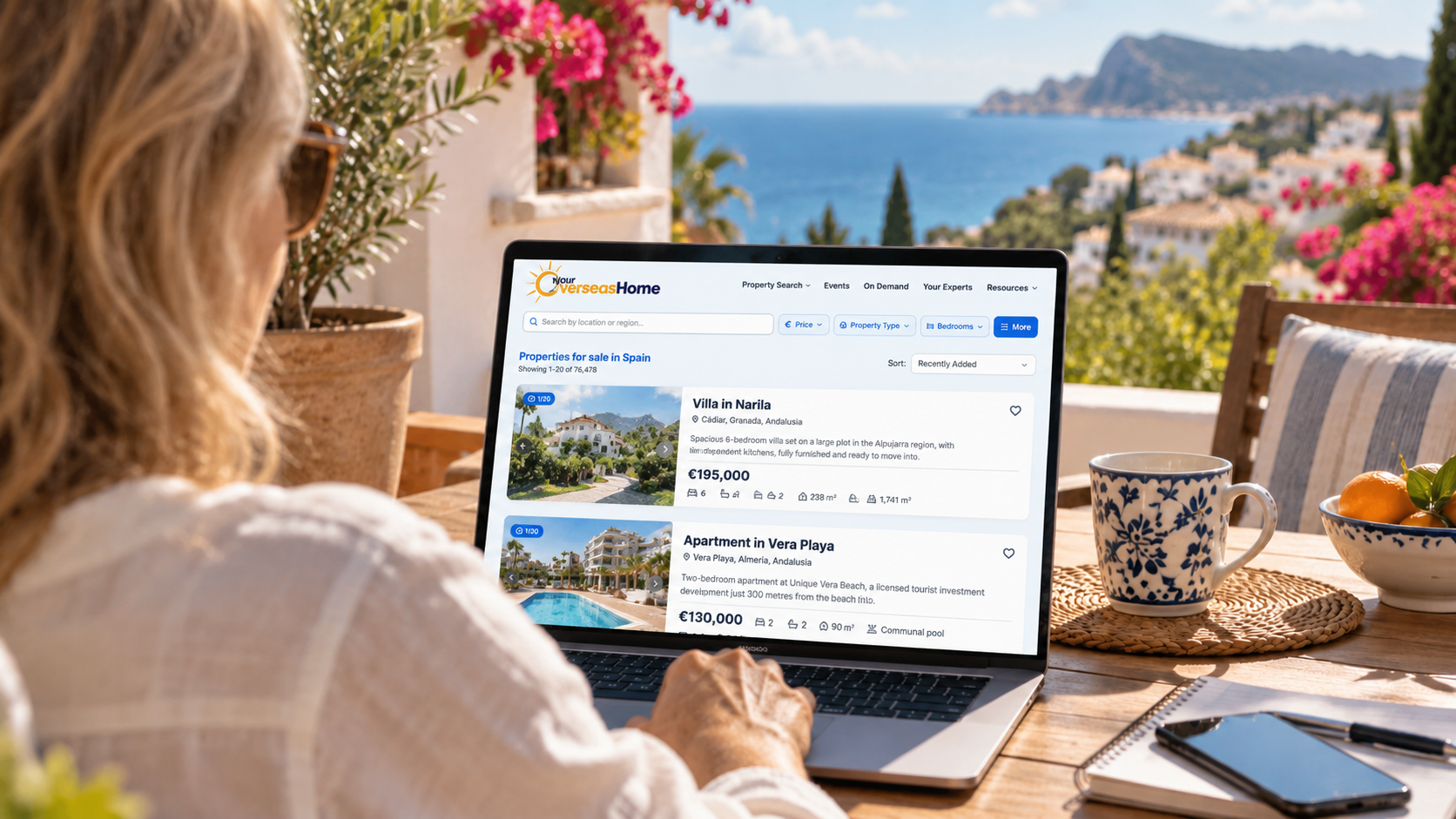
Most buyers find it useful to have six to ten properties on the shortlist for a three-day trip. Fewer than that leaves your schedule thin; more than that becomes exhausting and the properties blur into one another. Use the YOH property portal to refine your shortlist before you travel, and share it with your agent so they can add any properties they know of that aren’t yet listed online.
Don’t assume your shortlist will survive contact with reality. Many buyers arrive expecting to love their top pick and leave with a completely different favourite. That’s not a failure of planning – it’s the point of going.
Choosing and briefing your agents
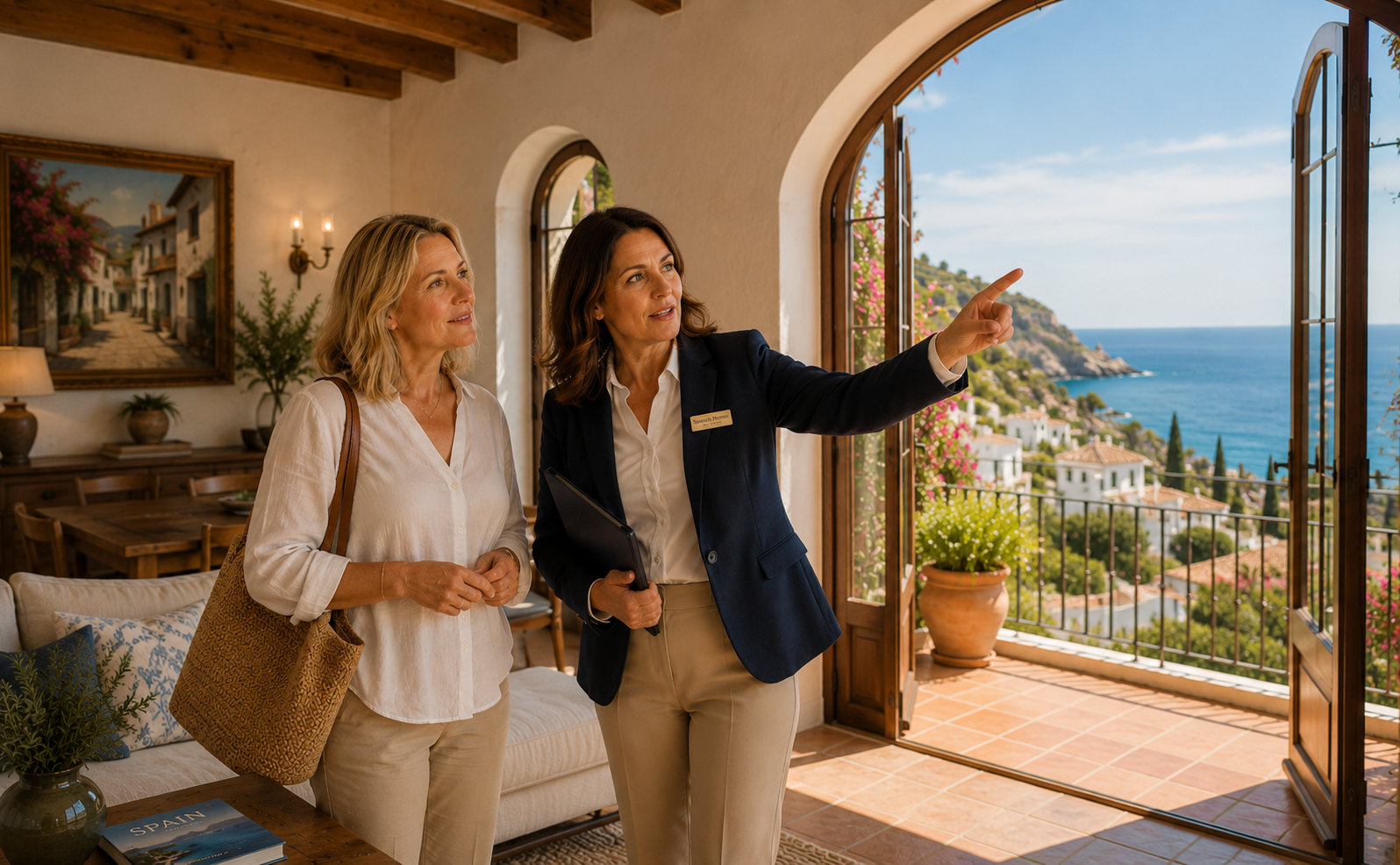
For most areas of Spain, you’ll work with local estate agents (agencias inmobiliarias) rather than a single national operator. It’s worth speaking to two or three agencies in your target area, since agents typically carry different stock and may have access to off-market listings.
When you contact an agent, give them a written brief: your budget, the type of property, any non-negotiables (pool, garage, sea view, ground-floor access) and the dates you’re available. A good agent will come back to you with a curated shortlist and a proposed schedule.
Be direct about your timeline. If you’re a serious buyer who could move within six months, say so. Agents prioritise their time accordingly, and the ones who are right for you will appreciate the honesty.
NIE numbers: book early
A Spanish Número de Identificación de Extranjero (NIE) is the tax identification number you’ll need before you can complete a property purchase. You can’t sign the escritura (title deed) without one.
Getting your NIE isn’t something to leave until the last minute. Appointments at Spanish consulates in the UK and at police stations in Spain can book out weeks or even months in advance, particularly in popular buying areas. Many buyers use their viewing trip to start the NIE application in person at a local police station, which is often faster than going through the consulate at home.
Bring your passport, two passport photos and a completed EX-15 form. Your agent or lawyer can usually advise on the nearest appointment office. If your trip is primarily a first look and you’re not ready to commit, you can still apply for the NIE to save time later – it’s a practical step, not a legal commitment to buy.
Travel prep for 2026: EES and ETIAS
Two changes to Schengen border procedures are relevant for UK buyers travelling to Spain this year.
Entry/Exit System (EES) is now fully operational. Instead of passport stamping, your biometric data – fingerprints and a facial image – is registered on arrival at Schengen external borders. The process adds a few minutes to border clearance the first time, so allow extra time at the airport, particularly during busy periods.
ETIAS (European Travel Information and Authorisation System) is a separate pre-travel authorisation for visa-exempt travellers, including British nationals. It has not yet launched at the time of writing but is expected later in 2026. Before you book your trip, check the current status at the official ETIAS website – you may need to apply online before you travel.
Neither EES nor ETIAS affects your right to visit Spain or how long you can stay as a tourist, but both require you to plan ahead.
The 90-day rule

British nationals can spend up to 90 days in any 180-day period in the Schengen Area without a visa. This covers Spain, France, Portugal and most other EU countries – the 90 days is counted across the whole Schengen zone, not per country.
For a viewing trip, this is unlikely to be a constraint. But if you’re planning multiple research trips in the same six-month period, keep track of your days. Overstaying has consequences for future travel. If you’re thinking about spending extended periods in Spain after you buy, speak to a visa or residency specialist about your options.
What to inspect on a viewing
A viewing trip is your chance to go beyond the photographs. Here’s what experienced buyers focus on when they walk through a property:
Outside the property
- Condition of roof, external walls and window frames
- Quality of the communal areas (for apartments and urbanizaciones)
- Parking and access
- Orientation – does the property get sun in the morning, afternoon or both?
- Distance to amenities, beach, road noise
Inside the property
- Age and condition of the boiler, air conditioning and electrical panel
- Water pressure and plumbing condition
- Signs of damp or water ingress, particularly around windows and on ceilings
- Quality of windows and doors – aluminium double-glazing is standard; older single-glazed timber frames add renovation costs
- Mobile signal and broadband availability (ask the agent or check on your phone)
Documentation to ask about
- Cédula de habitabilidad (certificate of habitation) – confirms the property is legally habitable
- Nota simple – the land registry extract showing ownership, boundaries and any charges on the property
- Community fees and any outstanding debts to the community (comunidad de propietarios)
- Most recent IBI (local rates) receipt
Your lawyer will carry out full due diligence later, but knowing what to look for on a viewing lets you make a more confident shortlist decision on the day.
Questions to ask your agent
Good estate agents expect to be questioned. Here are the ones that tell you the most:
- How long has the property been on the market?
- Has the price been reduced since listing?
- What are the monthly community fees?
- Are there any known issues with the property or the building?
- What’s included in the sale price – furniture, white goods, air conditioning units?
- What’s the vendor’s situation? Is there a chain?
- What’s the local rental market like if we wanted to let occasionally?
You’re not obliged to ask all of these on a first viewing, but the answers give you useful context before a second visit or an offer.
Speak to a Spain property expert
Structuring your days
A three-to-five-day trip works well with the following shape:
| Day | Focus |
|---|---|
| Day 1 | Arrive, settle in, familiarise with the area, first agent meeting |
| Day 2-3 | Property viewings – aim for three or four per half-day |
| Day 4 | Second viewings of favourites, NIE appointment if booked, meet your lawyer |
| Day 5 | Review notes, any outstanding viewings, debrief with agent |
Try not to schedule more than six or seven viewings in a day. After that number, the detail stops sticking and decisions become harder rather than easier. Build in time to walk around the neighbourhood, try a local restaurant and get a feel for what day-to-day life would actually be like.
Meeting a lawyer on your trip
If you haven’t already appointed a Spanish property lawyer, your viewing trip is a good time to have a first meeting. Your lawyer doesn’t act for the agent or the vendor – they work solely for you, carrying out searches, reviewing contracts and advising on tax implications.
Many UK buyers ask for recommendations from their agent, which is fine as a starting point, but worth checking independently too. Look for a lawyer who is fluent in English and has specific experience in Spanish property conveyancing in your target area. The Spanish Bar Association (Consejo General de la Abogacía Española) holds a register of qualified lawyers.
Managing your currency
If you make an offer on a trip and it’s accepted, you’ll need to move money within days for the reservation deposit. Exchange rates can move significantly between the moment you commit and the moment you transfer, and a shift of even 2-3% on a €300,000 (£254,000) purchase adds up quickly.
Many buyers find it useful to speak to a currency specialist before they travel, so that a forward contract or a rate-watch arrangement is already in place. Our partner Smart Currency Exchange specialises in overseas property transactions and can help you plan your transfers so a good rate doesn’t slip through your fingers. Speak to Smart Currency Exchange before your trip to understand your options.
What should I do next?
If you’re at the stage of planning a viewing trip, you’re making real progress. Here’s how to move forward:
- Search for properties in your target area using the YOH Spain property portal
- Join our next Spain webinar to hear from agents and legal specialists with on-the-ground experience
- Speak to a currency specialist at Smart Currency Exchange to protect your budget before you travel
- Download our Spain Buying Guide for a full overview of the purchase process, costs and legal steps
Summary
A Spain property viewing trip in 2026 takes preparation to do well. Build a focused shortlist before you travel, book NIE appointments early and confirm EES border registration requirements before you fly. On viewings, look beyond the obvious – check documentation, community fees and practical details that photographs can’t tell you. Allow four to five days, limit yourself to six or seven viewings a day and schedule time with your lawyer. Come home with a clear favourite rather than an overwhelming list, and have your currency strategy in place before you make an offer.
FAQs
Six to ten properties over a three-to-five-day trip is a workable number for most buyers. Any more and the detail becomes hard to retain; any fewer and you may not have enough to compare.
No – a NIE is required to complete a purchase, not to view properties. But your viewing trip is a good opportunity to start the NIE application, since appointments can be booked out weeks in advance in popular areas.
The Entry/Exit System (EES) is a biometric border registration system for Schengen external borders, now operational. It replaces passport stamping and adds a few minutes to first-time border clearance. It does not change your right to visit Spain or how long you can stay.
Yes, and many buyers do. If you want to move quickly, have your currency arrangements in place before you travel so you can act on a rate without delay if your offer is accepted.