



Our writer Sally Veall shares her first-hand experience of gardening in Spain, with practical tips on the plants, trees and flowers that thrive in the heat, plus what to consider if you’re creating a terrace, patio or garden of your own.
Before moving to Spain, I lived in southwest France where the garden was walled and about 220 square metres. We rescued it from negligence and turned into a prize-winning garden full of colour with a large variety of plants and flowers, especially roses.
When we decided to move to Spain, we settled on an area just four and a half hours’ drive away, close to Girona in Catalonia. At first, we only had a small balcony which we filled with bright red trailing geraniums. They survived, though the salty sea air and strong local winds made conditions challenging.
Find a Spanish home with space to grow
Browse properties for sale across Spain and start looking for the terrace, patio or garden that suits the way you want to live.
Search properties in SpainContents
Gardening on a terrace
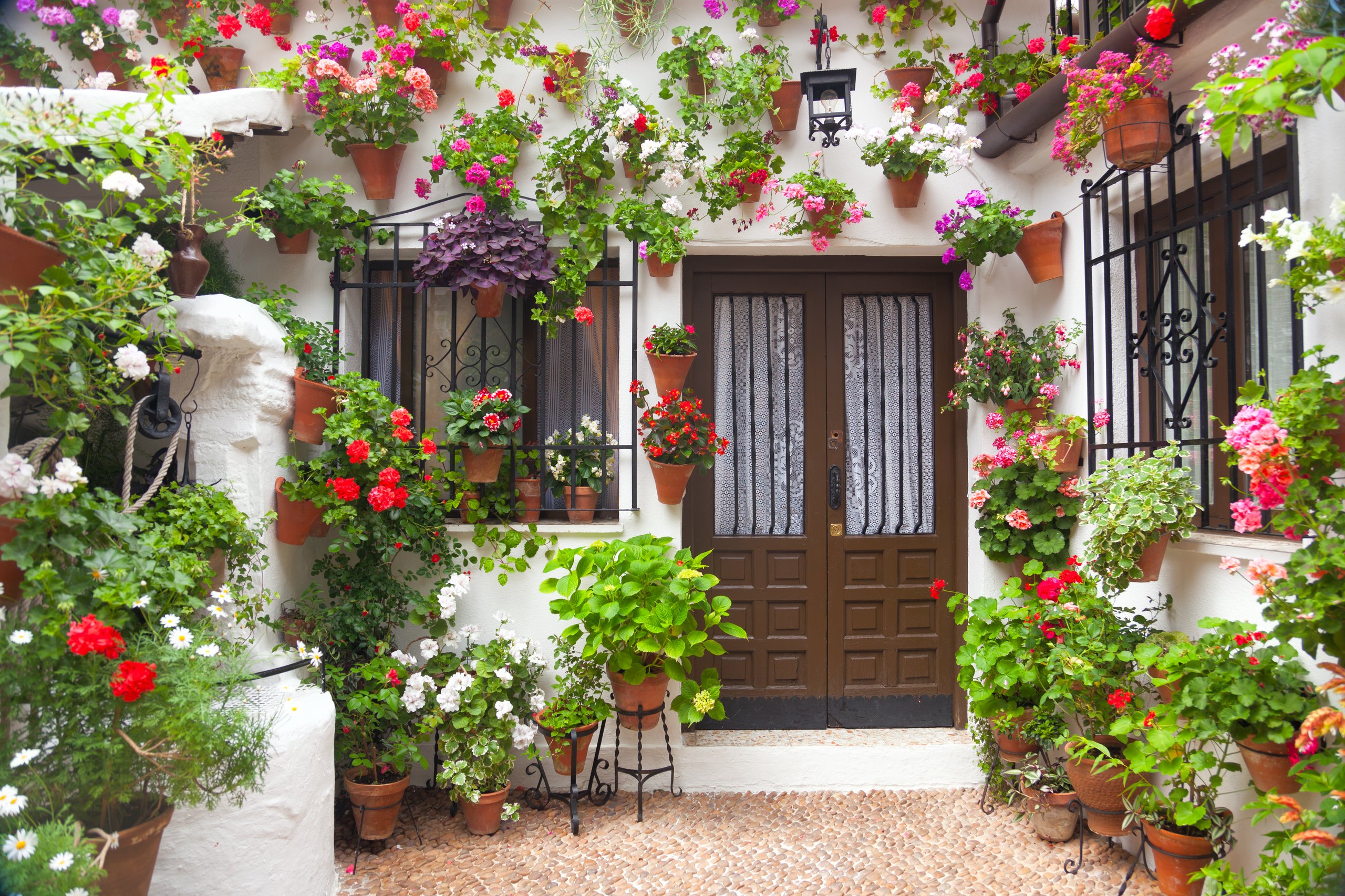
Later, I moved to an apartment with a large terrace. It had an east-west aspect and, being on the top floor, was exposed to high winds. There are eight winds in this part of Catalonia, so only sturdy plants do well. I managed to grow bougainvillaea, lavender, geraniums and even a small lemon tree. Herbs grow well in pots, so I had plenty.
The problem with pots in the hot summer sun is that they dry out quickly. Terracotta pots are preferable, and it’s best to choose the largest size your space allows. They need daily watering and with water restrictions often in place, this can be a bit of a battle. I suggest having a large bowl in or near your kitchen sink into which you add water left in kettles, saucepans, water you run before it gets hot. Similarly, have a bucket in the shower to catch the cold water before it warms up. Use this for watering.
As the climate is changing and getting hotter for longer, we need to rethink which plants to buy. Succulents do well of course, cacti too and aloe vera. Here is a selection that I find thrive, providing they have good drainage:
- Bougainvillaea – one of the best choices; loves intense sun and heat and can tolerate quite dry conditions once established.
- Geraniums / pelargoniums – excellent in pots and cope well with hot Spanish summers.
- Portulaca (moss rose) – brilliant for really hot, dry positions; flowers beautifully in strong sun.
- Gazania – extremely sun-loving and drought tolerant.
- Lantana – very tough, flowers for months and handles heat exceptionally well.
- Oleander – ideal for a large pot if you have space; loves heat and sun.
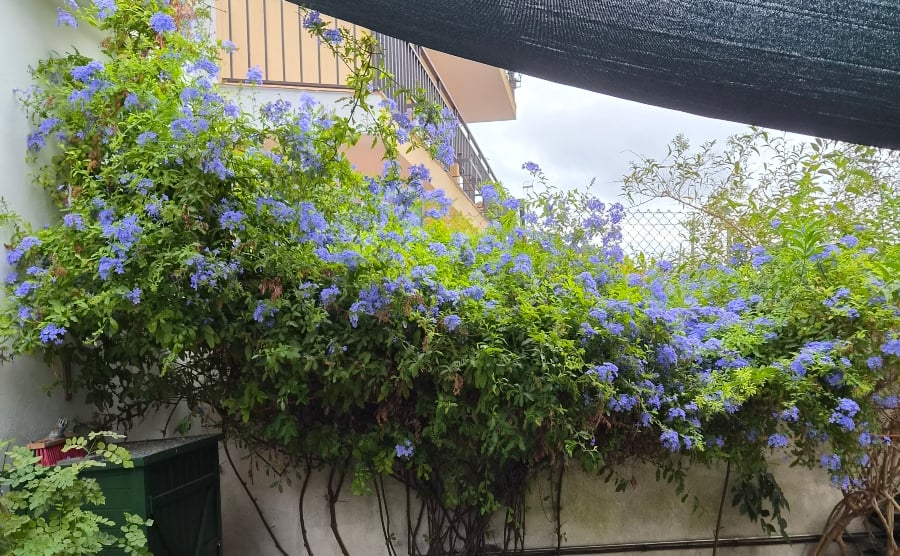
- Plumbago – pretty blue flowers and very good in warm climates.
- Hibiscus – loves warmth and sun, although it needs more regular watering than bougainvillaea or lantana.
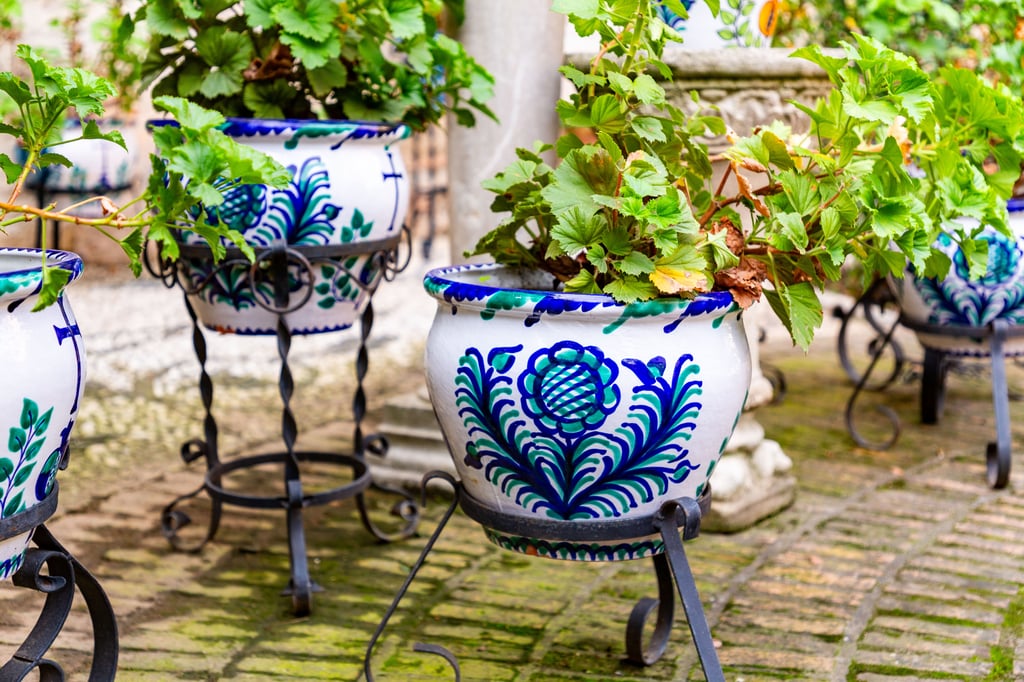
Geranium moth/caterpillar (Cacyreus marshalli)
I should mention that geraniums, particularly zonal geraniums, are attacked by a type of moth that lays eggs on the leaves, which then die. This is a permanent problem and by late summer, there may be nothing left of the original plant. I’ve found Bacillus thuringiensis (Bt) to be a good treatment option.
Pot gardening requires maintenance and watering, but the results can be worth it with a lovely display of colours to enjoy while sipping a glass of cava with family or friends.
Patio and gardens
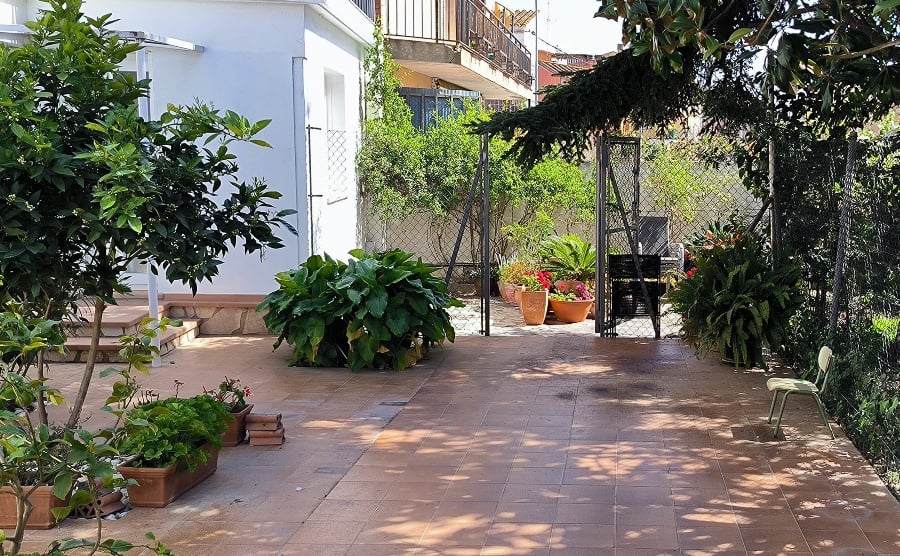
I now have a garden that has trees and a large patio. Pine trees do well but constantly shed needles which I am forever sweeping up. I also have a magnolia, which is rather old and drops leaves all year round. It’s so pretty when in flower but I don’t think it likes the very hot summers.
My plumbago, on the other hand, is very happy and has been in flower for weeks. I recommend it as well as oleander. It grows well in poor soil and needs very little water, which is why you see it planted in the middle of Mediterranean motorways (it also stops the bright headlights of cars coming the other way). Be aware though, that oleander is toxic, so if you have little people in your home, it’s best to avoid it.
This year I planted passionflower that a friend gave to me in a tiny pot. It has grown well and is spreading along a wire fence. No flowers as yet but hopefully next year. The jasmine is flourishing and the smell drifts into my living room in the evening.
Ferns
I didn’t think ferns would grow well here but my Hart’s Tongue Fern (Asplenium scolopendrium) in a large pot in semi-shade is abundant. It doesn’t seem to need daily watering and is very decorative. I’m inclined to buy more as the trees offer just the right amount of shade.
Citrus trees
Spain is Europe’s leading producer of citrus fruits, cultivating a world-renowned selection of oranges, mandarins, lemons and grapefruits across its sun-drenched Mediterranean coast.
There’s nothing better than picking oranges off your own tree, which I am lucky enough to be able to do. I also have a lemon tree but it isn’t as prolific as the orange tree. They only need pruning once a year, in April, and give a great deal of pleasure both visually and practically. If your new home has either of these trees, you are very fortunate. If they aren’t there, think of planting some.
Tomatoes
All my neighbours grow tomatoes. Just behind me is a vegetable garden and the tomatoes provide colour as well as food. Spain is the largest producer and consumer of fresh tomatoes in the European Union and there are literally hundreds of traditional heirloom tomato varieties. Only about ten are commercially grown and are available in supermarkets and town markets.
Cherry and vine tomatoes grow successfully in pots placed in a sunny spot. Mine have produced enough for me and for friends. Next year I plan to buy a 20-litre bag of good soil and will plant them directly in that instead of pots. Growbags aren’t available here.
Succulents
I have some that survive the very hot weather without much watering. In fact, they are best left to dry out completely before giving them a good soaking. I know I will have to buy more as the summers get hotter and longer, so will look for more Kalanchoe which do have bright, colourful flowers. I already have them in almost every colour and have planted them in clusters.
Second homes
If you have a second home and are not there year-round, really you need to plant succulents and hope that there is enough rain to keep them alive. Cacti are also useful and will survive – think of deserts. Oleander should do well. Buy a few geraniums and other flowers for when you are there for colour. Offer them to neighbours when you leave.
Although gardening in Spain requires some effort, bright bougainvillaea climbing up walls, plumbago gracing fences, citrus fruit trees, abundant ferns, succulents, geraniums, portulaca and hibiscus are well worth nurturing. Save water so that if there is a hose pipe ban you can still give your plants the daily drink in the summer. Remember to cover delicate plants and young lemon trees in winter to protect them from frosts or place them in a protected area of your garden.
Gardening in Spain can be incredibly rewarding. Rather than mowing the lawn, you’ll spend more time harvesting your own oranges, lemons and tomatoes!