

Renovating property in Italy often begins with one very persuasive bit of maths: the tired farmhouse is €150,000 cheaper than the restored house down the road, so there must be €150,000 to spend on the work. Sometimes that logic holds. Sometimes the roof, the wiring, the planning history and a few surprises behind the plaster get there first.
That does not make renovation a bad bet. For many buyers it is the best way to get the house they actually want, rather than paying for somebody else’s choices. But it works much better when you treat the purchase and the building work as one project.
Before you buy, establish how the property is registered, whether earlier alterations were authorised, what the local comune will let you change and what the finished cost looks like once professional fees and contingency are added.
Key takeaway: A renovation project in Italy should be judged by its finished cost, not the asking price alone. Check municipal and cadastral records before you commit, confirm that your plans are feasible and budget for professional fees as well as construction. In Tuscany, EmmePi Architettura’s 2026 estimates range from about €600 (£515) to €3,000+ (£2,575+) per m² depending on the work involved.
Contents
- Why renovation properties attract buyers – and where the risks are
- What to check before you make an offer
- Understanding Italian planning rules
- What does renovating property in Italy cost in 2026?
- Finding and vetting trades and your project team
- Renovation tax relief and VAT in Italy
- What should I do next?
- Summary
- Frequently asked questions
- Sources
Speak to an Italy property expert
Get practical help from trusted experts who understand the Italian property-buying process.
Why renovation properties attract buyers – and where the risks are
The attraction is the freedom to decide where the money goes. You can keep the stone walls, beams or land that drew you to the property, then spend on the kitchen, bathrooms, heating and layout you actually want. If Tuscany is your focus, our province-by-province guide to buying property in Tuscany gives a useful sense of how the property stock and pricing change across the region.
What is easy to underestimate is how quickly the renovation becomes the main event. Laura Orlovic, Strategy and Project Manager at EmmePi Architettura in Pietrasanta, says that for some farmhouses, village houses and small properties with land, “the budget would be about 25% for the purchase, 75% for the renovation”. That is not a Tuscan rule of thumb, but it is a useful reminder that a low asking price can be the smallest part of the calculation.
Take a €150,000 house that needs €300,000 of work. Once buying costs, professional fees and contingency are added, the meaningful comparison is no longer with other €150,000 houses. It is with finished properties around the same total budget.
Smaller does not automatically mean simpler either. Orlovic says some small stone houses need substantial work, with “most of the budget” going into the renovation. The attraction is that buyers can preserve the parts they value while modernising the rest. As she puts it, many want “this Tuscan character – stone, beams, fireplaces” without giving up a modern kitchen and bathroom, insulation or efficient heating and cooling.
That is where the scope starts to matter. New services, insulation and structural changes can move a project a long way beyond decorating. And before any of that is priced properly, there is an even more basic question to settle: does the house on the ground match the house in the paperwork?
What to check before you make an offer
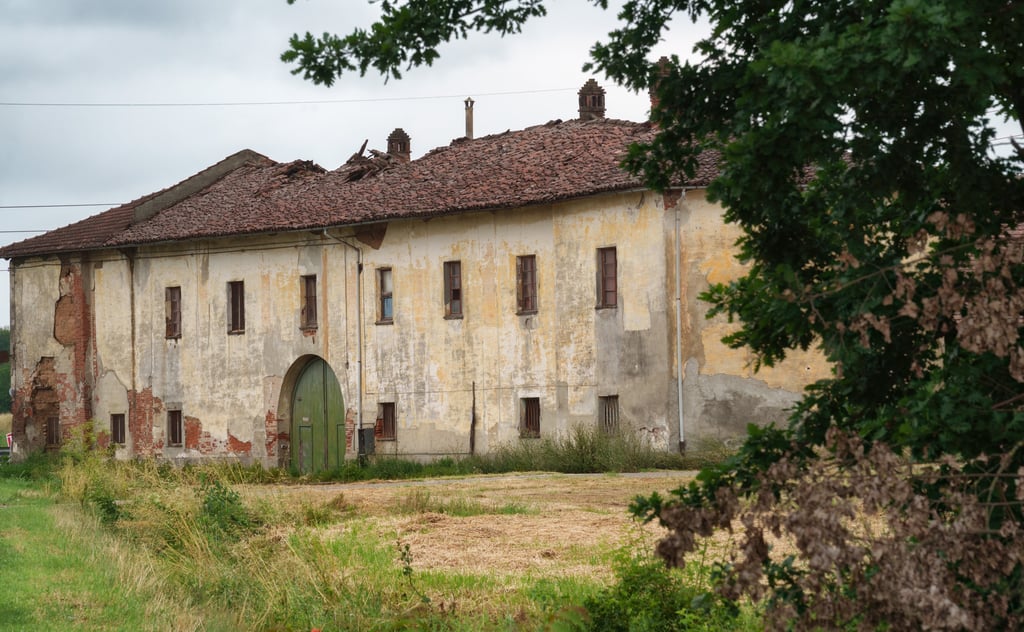
For an older property, a survey of the physical condition is only part of the job. You also need somebody to establish whether the building on the ground matches the building in the records.
Many buyers use an architect, engineer or geometra for this. Our guide to essential property checks before buying in Italy explains the different types of technical inspection. For a renovation purchase, the important point is to compare the house with the records held by the local comune and with the cadastral plan.
Orlovic’s advice is to start with the basics: “You need to go to the Comune [city hall] and check how is it registered. Is it registered as a residential area, a farmhouse, a garage? … Is the building compliant? Was all of the construction actually meeting obligations?”
That can sound bureaucratic until you think about what it means in practice. An outbuilding may be used as accommodation but still be registered for another purpose. A room may have been added years ago without the right paperwork. A doorway may have moved, a terrace may have been enclosed or a barn may have been converted without the records keeping up.
None of those things automatically makes the property a bad purchase. What matters is knowing about them before you own the problem and understanding whether they can be regularised.
Ask your technical adviser to check:
- The authorised use of the building. A room being used as a bedroom does not necessarily mean it is registered as residential accommodation.
- Municipal planning records. Approved plans and previous building titles should match what is physically present.
- Cadastral records. The cadastral plan should also correspond with the property as it stands.
- Previous alterations. If something does not match, establish whether it can be regularised, how long that may take and what it is likely to cost.
- Structure and services. Roofs, floors, load-bearing walls, drainage, electrics, plumbing and heating can all move the budget materially.
- Landscape or heritage restrictions. These can affect windows, roofs, outbuildings, external finishes and what you can do with the land.
- Your own plans. Space for a pool is not the same thing as permission for a pool. The same applies to an extension or a change of use.
The Italian Notariat has been encouraging the use of integrated urban and cadastral technical reports in property transactions. They are optional under national law, but the principle is useful for renovation buyers: have a qualified technician compare the physical property with the municipal and cadastral records before the sale.
Find a webinar for your plans
Choose what you need help with and when you want to attend. We will take you straight to the most relevant upcoming events.
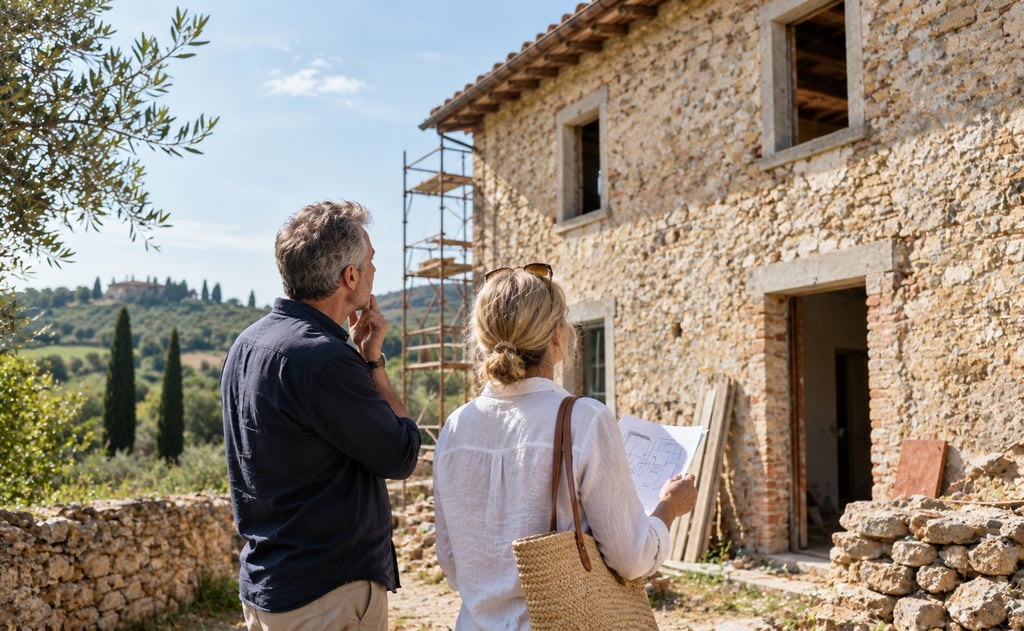
Once the existing building checks out, test the changes that matter to you. Orlovic says clients often arrive saying, “I want to have a pool, I want to expand it,” but the next step is to ask the relevant comune whether that is actually possible and what rules apply.
If the pool, extension or change of use is central to the purchase, it is worth resolving that before you make an unconditional commitment. You can also ask your independent property lawyer in Italy whether the preliminary agreement should deal with a specific planning or technical outcome.
The notary’s role when buying property in Italy remains important, but the notary is not a substitute for buyer-side technical due diligence on an older building.
Understanding Italian planning rules
Once you know what legally exists, the next question is what you can change. This is where CILA, SCIA and Permesso di Costruire enter the conversation.
You do not need to become fluent in Italian planning law. You do need a technician who understands which route applies to your project and what other approvals may sit alongside it.
Orlovic describes the broad split as minor work under CILA and more substantial work under SCIA or a building permit. Tiziana Piccinini, Co-founder and Lead Senior Architect at EmmePi Architettura, puts it more simply: “SCIA is when we change the structure of a building. CILA is when we make some change that does not involve the structure.”
That is a useful buyer’s shorthand rather than a complete legal test. The correct filing still depends on the work, the building and the local rules.
| Route | Broadly used for | What it means for you |
|---|---|---|
| Edilizia libera | Decoration and some like-for-like maintenance | Some small jobs can be carried out without a building filing |
| CILA | Non-structural internal alterations and qualifying extraordinary maintenance | A qualified technician files the paperwork and the project must still comply with the other rules affecting the property |
| SCIA | More substantial renovation, including work that can involve structural elements | More technical documentation and municipal oversight |
| Permesso di Costruire | Major transformations, certain extensions and new construction | Formal building permission is required |
| Landscape or heritage approval | Work affecting protected buildings or protected settings | An extra approval layer that can affect materials, appearance and timing |
Italy’s national building code requires CILA work to comply with planning rules and with other legislation covering seismic safety, energy performance and cultural heritage. In other words, a CILA does not override restrictions that already apply to the property.
In Tuscany, municipalities exercise delegated functions for landscape authorisations under Article 146 of the Cultural Heritage and Landscape Code. If the house or its setting is protected, your project may need landscape approval as well as the relevant CILA, SCIA or building permit.
This is why it pays to discuss the actual project before purchase. Showing a local technician the house and saying “this is what I want to do with it” is much more useful than finding out six weeks after completion that the wall, window or pool you had planned is the part you cannot have.
What does renovating property in Italy cost in 2026?
There is no sensible single price per square metre for renovating property in Italy. A structurally sound apartment needing new finishes is one job. A rural farmhouse that needs a roof, new services and structural work is another entirely.
For a useful real-world benchmark, EmmePi Architettura publishes 2026 Tuscany ranges based on its own projects and quotations in Versilia and elsewhere in the region. These are budgeting figures rather than a national tariff, but they give buyers something more useful than a vague promise that “it depends”.
| Renovation level | EmmePi 2026 Tuscany estimate | What it typically means |
|---|---|---|
| Light refresh | €600–€900 per m² | Structurally sound property, limited bathroom work, flooring, painting, doors and smaller electrical updates |
| Complete standard renovation | €1,200–€1,800 per m² | New layouts, complete services, floors, windows and bathrooms |
| Higher-specification turnkey renovation | €1,800–€3,000+ per m² | Standard renovation plus more complex systems, bespoke work, higher-specification materials and demanding finishes |
On a 150 m² house, those bands create very different budgets. A light refresh works out at around €90,000 to €135,000 (£77,000 to £116,000). A complete standard renovation is closer to €180,000 to €270,000 (£154,000 to £232,000). At the higher end, the starting point is around €270,000 (£232,000) and a complex project can move beyond €450,000 (£386,000).
Overseas property search
Find properties that fit your plans
Choose where you want to buy, your budget and how many bedrooms you need. We’ll take you straight to matching properties on the Your Overseas Home Property Portal.
Start your property search
Your selections carry through to the results
Access matters too. A property in a pedestrian historic centre is harder to supply than one with easy road access, and that extra time finds its way into the final bill. The same is true of specialist labour and work that has to respect existing materials or protected features.
Professional fees are separate from many construction quotations. As one real-world reference, EmmePi currently publishes its own ranges of €600–€1,200 for a CILA, €1,500–€3,000 for a SCIA and €3,000–€6,000 for a Permesso di Costruire. It quotes direzione lavori, or construction supervision, at 3–8% of the anticipated works cost. Those are EmmePi’s fees, not statutory charges or a national tariff.
For the costs attached to the purchase itself, read our guide to the cost of buying property in Italy in 2026. Keeping acquisition and renovation costs separate makes it much easier to see what the project is really costing.
How much contingency should you allow?
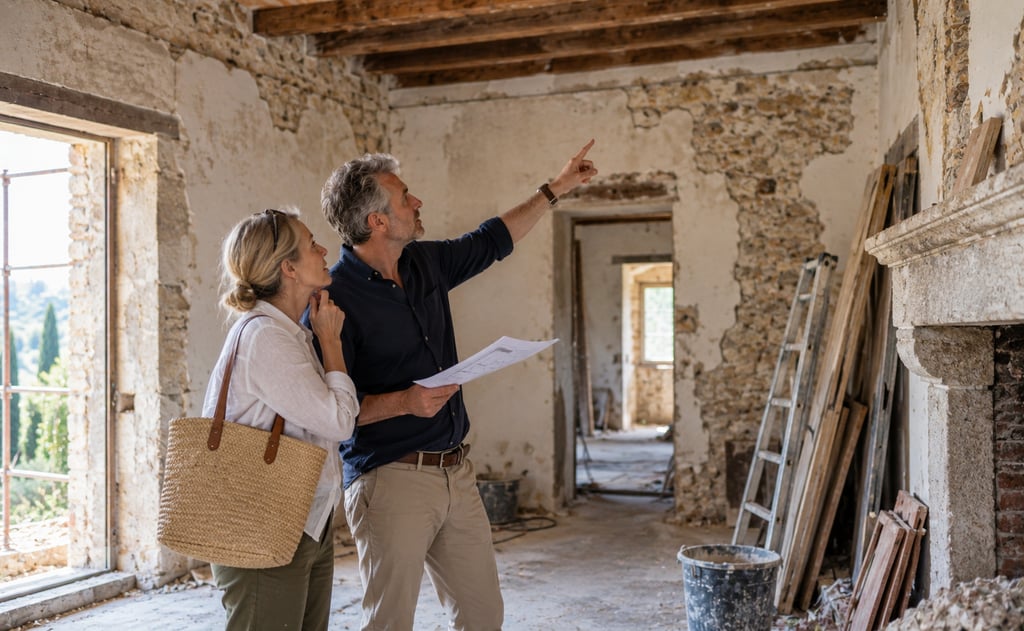
This is the line in the budget that nobody particularly enjoys adding, but older houses are good at justifying it. Problems with roofs, floors, drainage or previous work sometimes only become obvious once the project is under way.
Orlovic’s advice is to “plan for a little wiggle room”: around 10–15% for a straightforward renovation, 15–20% for an older rural property and about 20% for a full transformation.
On a €250,000 construction budget, 15% means keeping another €37,500 aside. At 20%, it is €50,000. That reserve is there for genuine surprises, not as a second interiors budget waiting to be spent.
Currency deserves the same attention because renovation payments are normally staged. If your money is in sterling, the pound cost of a later invoice can change even if the builder’s euro price does not. Our guide to budgeting, currency transfers and overseas property payments explains how buyers can plan around deposits, stage payments and future euro requirements.
Finding and vetting trades and your project team
Planning to buy property in Italy?
Download our free Italy Buying Guide for practical advice on finding a property, navigating the buying process and preparing for your move.
Get your free guideA major renovation is rarely a straight line between you and one builder. Depending on the project, you may have an architect, geometra, structural engineer, direttore dei lavori and several specialist trades involved.
For an overseas owner, the important point is not having the biggest team. It is knowing who is responsible for what. Somebody needs to own the drawings, permissions, contractor tender, site supervision, budget control and the paperwork at the end.
The professional leading the project can also make contractor quotations much easier to compare. EmmePi’s 2026 cost guidance recommends completing the detailed design before builders price the work. That sounds basic, but three quotes are only genuinely comparable if all three firms are pricing the same specification.
When vetting a contractor or building firm, look beyond the figure at the bottom of the page:
- Confirm the business through Italy’s official Registro Imprese and obtain a visura camerale where appropriate.
- Ask who will actually carry out the work and which parts will be subcontracted.
- Ask for evidence of relevant insurance.
- Ask your professional adviser about the firm’s current DURC, which records social security and insurance contribution compliance.
- Request recent references for comparable renovation work.
- Put the scope, exclusions, stage payments and procedure for variations in writing.
- Make sure somebody checks the work before major stage payments are released.
A low quote can be perfectly good. It can also be low because important parts of the job are sitting in somebody else’s column. Your architect or project manager should be able to tell you which is which before the contract is signed.
Our guide to avoiding common mistakes when buying property in Italy covers the wider legal and practical risks around older property purchases.
Renovation tax relief and VAT in Italy
Tax relief can make the numbers look a little kinder, but it should sit near the bottom of the spreadsheet rather than rescue the project at the top.
For 2025 and 2026, the Italian Revenue Agency states that the ordinary renovation deduction is 36% of qualifying expenditure. The rate rises to 50% where the owner or holder of a qualifying property right carries out eligible work on the property used as their main home. The current €96,000 spending limit applies per property unit for the relevant renovation expenditure.
The important distinction is that this is an Italian income-tax deduction, not a grant towards the building work. The amount you can actually use depends on your Italian tax position. The Revenue Agency also warns that if the tax due is lower than the deduction available, the excess is generally not refunded.
That matters particularly for overseas owners buying a holiday home or second home. Before you count any tax relief as part of the project’s economics, ask an Italian accountant or tax adviser what you personally can claim and how the work and payments need to be documented.
There is also a reduced VAT regime for some residential renovation services. The Revenue Agency states that qualifying ordinary and extraordinary maintenance services on residential property can attract 10% VAT rather than the standard 22%. The rules become more complicated when the contractor supplies certain higher-value items, and goods bought separately do not automatically receive the same treatment.
Tax rules change and the treatment depends on the work, the property and the taxpayer. It is one area where a short conversation with a specialist can prevent a very expensive assumption.
What should I do next?
If a renovation property is on your shortlist, start by comparing unfinished projects with finished homes in the same area. You can browse current property for sale in Tuscany and use our guide to where to buy property in Italy to put the asking price into context.
Once one property becomes a serious prospect, bring in technical advice before you commit. A local architect, engineer or geometra can compare the building with the municipal and cadastral records, identify anything that needs regularising and tell you whether your plans are realistic. Our Italy property buying guide explains where those checks fit into the wider purchase.
Then build one honest project budget: purchase costs, professional fees, construction and contingency. If you will be paying from sterling, add the timing of the euro stage payments at the same point. It is easier to plan for currency movement before the invoice arrives than after it.
Italy renovation cost estimator
Choose a property size and level of work to get a working construction budget.
Property size
Use the internal floor area you expect to renovate.
Renovation level
Pick the description closest to the project you have in mind.
Contingency
Add a buffer for work that only becomes clear once the property is opened up.
Summary
- Judge a renovation property by the finished project cost, not the asking price alone.
- Check municipal and cadastral records before you commit, particularly where an older building has been altered.
- If a pool, extension or structural change matters to you, establish whether it is feasible with the local comune before buying.
- CILA, SCIA and Permesso di Costruire cover different levels of work, while protected properties may need additional approval.
- In Tuscany, EmmePi’s 2026 estimates range from €600–€900 per m² for lighter work to €1,800–€3,000+ per m² for higher-specification renovation.
- Allow a realistic contingency and make sure contractors are all pricing the same scope of work.
- Treat tax relief as a possible benefit until an Italian tax specialist confirms what you can actually claim.
Frequently asked questions
There is no single national rate. In Tuscany, EmmePi Architettura’s current 2026 estimates put a light refresh at €600–€900 per m², a complete standard renovation at €1,200–€1,800 per m² and a higher-specification turnkey project at €1,800–€3,000+ per m². Structural condition, access, location and materials can move the final figure considerably.
A CILA is generally used for qualifying non-structural renovation work, while a SCIA is used for more substantial work and can cover structural intervention. The exact filing depends on the project and local rules. Major transformation or new construction may require a Permesso di Costruire, while protected properties can need separate landscape or heritage approval.
Ask a qualified technician to compare the building with its municipal authorisations and cadastral plan, check its authorised use and investigate previous alterations. Also assess the structure, roof and services and confirm whether landscape or heritage restrictions apply. If a pool or extension is central to the purchase, check its feasibility before committing.
EmmePi Architettura recommends around 10–15% for a straightforward renovation, 15–20% for an older rural property and about 20% for a full transformation. The right figure depends on how much is known about the building before work starts and how much structural intervention is planned.
Possibly, but the value of the relief depends on your Italian tax position and the qualifying work. The renovation incentive is an income-tax deduction rather than a cash grant, so eligible spending does not automatically mean you can use the full headline percentage. Take advice from an Italian tax specialist before including any relief in your budget.
Sources
- Your Overseas Home – Buying and renovating in Tuscany: the costs and timelines involved, 17 September 2026. Expert quotations from Laura Orlovic and Tiziana Piccinini of EmmePi Architettura.
- EmmePi Architettura – Quanto costa ristrutturare casa in Toscana nel 2026? Una guida ai prezzi al mq.
- EmmePi Architettura – Quanto costa un Architetto? Guida ai Costi per Progettazione e Lavori.
- Normattiva – DPR 380/2001, Testo unico delle disposizioni legislative e regolamentari in materia edilizia.
- Regione Toscana – Landscape authorisation and Article 146 procedures.
- Consiglio Nazionale del Notariato – Integrated urban and cadastral technical report for property buyers.
- Agenzia delle Entrate – 2026 property renovation deduction rates and limits.
- Agenzia delle Entrate – Reduced VAT on qualifying renovation and energy-efficiency work.
- Registro Imprese – Official Italian business register and company records.
- INPS – DURC Online and contribution-compliance checks.
- European Central Bank – Euro foreign exchange reference rates. GBP conversions use the 17 September 2026 reference rate of €1 = £0.85830.