
In historic streets across Italy there are huge wooden doors with ornate stone surrounds. What lies behind the doors of these palazzi often fascinates the passer by, hoping to catch a glimpse inside. Could it be a courtyard where a nobleman once tied his horse? Or a large entrance hall with an impressive staircase? Is it really like a royal palace inside?
What is a palazzo?
A palazzo (plural: palazzi) is a grand historic townhouse in Italy. They were originally built for a wealthy family, whether merchant or noble. So they tended to be situated in prime locations in the heart of the city or along the riverside, often close to where the head of the household did business.
Even today, you will find the family accommodation located on the first floor, with shops, offices, doctors, pharmacies, a garage or a workshop on the ground floor. From the street you may see a large wooden doorway with ornately carved stone surround, balconies and high windows, but with hints of the grand home hidden behind the shutters.
When you step through those large wooden doors you might enter a huge hallway with wide stone staircase, or walk under a vaulted ceiling into a central courtyard. Palazzi with accommodation on just the first floor may be listed as an apartment, but this title really doesn’t do it justice. Looking at the square metreage they compare well with villsa.
What are palazzi like inside?
The rooms are generally large with high, vaulted ceilings. They may even have frescoes and décor that makes you feel like you are in a palace. I visited a family in one that had antique furniture, large chandeliers, gold framed paintings and frescoes on the ceiling. It did feel like I was visiting the king. Rather than a corridor, you had to walk through room after room to reach the one at the end.
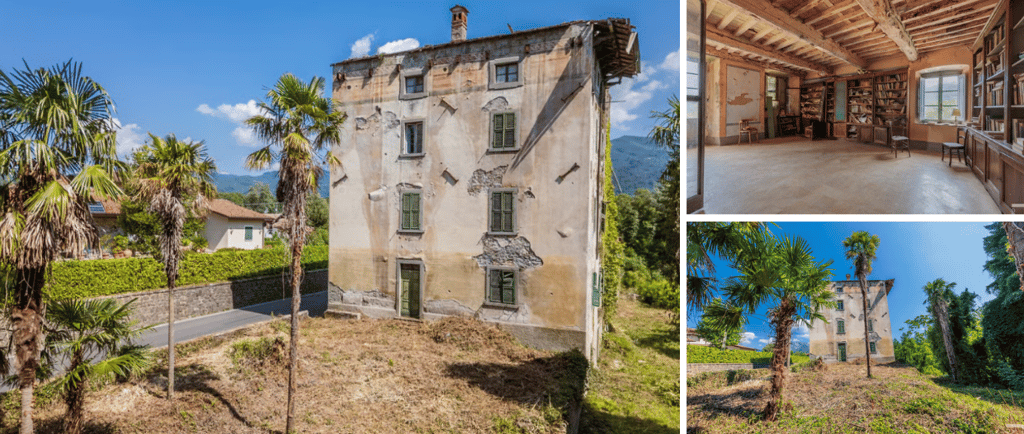
Some have fallen into disrepair, due to elderly owners lacking of funds. Some palazzi have flaking paint, tired furnishings, dodgy electrics and leaky plumbing. On the other hand, I have seen palazzi that have been renovated, respecting their Italian heritage – frescoes restored, walls redecorated and modern kitchens brought in.
Know your palazzi
While many palazzi have a layout from the Renaissance period, the building could actually be from another period. There are palazzi from the Medieval, Gothic, Baroque and Neoclassical eras. Some were built and added to over such a long period of time that elements from more than one period are evident. You can identify the era by some particular features.
Medieval palazzo: Built in considerably more dangerous times, medieval palazzi have defence in mind. Heavy stonework, battlements, watchtowers, crenelations and few openings at ground level. They do have courtyards and wells as well, handy in case of a siege. Example: Palazzo Vecchio in Florence.
Gothic Palazzo: The facades may be of coloured marble or brick. Open arcade galleries decorate the upper floors with several arches that curve to a point. Stone tracery creates a lacelike appearance. The floor plan varies when alongside winding canals.
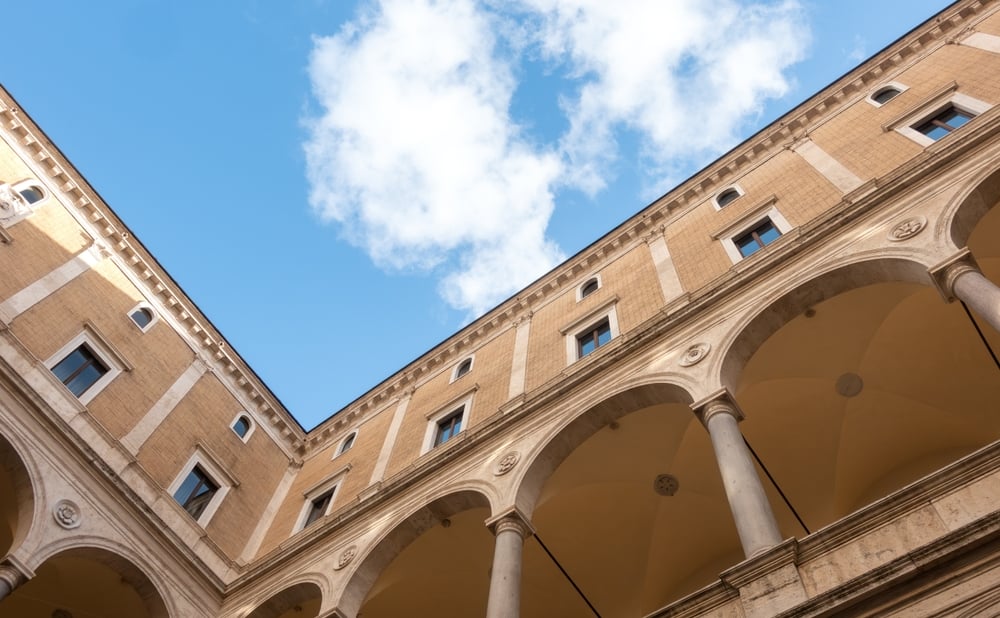
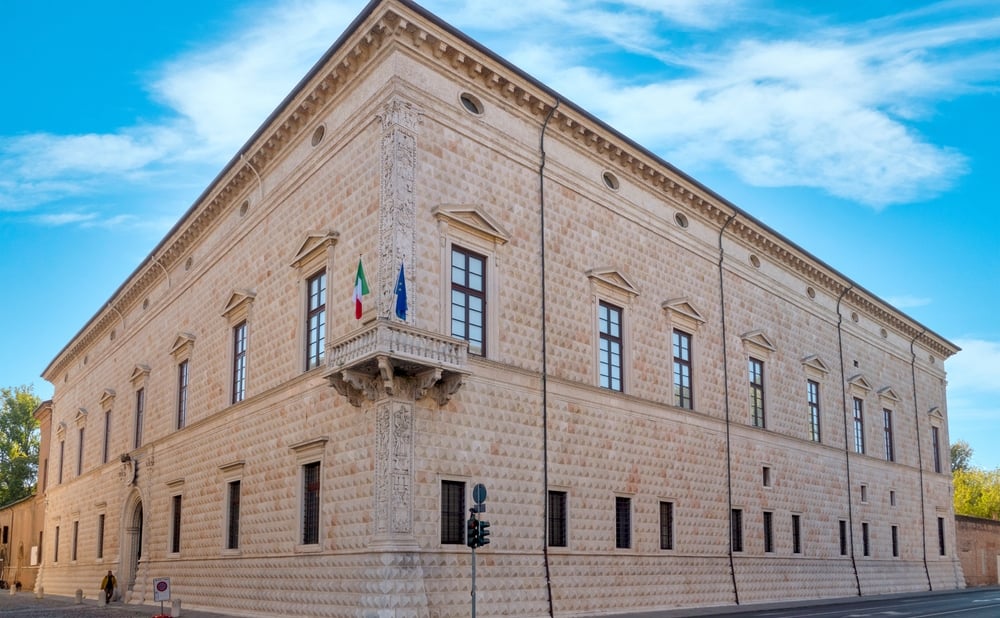
Renaissance Palazzo: Smooth stonework above rougher stone at the lower level. Classical columns, and courtyards with arches. Example: Palazzo Farnese, Rome.
Baroque Palazzo: Baroque facades are more decorative, with curves, ornate balconies and scrolls around the windows. There may also be faces of people or animals. Inside they have grand staircases, framed mirrors and painted ceilings to look like the sky. Examples can be seen in the Baroque towns of the Val di Noto on Sicily.
Neoclassical Palazzo: These palazzi have symmetrical facades, that are more ordered with columns, and triangular or flat tops to the rectangular windows. Inside they have high ceilings, decorative moldings and carvings, and more subtle frescoes. The most grand examples can be seen in Milan, Rome and Naples. Such as Palazzo Serbelloni in Milan.
How do you furnish a palazzo?
When furnishing a palazzo you could go for all antique furniture, but modern furniture can also work if it is craftsman-made and follows your colour pallet. However, some modern furniture can look cheap in a large room with vaulted ceilings. A melamine kitchen can look out of place and small furniture is lost in a big room.
What are palazzi used for in Italy today?
Many palazzi are still family homes, a few of which may be decedents of the original noble family that had built it. However, many have now been split into smaller, more manageable sized apartments.
This might be because it was inherited by two families who decided to divide the space. Others are where the owners have decided to live in one part then sell or rent the rest. Another trend is to transform them into luxury holiday accommodation such as a boutique hotel, or exclusive event venue.
Why are there uninhabited palazzi?
Palazzi that have been inherited by people who don’t live in the area, might either have no interest in living there or don’t have the finances to pay for the upkeep. They may also have been left with a debt on the property. When a family member inherits, they often feel a sense of responsibility to keep the property in the family, even if it is not being used.
Sadly, some owners die without heirs and the palazzo may be left empty for a long period and not adequately maintained. Some have been donated to the church. But if no eligible relatives can be found, up to the sixth degree, the property passes to the Italian State. The authorities will then wait at least ten years before considering selling it. This is just in case a potential heir turns up and wants to claim their inheritance.
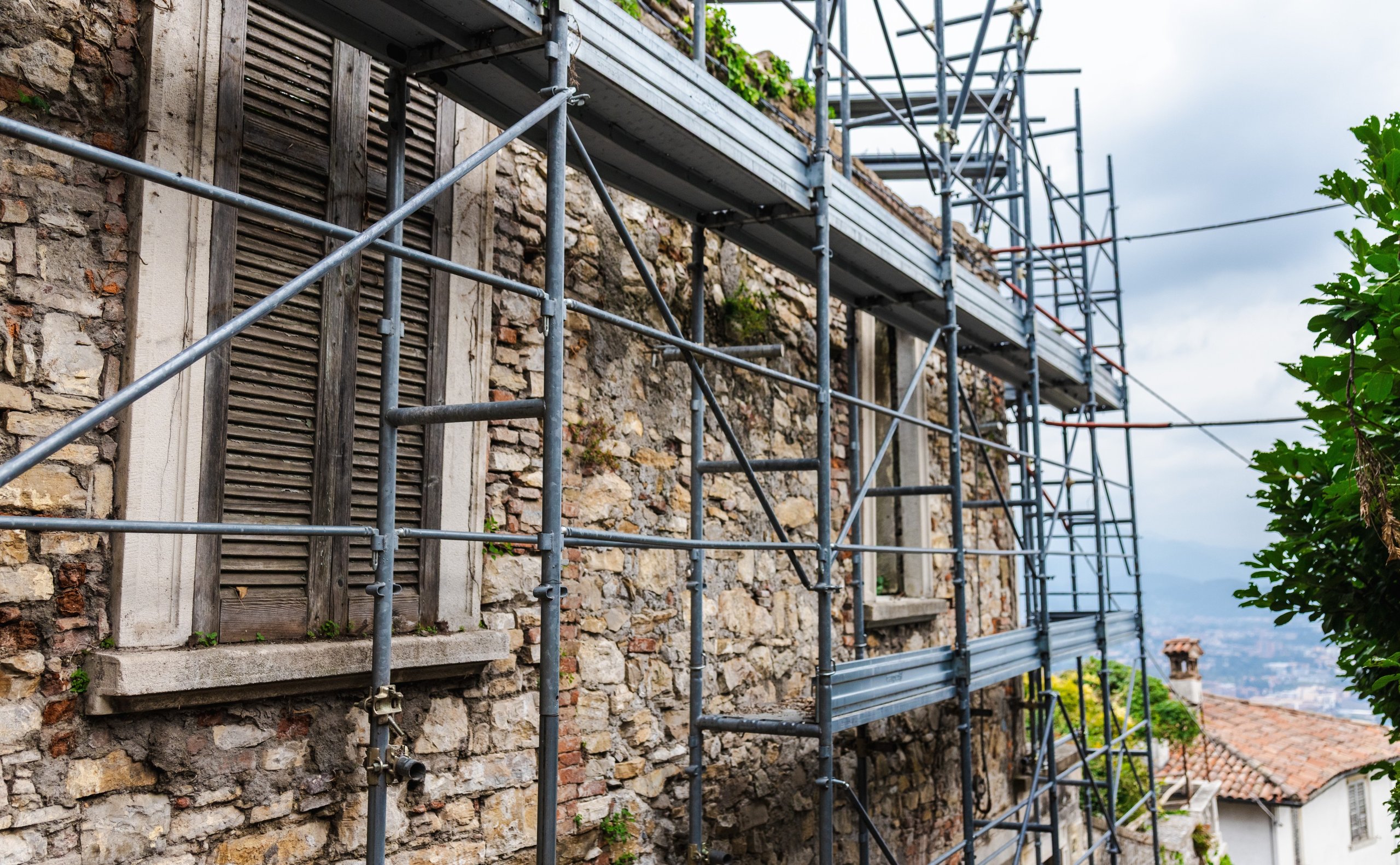
There are certainly plenty of palazzi to renovate, such as this one near Lucca.
What happens to Palazzi owned by the state?
The state run agency, (Agenzia del Demanio) takes responsibility for these palazzi. After being assessed historic, palazzi are either put up for public auction or used by the public administration. Palazzi of particular cultural value might be used by the local authority as a museum, art gallery, library or another use that benefit the life of the local community.
Where can I find a palazzo?
Cities in Tuscany, Veneto and Lazio have many historic palazzi, particularly where there is a history of wealthy merchants and nobility. But they can also be found in cities, small Italian towns and villages across the country.
Tuscany
Tuscan cities are famous for their Renaissance palazzi, featuring high frescoed ceilings and stone courtyards. They are often three stories high with windows in neat rows. The courtyards might be surrounded by columns and porticoes.
In Florence, the most famous palazzi are Palazzo Pitti and Palazzo Vecchio, which were built by powerful banking and political dynasties. For powerful families like the Medici, palazzi were a display of their power and wealth. Other Tuscan cities where you might find palazzi for sale are Montepulciano and Sansepolcro.
Veneto
In the Veneto region, Venice and Verona are most well known for their palazzi. Here they are mainly Gothic or Renaissance in style, with some baroque. The best examples being the Palazzo Ducale and Doge’s Palace.
The prime location for some of Italy’s finest palazzi is right on the Venetian Grand Canal. Families still live on the higher floors and run their business from the water’s edge. Other places in Veneto where you might find palazzi for sale are by the piazza or canals in Treviso. Or in historic parts of Vicenza and Padua.
Lazio
Most towns in Lazio will have some palazzi, although the most prestigious palazzi can be found in Rome, some of which are divided into high-end luxury apartments. Other prime locations where Palazzi come up for sale are Bagnoregio, Veroli and Atina.
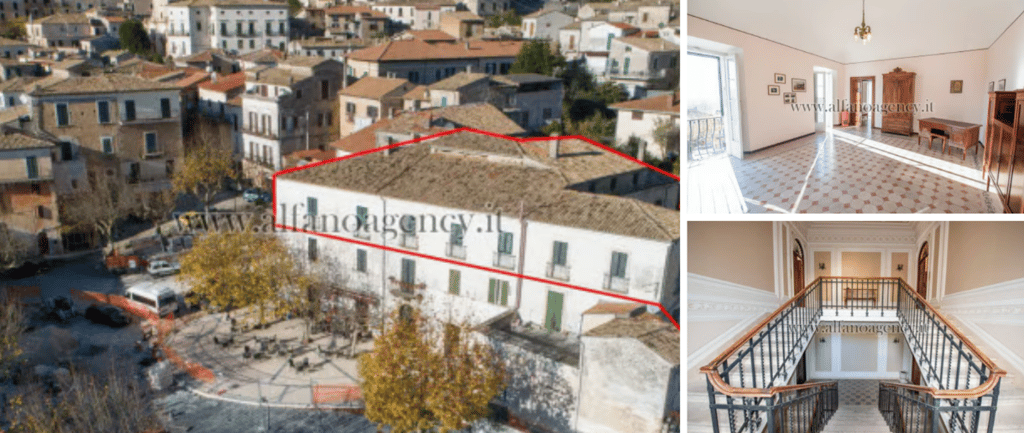
If you think a historic town house is going to be above your budget, take a look at this 450m2 property for sale in San Donato Val di Comino, Frosinone, for just €268,000.
Puglia
Town palazzi in Puglia are built with the local sandstone. They have star vaulted stone ceilings, courtyards and rooftop terraces. Lecce has many Baroque palazzi, and they can also be seen in Martina Franca and Francavilla Fontana. Other towns in Puglia with Palazzi include Nardo, Ostuni and Gallipoli.
Sicily
In Sicily, Baroque Palazzi needing restoration can often be found at low prices. You’ll see carved stone and wrought-iron balconies, huge wooden doors on narrow streets opening onto pillared central courtyards. Gilt mirrors are popular, and chandeliers made with Murano glass. Palazzi can mainly be found in Palermo, Catania, Ragusa and Modica.
Umbria
Palazzi in Umbria tend to be in the main towns and cities. Gubbio has a superb example of a Gothic palazzo, built between 1332 and 1349. In Perugia there is the medieval Palazzo dei Priori and in Citta di Castello is the renaissance Palazzi Vitelli.
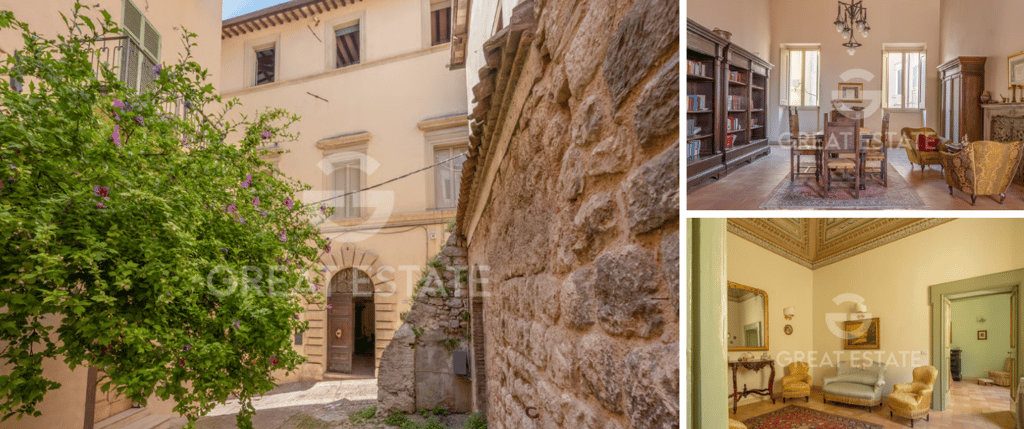
Spoleto, Todi and Asissi also have fine palazzi. But even villages can have palazzi, such as this six bedroom palazzo for sale in Trevi, built in 1400!
Things to consider before buying a Palazzo
- If the palazzo is on the national heritage list you will need official permission to make changes.
- It’s recommended to get a local geometra and lawyer to check the ownership history and whether changes have been made without permission.
- Research the restoration costs and consider the time it will take. Seek trustworthy recommendations for the tradespeople required to do the work.
- Take into consideration the running costs. Large rooms with high ceilings take a lot of heating and bills tend to be higher in the city than in the countryside.
- When buying a section of a building there may be ongoing fees necessary to maintain shared areas. Such as, historic facades, courtyards and grand staircases.
- Also look at historic villages with castles, they sometimes have grand homes within the city walls.
If you want a historic home in the heart of the community, a Palazzo could be the property you are looking for. They feel very private and exclusive, while be centrally located, near restaurants and shops.