
Italy has always attracted wealthy overseas buyers, but today it is actively competing for wealthy residents too. Tax incentives for new residents, a strong luxury property market and the ability to combine European city life with coast, countryside or lakes are persuading more affluent international buyers to make Italy their main home rather than simply owning a holiday property there.
So, if you have the means to relocate to Italy, where should you actually live?
For wealthy expats relocating to Italy, the strongest bases are Milan for business, the Lakes and Tuscany for prestige and country living, Rome for city services and Puglia, Sicily or the Riviera when you want space or coast. This is for buyers making Italy their main home, not a holiday base. Where you buy shapes your tax position, so it’s worth taking specialist cross-border advice first.
Contents
Why wealthy expats are moving to Italy
According to Henley & Partners, Italy attracted around a net 3,600 millionaires in 2025, making it the world’s third-biggest destination for migrating high-net-worth individuals after the UAE and US. In 2026, Henley continues to identify Italy as one of Europe’s leading destinations for internationally mobile wealth, helped by its tax regime for new residents and access to the EU market.
Italy’s appeal to wealthy international residents isn’t accidental. Its special tax regime for new residents allows qualifying people who have not been Italian tax residents for at least nine of the previous 10 years to pay a fixed annual tax on foreign income.
For people moving to Italy since 1 January 2026, the flat tax for new residents has increased to €300,000 per year, with qualifying family members added for €50,000 each. The regime can run for up to 15 years. Whether it saves you money will depend heavily on your income and circumstances, so specialist cross-border tax advice is essential before moving. It’s also worth planning early how you’ll move large sums between currencies. Contact our expert currency partner Smart Currency Exchange for that.
The property market is attracting international money too. International buyers account for around 35% of Italy’s prime property market, rising to 52% of transactions in central Italy.
But choosing where to live requires rather more thought than deciding which view you’d like from the terrace.
Can you get the services you expect?
If you’re moving with children, Italy has a good choice of international schools, but location matters enormously. Milan and Rome have by far the greatest choice, followed by smaller clusters in cities including Florence. Outside the major cities, living within reasonable travelling distance of the right school may determine where you buy.
Italy also has an extensive private healthcare sector, particularly around major cities. For a wealthy buyer considering a remote Tuscan estate or Sicilian villa, however, the important question isn’t simply whether Italy has excellent doctors, but how far you will be from the hospital, consultant or specialist you want to use.
Domestic help is readily available in Italy too, from cleaners and gardeners to carers, drivers and property managers. With a large country estate, the greater challenge may be finding and managing trusted people locally. In established international markets such as Tuscany and the Lakes, specialist estate and property-management services are easier to find.
Tuscany
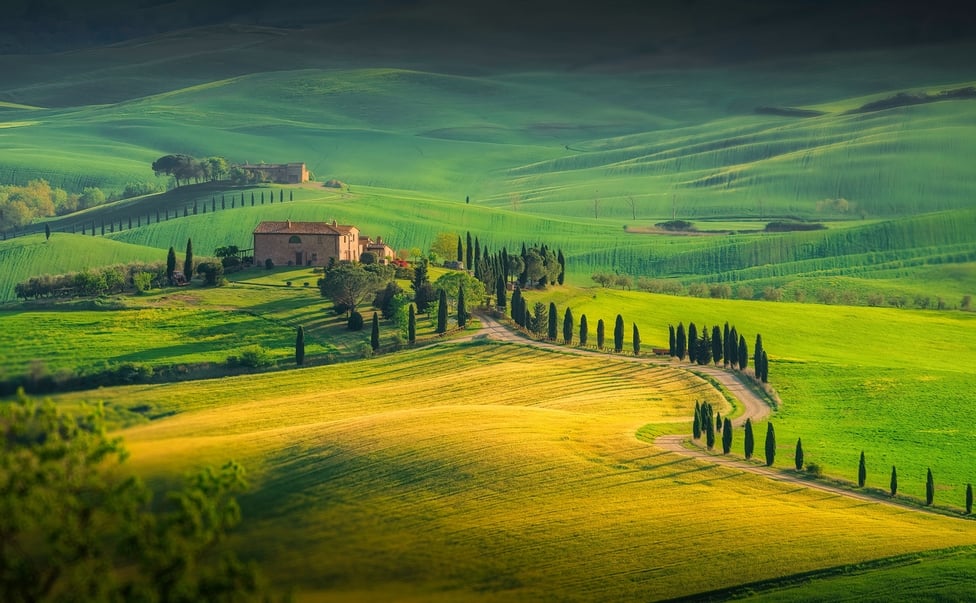
The golden triangle between Florence, Siena and the Val d’Orcia remains the Italy of many overseas buyers’ imagination: historic villas, stone farmhouses, vineyards and substantial country estates. Closer to Florence, Fiesole and the surrounding hills offer large historic villas within reach of the city, while Forte dei Marmi provides a very different, distinctly high-end Tuscan life by the sea.
What does €1m, €2m or €5m buy?
Location makes an enormous difference. Average asking prices range from around €1,600 per square metre in Arezzo province to €3,800 in Lucca province and €3,400 around Florence, but exceptional properties command far more. In Chianti and the Tuscan hills, prime homes can reach €15,000 per square metre. €1m can still buy a substantial country property away from the most celebrated addresses. At €2m you enter the market for restored villas and estates, while €5m opens considerably more of prime Tuscany – although the finest estates around Florence, Chianti and Forte dei Marmi can sail far beyond that.
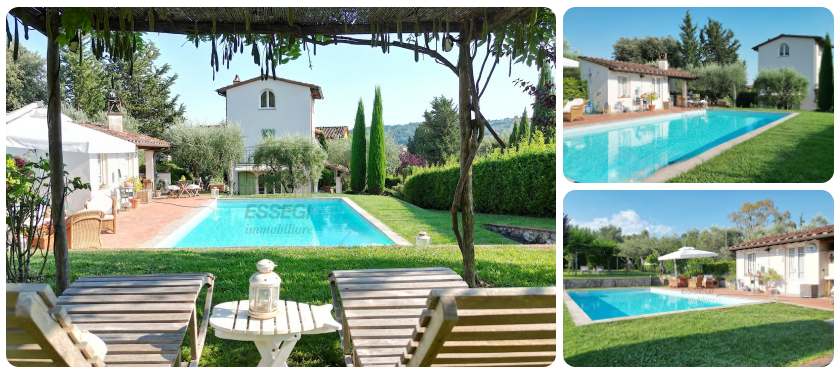
Check out properties for sale in Tuscany from €1million.
How close can you be to an international airport?
Florence has its own airport, while Pisa offers a wider range of international routes. Central Tuscany can therefore work well for someone who travels frequently, but a remote Val d’Orcia estate is a rather different proposition from a villa outside Florence.
Do wealthy foreigners actually live here?
Yes. Tuscany has one of Italy’s most established international communities and overseas buyers are particularly important to its prime market. In central Italy generally, international purchasers account for more than half of prime transactions. However, countryside and coastal Tuscany also have substantial second-home markets.
What are the drawbacks?
The Tuscany everyone wants is no longer inexpensive. Renovated properties in famous locations command substantial premiums and rural estates bring maintenance, land and staffing responsibilities. Being surrounded by vineyards sounds rather less romantic when you need to reach an airport at 6am.
The Italian Lakes
Lake Como is Italy’s international trophy-home market, with elegant historic villas on the water, landscaped gardens and towns such as Bellagio, Cernobbio and Tremezzina. Lake Garda offers a somewhat broader choice and useful links towards Milan and Verona, while Lake Maggiore combines waterfront towns with access to Milan and Switzerland.
What does €1m, €2m or €5m buy?
On Lake Como, €1m does not make you an oligarch. It can buy an excellent apartment or smaller villa, depending on location, but genuinely exceptional waterfront homes occupy another market entirely. Above €3m, Como accounts for more than a fifth of international high-end property requests in Italy, with the average value sought in Italy’s ultra-luxury market reaching €6.69m. On Garda and Maggiore, your budget can generally stretch further.
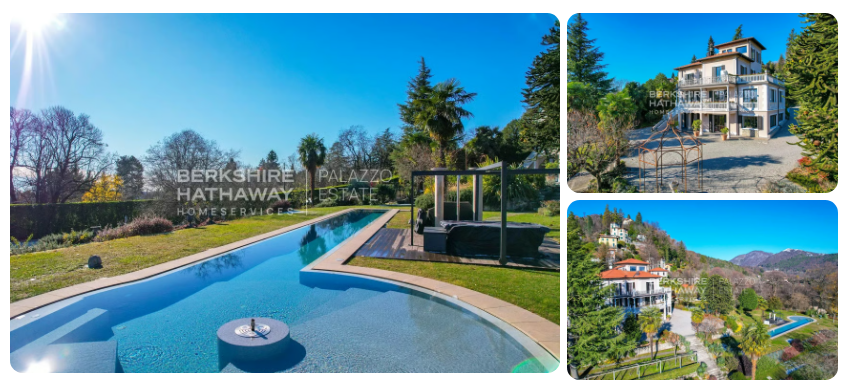
Check out properties for sale in Lombardy at over €1million.
How close can you be to an international airport?
This is one of the Lakes’ great advantages. Milan Malpensa is particularly convenient for Lake Maggiore and accessible from Como, while Bergamo and Milan’s other airports expand the choice. Southern Lake Garda has good road and rail connections towards Milan and Verona.
Do wealthy foreigners actually live here?
Yes, particularly around Como, although second homes remain an important part of the market. The Lakes have long-established international communities rather than being a newly discovered destination for wealthy overseas buyers.
What are the drawbacks?
Prime waterfront supply is inherently limited and prices reflect it. Roads around the lakes can be slow and crowded, particularly in summer, while some smaller resort communities become much quieter outside the main season. Privacy and parking can also prove surprisingly valuable luxuries.
The mountains
Italy’s wealthy mountain buyers have considerably more choice than simply buying a ski chalet. Trentino-Alto Adige combines mountain scenery with prosperous towns, vineyards and some of Italy’s best-known ski resorts. There are wine estates in the hills and chalets close to the lifts, while international buyers and professionals are relocating to Trento and Bolzano and wealthy retirees are attracted to the architecture and spa-town atmosphere of Merano.
Further east, Cortina d’Ampezzo is Italy’s highest-profile Alpine property market. Its international profile received another boost from hosting the 2026 Winter Olympics, while Val Gardena, Alta Badia and the other Dolomite resorts offer year-round hiking and cycling as well as winter sports. If your idea of luxury means being able to ski in the morning, eat exceptionally well at lunchtime and spend the summer in the mountains, northern Italy deserves serious consideration.
What does €1m, €2m or €5m buy?
This is one area where €1m doesn’t necessarily buy the sprawling chalet you might expect. Cortina is Italy’s most expensive mountain market, with average prices of around €12,600 per square metre in 2026 and prime property reaching €24,000 per square metre. At €1m, you are largely looking at apartments or property outside the most prestigious locations. €2m provides considerably more choice, but €5m still doesn’t guarantee one of Cortina’s finest chalets – exceptional homes run well into eight figures.
Look beyond Cortina and your money stretches further, although the most fashionable Dolomite resorts are hardly cheap. Average 2026 prices were around €8,300 per square metre in Val Gardena and €5,900 in Canazei. Bolzano, Merano and Trento also offer an alternative for someone who wants mountain access but prefers a proper year-round town to a ski resort.
Check out high-end properties for sale in Trentino-Alto Adige
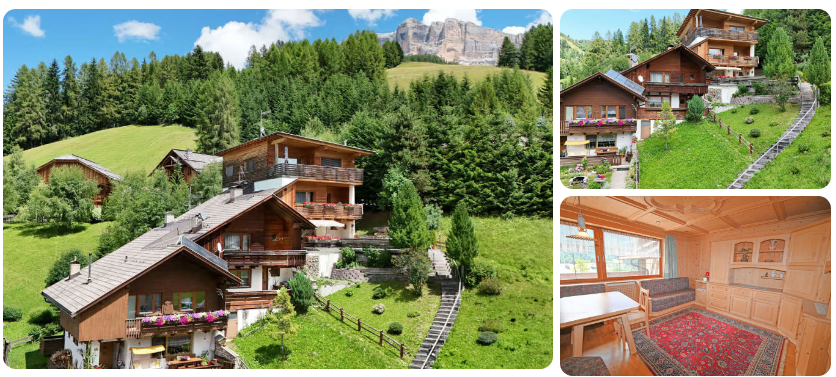
How close can you be to an international airport?
There is no major international airport in the heart of the Dolomites. Venice is the most useful gateway for Cortina – around 162km away – while Innsbruck, Verona and Venice serve different parts of Trentino-Alto Adige and the Dolomites. Bolzano has a small airport, but with a much more limited network.
Do wealthy foreigners actually live here?
Bolzano, Trento and Merano are functioning towns with permanent populations, so they make much more obvious year-round homes. Cortina and the ski valleys have a far higher proportion of second homes.
What are the drawbacks?
Accessibility is the obvious one. Mountain roads and winter weather make journey times less predictable. If you’re relocating permanently, decide whether you really want to live in a ski resort, or whether somewhere such as Bolzano, Merano or Trento gives you the mountain lifestyle you want without making every errand an Alpine expedition.
Sicily
Sicily offers something very different: grand villas, baroque town houses, vineyards and contemporary coastal homes, often for considerably less than their equivalents in northern Italy. Taormina and the Val di Noto are established international favourites, with interest also extending to areas around Ragusa, Palermo and Agrigento.
What does €1m, €2m or €5m buy?
This is where a seven-figure budget can become genuinely exciting. Sicily’s average asking price was only around €1,200 per square metre in August 2026, although the best properties and locations command considerably more. €1m can put substantial villas and estates within reach, while €2m–€5m takes you into a relatively rarefied market of large historic properties, exceptional coastal villas and sizeable estates.
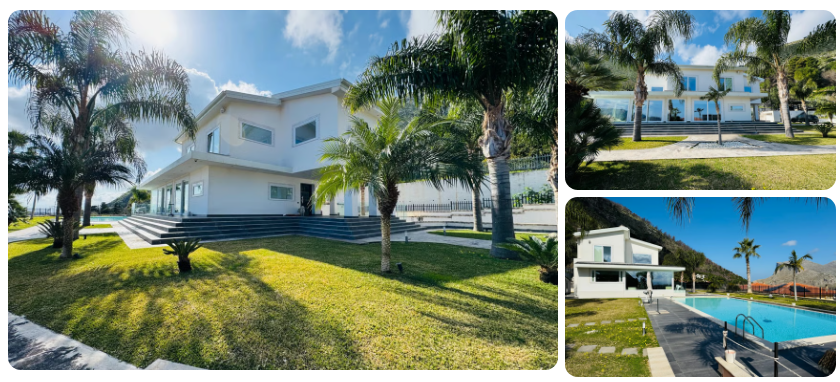
Check out properties for sale in Sicily for over €1million.
How close can you be to an international airport?
Palermo and Catania are the two obvious bases for frequent flyers. Choose carefully: Sicily is large and a remote estate that looks reasonably close to an airport on the map can involve a significant drive.
Do wealthy foreigners actually live here?
Increasingly, but Sicily isn’t Tuscany. There are established international communities in particular locations, but many overseas-owned luxury properties remain second homes or investments rather than primary residences.
What are the drawbacks?
Distance matters. If you want international schools, specialist healthcare, frequent flights and an extensive network of English-speaking professional services within minutes, location becomes critical. Older estates can also require considerable management and maintenance.
Milan
For an affluent buyer who still works internationally, Milan makes a compelling case. It is Italy’s major centre for finance, fashion and design, with prime buyers concentrating on areas such as Brera and the historic centre.
What does €1m, €2m or €5m buy?
Less space, more address. Central Milan’s prime prices can reach €27,000 per square metre, with new or refurbished properties typically ranging from €10,000 to €23,000. At €1m you’re principally looking at a high-quality apartment rather than a grand residence. €2m provides considerably more choice, while €5m brings penthouses and substantial prime apartments into play – although the city’s most exceptional homes can cost considerably more.
How close can you be to an international airport?
Very. Milan’s international connections are one of its strongest arguments for someone who continues to work or travel frequently.
Do wealthy foreigners actually live here?
Absolutely. Unlike many resort markets, Milan is overwhelmingly a functioning year-round city. It attracts executives, entrepreneurs and professionals as well as property investors.
What are the drawbacks?
You are paying city prices for city space. If your idea of wealthy Italian living involves hectares of land, a pool and views from every window, Milan itself is probably the wrong answer – although owning a city base plus a home at the Lakes is a well-established solution.
Rome
Rome offers something few cities can replicate: the opportunity to live among several thousand years of history while remaining in a major European capital. Prime buyers look to prestigious central and residential districts, including Prati and Parioli, as well as palazzi and penthouses overlooking the city’s rooftops.
What does €1m, €2m or €5m buy?
Prime Rome reaches around €12,000 per square metre, with values of roughly €6,000–€10,000 typical at the upper end of the market. €1m therefore buys a good apartment but not necessarily an enormous one in the most sought-after streets. At €2m the choice becomes considerably broader, while €5m puts substantial historic apartments, terraces and exceptional residences within reach.
How close can you be to an international airport?
Rome is one of the easiest choices here for international travel, with Fiumicino providing extensive long-haul and European connections.
Do wealthy foreigners actually live here?
Yes. Rome is a year-round capital rather than a resort market, with diplomats, businesspeople and an established international population alongside affluent Italians.
What are the drawbacks?
Traffic, parking and bureaucracy can test even a generous budget. Historic property may also bring restrictions, maintenance costs and compromises that you wouldn’t encounter in a modern luxury development.
Puglia
Puglia has moved firmly onto the international luxury map. Its trulli and masserie – traditional fortified farmhouses – have attracted overseas buyers looking for privacy, land and distinctive architecture, particularly around the Valle d’Itria, Ostuni, Fasano, Monopoli and Salento.
What does €1m, €2m or €5m buy?
A great deal by the standards of Como, Milan or prime Tuscany. Average asking prices across Puglia were around €1,450 per square metre in August 2026, although restored masserie and prime coastal property cost considerably more. At €1m you can realistically search for a substantial villa or restored country home with land and a pool. €2m opens the door to high-quality masserie and larger estates, while €5m gives you access to some of the region’s standout private properties.
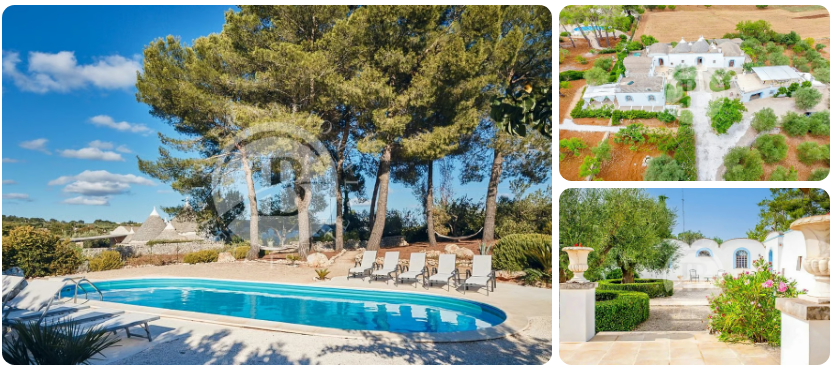
Check out properties for sale in Puglia at over €1million.
How close can you be to an international airport?
Bari works well for central and northern Puglia, while Brindisi serves Salento and the south. A home around Fasano or the Valle d’Itria can therefore combine countryside privacy with reasonably straightforward international travel.
Do wealthy foreigners actually live here?
Yes, although the international luxury market is younger than Tuscany’s. Puglia attracts both permanent movers and buyers who use their masseria or coastal home seasonally.
What are the drawbacks?
The further you move into the countryside, the more important the car becomes and the further you may be from specialist services. Restoring and maintaining an old masseria is also a different undertaking from buying a serviced apartment in Milan.
The Italian Riviera
Stretching along Liguria from the French border towards Tuscany, the Italian Riviera contains some of the country’s most expensive coastal addresses. Portofino and Santa Margherita Ligure are the famous names, but Imperia and Savona can offer considerably more property for the money.
What does €1m, €2m or €5m buy?
This depends enormously on your postcode. In Portofino and Santa Margherita Ligure, prime prices have reached around €25,000 per square metre. €1m may therefore buy an apartment rather than a villa. Move along the Ligurian coast and the same money can buy considerably more. At €2m–€5m, excellent villas become realistic in less rarefied locations, while truly exceptional Portofino property can still sit well beyond that budget.
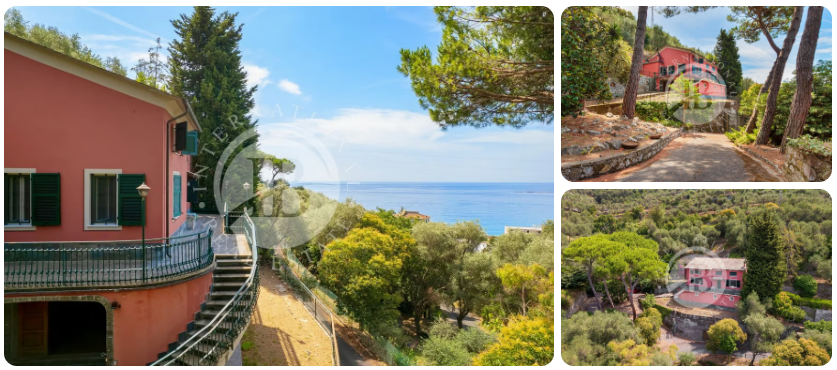
Check out properties for sale in Liguria at over €1million.
How close can you be to an international airport?
Genoa is convenient for much of central Liguria, while buyers towards the western end can also consider Nice in France. Road and rail connections along the coast are good in places, although geography makes some journeys slower than their distance suggests.
Do wealthy foreigners actually live here?
Yes, but this is much more of a second-home market than Milan or Rome. Around 80% of purchases in Portofino and Santa Margherita Ligure are second homes.
What are the drawbacks?
Summer crowds are the obvious one, followed closely by price and property supply. The geography that makes Liguria so attractive – mountains dropping towards the Mediterranean – also means limited building space, winding roads, difficult parking and properties where steps come as standard.
So where should you live?
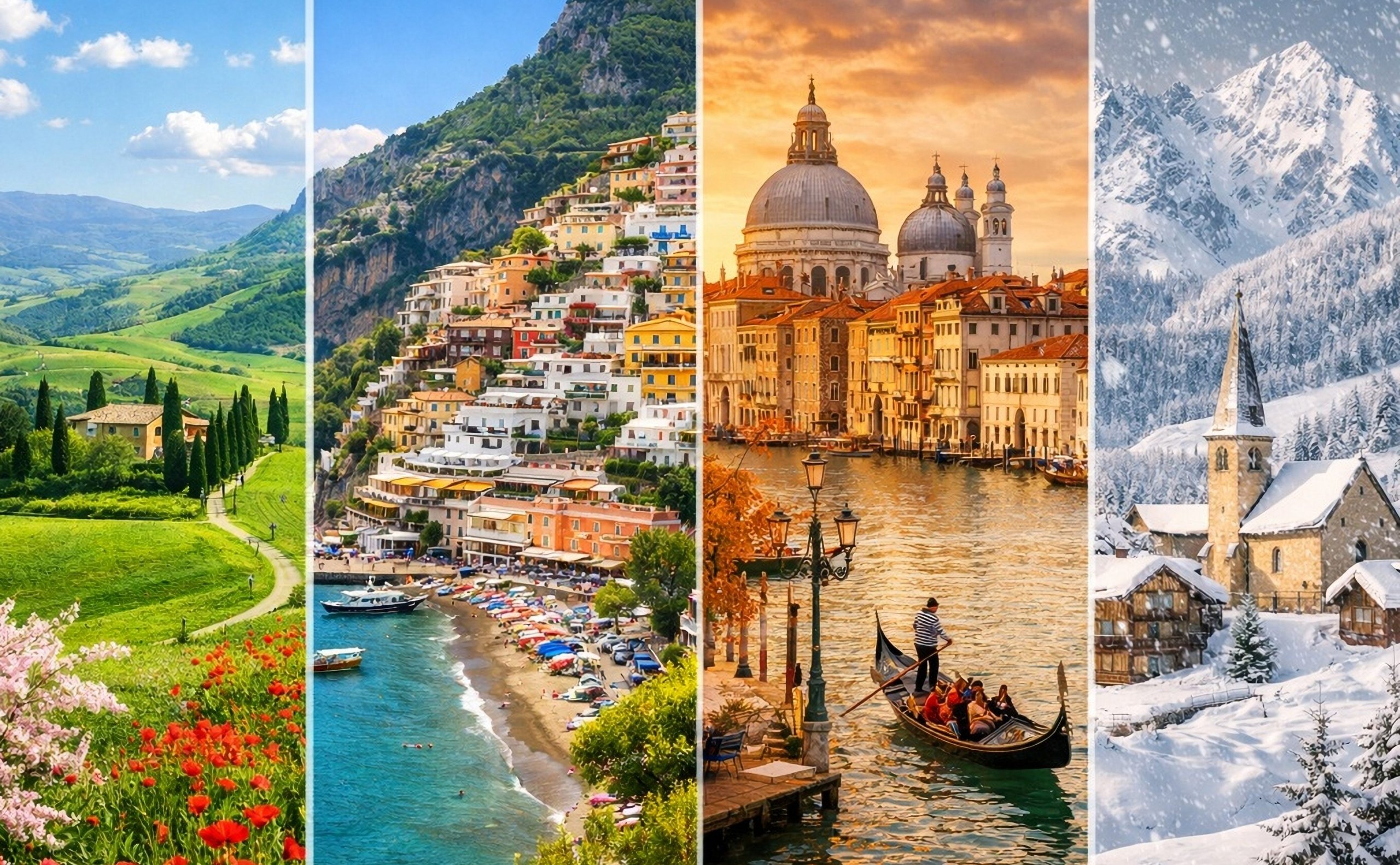
There isn’t one wealthy-expat Italy.
If you need to remain closely connected to international business, Milan is the obvious starting point. For prestige, privacy and easy access to northern Europe, look at the Lakes. Tuscany offers perhaps the most established version of the international country-house life, while Rome gives you history, culture and big-city services.
Puglia and Sicily become particularly interesting if you want your money to buy space, land and architectural character rather than simply a famous postcode. And if being beside the Mediterranean matters more than square metres, the Italian Riviera remains difficult to beat – provided you’re prepared to pay for the address.
The important distinction is between somewhere that is wonderful to visit for three weeks and somewhere that works for you for 12 months. If you’re genuinely relocating to Italy, the airport, hospital, school, staff, shops and community beyond your gates may ultimately matter every bit as much as the view from them.
What should you do next?
Buying prime property in Italy rewards getting the groundwork right before you fall for a view. A sensible order:
- Get your tax position modelled. Whether the flat-tax regime saves you money depends entirely on your income and circumstances, so speak to a cross-border specialist before you commit to a region.
- Shortlist by services, not just scenery. Weigh airport access, healthcare and schools against each area you’re drawn to, then compare live listings in Italy to see what your budget actually buys.
- Plan how you’ll move the money. On a purchase of this size, the exchange rate can move the price by tens of thousands between offer and completion. Currency Transfer and Property Purchases Explained walks through protecting your budget.
- Talk to someone who’s done it. If you’re weighing two or three regions, it’s worth speaking to an expert who knows the Italian prime market before you book viewings.