
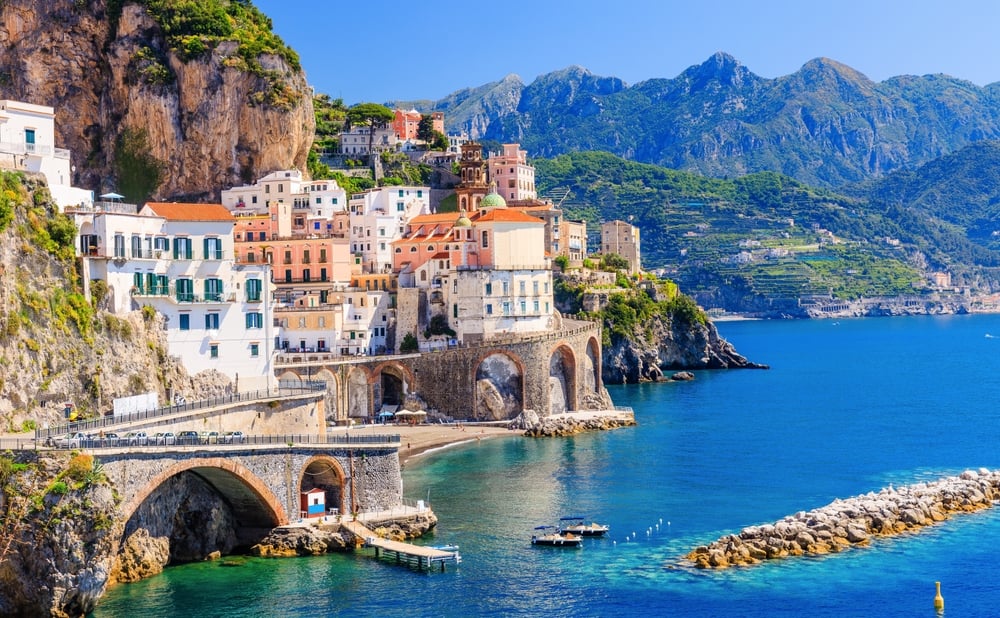


How easy is it to retire to Italy from the UK, ten years on from the Brexit referendum? We looked at legal processes, income requirements and other factors, and discovered that it’s remarkably easy, not just from the UK, but from other ‘third countries’ too.
British people have been marking the ten-year anniversary of the Brexit referendum thkat took them out of the European Union (EU).
For many, the end of “free movement” in the EU seemed liked the end of a dream. After Brexit, they let the idea quietly slip into the “too difficult” category.
Sound familiar? If you’ve dismissed the idea of retiring to Italy because you think Brexit closed the door, you’re not alone. Yet it’s one of the biggest misconceptions surrounding overseas retirement today.
The truth is that Italy remains one of the easiest countries for retirees to move to legally not just in Europe, but the world. In our Easiest Places to Retire Overseas in 2026 rankings, it scores highly for its straightforward retirement visa, Italy’s affordable property, great transport connections and high quality of life.
Far from becoming inaccessible, Italy welcomes retirees from outside the EU so long as they can look after themselves and not be a burden on the state. The paperwork has changed, but the opportunity certainly hasn’t.
Are there cheaper ways to take your pet to France? Yes, but the savings come from planning rather than dodging the rules. Shop around for your animal health certificate, compare routes by total journey cost and book your French vet appointment early if your dog needs tapeworm treatment before returning to Great Britain. If your main home is in Great Britain, do not rely on a French pet passport shortcut – you will usually need a new AHC each trip.
Britons joined the ‘third country’ club
The legal restrictions on visa-free access for Britons only started in 2021, and it is important to remember that anyone with grandparents born in Ireland, Italy, Poland or many other EU countries can in any case simple claim a Schengen Area visa.
But even without that, Britain is not in a category of its own. Today, Britons apply through exactly the same immigration system as Americans, Australians, Canadians, New Zealanders and other non-EU nationals – known in Europe as “third-country nationals”.
That should be reassuring. Italy has been issuing residency visas to people from these countries for decades. British retirees are now following an established process rather than navigating something new or uncertain.
The message behind our Brexit anniversary campaign is simple: Brexit added paperwork, not a brick wall.
A retirement visa already exists
Unlike some countries where retirees have to fit into a general visitor category, Italy has a long-established visa designed specifically for people who want to live there without working.
It’s called the Elective Residence Visa (ERV).
If you have sufficient passive income (around €31,000), from pensions investments or savings, suitable accommodation and comprehensive healthcare cover, you can apply before leaving your home country. The visa is initially granted for one year before being renewed, eventually leading towards permanent residency.
The income requirement is certainly higher than in France or Portugal, but for most applicants, the financial requirements are more achievable than they expect. A retired couple with a UK State Pension, one or two workplace pensions and modest savings may already satisfy the income criteria without needing substantial wealth.
Visa processing times are about average, at an estimated 90 days. Your Overseas Home can help you find an efficient immigration lawyer for Italy.
Italy is easy to travel to and around
Living abroad doesn’t mean losing touch with family. Italy remains one of the UK’s best-connected overseas destinations, with direct flights operating throughout the year from airports all over the UK.
For grandparents especially, that’s a major advantage. A weekend visit from children or grandchildren is entirely realistic, while returning to Britain for birthdays, weddings or Christmas is rarely complicated. Compared with retiring in Australia, New Zealand or North America, Italy feels reassuringly close. Even compared to Greece, travel is much easier throughout the year.
Don’t forget too, the option to get the train, which is just about doable to northern Italy in a day from London. The country’s high-speed Frecciarossa and Italo trains connect Milan, Bologna, Florence, Rome and Naples in a matter of hours.
You’ll settle in more quickly than you think
Nobody expects you to arrive speaking fluent Italian. In our ratings, Italy scores less well for language as few of us studied it in school. However, with its basis in Latin, it is relatively easy to pick up.
The Foreign Service Institute (FSI) ranks language learning difficulty by the time it takes native English speakers to reach professional working proficiency, and puts Italian in the easiest category, saying that it usually requires around 24-30 weeks or 600-750 class hours to reach basic (S-3/R-3) proficiency.
Most retirees begin with a handful of phrases learned through language apps or evening classes before gradually becoming more confident through everyday conversations at cafés, markets and local shops. Many towns already have established international communities, alongside English-speaking estate agents, lawyers, accountants and healthcare professionals who regularly help newcomers settle in. Even so, do check out our guides to Italian customs and culture.
Italy scored about average in our rankings for feelings of safety, based on surveys by organisations like the OECD. The country certainly has an underbelly – maybe that’s part of the appeal! – and it is best to get independent advice on using lawyers and other professionals. Or speak to our property consultants.
Your retirement income will stretch further
The best news for British retirees is that their state pension will be uprated every year under the triple lock (the lowest on annual UK inflation, average earnings or 2.5%).
In the Your Overseas Home Cost of Living index 2026, Italy came out third cheapest overall, from our top 15 countries to retire to. Overall, living costs were roughly 25% less than the UK, USA and Australia.
Although fashionable city centres command premium prices, much of the country remains noticeably less expensive than many parts of Britain. Fresh produce, local restaurants, home maintenance and everyday leisure can all cost considerably less, allowing pensions to go further.
Imagine finishing your weekly shopping at the local market, stopping for an espresso that costs little more than a pound, then walking home rather than sitting in traffic. It’s these everyday savings, rather than dramatic differences, that often make retirees feel more financially comfortable.
Homes are also much more affordable. Italy has not seen the property booms of countries like Spain and Portugal, perhaps because people see it as a place to love and live in, not profit from.
Another Brexit myth that refuses to disappear: that it somehow made buying property in Italy difficult. It didn’t. British buyers still have the same right to purchase property as other overseas nationals, whether from the EU or outside.
Healthcare offers real reassurance
Healthcare inevitably becomes more important as we grow older, and Italy was second only to Germany in our healthcare assessment, based on a range of published data.
Italy’s healthcare system enjoys an excellent international reputation and, once you’re resident, British retirees receiving the UK State Pension can usually access healthcare through the S1 scheme, whereby the UK reimburses Italy for your treatment. Similar reciprocal arrangements exist for retirees from several other countries.
That means many people who worried about healthcare before moving discover that they have access to a comprehensive public system once the paperwork is complete.
Combined with private healthcare options that are often more affordable than in many English-speaking countries, it provides considerable peace of mind.
The biggest obstacle is often confidence
Italy continues to welcome retirees who can support themselves financially and who are prepared to follow the legal residency process. Exactly the same applies whether you’re moving from Britain, the United States, Australia or another third country.
For thousands of people every year, the dream hasn’t disappeared. It has simply acquired a checklist.
The hardest part of retiring overseas is often deciding to start. Once you begin researching the Elective Residence Visa, speaking to specialists and viewing properties, the process quickly becomes much more manageable than many people expect.
Ten years after the Brexit referendum, Italy remains one of Europe’s most attractive retirement destinations. Not because nothing changed, but because the things that matter most – welcoming communities, affordable homes, excellent healthcare, beautiful surroundings and a slower pace of life – are still very much there.