
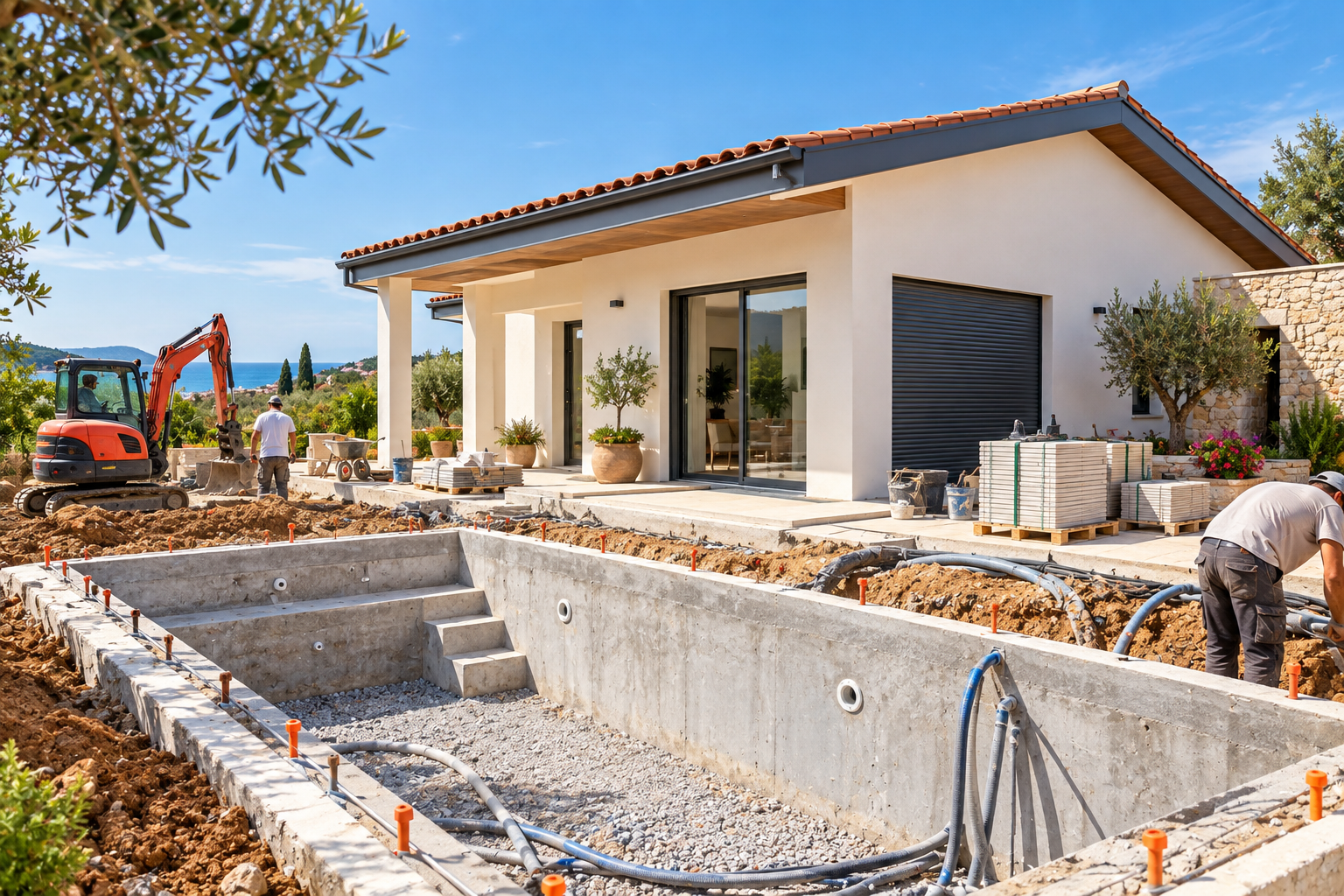



Once you’ve bought your overseas home, it’s natural to want to make it your own: adding a pool, opening up the kitchen, converting that spare bedroom into a home gym. Most of these changes are about how you’ll live in the property day to day, and that’s exactly as it should be.
However, it’s still worth keeping half an eye on value while you’re at it, because the maths that applies to a British semi doesn’t always travel. A pool that adds thousands to a home in the Cotswolds can add almost nothing on a coastline where every villa already has one. And in some countries, work done without the correct permit can sit quietly for years, only to surface as a problem whenever you or your family eventually come to sell.
Here’s what’s worth bearing in mind before any major renovation, so you can enjoy the improvements now without a surprise further down the line.
Some overseas renovations cost more than they return. Pools rarely add value where they’re already standard, and any extension or pool built without a permit can block a sale rather than boost it. The cost of a highly personal or over-specified interior can also exceed what local buyers will pay for it. A local valuation and a permit check, done before work starts, are the best protection.
Contents
- Renovations overseas owners often overestimate
- 1. A pool where pools are already the norm
- 2. Anything built without a permit
- 3. Enclosed terraces, balconies and rural extensions added informally
- 4. Highly personal, bespoke interiors
- 5. Spending beyond the local ceiling price
- 6. Structures that don’t match how local buyers actually live
- 7. Skipping the paperwork on a “cosmetic” job
- When a pool adds cost rather than value
- Improvements buyers increasingly expect
- How to test the likely return before spending
- Selling your UK home to fund the move? The same rule applies
- What should I do next?
- Summary
- FAQs
Renovations overseas owners often overestimate
1. A pool where pools are already the norm
In many coastal resort areas, a pool is now the norm rather than a differentiator. Most villas already have one, so adding one to yours does little to set your property apart from the rest of the street. It’s a different picture in rural or inland areas with larger plots, where a pool is still relatively unusual and more likely to stand out to a buyer. Either way, it’s worth weighing the ongoing running costs against what you might realistically get back, which is where the sums often turn (read more on this below).
2. Anything built without a permit
This is the renovation most likely to lose you money outright, because it isn’t really a renovation until it’s legal. In Spain, pools and extensions typically need a licencia de obra mayor; older unpermitted rural builds can sometimes be recognised (not legalised) through an AFO certificate, at a typical cost of €3,000–€20,000 (£2,500–£16,800). In France, tax authorities have used satellite imagery and AI to identify more than 20,000 undeclared pools in a single pilot, and fines for unauthorised work can run to €6,000 per square metre. In Portugal, unlicensed work can’t be registered on the property record, which can block a sale outright, with fines running to €200,000 in the most serious cases.
3. Enclosed terraces, balconies and rural extensions added informally
Closing in a terrace or extending onto agricultural land is common practice in older properties, and it’s exactly the kind of work most likely to have been done without paperwork. Even where the work has stood for years, it can surface at the worst possible moment: during the buyer’s due diligence, when the sale is otherwise ready to complete.
4. Highly personal, bespoke interiors
A home cinema, a marble bathroom suite or a wine cellar might suit your own taste perfectly. They rarely reflect what the next buyer in a modest local market is willing to pay. Once a property is close to its area’s ceiling price, spending more becomes very difficult to recoup, whatever the finish.
5. Spending beyond the local ceiling price
Every area has a rough price ceiling, based on what similar renovated homes have actually sold for nearby. A useful rule of thumb, used by valuers, is that renovation spend beyond around 10% of the property’s current value tends to need the finished home to be the best on the street to earn it back – which is a hard bar to clear.
6. Structures that don’t match how local buyers actually live
An open-plan extension built for a UK-style kitchen-diner can look out of step in a village where local buyers expect separate, cooler rooms. What reads as an improvement to one market can read as an oddity to another.
7. Skipping the paperwork on a “cosmetic” job
Even work that feels minor, such as changing a façade, replacing windows or altering room layouts, can fall under a formal notification requirement rather than being exempt. Treating it as informal because it doesn’t involve structural change is a common and avoidable mistake.

When a pool adds cost rather than value
A pool’s ongoing cost is where the sums often turn against the owner. In Spain, a typical 8×4m pool runs to roughly €1,500–€3,000 (£1,260–£2,520) a year in professional upkeep. In France, budget closer to €650–€950 (£550–£800) a year, plus a modest annual increase in taxe foncière. Add a summer of neglect and a green pool can take days to recover and cost a few hundred euros to put right.
None of that is prohibitive if you’re building a pool for your own enjoyment. It becomes a problem when the pool is the whole renovation case, and the local market simply won’t reward it. Coastal resort areas, where pools are already common, are the clearest example. Rural areas with larger plots, where a pool is still a genuine differentiator, are the exception.
Improvements buyers increasingly expect
Not every renovation loses money, and it’s worth knowing where the balance tips the other way. Energy-efficiency upgrades, insulation and effective cooling are increasingly the renovations that do pay off, partly because energy certificates are now mandatory before a sale can complete in many markets.
In Spain, Banco de España research covering roughly 1.2 million transactions found homes rated A or B sold for 9.7% more on average than those rated F or G, a gap that has widened in recent years. In France, homes rated G have been banned from new lettings since January 2025, with F following in 2028. In Greece, a property can’t even be issued an energy certificate if the building itself isn’t legally registered, which ties the two issues together directly.
In short, insulation, shutters, glazing and an efficient reversible air conditioning or heat-pump system are far more likely to protect or add value than a swimming pool or a statement interior.
How to test the likely return before spending
Before committing to any significant renovation, a few checks can save a great deal of money later.
- Get a local valuation first. Ask a local estate agent for recent sales of comparable renovated and unrenovated properties nearby, to establish the area’s realistic ceiling price before you plan any work.
- Commission an independent survey. A locally accredited or RICS-qualified surveyor can flag existing unpermitted work and advise on what any further renovation is actually likely to be worth.
- Ask a local lawyer to check permits before you buy or build. Confirming that any existing extension or pool is properly licensed avoids inheriting someone else’s unresolved problem, and avoids creating a new one of your own.
- Budget in local currency, and plan the transfer. Renovation invoices are usually paid in the local currency, so it’s worth locking in your budget in advance rather than watching exchange rate movements erode what you’ve set aside for the work.
Selling your UK home to fund the move? The same rule applies
Maybe you’re not even thinking about renovating an overseas property yet. But if you’re selling a home in the UK first, maybe to release the funds for your overseas purchase, the same principle holds: a house close to its local ceiling price rarely earns back a big last-minute renovation, whether that’s in Alicante or Aylesbury.
What should I do next?
If you’re weighing up a renovation on a property you already own, or budgeting for one as part of a purchase, it’s worth getting local guidance before committing. Speak to a Spain-based property expert, a France-based property expert or a Portugal-based property expert who can check permits and give a realistic view of local value before any work begins. If you’re still deciding where to buy, our full range of local experts covers every country YOH features.
Summary
Not every renovation earns its keep abroad. Pools rarely add much where they’re already standard, and unpermitted work, however long it’s stood, can block a sale rather than help one. Highly personal interiors and any spend beyond the local ceiling price carry the same risk. Energy-efficiency improvements are the clearer win, increasingly expected by buyers and, in some markets, a legal requirement to sell at all. A local valuation, an independent survey and a permit check before you spend are the cheapest insurance you’ll buy.
FAQs
It depends heavily on location. In areas where pools are already common, such as established coastal resorts, the added value tends to be small. In rural areas with larger plots, where a pool is still unusual, the effect can be larger, though ongoing running costs still need to be weighed against it.
Rules vary by country, but the consequences are broadly similar: fines, a requirement to bring the work up to standard or remove it, and difficulty selling until the position is resolved. In some cases, unpermitted work can’t be registered on the property at all.
Yes. Even work that has stood for many years can surface during a buyer’s due diligence, and resolving it retrospectively is often slower and more expensive than getting permission before building.
Energy-efficiency upgrades such as insulation, shutters and efficient cooling tend to perform well, partly because energy certificates are now required before a sale can complete in many markets.
The same caution applies. A UK home close to its local ceiling price is unlikely to earn back a major renovation. Smaller, lower-cost changes tend to work better, as covered in our tips for selling your home quickly.