



A home by the Mediterranean can feel like a distant dream when the headlines are all about the Costa del Sol or the French Riviera. Away from the well-trodden spots, though, there are still coastlines where your budget goes considerably further.
The most affordable Mediterranean coastal areas for overseas buyers in 2026 include Cyprus’s Famagusta district, Crete’s Apokoronas region, the Greek mainland’s Peloponnese peninsula, the Turkish resort of Kusadasi, Italy’s Abruzzo coast, Spain’s Almería province and Portugal’s Eastern Algarve. Entry-level apartments in these areas typically start between €60,000 and €150,000 (£51,000–£128,000), with detached villas and stone village houses available in the €150,000–€500,000 (£128,000–£425,000) bracket depending on location and distance from the beach. Each area offers direct or short-connection flights from the UK, established expat communities and lifestyle appeal without the price tags of better-known Mediterranean destinations.
Here’s where to look if you’re chasing a seafront (or near-seafront) home without stretching your budget too far.
Contents
1. Famagusta district, Cyprus
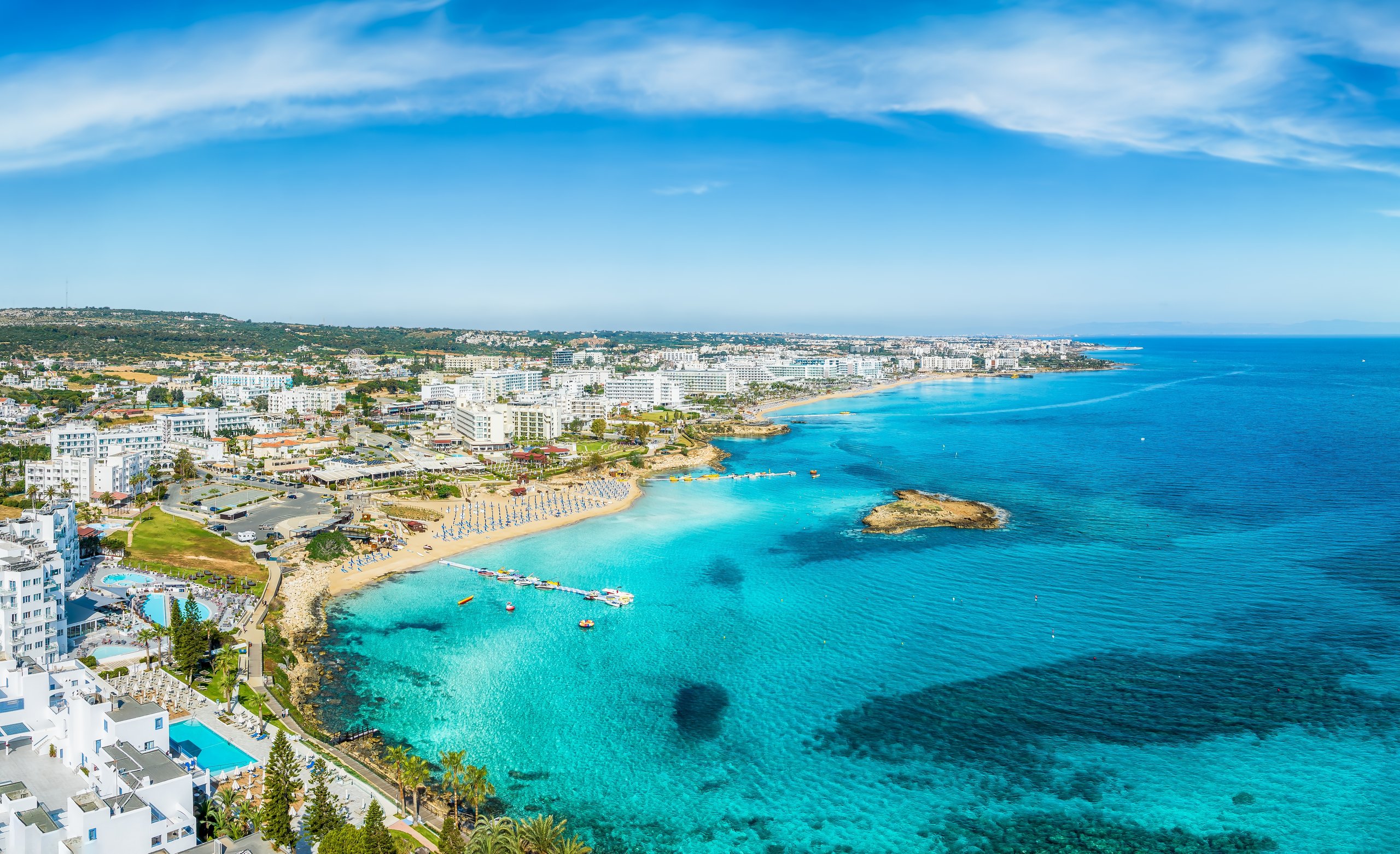
Cyprus’s year-round sunshine and long-standing ties with Britain keep it firmly on the radar for buyers who want reliable weather and an established expat network. Paphos remains the best-known spot for UK buyers, but the Cypriot-controlled side of the Famagusta district, in the island’s east, still has some of the better value on offer.
Paralimni sits about ten minutes inland from some of the coast’s best beaches, with median asking prices around €2,533/m² for apartments. In nearby Kapparis, two-bedroom new-builds within walking distance of the beach typically run €185,000–€350,000 (£157,000–£298,000), with smaller studios starting from around €80,000 (£68,000).
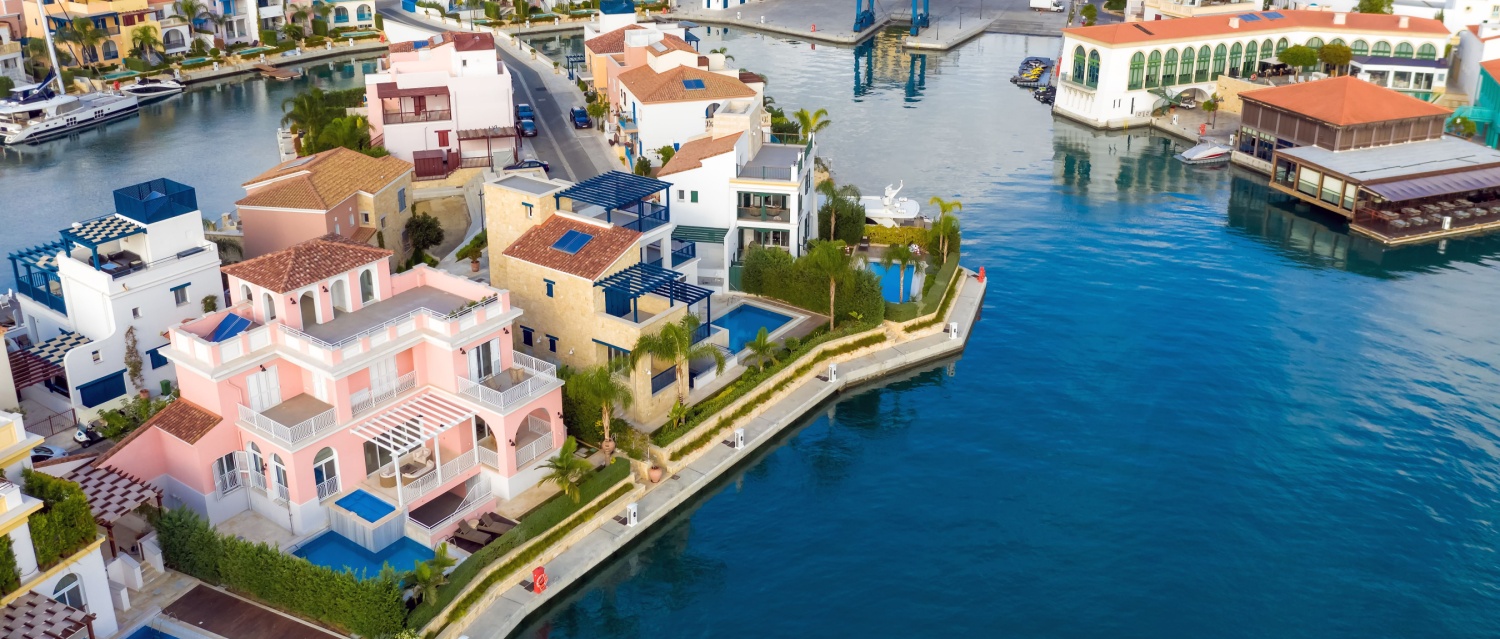
Marina developments continue to shape the area. Ayia Napa Marina, which opened in 2022 with an investment of more than €300 million, has already sold over 90% of its rotating East Tower, with units priced between €895,000 and €9 million. Closer to Paralimni itself, a new marina is under construction and is being described locally as one of the largest development projects in the wider region – worth keeping an eye on if you’re considering the area for its longer-term potential as well as its lifestyle appeal.
2. Apokoronas, Crete, Greece
At the foot of the White Mountains, where green countryside meets the sea, Crete’s Apokoronas region sits conveniently between the larger towns of Chania and Rethymnon. Strict building regulations mean the coastline here has largely avoided high-rise development, so even homes a mile or two inland tend to keep a view of the water.
The area’s best-known beach villages, built around older fishing settlements, include Kalyves, Almyrida and Kokkino Horio; inland, Vamos, Stilos, Drapanos and Gavalochori remain popular with foreign buyers drawn to village life. Village houses and building plots start from around €75,000–€100,000 (£64,000–£85,000), with renovated village houses and smaller villas running €300,000–€575,000 (£255,000–£489,000). New-build stone or contemporary villas with pools typically cost €800,000–€1,450,000, with the very largest estates reaching around €3 million.
One point worth flagging for anyone considering residency alongside a lifestyle purchase: Crete falls within the higher, €800,000 tier of Greece’s golden visa scheme. It won’t affect a straightforward holiday-home purchase below that figure, but it’s worth knowing if residency through investment is part of your plan.
3. Peloponnese, mainland Greece
Greece’s islands aren’t the only place to find a slower-paced Mediterranean lifestyle at a lower price. The Peloponnese peninsula mixes wooded mountains with fishing villages and beaches that see a fraction of the footfall of the Cyclades, and property here has traditionally undercut the islands too.
Stoupa, on the Mani peninsula, remains one of the best-known bases – a low-rise resort set around a bay ten minutes from the older village of Lefktron, with a second, sandier beach a short walk around the headland. Other well-regarded spots include Kardamyli, Finikounda and Gythion, along with Pylos and Methoni further south. Traditional stone houses and smaller village properties start from around €149,000–€175,000 (£127,000–£149,000), with renovated detached stone houses typically €295,000–€500,000, and premium villas with sea views reaching €580,000–€650,000. Gentrifying villages such as Kardamyli have seen an estimated 15–25% rise in prices over the past two to three years, so it’s no longer quite the secret it once was.
Kalamata Airport now has confirmed direct UK links via Jet2, easyJet, Ryanair and British Airways, serving Manchester, London, Birmingham and Bristol among other routes, with Gatwick the busiest single connection. Athens, with year-round flights, is around two and a half hours away by road via modern toll motorways.
As with Crete, buyers considering Greece’s golden visa route should note that the Peloponnese sits in the lower, €400,000 tier – a point that matters for investment migration, though not for a straightforward purchase.
4. Kusadasi, Turkey
Home to one of the Aegean’s busiest cruise ports and a large marina, Kusadasi packs plenty into a compact stretch of Turkish coastline. Away from the main strip and Ladies Beach, areas such as Degirmendere are seeing new-build apartments come to market at accessible prices, still within walking distance of the sea.
A note on currency: property here is priced in euros, sterling or US dollars rather than Turkish lira, reflecting standard practice for international buyers given the lira’s continued depreciation. New-build one-bedroom apartments in Degirmendere and similar areas start from around €75,000–€120,000 (£64,000–£102,000), with two-bedroom units typically €100,000–€200,000 (£85,000–£170,000). Central, sea-view apartments command more, typically €200,000–€390,000.
For a quieter setting still within 15–20 minutes of Kusadasi’s centre, Davutlar sits amongst fruit and olive groves near the Dilek Peninsula’s beaches, known for its thermal springs and clean air. New semi-detached villas here are popular, with prices from around €100,000 (£85,000).
İzmir Adnan Menderes Airport is around 80km from Kusadasi – roughly an hour to an hour and a quarter by car – while Milas–Bodrum Airport is about an hour and three-quarters away. Ferries to the Greek islands of Samos and Patmos continue to run regularly through the season, making a day trip across the water an easy addition to a viewing visit.
5. Abruzzo, Italy
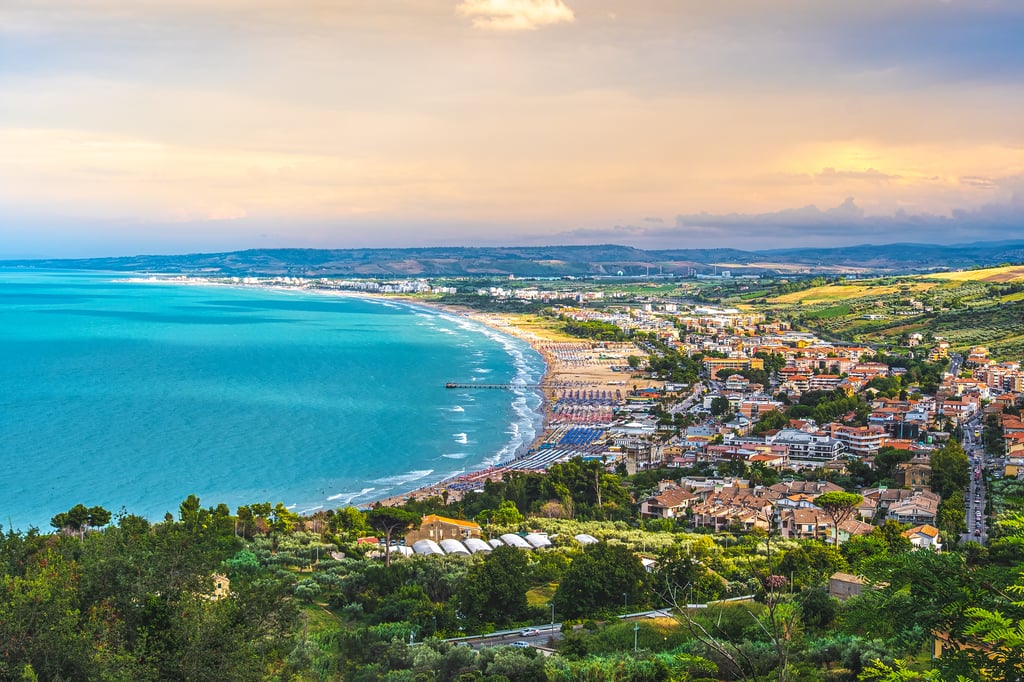
Often overlooked in favour of Tuscany or Puglia, Abruzzo sits roughly halfway down Italy’s Adriatic coast, with a 130-kilometre shoreline backed by mountains. The regional average of around €1,361/m² compares strikingly with Tuscany, where the average property price sits above €837,000 – Abruzzo’s average is closer to €227,000.
The Teramo coastline’s so-called “seven sisters” resorts – Martinsicuro, Alba Adriatica, Tortoreto, Giulianova, Roseto degli Abruzzi, Pineto and Silvi Marina – are already popular with Italian holiday-home owners for their beaches and fish restaurants. Typical asking prices across these towns sit in the region of €280,000–€350,000 for established beachfront apartments, with prime seafront positions in Roseto reaching as much as €4,500/m². Several of these beaches hold Blue Flag status.
One incentive worth mentioning for retirees: Italy offers a flat 7% tax on foreign pension income for up to nine years to those relocating to qualifying smaller southern towns, including parts of Abruzzo – a detail that can make a meaningful difference for anyone planning a full-time move.
6. Almería, Spain
Almería enjoys some of the mildest winters in mainland Spain and Europe – second only to Cádiz, with daytime highs typically 17–18°C even in January, and around 3,000 hours of sunshine a year. It was also one of the last stretches of Spain’s Mediterranean coast to see mass tourism arrive, so unspoilt beaches remain easier to find here than further along the coast.
The provincial average asking price sits at around €1,431/m², up 8.41% year-on-year, though this masks considerable variation by town: Vera averages roughly €1,962/m², Mojácar and Cabo de Gata both exceed €1,800/m², while Roquetas de Mar sits closer to €1,609/m². New-build apartments in the city of Almería start from around €131,950 (£112,000), while new flats in Pulpí range €137,000–€557,000 (£116,000–£473,000) and villas in San Juan de los Terreros start from roughly €295,000 (£251,000). Other popular bases include Villaricos and Garrucha.
Britons remain among the largest groups of foreign buyers in the province, alongside German and Dutch buyers. Foreign buyers made up nearly 18%* of all transactions in the province across 2025.
Almería airport serves the area directly, and Región de Murcia International Airport – which replaced the former Murcia–San Javier airport in 2019 – lies to the north, closing 2025 with just under a million passengers, most of them on international routes. Málaga Airport remains a further option for anyone happy with a longer drive.
7. Eastern Algarve, Portugal
Strictly speaking, the Algarve faces the Atlantic rather than the Mediterranean, but its climate, architecture and laid-back pace put it firmly in the same lifestyle bracket, so it’s worth including in this list.
The Eastern Algarve has long been favoured by Portuguese families over the busier resorts further west, and it remains both quieter and more traditional, while still enjoying the region’s climate and easy access via Faro Airport. Strict planning controls tied to the Ria Formosa natural reserve have also kept high-rise development to a minimum.
Prices here have moved considerably – the wider Eastern Algarve, including Tavira, rose around 13.2% over the past year, with new-builds now accounting for roughly a fifth of transactions. Renovation projects in Cabanas de Tavira start from around €78,500 (£67,000), while new two-bedroom apartments and villas across the area typically start from €130,000–€300,000, rising further for larger homes closer to the sea.
Vila Real de Santo António, on the banks of the Guadiana river, and neighbouring Vila Nova de Cacela and Manta Rota remain popular choices, along with the smaller fishing villages of Cabanas, Santa Luzia and Fuseta near Tavira. Both Tavira and Vila Real de Santo António municipalities held four Blue Flag beaches apiece in 2026, part of the Algarve’s regional total of 86 – once again the highest of any Portuguese region. Faro Airport is around 33km from Tavira, roughly 30 to 35 minutes by road.
Making your budget go further
Wherever you decide to buy, currency movement can add or strip away thousands of pounds from a purchase between agreeing a price and completing. Smart Currency Exchange can help you lock in a rate ahead of completion and plan transfers around your buying timeline, so the numbers you budget for at the outset are the numbers you pay at the end.
Frequently asked questions
No – entry-level apartments across most of the areas covered here start below €150,000, with village houses in Greece and Cyprus sometimes available for less.
All seven areas have established, functioning property markets with UK buyer communities already in place, though as with any overseas purchase, using a qualified local lawyer is essential.
Turkey’s Aegean and southern coasts, including Kusadasi, generally offer the lowest entry prices, though currency movement against sterling is worth watching closely.
Ongoing lira depreciation means most agents and developers price homes for foreign buyers in euros, sterling or US dollars to give both sides price certainty.
Only if you’re specifically pursuing a golden visa residency route – both countries have raised or restructured their investment thresholds in recent years, but a standard purchase below those figures isn’t affected.
*Source: Idealista
You might also like: