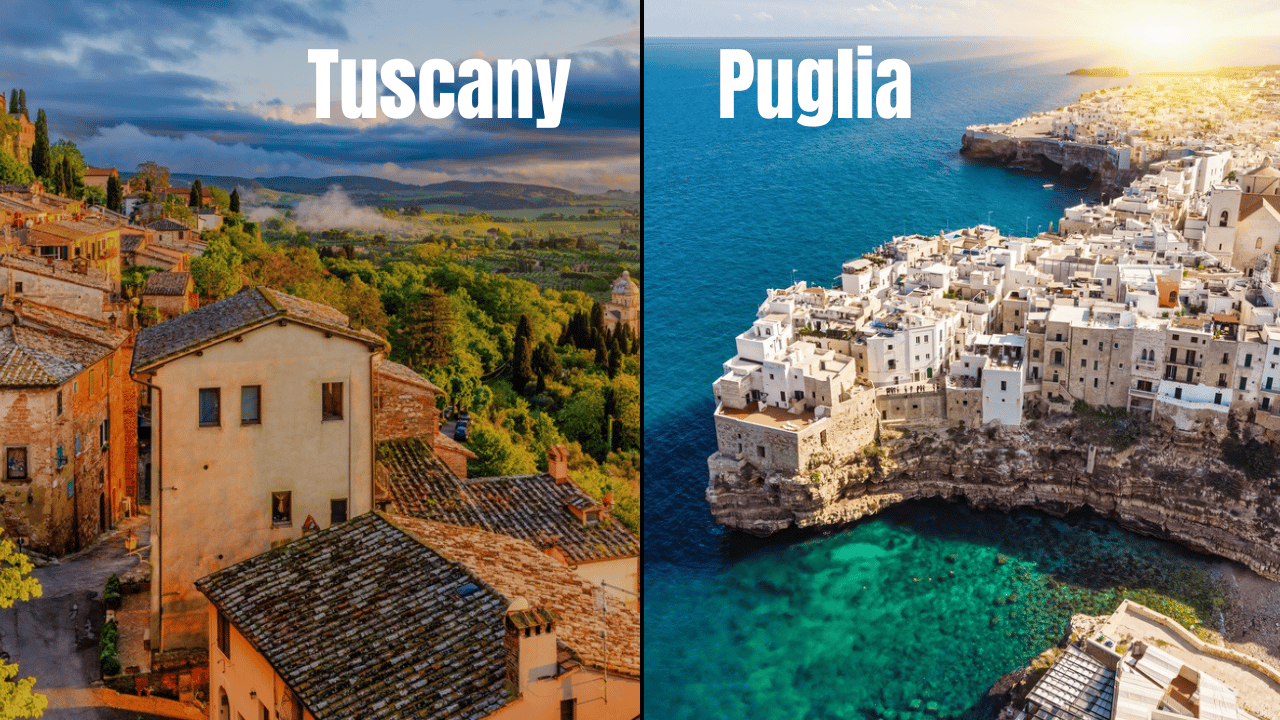

When buying a home in Italy, one of the hardest things is deciding which region to buy property in. Tuscany and Puglia are great regions to start your property search. Both offer achingly-beautiful scenery, and towns that are lively, cultured and full of wonderful restaurants.
While Tuscany has been the top destination for British and American home buyers for since the 1950s, it’s only over the past 20 years that Puglia has been fully on the radar of house hunters, led by such influential stars as Amanda Lamb and Helen Mirren.
You could be forgiven for assuming that life in Italy is the same in the south as in the north. But in fact, they can be very different. Indeed, some homebuyers start off with a home in one region but as they get to know Italy better, move to another.
In some ways they are very similar though. Both are more or less the same size, at 20,000-or-so square kilometres they are roughly the size of Wales (or New Jersey). They have similar population sizes to each other too, at around 3.75 million.
But beyond that there are several meaningful differences that may affect your choice. Here are ten points of difference between Puglia and Tuscany.
What are the main differences between Puglia and Tuscany? For property buyers the main difference is that property prices in Tuscany in autumn 2026 are 85% higher than in Puglia. However, you can still find value in Tuscany, simply by steering away from the main tourist traps. Living expenses are also lower in Puglia. The types of property are different, as is the landscape, with Puglia drier, flatter and with fewer trees. But making up for that is a longer coastline. Both are hot in summer, but maybe in Puglia they deal with it better. Food is wonderful in both, but in Puglia the seafood is perhaps better and in Tuscany the beef is better.
Contents
1. Puglia vs Tuscany homes – which are cheaper?
Tuscany and Puglia are both large regions where house prices, especially among international buyers, can be greatly affected by distance from airports, the sea and popular cities.
The bad news for Tuscany buyers vs Puglia buyers is that Tuscany prices are not far off double Puglia’s. However, don’t be put off. In both regions there are areas where you can find a low-priced home for barely into five figures, but also locations where family properties start at a million euros.
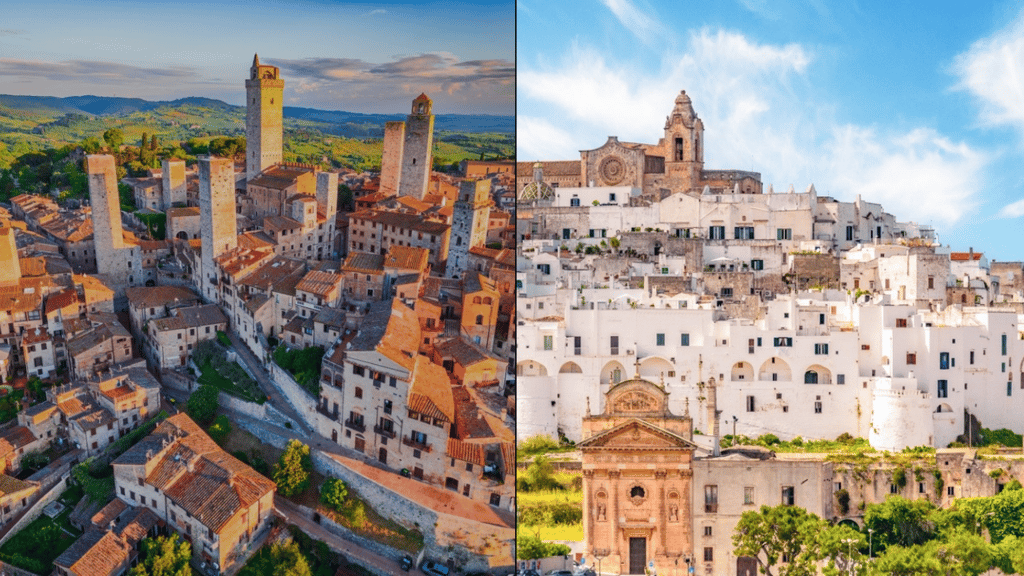
Puglia property prices
The average price per square metre for a residential property in Puglia, according to Italy’s largest estate agency Immobiliare.it, was €1,456 in September 2026. (These are asking prices, not necessarily what they sold for). The provinces of Bari and Brindisi have the highest average prices, particularly along the coast, at €1,844 and €1,707 respectively.
Monopoli, within the province of Bari, has seen a marked increase in interest from foreign homebuyers over the last seven years, being conveniently located by the sea, near a train line and with a choice of two nearby airports. Has that forced prices up? Not especially. Asking prices in Monopoli have risen from €1,789 per square metre in 2019 to €2,581 today, which is a 44% rise over six years. But that equates to a steady and sustainable increase of around 5.4% per year.
You only have to take your property search 20 minutes inland to find homes at prices around the €1,700/m2 mark.
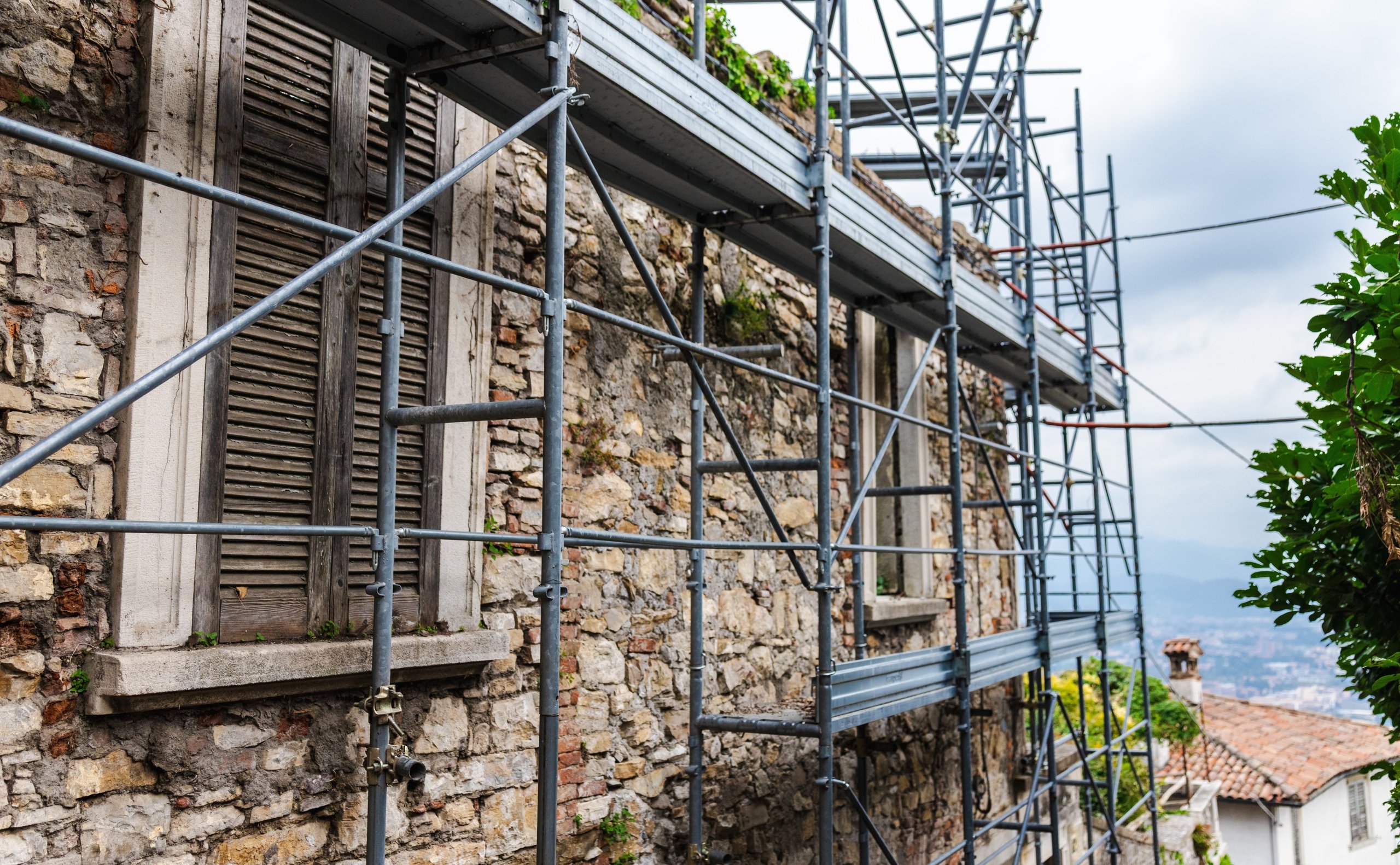
You will also have a wide choice of cheaper properties in need of renovation, but beware those where the owners have built bits on without permission. For a house in good condition at a fair price look where the Italians are living.
Planning to buy property in Italy?
Download our free Italy Buying Guide for practical advice on finding a property, navigating the buying process and preparing for your move.
Get your free guideTuscany property prices
The average asking price per square metre for a property in Tuscany in September 2026 was €2,700. Again that has been a steady 5% rise on September 2025.
So a 100 square metre property in Tuscany could cost you over €124,000 more than in Puglia. On average, the most expensive provinces in Tuscany are Lucca at €3,778 and Florence at €3,391. The cheapest provinces are Pistoia (€1,604) and Pisa (€1,975).
However, that doesn’t mean you can’t find affordable property in Lucca province. House buyers who thought they couldn’t afford to buy in this area are often surprised to discover that in the north-eastern half of Lucca province the average property price is under €1,000 per metre square.
It is the coastal area and Lucca’s historic centre that bump up the average price. Forte dei Marmi is on the coast, just a 40 minute drive from Lucca with a 30 minute drive time to Pisa airport. A 90m2 property less than 70 metres from the sea is currently advertised at around one million euros. A property the same size and distance from the sea and airport at Rosa Marina in Puglia is priced at €290,000. But these towns are very different in style.
Property prices in Tuscany vs Puglia
Average residential asking prices per m², September 2026
| Region / province | Price per m² |
|---|---|
| Puglia – regional average | €1,456 |
| Bari | €1,844 |
| Brindisi | €1,707 |
| Barletta-Andria-Trani | €1,534 |
| Lecce | €1,200 |
| Foggia | €1,071 |
| Taranto | €1,062 |
| Tuscany – regional average | €2,700 |
| Lucca | €3,778 |
| Florence | €3,391 |
| Grosseto | €2,761 |
| Siena | €2,066 |
| Pisa | €1,975 |
| Arezzo | €1,575 |
Source: Immobiliare.it, September 2026. Figures are average advertised prices for residential property, not completed sale prices. Provincial averages include towns and rural areas.
2. Property styles: Puglia vs Tuscany
You may be surprised by how different the architecture is in Puglia vs Tuscany.
Local stone was used to build the older houses, which in parts of Puglia are built with blocks of sandstone, rather than the more familiar limestone. In Tuscany you will see wooden beams, while in Puglia many houses have no wood in their construction at all. You will find properties with remarkable stone roofs.
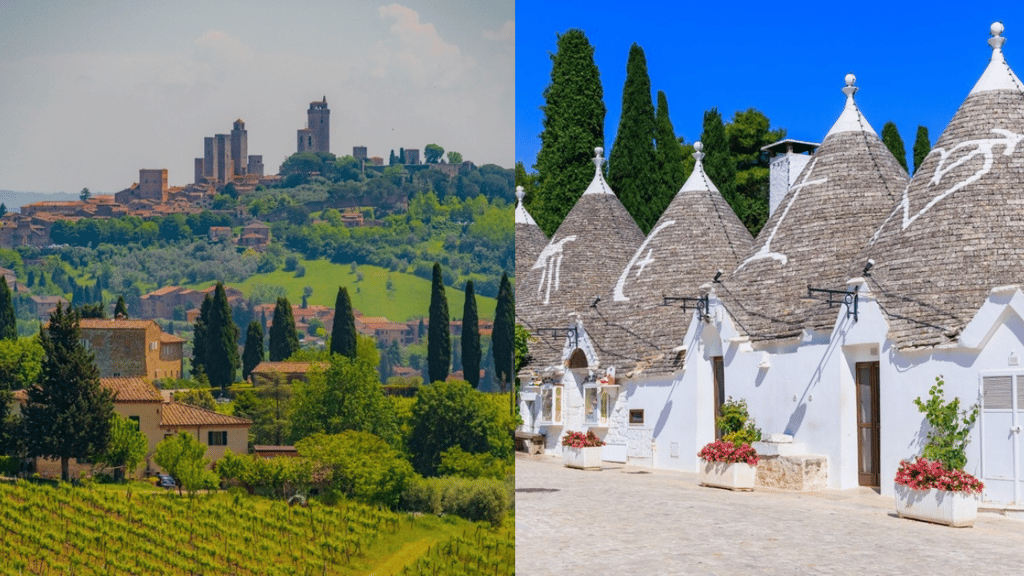
Puglia property
- Trullo – This cute little house has a round base with a cone shaped roof built of limestone. If it has more than one cone it is a trulli. The high stone ceilings keep it cool, but another feature that keeps them cool is the lack of windows. Therefore, this part of the building is often used as a bedroom, combined with a ‘lamia’ or newer villa as the main living area.
- Lamia – Tend to be built of stone with barrel ceilings.
- Villa – Most villas are more box-shaped with a covered veranda. Villas are either built with sandstone blocks or have a concrete frame with large terracotta ventilated bricks, but it’s rare to find a wall cavity.
- Masseria (Plural: Masserie) – These fortified farmhouses were built in 17th and 18th centuries. Typically, they have a big wooden gate into a large courtyard with high walls on two sides and an L-shape of buildings. Part of the building would have been used for animals, storage, wine and olive pressing. You may see a manger for animal feed, rings on the ceiling for hanging tomatoes, crenelations on the roof, corner fireplaces and larger masserie might even have a chapel. The most striking features are the stone vaulted ceilings.
- Palazzo – Once the town houses of noble families, they tend to have vaulted ceilings, but you may get a nice surprise and find one with beautiful painted frescoes. They often just have a big door and entrance hall on street level, with the accommodation on the first and possibly second floor.
Tuscany Property
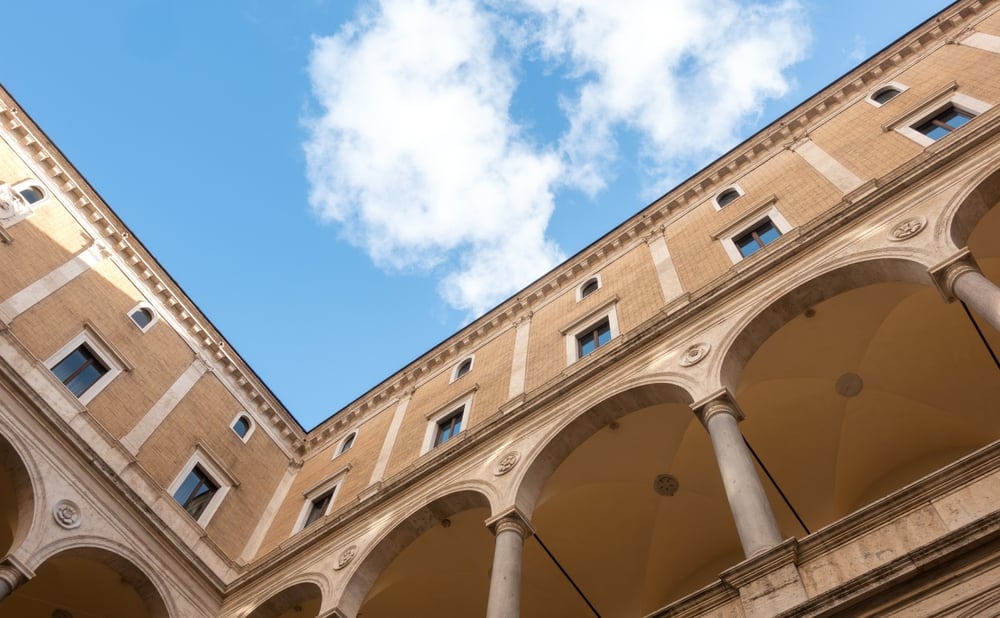
- Historic apartments – Located in cities like Florence, Pisa, Lucca and Siena in medieval or renaissance palazzi they can have high vaulted ceilings and frescoes.
- Liberty style villas – These properties can feature turrets and towers, grand staircases and big arched windows leading to covered verandas or balconies. They are decorated with tiles and friezes featuring curls, fauna, and botanical images.
- Tower houses – If you don’t mind going up stairs, a tower house is a very prestigious place to live. They were once owned by noble families, for whom the height of their towers represented their power and wealth (!). There are also watchtowers in the countryside.
- Mill houses – Around the Lucca and Pistoia valleys you can occasionally find old watermills that have been converted into houses. Built of stone, these houses may even have original features such as a grinding stone.
3. The climate
While both regions can feature hot summers and mild winters, there are some differences in winter temperatures, rainfall and humidity.
Puglia’s weather
Winters are short; basically January and February. Even then, temperatures can easily hit 15°C during the day, before getting chilly early evening. When living here in winter, you do need some form of heating for cold nights. But, Just a few hours in the evening to take the chill off.
Summers are very hot. In our experience 35°C is normal, but it can reach over 40°C. Hot weather with very little rain lasts from June to September. People that move here are often surprised to find that most people simply stop going out in the heat of the summer sun – but it’s made up for in the evenings, with summer events starting after 9pm.
Tuscany’s weather
Summer temperatures are in also the 30s, and across the year are not dissimilar to Puglia. Being in a basin, Florence holds the heat in its stone streets, making it feel up to 4°C hotter than the countryside or by the sea.
Tuscany can be a few degrees cooler than Puglia in the autumn and winter. It also gets more cloud cover and around three more rainy days each month, especially in November. The Apennine mountains get the coldest temperatures in Tuscany.
4. The Landscape
Puglia’s landscape
Coastal areas and Salento (South of Brindisi) is very flat, but as you go inland from the Bari/Brindisi coast towards Basilicata you’ll find roads with drystone walls that wind through a hillier landscape. The Valle d’Itria is particularly attractive to house buyers with its olive groves, vineyards, cherry orchards and trulli.
Puglia has a varied coastline with sandy beaches backed by sand dunes and dramatic rock formations and caves. Although the sea is the main attraction for tourists, many house buyers opt for properties in the countryside or near inland towns, as many of these are less than 30 minutes drive from the sea. Hill top towns, like Ostuni, also have great views.
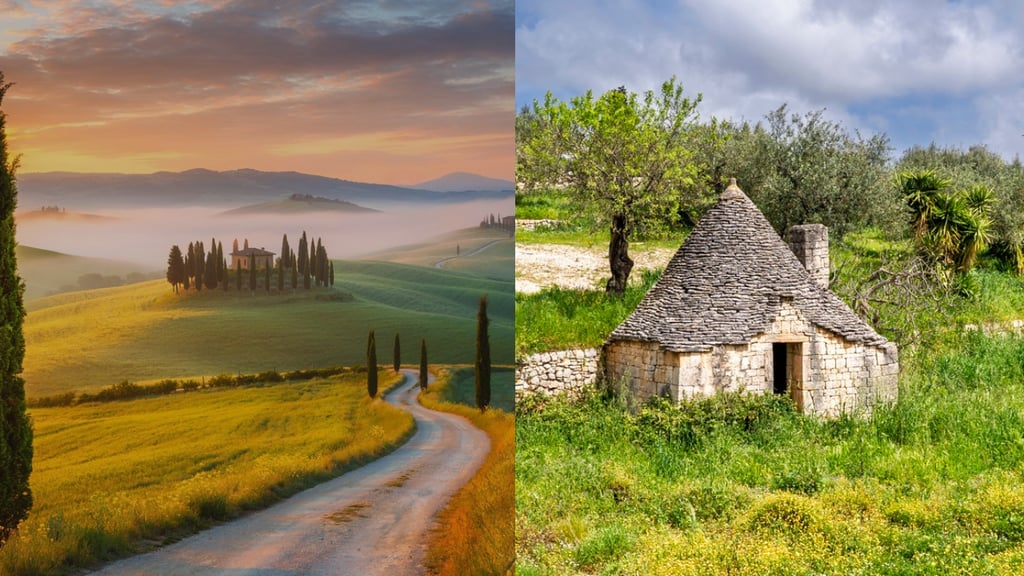
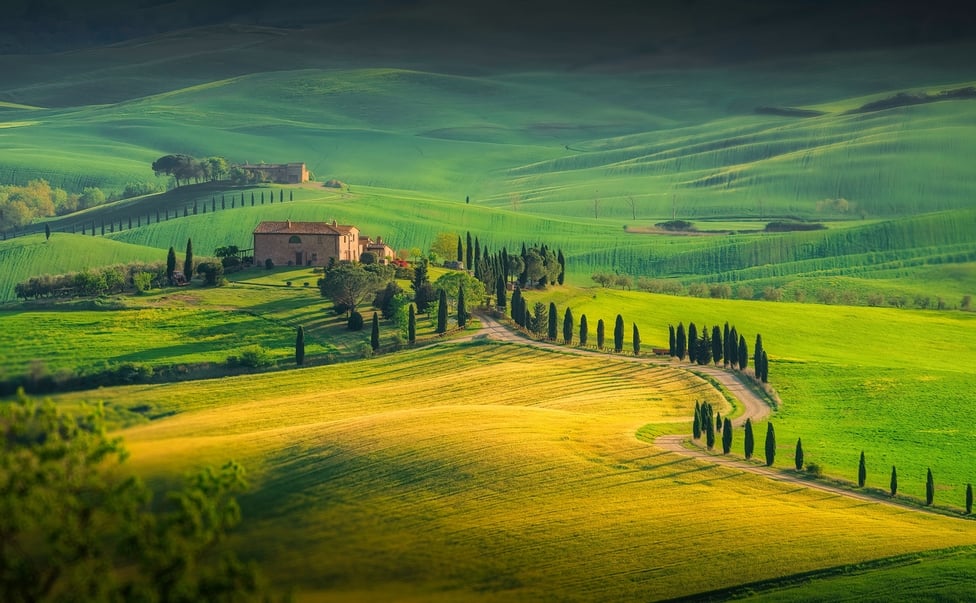
Tuscany’s rolling hills and cypress trees and Puglia’s olive trees
Tuscany’s landscape
The famous rolling hills of the Val d’Orcia owe their recognisable appearance to Renaissance noble landowners positioning cypress trees on road sides, farmhouses on hill tops and vineyards and other crops to create visually appealing views. This landscape is protected and recognised by UNESCO.
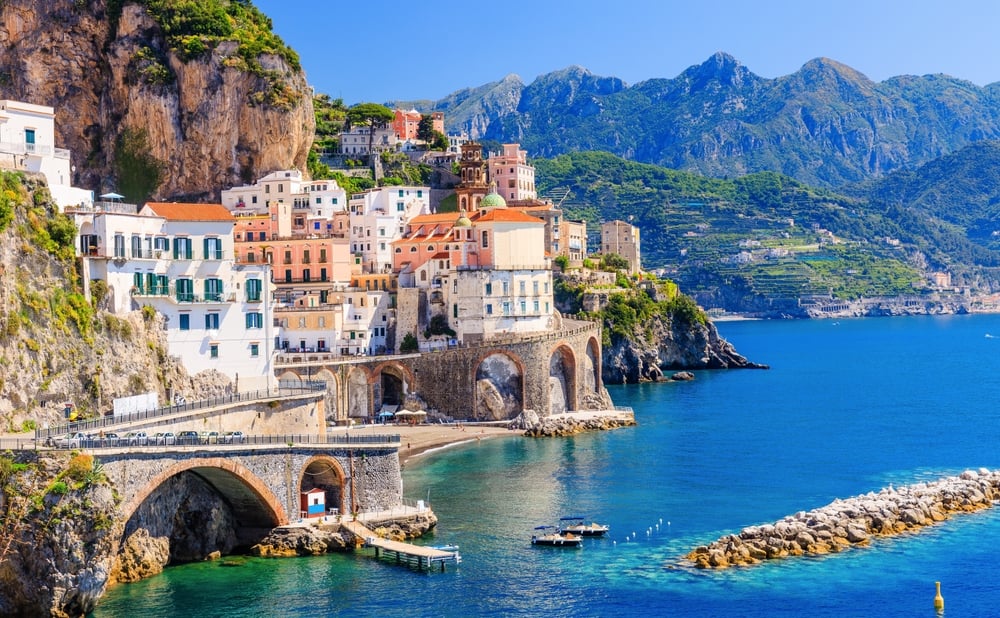
Most of Tuscany is hilly, but there are also mountains, river valleys and plains near the sea. The coastal area starts in the north with sandy beaches backed by pine forests and the white marble of the Apuan Alps. Then you get a mixture of sandy beaches, coves and rocky cliffs.
To the south it is much wilder, with nature reserves, such as Maremma Regional Park, and islands just off the coast. The river Arno passes through Arezzo, Florence and Pisa where you’ll find elegant riverside homes.
5. Cost of living
According to the Numbeo survey the cost of living in Brindisi, Puglia is 19% lower than in Lucca, Tuscany. If you are retiring to Italy, Puglia has several scenic towns that qualify for the 7% flat tax regime. Which is another welcome bonus in your pocket each month. Across Italy the cost of living compares very well with other countries.
Puglia
A meal at an inexpensive restaurant can cost less than €15 in Brindisi. On average that is about €3 less than in Lucca, Tuscany. Plus, in Puglia a bottle of wine at the table can cost €11 and a draft beer is almost half the price of Tuscany at around €3.50.
A food shop is cheaper too, especially on local produce such as bread, cheese, tomatoes, onions, lettuce, olive oil, and grapes. However, the big saving is on utilities which the Numbeo survey shows as being 37% cheaper in Brindisi compared to Lucca.
Leisure activities such as gym membership are also cheaper, plus there are a lot of free events and festivals. Brindisi has some free parking areas where you can walk into the centre.
Tuscany
Sections where Tuscany came out cheaper in the survey were pre-school childcare and some transport costs. Taxi tariffs and monthly transport passes also came out cheaper. Parking in the city centre of Lucca costs about €1.50 per hour, but outside the city walls there are areas where you can park free and walk or get a bus in for less than €2. Fuel prices average about the same as in Puglia.
6. Lifestyle
Puglia
Towns in Puglia, have an authentic friendly atmosphere and a laid-back feeling. Walking through the streets in the afternoon you may be mistaken into thinking that Puglia towns are dead. Then you catch the aroma of home cooked dishes wafting through the streets. You then realise to live here like a local, you’ll need to change your daily routine. Go to town in the morning or early evening and have a slow lunch at home followed by a siesta.
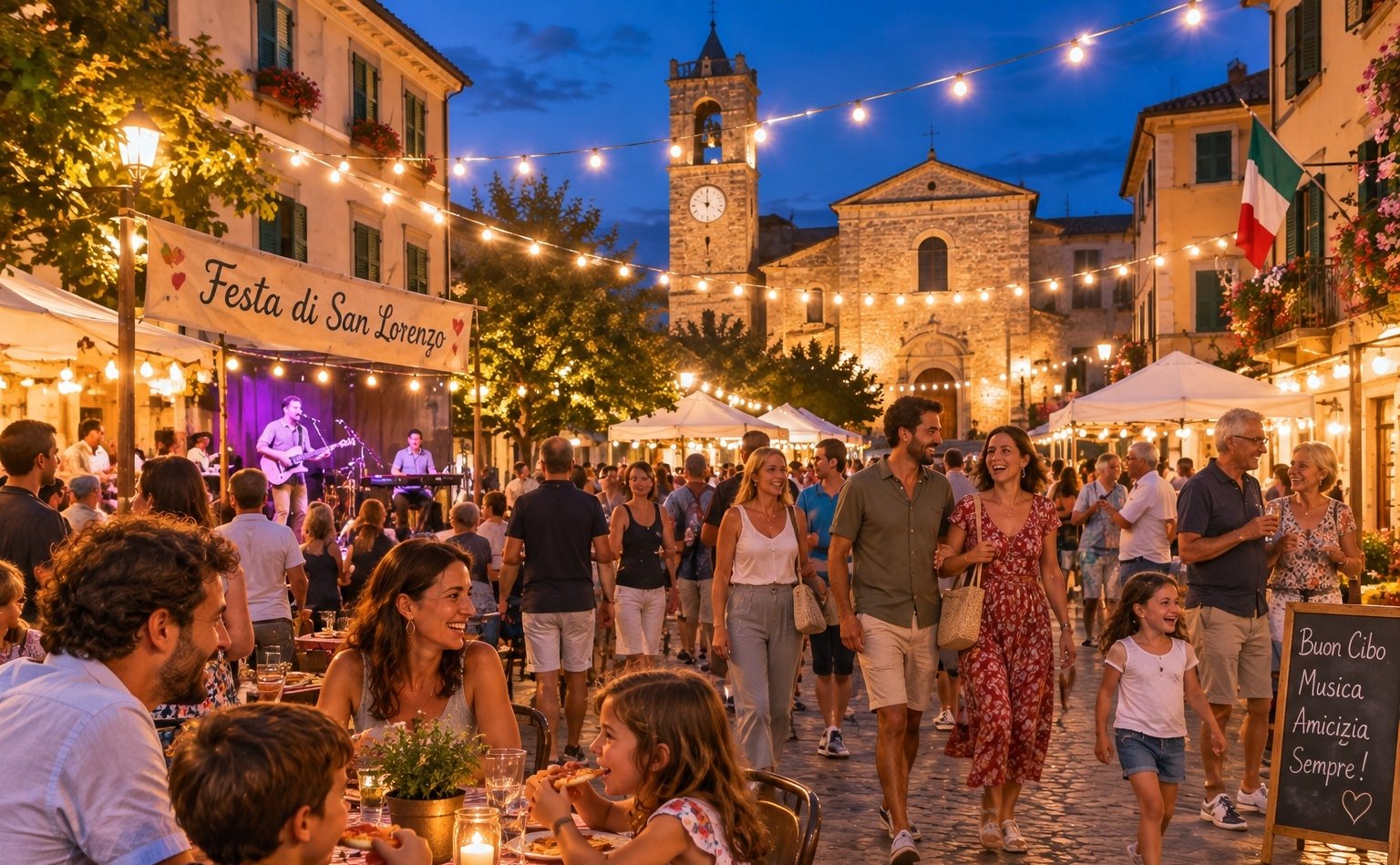
Compared to Tuscany, Puglia is more rustic and less glamourous. The cultural heritage is very important and communities gather for cultural events, food sagre and religious Festivals. You will buy fresh produce at the local market and find many family-run businesses where you receive a friendly service and they remember your name.
Tuscany
Parts of Tuscany are famous for their refined and luxurious lifestyle. Forte de Mare, which was mentioned before for its high property prices, is expensive due to its reputation as a holiday location for celebrities. Here you can visit designer shops and go to exclusive venues.
The infrastructure in Tuscany is more to the level expected by expats and where there are established expat communities there are additional clubs and services in English. The beautiful cities of Florence, Pisa, Lucca and Siena are wonderful for a day out admiring the architecture and art. Tuscany is also closer to Italy’s top hospitals in Milan, with the hospital in Florence also ranking in the top ten.
7. Food in Tuscany vs Puglia
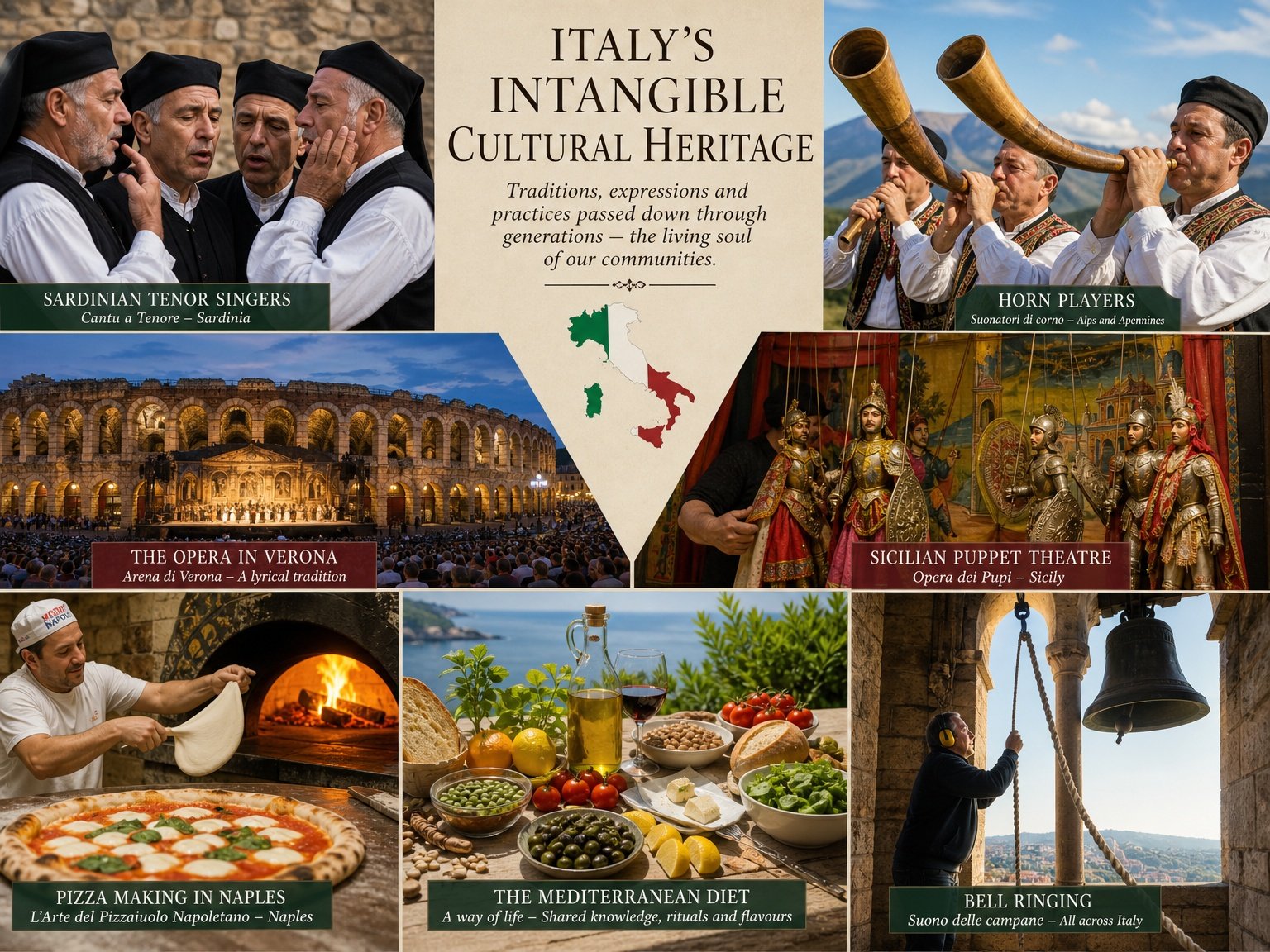
Meals in Italy are all about fresh local produce. Both regions are famous for their cucina povera (peasant cuisine) using extra virgin olive oil and whatever is grown or produced nearby.
Food in Puglia
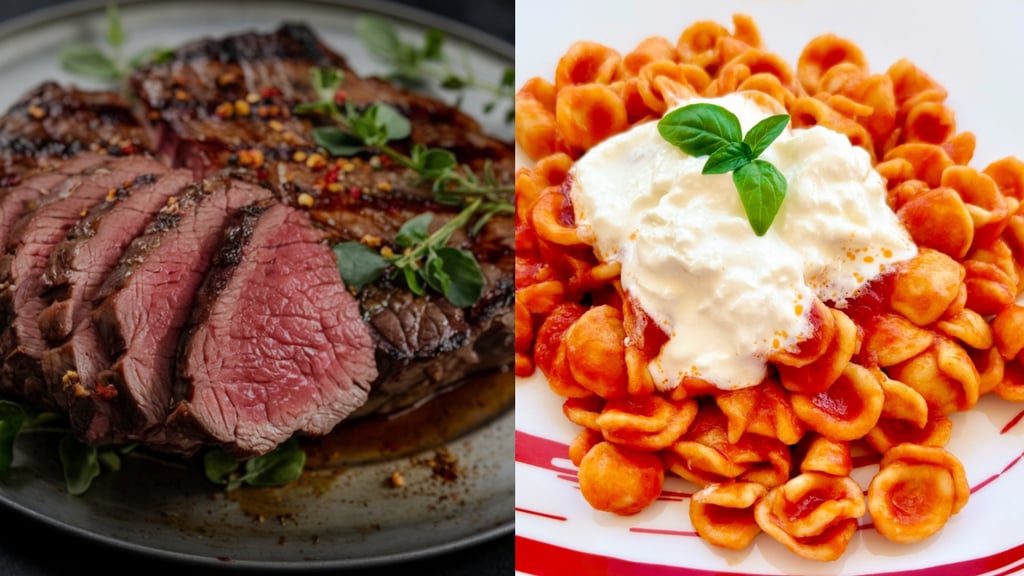
Between 40% and half of Italian olive oil comes from Puglia. Also, 35% of Durham wheat for making pasta, and 35% of cherries. Towns have weekly markets where you can buy a selection of locally grown fruit and vegetable for a healthy Mediterranean diet. Almonds, cherries, oranges, melons, courgettes and aubergines all grow well in Puglia.
Food in Tuscany
Beef steaks (Bistecca alla Fiorentina) are a speciality of the region, due to the local Chianina cattle. Thick warm soups, bean dishes and wild boar ragu also make the most of what is available in Tuscany.
There are a high number of food festivals in Tuscany that celebrate a new harvest. These include artichokes, strawberries, chestnuts and white truffles.
8. Transport and tourism
Transport in Puglia
There are two international airports in Puglia at Bari and Brindisi, both on the east coast. Flights and train services are reasonably priced. A motorway runs between the cities and popular towns such as Lecce, Taranto and Monopoli are also well-connected by road and rail.
Transport in Tuscany
There are two international airports in Tuscany, located in Pisa and Florence. Train travel between cities is fast and affordable and other towns have bus services. To reach villages it is best to have a car.
Tourism in Puglia
Tourists love the beaches, water sports, rustic countryside and the experience of staying in a traditional house. There are many outdoor concerts and festivals that are free to attend, and you can often find free parking in the streets nearby. They love the relaxed atmosphere and friendly locals.
Tourism in Tuscany
Tourists love to see the art in Florence and historic architecture and landmarks, such as the leaning tower of Pisa. For those who want to relax, rustic farmhouses surrounded by outstanding scenery make wonderful retreats. Combined with visits to hill top villages and restaurants and you have a perfect Tuscan holiday.
9. Who lives in Puglia and Tuscany?
Puglia
Wherever you go in Puglia you will mostly see Italians. They make up 96% of the population of the region. But there are areas where the English-speaking population is growing, especially Ostuni, Carovigno, San Vito di Normanni, Lecce, Monopoli, Oria and the villages in the Valle di Itria.
There are around 500 British and 400 Americans registered as living in Puglia, but that’s not many from a population of over 3.5million! However, more of us own holiday homes, so in the summer you will hear English being spoken more widely.
Tuscany
Around 88% of Tuscany’s population hold Italian citizenship. The percentage of foreign nationals is above the Italian national average, but still less than 12%. The majority of these are from Romania, Albania, China and Morocco, but in the Chianti wine region (“Chiantishire”) there is a well-established community of British, American and German citizens. There are over 3,500 British registered to live in Tuscany and 2,600 Americans, according to Istat.
10. Do they speak English?
Puglia
Most people don’t speak English, particularly outside the main tourist towns. The older generation don’t tend to speak English at all. Indeed, some don’t speak Italian, but a local dialect, or Griko (a dialect which comes, as you may have guessed, from Greek). It was a surprise at first when we couldn’t understand a word our elderly neighbour said. Then someone explained he was speaking the dialect of the local area.
The younger generation learn English at school from an early age, although a lack of English mother-tongue teachers means they don’t get as much opportunity to practice speaking it. Local schools are always looking for English teachers.
Tuscany
Most of the population of Tuscany speak Italian with a local accent, although there are some dialect words still in use. Cocomero for watermelon (anguria), cacio for Pecorino cheese and babbo for father (Papa). At Christmas time even in Puglia they have adopted “Babbo Natale” for Father Christmas or Santa Claus.
As Tuscany has received English visitors for many years, you will find that most big towns you visit will have people who can speak English, especially in bars, restaurants and tourist shops. You are more likely to find an English-speaking doctor in Tuscany than in Puglia. But in this modern age translation apps come in very useful, especially for medical and technical words.
In summary…
The history and landscape of Tuscany and Puglia have given them their own special characteristics.
The food and architecture of each are influenced by the soil and raw materials available and in turn the way of life of the local communities is a reflection of what can be grown there.
You need to spend time in each region to get a feel for which best suits the way of life you are looking for. Remember that even within a region, each town and village will have its own traditions. It is the people that you meet that make a place so special that you want to spend more time there.
Don’t judge a town on a drive through, walk around the historic centre and into the main piazza.