





Moving abroad doesn’t have to mean giving up the TV shows you love. Here’s how you can watch British TV in another country in 2026.
Whether it’s the evening news, a Saturday football match or simply having EastEnders on in the background, British TV is one of those things many expats hadn’t realised they’d miss until they couldn’t get it. The good news is that the options for watching UK television abroad have expanded significantly in recent years. However, they do come with varying degrees of reliability – and legality. Here’s an honest look at what’s available and what to consider before you set anything up.
Contents
- The rise of streaming – and why it changes things for expats
- The problem with UK-specific streaming
- BritBox – the legal shortcut for British content
- Satellite – still an option, but with caveats
- Sky abroad – traditional satellite and the new streaming route
- VPNs – widely used, but getting harder
- SmartDNS – a simpler but less private alternative
- IPTV boxes – proceed with caution
- Other streaming options
- Local TV and language immersion
- The simplest legal approach
- Making your decision
The rise of streaming – and why it changes things for expats
For most people in the UK, watching television now means a combination of subscription streaming services and on-demand catch-up. That shift has worked in expats' favour for some services, and against them for others.
Netflix and Amazon Prime Video are the straightforward ones. Both are international services available across most of the world, so if you have an active subscription, you can keep watching wherever you are. There is a catch worth knowing about, however: since Brexit, UK-registered accounts are treated as international the moment you connect from an EU country. This means the specific content you had access to in the UK – some shows, some films – may not appear in the library you see abroad. Disney+ operates similarly. Between these services there's more content than most people could watch in a lifetime, but don't assume your exact UK library will travel intact.
The problem with UK-specific streaming
Where things get more complicated is with the services that are intended solely for UK residents: BBC iPlayer, ITVX, Channel 4 and My5. All of these use geo-blocking – technology that detects where you are based on your internet connection and refuses access if you're outside the UK. The moment you connect from a Spanish or French IP address, you'll see an error message rather than your programme.
This isn't a technical glitch. These services are licensed to broadcast in the UK, and their rights agreements don't extend to audiences watching abroad. Accessing them from overseas is, at best, a legal grey area, and the BBC is explicit in its terms of service that iPlayer is for UK residents.
That said, plenty of expats do access these services – through methods we'll cover below. Whether you're comfortable doing so is a judgement call you'll need to make yourself.
BritBox – the legal shortcut for British content
If what you're really after is British drama, comedy and classic series, BritBox is worth knowing about. The service – now fully owned by BBC Studios following its buyout of ITV's stake in BritBox International in 2024 – offers a large library of British content. One thing to clarify: the original standalone BritBox app in the UK was shut down and its content absorbed into ITVX Premium, so UK-based viewers access it through ITVX rather than a separate app. For expats, though, BritBox International continues to operate as a standalone subscription service in the US, Canada, Australia and several Nordic countries. If you're moving to Spain, Portugal, Greece or France, it isn't currently an option through official channels. You can buy individual series through Amazon, Apple or Google Play in most countries, which keeps everything above board if you're happy to pay per title.
Satellite – still an option, but with caveats
For years, satellite was the go-to solution for British expats in Europe, and it remains an option – though the landscape has shifted. The key technical fact to understand is that the Astra satellites delivering UK free-to-air television concentrate their signal on the UK, but that signal does spread into parts of Europe. How far it reaches – and how reliably – depends on your location and the size of your satellite dish.
In northern France, satellite reception of UK free-to-air channels (via Freesat) is relatively reliable with the right dish. Further south, in Spain or Italy, the signal becomes weaker, and you may need a significantly larger dish to pick it up at all. In some locations, particularly further from the UK, it simply won't reach regardless of dish size.
Freesat, the subscription-free satellite service, remains one of the cleaner options for expats within range. There are no monthly fees – you buy the dish and receiver equipment and that's largely it. BBC, ITV, Channel 4 and Channel 5 are all available. Installation companies across popular expat destinations can advise on whether your area can receive a reliable signal.
It's worth noting that even on Freesat, BBC iPlayer and other on-demand services built into modern receivers may not work abroad – those still require a UK internet connection.
Sky abroad – traditional satellite and the new streaming route
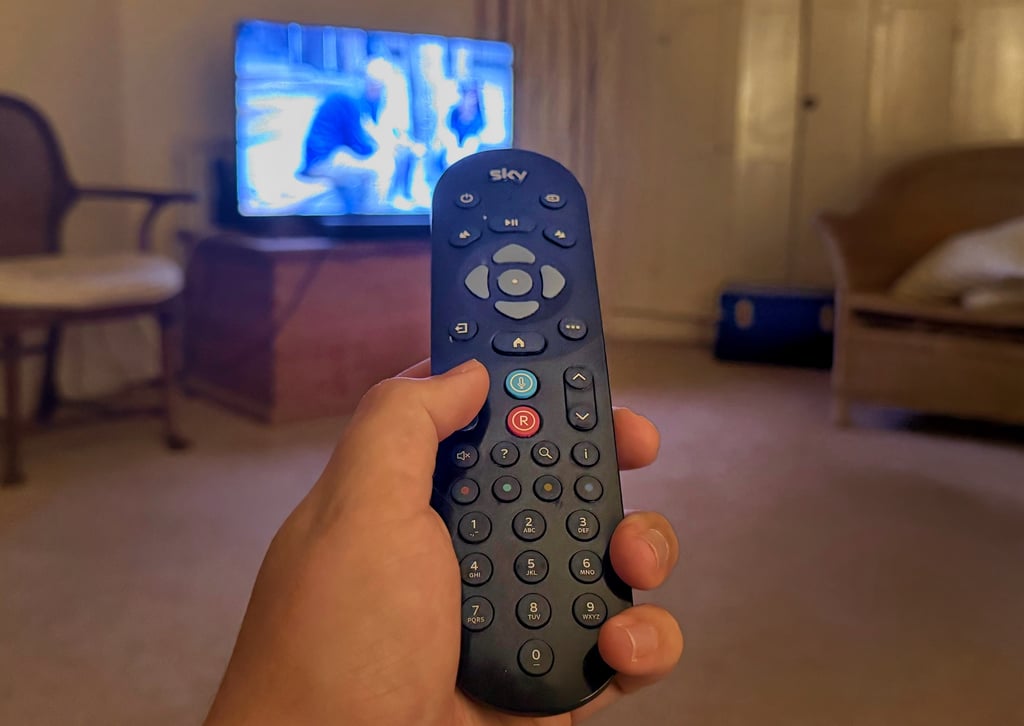
Sky remains the most comprehensive source of British TV, including premium sports and entertainment channels that aren't available on Freesat. There are a couple of routes to accessing it abroad.
The traditional approach involves setting up a UK Sky subscription with the help of third-party services that manage the account on your behalf. Various companies operate across Europe doing exactly this. Be clear-eyed about what you're agreeing to: Sky's terms of service are for UK residential customers, so using a subscription abroad sits outside those terms, even if the companies offering the service prefer not to emphasise that fact.
A newer development worth knowing about is Sky Stream – an internet-based alternative to the traditional satellite dish. Rather than picking up a satellite signal, it delivers Sky channels over your broadband connection. Some third-party providers now offer configured versions of this for use in Europe. It removes the need for a dish installation, which is useful if you're renting, live somewhere with planning restrictions, or simply want a cleaner setup. It's also easier to take with you if you move.
The same legal caveat applies: these setups aren't within Sky's terms of service for overseas use, and you should understand that before committing.
VPNs – widely used, but getting harder
A VPN (Virtual Private Network) works by routing your internet connection through a server in a country of your choice. Connect via a UK server, and websites see a UK IP address – which means streaming services treat you as a UK-based viewer. It's the most popular method expats use to access BBC iPlayer, ITVX and similar services.
VPNs themselves are legal in almost all popular expat destinations, including Spain, Portugal, France, Greece and across the EU. However, using them to access services whose terms of service restrict access to UK residents sits in a legal grey area, and you should make your own assessment of that.
What's changed recently is that BBC iPlayer in particular has significantly tightened its detection of VPN traffic. Free VPNs are now largely ineffective for iPlayer – the BBC identifies and blocks the IP addresses they use relatively quickly. Even among paid services, reliability varies: some consistently get through, others are blocked more often than not. The BBC rolled out enhanced VPN detection in early 2026, which has made the situation more volatile than it was a few years ago.
If you do go down this route, expect to pay between £5 and £10 a month for a reputable paid service, read recent reviews specifically focused on iPlayer compatibility, and accept that what works today may need troubleshooting in a few months. The services and the BBC are in an ongoing technical back-and-forth, and that's unlikely to change.
A VPN can be installed on your computer, phone or tablet, or configured on your router so that all devices in your home appear to connect from the UK. The router approach is more useful if you want to use a smart TV or streaming box that doesn't support VPN apps directly.
SmartDNS – a simpler but less private alternative
SmartDNS services work on a different principle to VPNs. Rather than encrypting your connection and routing all your traffic through another country, SmartDNS intercepts only the parts of your connection that streaming services use to check your location. The result is that the service thinks you're in the right country, while your general internet traffic routes normally.
The advantage is simplicity: SmartDNS is often easier to set up on smart TVs and streaming devices than a VPN. The disadvantage is that your internet service provider can see what you're watching, and the services have become better at detecting and blocking SmartDNS traffic. Coverage varies significantly by provider.
Pricing is broadly similar to VPNs, sometimes slightly less. If you find a service that works, it can be a cleaner option for specific devices. If not, a VPN is generally more reliable when it works.
IPTV boxes – proceed with caution
In most popular expat areas, you'll encounter people selling IPTV boxes – devices that promise access to hundreds of channels, including premium sports and movie packages, for a fraction of the cost of a legitimate subscription. In some cases they're sold quite openly.
The appeal is obvious. The reality is less attractive. These boxes work by streaming content that's been illegally rebroadcast – the people running those streams are in a constant battle with broadcasters and rights holders trying to shut them down. Streams get cut off with little warning, servers disappear, and the people who sold you the box often do too. You have no recourse when it stops working, which it usually does at some point.
Beyond the reliability issues, these services are illegal. Authorities in various European countries have prosecuted both operators and users of illegal IPTV services. If it sounds too good to be true – a package that would cost over £100 per month in the UK for €20 abroad – that's because it is. We'd recommend avoiding them.
Other streaming options
FilmOn is a subscription service that has been running for many years and includes some UK live TV channels. It has a long and complicated legal history, a mixed reputation for streaming quality, and most expats have largely moved on from it in favour of VPNs or local alternatives. It still operates at the time of writing, but we wouldn't rely on it as a primary solution.
There are also various illegal streaming websites that rebroadcast UK and US channels. Like IPTV boxes, these are unreliable, frequently shut down and not something we'd suggest relying on.
Local TV and language immersion
It's worth saying that local cable or satellite television in most popular expat destinations offers a reasonable selection of English-language content, often with English audio tracks or subtitles available. If you're in Spain, for example, many channels broadcast international programmes in their original language, alongside a Spanish dub. This is something experienced expats often come to appreciate, not just for the content itself, but because listening to local language TV – even as background – can help with language learning in a low-effort way.
Building some of your viewing habits around local TV doesn't mean abandoning British content entirely. It just means treating the two as complementary rather than in competition.
The simplest legal approach
If you want to keep things straightforward and entirely above board, the cleanest combination is usually:
- Netflix and/or Amazon Prime Video for the bulk of your viewing
- BritBox if you're in a country where it's officially available (US, Canada, Australia, Nordic countries)
- Purchasing individual series through Amazon, Apple or Google Play where you can't get BritBox
- A local cable or satellite subscription for local news, live sport and general channel browsing
It costs more than a VPN workaround, and you'll miss some things. But there's also something to be said for not having to troubleshoot your television setup every few months.
Making your decision
There's no single right answer here, and the right approach depends on how much British TV matters to you, where you're moving, what your internet connection is like, and how much you want to worry about the legal and technical dimensions.
Many expats end up using a combination of things – a paid streaming service or two, a VPN for iPlayer access when it's working, and some local TV in the mix. Others find that once they're settled and engaged in daily life abroad, the pull of specific British programmes weakens considerably.
What's true for almost everyone is that it's less of a problem than it seemed before the move. The options exist, they're improving, and most people find something that works well enough for them.