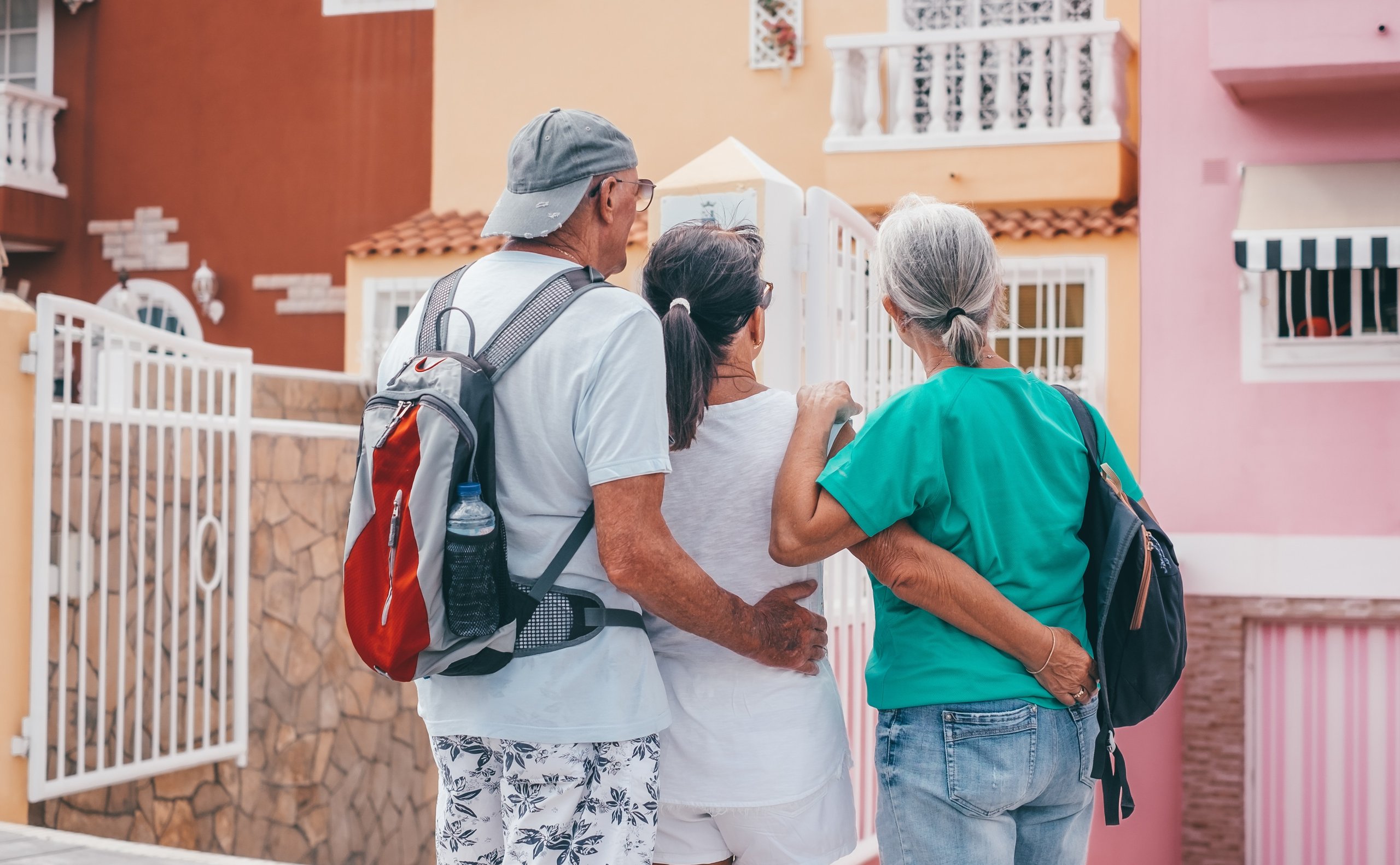
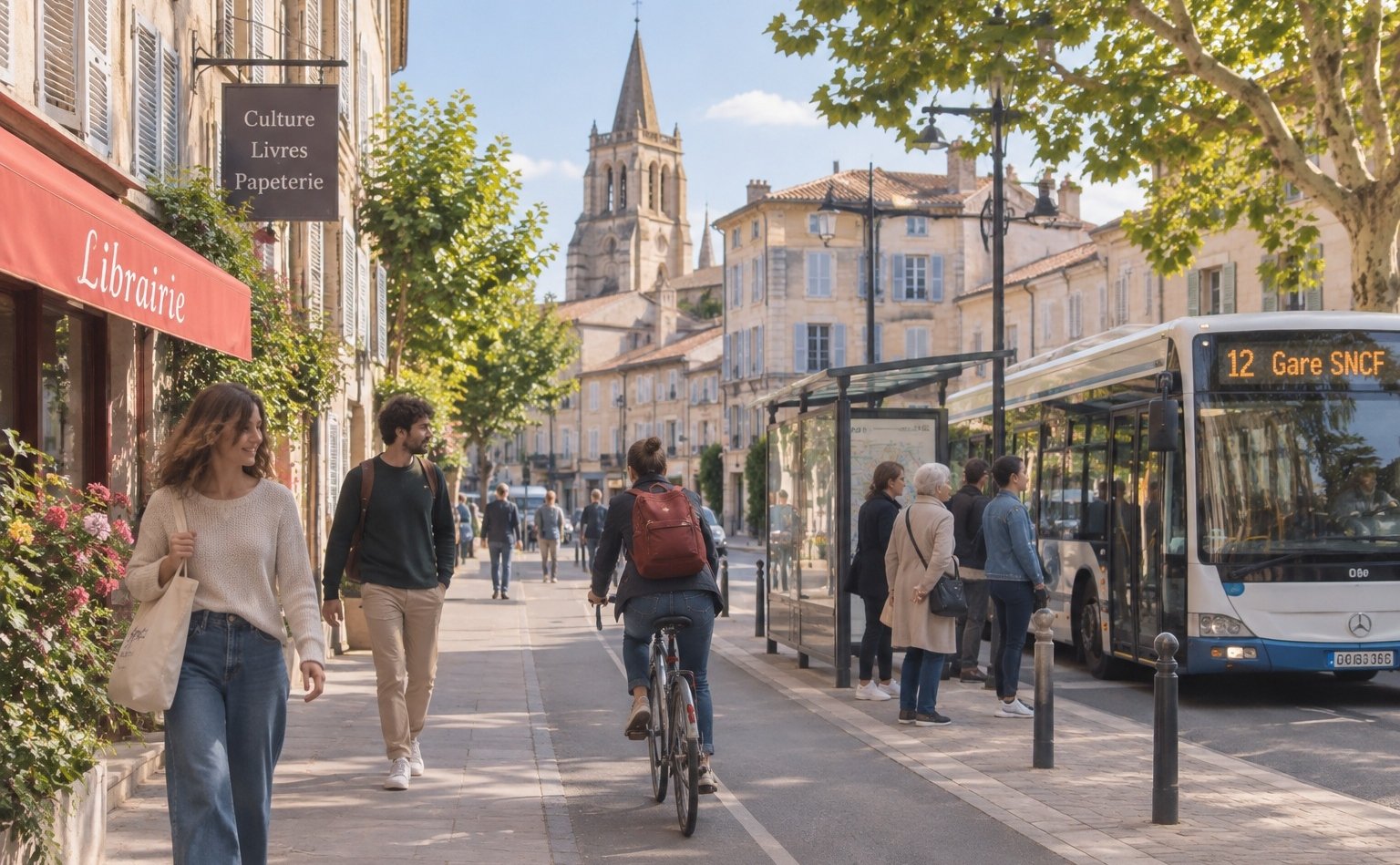

For many people contemplating a move to France, owning a car is simply taken for granted. After all, part of the attraction of French life is the freedom to explore the countryside, visit picturesque villages and stop for lunch at a restaurant that happens to catch your eye. But there’s also something rather appealing about a life in which you can walk to the shops, visit the local market and meet friends for coffee without ever having to get behind the wheel.
Cars are expensive to buy and maintain, and if you’re retiring to France on a fixed income, doing without one could make a considerable difference to your finances. British and American residents may also face the administrative complications of exchanging their driving licences, while older people may be thinking ahead to the day when driving is no longer an option.
What’s more the recent shortages at French petrol stations, together with the rising cost of petrol and diesel, have provided another reminder of the disadvantages of relying on a car. With fuel prices subject to sudden increases and supply disruptions, there’s an obvious attraction in being able to walk to the shops, use public transport and go about your daily life without worrying about filling up the tank. For anyone considering a move to France, it’s another good reason to think carefully about whether owning a car is really necessary.
Fortunately, France offers plenty of opportunities for living without a car, from its well-connected cities to smaller market towns where most daily necessities are within walking distance. The key is choosing the right location and understanding how you’ll manage those journeys that can’t easily be made on foot.
How dependent are the French on their cars?
I’ve lived in France for around 12 years, first in Paris, then in rural Normandy and now on the Mediterranean coast. Naturally, the practicalities of everyday life vary from one place to another, and between city, village and rural living.
In Paris, owning a car can be more trouble than it’s worth. Parking is expensive, traffic is dreadful and the Métro or RER will generally get you where you want to go much more quickly. The same is increasingly true of other large French cities, where public transport has improved considerably and restrictions on cars have made driving less attractive.
Outside the cities, however, cars remain an important part of French life. France is a large country, with a great many small towns and villages scattered across the countryside, and rural residents often rely on their cars for shopping, work and socialising. Nevertheless, there are also plenty of places where it’s possible to organise everyday life around walking, cycling and public transport.
In my part of the Var, for example, I can walk to the beach, shops, restaurants and most of the services I need. I managed without a car for about a year, and while I had to organise some journeys around bus timetables rather than my own convenience, I was able to get on with everyday life perfectly well. Visiting friends in neighbouring villages, attending specialist medical appointments and collecting bulky purchases required a little more planning, but having so much on my doorstep was a considerable advantage.
My neighbours here in the Var are a good illustration of just how dependent some French households remain on their cars. They’re an extended, intergenerational family, comprising an elderly lady, two younger families with children and an adult child still living at home. Between them, they have no fewer than seven cars, including a 4×4 that they need to reach a cabin they own in the hills. All seven are parked on the street, despite the family having a separate area on which to park, albeit a few metres away.
I’ve noticed that on-street parking is very much the norm here, even when houses have their own parking spaces. If getting into a driveway involves opening a gate or a bit of manoeuvring, people often seem to prefer leaving their cars on the road. It’s something worth bearing in mind when viewing property in a French town or village, particularly if you’re hoping to find somewhere with a quiet street and little traffic.
One of the interesting things about France is that a small town can sometimes be more convenient for everyday life than a much larger one. A town with 5,000 inhabitants and a thriving centre may have everything you need within walking distance, while a larger town with its shops concentrated in out-of-town commercial developments can be surprisingly car-dependent.
Where can you live in France without a car?
France’s major cities are the obvious starting point. Paris has one of the world’s most extensive public transport networks, combining the Métro, RER suburban trains, buses and trams. It’s quite possible to live there for years without needing a car, and many Parisians do precisely that.
Lyon is another excellent choice, with four Métro lines, trams, buses and funicular railways serving its hilly neighbourhoods. Bordeaux has an extensive tram network, while Toulouse combines its Métro and tram services with buses and a growing network of cycle routes. All three have good national rail connections, making it relatively easy to travel elsewhere in France.
However, you don’t have to choose a major city to enjoy the convenience of car-free living. In fact, some of France’s most attractive smaller towns offer an appealing combination of historic architecture, lively markets, independent shops and, in many cases, relatively affordable property.
Angoulême, in the Charente, is an attractive hilltop town with a historic centre, markets, restaurants and shops, as well as a TGV station with direct services to Paris and Bordeaux. The centre is compact enough for many everyday journeys on foot, although buyers should bear its steep streets in mind.
Périgueux, the capital of the Dordogne, has a lively old town, regular food markets, hospitals and a good selection of shops. It’s considerably more affordable than Bordeaux and offers the opportunity to enjoy the lifestyle of a traditional French market town without being dependent on a car for every errand.
Vannes, in southern Brittany, offers an appealing combination of a historic centre, coastal surroundings and good rail links. It’s more expensive than many inland towns, but the ability to reach Paris by TGV and enjoy much of everyday life on foot is a considerable advantage.
Albi, near Toulouse, is another possibility. Its beautiful historic centre is well supplied with shops, restaurants and services, and regional trains provide a useful connection to Toulouse. For someone who wants a smaller town without feeling isolated, it deserves consideration.
Other possibilities include Cahors, La Rochelle, Bayonne and smaller railway towns such as Redon in Brittany. Property prices vary enormously, but there are opportunities to find an attractive home within walking distance of everyday amenities without necessarily paying major-city prices.
When viewing properties, it’s worth paying as much attention to the surrounding neighbourhood as to the house itself. A home close to a market, supermarket, pharmacy and railway station could make daily life considerably easier, and the convenience may be worth paying a little extra for.
How useful are French trains?
France’s railway network is one of the country’s great advantages, making it possible to travel considerable distances without a car. Whether you want to visit another city, spend a weekend away or simply reach a neighbouring town, trains can be an important part of car-free living.
The best-known services are the TGVs, France’s high-speed trains, which connect Paris with major cities and many regional destinations. They’re excellent for longer journeys, and advance fares can be surprisingly reasonable.
For local journeys, the more important services are TER trains, or Transport Express Régional. These are regional services, generally operated under the responsibility of France’s regional authorities, connecting towns and cities within a region and sometimes crossing regional boundaries.
Depending on where you live, a TER can be an extremely practical alternative to driving. Someone living in Albi, for example, can travel to Toulouse by train, while residents of smaller towns along the Riviera can use the coastal railway to reach Nice, Cannes and other destinations. In some regions, trains run frequently enough to make commuting, shopping and medical appointments quite straightforward.
The third category is Intercités, conventional longer-distance trains serving routes that aren’t necessarily covered by the high-speed network. These can be particularly useful for travelling between regional towns.
One of the peculiarities of the French rail network is that it’s largely organised around Paris. This works extremely well if you’re travelling between the capital and a regional city, but cross-country journeys can be more complicated. For example, getting from Bordeaux to Lyon, a journey of around 550 kilometres by road, can involve taking a TGV north to Paris, crossing the capital from Montparnasse to the Gare de Lyon, and then catching another train south. It’s a considerable detour, and one that can seem particularly absurd when you look at a map.
Changing trains in Paris often means changing stations as well, which can involve a journey across the city by Métro, RER or taxi. That’s an additional consideration if you’re travelling with luggage or have mobility difficulties.
I’ve encountered this problem when planning walking trips in France. Getting to a regional city is often relatively straightforward, but reaching somewhere in the countryside, or travelling between two places that aren’t on the same main railway line, can involve a surprisingly complicated series of connections.
It’s worth checking actual journey times and connections rather than simply looking at distances on a map. A town with a frequent regional service can be an excellent base for exploring the surrounding area, even if you occasionally need to allow more time for a longer journey.
Could you manage in a French village?
For many international buyers, the attraction of France lies in its villages and small market towns, where life revolves around the local shops, cafés and weekly market. And there are still plenty of places where you can buy your bread, collect a prescription, enjoy a coffee and do much of your shopping without needing a car.
The best prospects are often villages that serve as centres for the surrounding countryside, rather than purely residential communities. A year-round population, a school, a weekly market and several independent shops are generally encouraging signs. In some places, the local shops and services are close enough together that everyday life can be remarkably convenient.
For retirees, access to medical services deserves particular attention. A village with a GP surgery and pharmacy is an excellent starting point, although it’s worth checking whether the doctor is accepting new patients and how you would reach a hospital or specialist when necessary. Some appointments may require a taxi or a journey by bus, but that needn’t be a reason to rule out village life.
The important thing is to distinguish between a village that functions as a small community in its own right and one where residents routinely drive elsewhere for everything. Both may be equally attractive, but they’ll offer quite different experiences if you don’t own a car.
What about buses?
France has extensive bus and coach networks, and these can be an inexpensive way of getting around. In cities, buses generally complement trams and Métro services and operate throughout the day. In rural areas, services are often organised by regional authorities, with routes connecting villages to larger towns.
In the Var, for example, regional buses connect many coastal towns and inland communities, and fares can be very reasonable. For someone who only needs to travel occasionally, taking the bus can be considerably cheaper than maintaining a car.
The main consideration is frequency. Some rural buses run only a few times a day, and certain services operate mainly during school terms. It’s therefore worth looking carefully at the timetable to see whether the service will suit your needs, particularly for shopping trips, appointments and journeys at weekends.
An alternative in some areas is transport à la demande (TAD), or demand-responsive transport. These services generally operate within a defined area and must be booked in advance, sometimes by telephone or through an app. Depending on the scheme, passengers may be collected from designated stops or offered a more flexible service.
TAD can be particularly useful in smaller communities where conventional bus services would be uneconomic, giving residents access to shops, services and transport connections that might otherwise be difficult to reach.
For anyone considering a particular town or village, the local mairie or communauté de communes should be able to explain what’s available.
Cycling, electric bikes and car-sharing
For shorter journeys, an electric bike can make an enormous difference. France has invested heavily in cycling infrastructure in recent years, particularly in urban areas, and the growth of e-bikes has made cycling a realistic option for people who wouldn’t otherwise consider it.
An electric bike can turn a five-kilometre journey into something quite manageable, even in moderately hilly country. It’s also useful for shopping, particularly if fitted with panniers or a basket. And in many parts of France, cycling is a pleasure in its own right, with dedicated routes through attractive countryside, along rivers and beside the coast.
It’s also worth checking whether your local authority offers financial assistance towards buying a bicycle. Although the French government’s national bicycle purchase grants ended in February 2025, many local schemes remain. Lyon Métropole, for example, offers eligible residents up to €400 towards an electric bike, or as much as €900 for certain electric cargo bikes, depending on income. Bordeaux Métropole and the Île-de-France region also operate subsidy schemes. Conditions vary, so check with your mairie or local authority before making a purchase.
Car-sharing offers another possibility. Services such as Citiz operate in a number of French towns and cities, allowing members to book a vehicle for anything from a short shopping trip to a weekend away. Some municipalities have introduced their own shared-car schemes, although availability is more limited in rural areas.
Another useful option is BlaBlaCar, the French car-sharing platform that connects drivers with passengers travelling in the same direction. It’s particularly popular for longer journeys between towns and cities, and fares are often considerably cheaper than train tickets. Drivers advertise their planned journeys, and passengers can book a seat and contribute towards the cost of fuel and other expenses. There’s also BlaBlaCar Daily, which focuses on shorter, regular journeys, particularly commuting.
BlaBlaCar can be particularly helpful for journeys between places that aren’t well connected by rail, although you’ll need to find a driver travelling at a suitable time.
Traditional car hire is another great option. If you only need a vehicle occasionally, hiring one for a few days may be considerably cheaper than owning, insuring and maintaining a car throughout the year. It also means you can still enjoy spontaneous trips into the countryside or longer holidays without having to pay for a vehicle you rarely use.
Can you get everything delivered in France?
Online shopping has made living without a car considerably easier, particularly for people who live some distance from larger shops.
Amazon and other online retailers operate throughout France, and next-day delivery is available for some products and addresses. Many retailers also use collection points, known as points relais, rather than delivering directly to your home. These can be particularly convenient if there’s one within walking distance, as you don’t need to be at home to accept a package.
In larger towns and cities, it’s often possible to have groceries brought to your door. Elsewhere, the main alternative is drive, which means ordering online and collecting your shopping from the supermarket. That’s useful if you occasionally hire or borrow a car, although less convenient if you rely entirely on public transport.
Some independent shops still offer local delivery, particularly to older customers, and pharmacies may be willing to make arrangements for people who have difficulty getting out.
Delivery services vary from one area to another, but with a combination of online shopping, local retailers and collection points, it’s possible to organise most purchases without needing a car. It’s worth checking what’s available locally before buying a property, particularly if you’re accustomed to the speed and convenience of British home deliveries.
Will driverless cars change things?
Autonomous vehicles could eventually make car-free living even more practical, particularly for older people who can no longer drive. The prospect of summoning a driverless vehicle to take you to a medical appointment or supermarket is certainly attractive, especially in rural areas where public transport is limited.
There have been some interesting developments. In September 2026, France authorised tests of Tesla’s Full Self-Driving technology on public roads as part of a wider European assessment of the system. Despite its name, the technology still requires a driver to remain attentive and ready to intervene.
France has also experimented with autonomous shuttles and other forms of automated public transport, although these have generally operated on restricted routes or under controlled conditions.
Fully driverless transport isn’t yet an everyday option, but the technology is developing, and it could eventually offer another way for people to enjoy independent living without owning a car.
The practicalities of living without a car
Even in a well-connected town, there will be occasions when having a car would make life easier. However, many of these situations are manageable with a little forward planning, particularly if you’ve chosen somewhere with good local amenities and transport connections.
Sundays are one example. Although Sunday opening has become more common in tourist areas and larger towns, many shops still close, and public transport services are often reduced. It’s worth finding out which shops open on Sunday mornings and keeping an eye on weekend bus and train timetables.
Medical appointments are another consideration. You may have a GP within walking distance but need to travel to another town for a scan, dental treatment or hospital consultation. In some cases, public transport will be perfectly adequate; in others, a taxi may be more practical. Allowing for occasional taxi fares in your household budget can make these journeys much less of a concern.
Visiting friends in the countryside may require a little more organisation, as France’s transport networks tend to connect smaller communities with regional centres rather than with one another. Two villages that are only ten kilometres apart by road may have no direct public transport connection, making car-sharing or an occasional hire car particularly useful.
Airport transfers are worth investigating too. A town with good rail connections may offer a straightforward journey to a major airport, while early-morning and late-evening flights can require a taxi or an overnight stay.
Then there’s the weather. Walking and cycling are delightful for much of the year, but during a Mediterranean heatwave, a spell of heavy rain or a cold winter in central France, you may be glad of an alternative. A reasonably frequent bus service can be especially valuable at these times.
These are all considerations when choosing where to live, rather than reasons to dismiss the idea of a car-free lifestyle. In a well-chosen location, most everyday journeys can be straightforward, leaving only the occasional trip that requires a little extra planning.
How much could you save by giving up your car?
The financial argument for living without a car is persuasive, particularly for retirees, and the savings could make a real difference to the kind of property you can afford.
According to a 2026 study by French motorists’ organisation Roole, the average cost of owning and running a car in France was around €440 a month in 2025. That includes the cost of acquiring the vehicle, fuel, insurance, maintenance, parking and other expenses.
That works out at approximately €5,280 a year, a substantial sum for anyone living on a fixed income.
Of course, the actual cost depends on the car you own and how much you use it. Someone driving an older, inexpensive vehicle and covering relatively few kilometres may spend considerably less, while a newer car, particularly one purchased on finance, can cost much more.
Even allowing €1,500 or €2,000 a year for train fares, taxis, occasional car hire and other transport expenses, a car-free household could potentially save several thousand euros annually. That’s money that could be put towards enjoying life in France, travelling or simply making retirement more comfortable.
Those savings could also influence your property budget. Suppose you pay an additional €40,000 for a centrally located apartment or townhouse rather than buying a cheaper property on the outskirts. If doing so allows you to dispense with a car costing €5,000 a year, the extra purchase price could be offset by eight years of avoided motoring costs, before allowing for alternative transport expenses, financing or the different running costs of the properties.
There are other advantages to living centrally. A property within walking distance of shops, restaurants and medical services may prove easier to manage as you get older, and it could appeal to future buyers who are also looking for a more convenient lifestyle.
Of course, central properties may have less outside space, and parking can be limited or expensive. But for someone who values being able to walk to the market, enjoy a meal out and take part in local life without driving, the advantages can be considerable.
How to choose somewhere to live without a car
If you’re seriously considering a car-free life in France, I’d suggest making the location just as important as the property itself.
Look for a town or village with a good selection of shops and services (including a general medical practice and pharmacy), a year-round population and public transport connections that are useful for ordinary journeys, not just occasional holidays. A lively town centre, regular market and convenient railway station can add enormously to the pleasure of living in France.
Check the location of the railway station, bus stops, supermarket, pharmacy and medical facilities. A property described as being within walking distance of the centre may be ideal, but it’s worth walking the route yourself. A kilometre uphill in 35°C heat is rather different from a kilometre along a level, shaded street.
It’s also worth considering how well a location will suit you in the longer term. A home with shops, cafés and medical services nearby can be particularly appealing as you get older, allowing you to remain independent even if you eventually decide to stop driving.
Most importantly, spend some time in the area before committing to a purchase. Ideally, rent somewhere for a week or two and try living without a car. Do your shopping, use the local buses, take a train to a neighbouring town and find out how you’d get to the nearest hospital or airport. Trying this outside the tourist season will give you a much better idea of what everyday life would be like throughout the year.
Living without a car in France is not only possible, but in the right location it can be a thoroughly enjoyable way of life. The country has an enormous variety of towns and villages, and finding somewhere that combines the charm of French life with practical everyday convenience is well worth the effort.
For me, the ideal compromise would be a small, lively town with shops and services on the doorstep, good rail connections and enough going on throughout the year to make daily life interesting. You might occasionally miss the freedom of having a car, but there’s a great deal to be said for being able to walk out of your front door, buy fresh bread, visit the market or meet friends for lunch without having to think about driving at all.