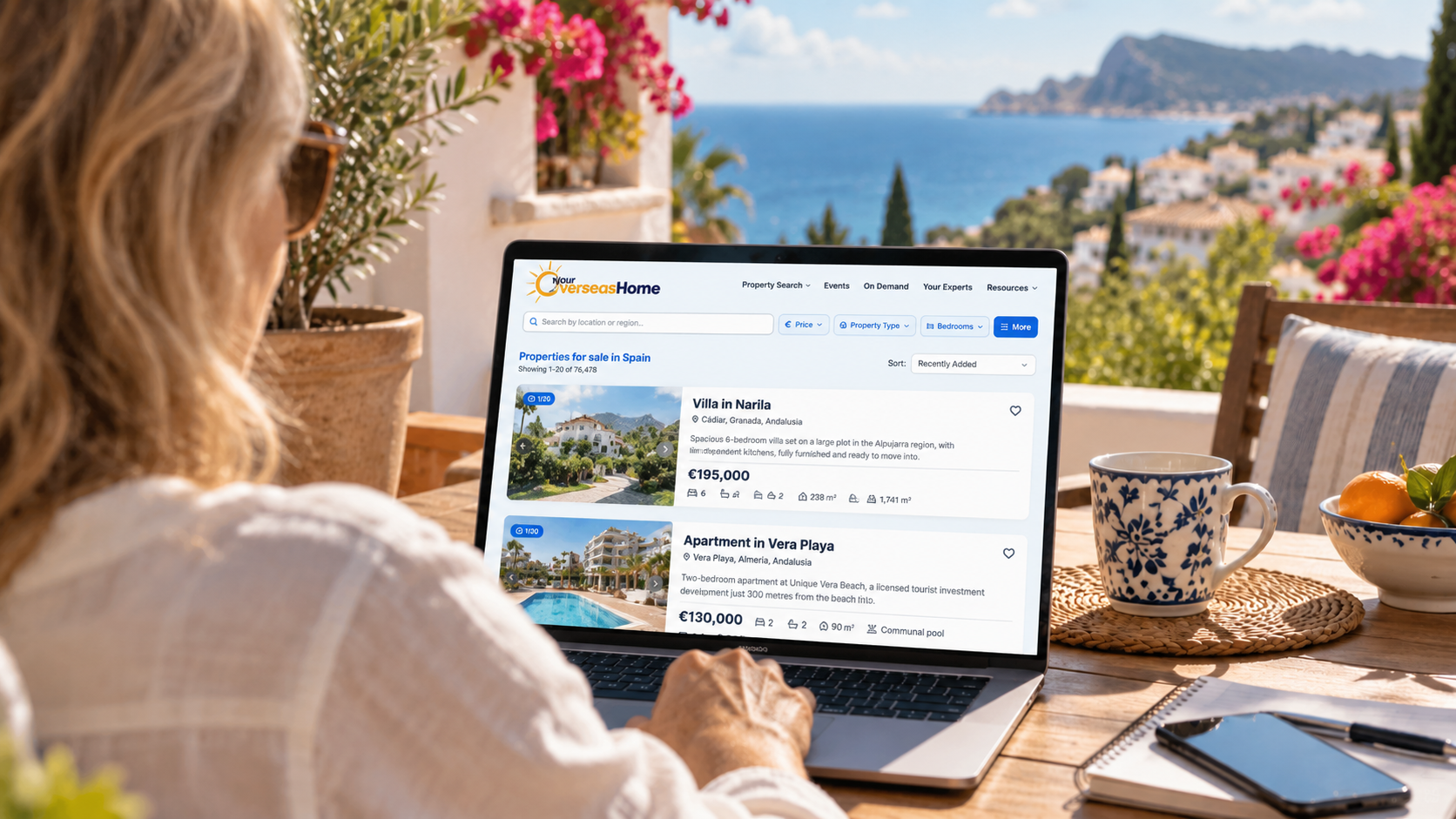




For British, US and other non-EU citizens, to live in Spain full time you need a visa. The good news: they’re fairly easy to obtain, and we can help.
If you’ve been dreaming of long, leisurely stays at your future home in Spain, you’ve probably bumped into the 90-day rule. For many non-European Union (EU) buyers – including UK citizens post-Brexit – it’s one of the biggest concerns when buying abroad.
The same rules apply to other ‘third country nationals’, as the EU refers to them; those from the USA, Canada and Australia.
But here’s the reality. Spain welcomes international buyers, especially those who support the economy. There are several routes to spending longer in Spain, depending on your finances, employment and personal circumstances. However, buying a property doesn’t automatically give you residency rights – you’ll still need to qualify for the appropriate visa or residence permit.
Moreover, for retirees, our own study found that Spain was the easiest place to retire on the European continent.
Let’s investigate your options.
Can you stay in Spain for longer than 90 days? Yes, but if you’re a British citizen, you can’t normally spend more than 90 days in Spain within any 180-day period without a visa or residence permit. This means you can’t simply stay for six months at a time, even if you own a property there. However, there are ways to stay longer, including applying for a non-lucrative visa if you’re retired or financially independent, or a digital nomad visa if you work remotely and meet the requirements.
Contents
Thinking about moving or buying abroad? Start here
Spend one online day getting practical answers on property, visas, tax, finance and the next steps in your overseas plans.
- 35+ live seminars
- Speak to industry experts
- 30 days of on-demand access
Join at any point during the day.
Get practical answers before you buy or move abroad
Explore upcoming expert-led sessions on property, finance, tax, legal issues, visas and relocation.
The 90-day rule: what it means
If you hold a non-EU passport (including UK, US and others), you can spend up to 90 days in any 180-day period in the Schengen Area (which includes Spain). That means you can visit for holidays, viewing trips and short stays without any visa at all. You may also need to register your biometric details under the EU's Entry/Exit System (EES), which records when non-EU travellers enter and leave the Schengen Area. EES registration is free. A separate system, ETIAS, is expected to launch in late 2026 and will require eligible visa-exempt travellers to obtain travel authorisation, costing €20 for most adults.
But if you’re planning to stay for longer periods – perhaps entire seasons or several months at a time – you’ll need a visa or residency option that fits your situation.
"The 90 days in the 180-day rule is essentially the days you're allowed to be in the country as a tourist – three months in the last six months. You can actually spend up to six months in a rolling year without becoming a resident, you just can't spend six months in one single period."
– Camila Garcia, senior legal manager at Move Wise
Watch the full webinar with visa experts Move Wise, here:
Good news: you’ve got options
Spain offers several visa types specifically designed for people who want to live part-time or full-time in the country without needing to work there.
Here are three of the most popular:
1. The non-lucrative visa
This is ideal for retirees or those with independent income. You’ll need to show proof of funds (such as pension or investment income) and private health insurance. It’s often used by early retirees and can lead to residency.
In 2026, you'll need to demonstrate sufficient financial means equivalent to at least €28,800 per year for the main applicant, plus €7,200 for each dependent family member. This can be demonstrated through qualifying savings, regular income or other acceptable financial evidence. You'll also need suitable health insurance and must not undertake paid work, including remote work, while living in Spain under this visa.
The initial visa lasts for one year but can then be renewed every two years until you reach the five-year threshold for permanent residency.
2. The digital nomad visa
A newer option for remote workers or business owners who work online. The digital nomad visa (Teletrabajadores de Carácter Internacional) allows you to live in Spain while working for clients or companies based abroad.
The length of your initial permission depends on how you apply. An eligible applicant applying from within Spain may receive a three-year residence authorisation, while a visa issued through a Spanish consulate is generally valid for up to one year. Some applicants may also qualify for a special tax regime, but the 24% rate isn't automatic and depends on their circumstances.
3. An EU passport
If you’re Dutch, Irish, or hold another EU passport, none of this applies – you can live in Spain without restriction. A surprising number of people born outside the EU can obtain an EU passport, and thus live in Spain year-round.
The first group are those who can claim an Irish passport. If your parent was born anywhere on the island of Ireland (including Northern Ireland), you can simply apply for a passport. If your grandparent was born in Ireland there is a more long-winded process, but you can still claim one.
Similar rules apply for those with grandparents born in countries like Italy, Germany, Poland or countries from the former Yugoslavia. This opens the door to many Americans and Australians for example.
Other benefits
A Spanish long-stay visa or residence permit allows you to remain in Spain for the period authorised. However, it doesn't give you unrestricted residency rights elsewhere in the Schengen Area, where the usual short-stay limits generally still apply. If you're settling in Spain, you'll normally need to register your address with your local town hall (ayuntamiento) through the padrón system and complete any other applicable residence documentation.
When you have residency in Spain other practical benefits open up. These may include better access to state healthcare, lower taxes, a better range of mortgages and bank accounts. If Spain raises taxes on non-residents you also benefit.
Your Overseas Home can introduce you to legal and immigration specialists who will help you navigate your options.