
Portugal is a popular choice for British retirees, but where should you settle? We reveal the five best regions to retire to in Portugal, comparing property prices, healthcare, transport links and everyday living.
Morning coffee overlooking the Atlantic, fresh fish for lunch and plenty of sunshine – retirement in Portugal has obvious appeal. But choosing somewhere to spend your retirement involves more than finding a beautiful property. We’ve compared five regions to help you decide where you could enjoy life all year round.
Our 2026 buyer survey [1] found that retirement was the main reason people wanted to buy in Portugal, with 56.7% of prospective property buyers choosing it as their purpose.
Portugal also performs well on affordability. Our Cost of Living Index 2026 [2] found that a representative basket of everyday expenses was 29% cheaper than in the UK.
In short: The Algarve is our best all-round region to retire to in Portugal, thanks to its climate, established international communities, healthcare and transport connections. Central Portugal stands out for affordable property, while the Silver Coast offers coastal living at more manageable prices. Porto and Northern Portugal suit retirees seeking city amenities, while Madeira appeals to those prioritising a mild climate.
Contents
How we ranked the best regions to retire to in Portugal
We’ve considered property affordability, healthcare, climate, transport connections, international communities and access to everyday amenities. We’ve also looked at the priorities of prospective buyers in our 2026 reader survey.
The Algarve was the most popular Portuguese destination, chosen by 26.2% of respondents who answered the regional preference question. However, interest extended well beyond the south, with Porto and inland Central Portugal also attracting buyers.
Affordability is important. The most common property budget among Portugal buyers in our survey was €200,000–€299,999, selected by 26.7%.
To compare regional prices, we’ve used October 2026 asking-price data from idealista [3]. These are advertised prices rather than completed sales, and prices within individual regions can vary considerably.
What are Portugal’s best regions for retirees?
1. The Algarve – best all-rounder
- Best for: Sunshine, established international communities and coastal living.
- Where to look: Lagos, Tavira, Faro, Olhão and São Brás de Alportel.
- Regional asking price: €4,231/m².
- Why it ranks first: The Algarve combines a warm climate, established services, international connections and a wide choice of towns suitable for year-round living.
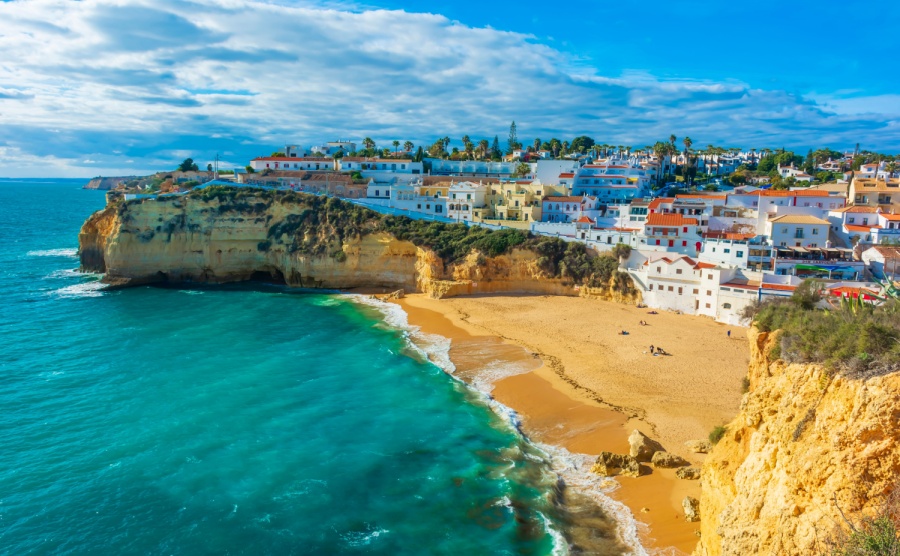
It’s easy to see why the Algarve remains Portugal’s most popular destination among our prospective buyers.
You have sandy beaches, golf courses, coastal walking routes and a large English-speaking community. Faro Airport also makes visiting family in the UK relatively convenient.
For retirement, location matters enormously. Lagos offers a lively centre, marina and established international community, although properties close to the coast can command high prices.
Tavira, in the eastern Algarve, has a more traditional Portuguese atmosphere, with riverside cafés, markets and a walkable centre. Nearby Olhão is worth considering if you enjoy fresh seafood, local markets and being close to Faro.
Healthcare is another advantage. Faro has a public hospital, while private healthcare facilities are available in several larger Algarve towns.
The main drawback is affordability. At €4,231/m², the Algarve’s regional asking price is considerably above Portugal’s national average (€3,249/m²).
You should also consider the summer crowds. Some coastal neighbourhoods become extremely busy during peak holiday season, while others are quieter during winter.
For better value, look inland around São Brás de Alportel or towards less tourist-focused neighbourhoods.
2. Central Portugal – best for affordable retirement
- Best for: Property affordability, countryside living and a slower pace of life.
- Where to look: Coimbra, Tomar, Castelo Branco and Fundão.
- Regional asking price: €1,810/m².
- Why it ranks: Central Portugal offers substantially lower property asking prices than the Algarve, with established towns and access to essential services.
If you’d rather spend more of your retirement income enjoying life than paying for your home, Central Portugal deserves a closer look.
This region offers traditional stone houses, smallholdings, riverside towns and larger properties that would cost considerably more near the southern coast.
Coimbra is particularly appealing for retirees who want access to healthcare, shops, restaurants and cultural activities. As a university city, it has a lively atmosphere throughout much of the year.
Tomar is another option, with its historic centre, cafés and established local community. Further east, Castelo Branco and Fundão offer access to countryside and comparatively affordable property.
However, the lower prices come with compromises.
Summers can be extremely hot inland, while winters are generally cooler than in the Algarve. Some rural properties also require substantial maintenance, and access to hospitals or specialist medical services can involve longer journeys.
If you’re planning to retire here, we’d recommend choosing somewhere within easy reach of a substantial town rather than an isolated village.
3. The Silver Coast – best for coastal living at a lower price
- Best for: Atlantic beaches, traditional towns and coastal living outside the Algarve.
- Where to look: Caldas da Rainha, Nazaré, São Martinho do Porto and Peniche.
- Regional asking price: €2,123/m² in Leiria district.
- Why it ranks: The Silver Coast offers established towns, beaches and access to Lisbon without the Algarve’s regional property prices.
The Silver Coast has become an appealing alternative for buyers who want to live near the sea without paying southern Portugal’s premium prices.
It stretches along part of Portugal’s western coastline, with fishing towns, broad sandy beaches and communities that remain active throughout the year.
Caldas da Rainha is particularly worth considering for retirement. Its markets, shops, hospital and everyday amenities make it a practical base, while the beaches of Foz do Arelho are a short drive away.
São Martinho do Porto offers a sheltered bay and a relaxed seaside atmosphere. Nazaré is another possibility, although its popularity with visitors means you’ll want to explore residential neighbourhoods away from the busiest areas.
The Silver Coast is generally cooler and windier than the Algarve, particularly during winter.
But if you enjoy walking, fresh Atlantic air and being within reach of Lisbon, that may be a worthwhile trade-off.
One consideration is transport. Some coastal towns have limited public transport, so choosing somewhere with walkable amenities could become increasingly important later in retirement.
4. Porto and Northern Portugal – best for city amenities and culture

- Best for: Healthcare, public transport, restaurants and year-round city life.
- Where to look: Porto, Vila Nova de Gaia, Braga and Viana do Castelo.
- Regional asking price: €2,601/m² across Northern Portugal.
- Why it ranks: Northern Portugal combines established cities, healthcare facilities, transport connections and access to the coast and countryside.
Retirement doesn’t have to mean moving to a quiet seaside village.
If you enjoy museums, restaurants, markets and having plenty happening throughout the year, Porto and Northern Portugal are worth considering.
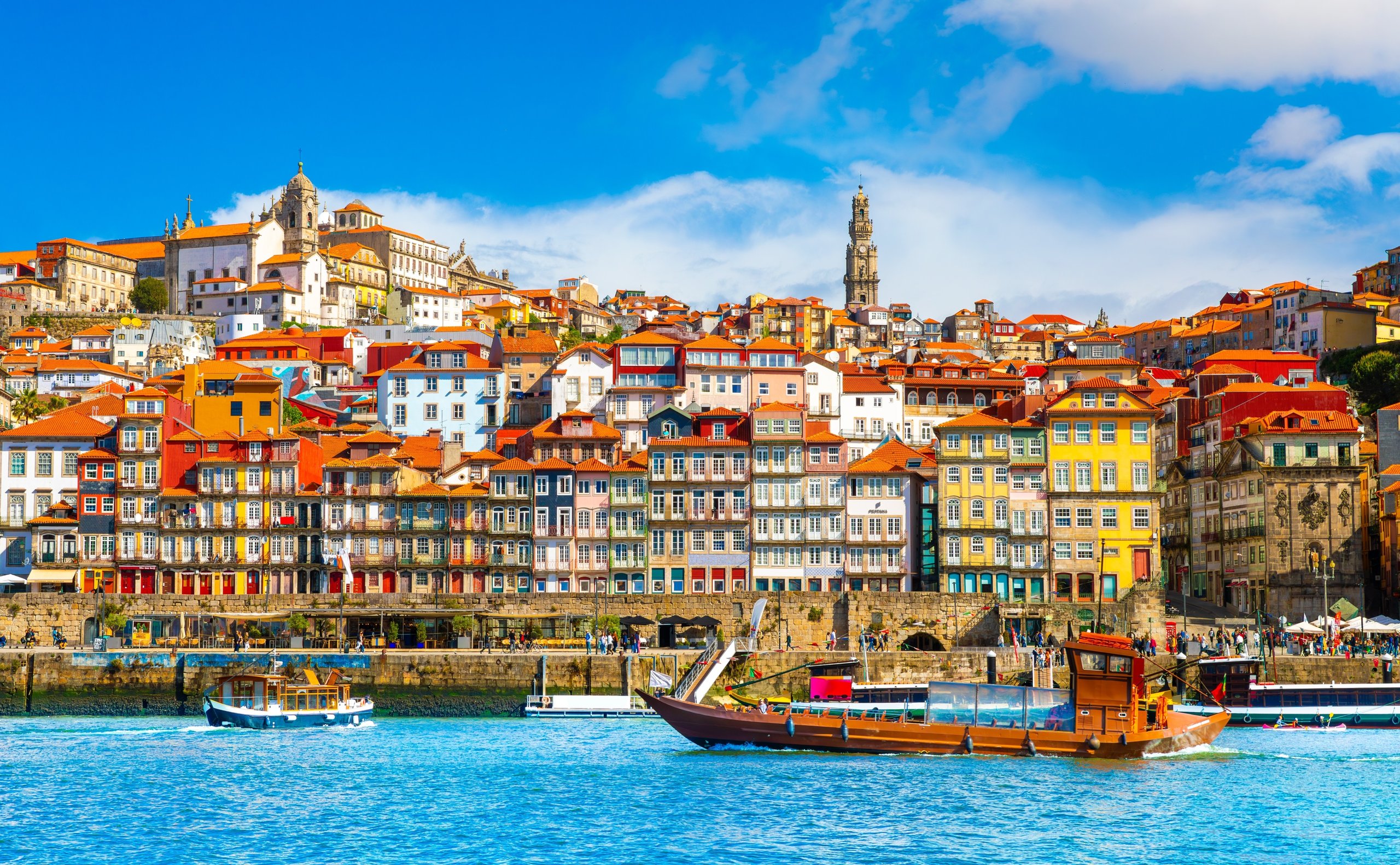
Porto offers an extensive public transport network, major hospitals and an international airport. You could spend your mornings walking beside the Douro and your afternoons exploring neighbourhood cafés or visiting the coast.
However, central Porto has become expensive, and its steep streets may be challenging if mobility becomes a concern.
Vila Nova de Gaia, across the river, offers alternative neighbourhoods, while Braga is worth considering for its historic centre, services and connections to Porto.
Viana do Castelo is another possibility if you’d prefer a smaller coastal city.
Northern Portugal receives considerably more rainfall than the Algarve, particularly during winter. But the greener countryside, established communities and city amenities could outweigh the weather for some retirees.
5. Madeira – best for a mild climate and outdoor living
- Best for: Mild temperatures, walking, gardens and island living.
- Where to look: Funchal, Caniço, Câmara de Lobos and Machico.
- Regional asking price: €3,765/m².
- Why it ranks: Madeira offers a relatively mild year-round climate, established healthcare facilities and an appealing outdoor lifestyle.
If the thought of spending your retirement surrounded by gardens, coastal views and mountain scenery appeals, Madeira could be a strong contender.
The island’s subtropical climate makes it particularly attractive to retirees who want to avoid cold winters.
Funchal is the most practical base for many overseas residents, with hospitals, shops, restaurants and cultural activities. It also has an established international community.
Caniço and Machico offer alternatives, depending on your preference for coastal access and proximity to the airport.
However, Madeira isn’t necessarily the affordable retirement destination some buyers imagine.
Property prices are relatively high, particularly in desirable areas around Funchal. The island’s steep terrain can also make walking difficult, and some residential areas are much easier to manage with a car.
You should also consider the practicalities of island living, including travel to mainland Portugal and access to specialist medical treatment.
Where can you retire in Portugal without a car?
If you’re planning to retire permanently, it’s worth considering how you’ll manage everyday life if you eventually decide to stop driving.
Of our five recommended regions, these locations are particularly worth investigating:
- Porto: An extensive metro, bus and rail network, although some neighbourhoods have steep streets.
- Faro: A compact centre with shops, services and transport connections.
- Coimbra: A good range of amenities and public transport, although the historic upper town is hilly.
- Caldas da Rainha: A manageable town centre with markets, shops and healthcare facilities.
- Funchal: Regular bus services and plenty of amenities, but steep hills in some residential areas.
Before buying, walk the route to the nearest supermarket, pharmacy and health centre. A property that’s convenient when you’re driving everywhere might feel very different in ten years’ time.
What should I know before retiring to Portugal?

Choosing your location is only part of the process.
British citizens without relevant EU residence rights generally need an appropriate visa or residence permit to live in Portugal beyond the Schengen short-stay allowance of 90 days in any rolling 180-day period.
Portugal has a residence visa route for retirees and people living on their own income, often referred to as the D7 visa. You can find details on the Portuguese government’s official website.
Healthcare is another important consideration.
Legal residents can register with Portugal’s national health service, the SNS. Some UK State Pension recipients may also qualify for an S1 form, which allows the UK to cover their state healthcare costs.
The UK government’s guidance on living in Portugal explains the arrangements.
You should also investigate how becoming Portuguese tax resident could affect your pension, investments and other income. Don’t assume that Portugal’s former Non-Habitual Resident tax regime is available to new retirees.
Our guide to retiring to Portugal is a useful starting point for planning your move.
Where is the best place to retire in Portugal?
For most British retirees, we’d put the Algarve at the top of the shortlist.
It offers the strongest overall combination of climate, international communities, healthcare, transport links and year-round amenities.
However, the best region depends on your priorities.
If affordability matters most, Central Portugal offers considerably more property for your money. The Silver Coast is worth considering if you want to live near the sea without paying Algarve prices.
For city amenities and public transport, Porto is a strong alternative. And if mild temperatures and outdoor living are your priorities, Madeira could be the answer.
The key is to choose somewhere that suits your everyday life, rather than simply your favourite holiday destination.
Spend time in your shortlisted locations outside the main tourist season. Visit local supermarkets, explore residential neighbourhoods and check the journey to the nearest hospital.
You might discover that the town you enjoyed visiting for a fortnight is quite different when you’re planning to live there permanently.
What should I do next?
Once you’ve narrowed down your preferred regions, start comparing properties and the practical costs of living in each location.
Our guide to where to buy in Portugal can help you explore the options, while our ranking of the easiest places to retire overseas lets you compare Portugal with other destinations.
And remember that buying a home in euros while holding savings in pounds introduces exchange rate risk. Planning your currency transfers before committing to a purchase can help you understand your budget.
Summary
The Algarve is our top all-round region for retirement in Portugal, combining sunshine, healthcare and established international communities. Central Portugal offers affordable property, while the Silver Coast suits coastal buyers. Porto provides city amenities and transport, and Madeira appeals to retirees seeking a mild climate and outdoor living.
FAQs
The Algarve is our top choice for its warm climate, established international communities, healthcare facilities and transport connections. However, Central Portugal, the Silver Coast, Porto and Madeira may suit different budgets and lifestyles.
Central Portugal is among the more affordable regions in our shortlist. In October 2026, its average advertised property price was €1,810/m², compared with €4,231/m² in the Algarve. More remote inland districts can be cheaper still.
Many everyday expenses can be lower. The Your Overseas Home Cost of Living Index 2026 found that its representative basket of goods and services cost 29% less in Portugal than in the UK. Actual living costs depend on your location, housing and lifestyle.
Yes. British pensioners can retire to Portugal if they meet the relevant immigration requirements. The D7 residence visa may be suitable for retirees with qualifying income. Buying a property does not automatically provide residency rights.
Legal residents can register with Portugal’s national health service. Some UK State Pension recipients may also qualify for an S1 form. You should confirm your eligibility and healthcare arrangements before moving.
Porto is a strong choice thanks to its public transport network and access to healthcare and everyday services. Faro, Caldas da Rainha and selected neighbourhoods of Funchal are also worth considering.
Sources:
[1]: Overseas property buyer survey 2026: 1,107 buyers – Your Overseas Home
[2]: Cost of Living Overseas Index 2026 – Your Overseas Home
[3]: Price evolution of houses for sale, Portugal – idealista