


Renting out a home in Italy can turn a holiday property into a genuine income stream, particularly in art cities, coastal towns and villages that pull in tourists through the summer months. A one-bedroom apartment in the historic centre of Ostuni, Puglia, or Lucca in Tuscany, might cost around €130,000 (£108,000), yet let for roughly €1,000 a week to tourists in August. Even at 12 weeks a year, that is a gross rental yield of more than 9%.
But Italy’s rental rules changed again from 1 January 2026, and the tax position for anyone with more than one property is stricter than it used to be. The rules that apply to you now depend heavily on how many properties you let, not just how much you earn from them.
This guide sets out what changed for 2026, what stayed the same, and what you need in place before you take your first booking.
Key takeaway: Renting out a home you own in Italy is legal for foreign owners, whether short-term to tourists or long-term to tenants, but registration, safety and tax obligations apply from your first booking. The tax position depends heavily on how many properties you let: cedolare secca gives 21% on one property and 26% on a second, but a third property makes you a business for tax purposes. Get a CIN before you list.
Contents
Short-term rental income potential
Online platforms such as Airbnb and Booking.com have made it straightforward for property owners to earn extra income from an Italian home, often one bought for residential use in an art city, near the sea or in a popular tourist town.
If you own a property you only use for holidays, letting it out when you are not there can help cover running costs. Even full-time residents may have a spare room or annexe generating income that would otherwise sit idle.
Get the free Italy Buying Guide
Costs, regions, the legal process and more, from first viewing to picking up the keys.
Owners in popular tourist areas have done well from this model. However, as in many parts of the world, it has reduced the supply of long-term rentals available to local people, which is part of why the rules keep tightening.
Before you buy, check the market
Before buying with the intention to let, check how strong local competition already is. Consider whether the services you might need are available nearby, such as laundry, meet-and-greet, cleaning, maintenance and pool care.
Some cities that attract high numbers of tourists have gone further than national rules and restricted new holiday lets directly. Florence is the clearest current example: on 26 May 2026, the city council voted to nearly triple the area where new short-term rentals are barred, extending the existing ban beyond the UNESCO-listed historic centre to cover more than 100,000 residential properties in total, up from around 35,600. Existing lets keep operating for now, but the vote signals the direction Italian cities are moving in, and similar local restrictions are worth checking before you commit to a rental strategy in any high-tourism city.
Tax on short-term rental income in 2026
Rental income from an Italian property is taxed in Italy whether or not the owner lives there. Most owners use cedolare secca, an optional flat-rate tax that replaces IRPEF (income tax) with a single fixed rate and avoids the paperwork of the standard regime.
The 2026 Budget Law (Legge 30 dicembre 2025, n. 199, published in Gazzetta Ufficiale n. 301 on 30 December 2025 and in force from 1 January) tightened who can use it. The relevant change sits at Article 1, comma 17, amending the earlier threshold set in Legge 178/2020:
- First property: 21% flat rate.
- Second property: 26% flat rate.
- Third property onwards: cedolare secca no longer applies. The activity is automatically treated as a business, whatever your scale or intentions. You will need to register for VAT (partita IVA), file a SCIA (Certified Start of Business Report) and meet the associated accounting and social security obligations.
This is a meaningful tightening from the previous rule, which allowed up to four properties before business status applied, with SCIA only required beyond that. From 2026, SCIA is triggered automatically at three properties, not as a separate later step. If you are close to this threshold, it is worth speaking to a commercialista (Italian accountant) before the tax year is out, since some of the finer detail on how the third-property rules interact with existing rate bands is still being clarified by the tax authorities.
If you use a rental portal or agent and opt for the flat tax, they must report your short-term rental contract details to the Revenue Agency and can withhold the 21% tax on your behalf, passing you the data so you can check it is correct.
You can no longer simply give a guest directions to a key box and allow them to let themselves in.
Legal requirements for short-term lets
1. Safety standards. Your property must comply with safety and habitability rules, including devices for detecting combustible gases and carbon monoxide, plus portable fire extinguishers. Keep documentation showing these are regularly checked and maintained. Missing or non-functioning equipment can bring a fine of €600 to €6,000 per violation.
2. Identification codes. You must notify your local municipality (Comune) and obtain a regional rental identification code (CIR), plus the mandatory National Identification Code (CIN), which must be displayed outside the property and in all advertising. Operating without a CIN carries a fine of €800 to €8,000; having one but failing to display or publish it carries €500 to €5,000. From 2026, the CIN also has to appear on your Italian tax return (Modello Redditi PF, quadro RS, or Modello 730), and a return filed without it is rejected automatically. The Ministry of Tourism keeps a public record of CINs by region, with a user guide explaining how to apply.
3. Greet guests in person. Guests must be met in person on arrival so their identity can be verified. Key boxes for self-check-in are no longer permitted on public surfaces such as railings, gates or lamp posts. Florence, Rome, Venice, Milan and Bologna have all enforced this, with police physically removing key boxes and fining owners for each one found.
4. Register guests. You must register guests with the local police authority (Questura) within 24 hours of arrival, done online via Alloggiati Web once you have an access code.
5. Tourist tax. Most Italian municipalities now charge a tourist tax (Tassa di Soggiorno), typically €1 to €10 per person per night, with higher caps in the top art cities and a temporary uplift for towns near the Milan–Cortina 2026 Winter Olympics. You collect and remit it, with an annual declaration due to the Revenue Agency. Where a municipality has registered with Airbnb’s tourist tax portal, Airbnb may collect and pay this on your behalf.
6. City-specific restrictions. National rules are the floor, not the ceiling. Venice applies a 120-day threshold: let beyond that in a year and you move into stricter, business-form registration through the SUAP system, on top of the standard Veneto regional registration and national CIN. Florence, as above, has gone further still with an outright ban on new lets across an expanding zone. The national government has largely left this to individual cities rather than imposing a nationwide cap, so always check the specific city or town’s current position rather than relying on national rules alone.
Conditions for the flat-rate tax
- Designed for individuals letting to tourists on a non-entrepreneurial basis. You can hold up to two properties under this regime from 2026.
- Applies to short-term rental contracts of 30 days or less.
- Only available on residential properties in cadastral categories A1 to A11 (excluding A10 offices and studios).
- Can include ancillary services such as bedding, cleaning and wi-fi without affecting eligibility.
- Tax can be handled directly by you or through a rental portal or agent.
Long-term rental options
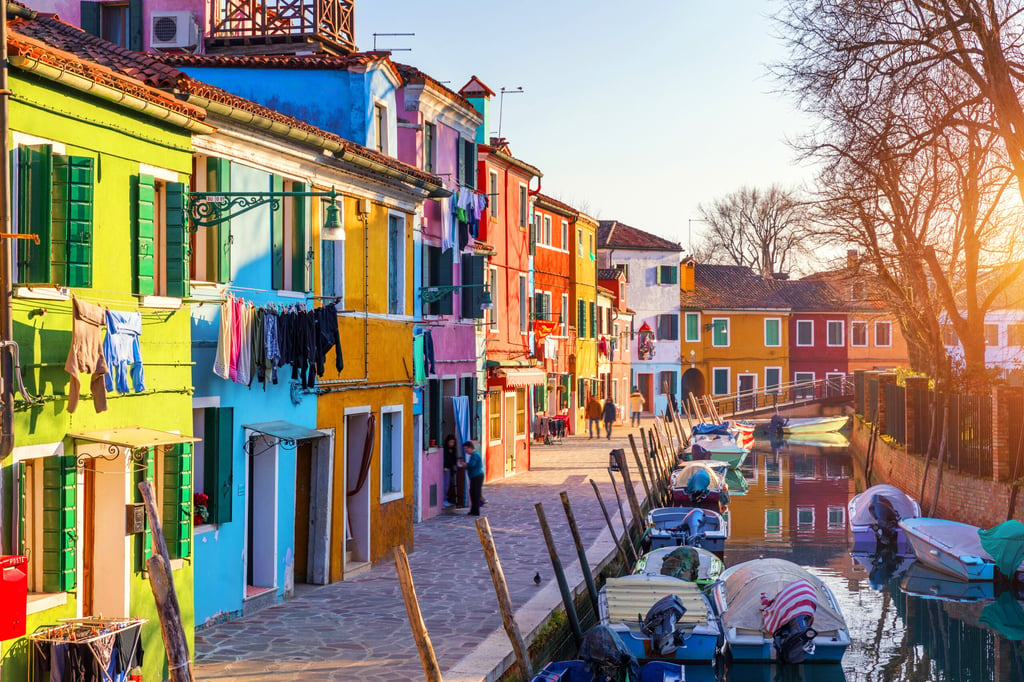
Long-term lets need less regular upkeep than holiday rentals and offer predictable, year-round income, which is why some holiday-let owners switch as their circumstances change.
The government continues to offer tax incentives for regulated long-term agreements. In Milan, for example, “canone concordato” agreements give landlords a 10% flat tax (cedolare secca), a 25% reduction in property tax (IMU) and a shorter minimum lease of five years rather than eight on the free market.
Free market contracts are the most common type. They run for a minimum of four years with automatic renewal for another four. The landlord cannot end the contract early; the tenant can, with six months’ notice. You can ask for a deposit of up to three months’ rent.
Other contract types worth knowing:
| Contract type | Minimum term | Key feature |
|---|---|---|
| Agreed rent (canone concordato) | Three years, plus two-year renewal | Municipality-regulated rent, landlord tax benefits (as little as 10%) |
| Student lets | Six months to three years | Regulated rent, landlord tax benefits |
| Luxury and historic | Freely negotiable | For A/1, A/8, A/9 or historic-interest properties |
Obligations and proving habitability
The landlord must register the contract within 30 days and give the tenant the details within 60 days. Contracts over 30 days must be registered with the Italian Revenue Agency (Agenzia delle Entrate), which can be done online through Fisconline. Registration fees are split between landlord and tenant.
You are also responsible for keeping the property in a habitable condition and meeting the safety requirements set by law. Documents that support this, whether for the authorities, a buyer or a prospective tenant, include an energy performance certificate (APE), a land registry certificate, a cadastral plan and a certificate of habitability, issued by the municipality’s technical office to confirm the building is safe, hygienic, accessible and fire-compliant.
What should I do next?
Deciding which contract suits your plans, finding a reliable tenant and calculating a realistic yield is easier with local support behind you. Many owners we help choose to work with a property management specialist in Italy rather than manage lettings alone from abroad.
Since the information in this guide can change at national and local level, it is worth speaking to a property lawyer with recent experience of the Italian rental market in the area where you are buying, and a tax advisor licensed to work in Italy about which regime suits your situation.
If you are planning to bring rental income back to the UK, exchange rates can make a real difference to what actually lands in your account. Currency Transfer and Property Purchases Explained covers how to plan transfers and reduce the impact of rate swings.
For the full cost picture before you buy, see our guide to the costs of buying property in Italy, or browse current listings in Italy if you are still deciding where to buy.
Summary
Italy’s rental rules tightened further from 1 January 2026. Cedolare secca, the flat-rate rental tax, now covers only your first two properties, at 21% and 26%. A third short-let property makes you a business for tax purposes, whatever your scale. Enforcement has real teeth: fines of €500 to €8,000 for CIN and safety breaches, and cities including Florence, Venice, Rome, Milan and Bologna are adding their own restrictions on top of national rules. Long-term lets still carry their own set of contract types and tax benefits. Given how often the detail shifts, get current advice from a local lawyer or tax advisor before you commit.