

British expat Julia Silk shares what she has learned about living in Greece without a car – and with one. Drawing on her own time in a Greek village, she explains how ferries, buses, boats and cars fit into everyday life, and what property buyers should consider before choosing where to live.
I have experienced living with and without a car in Greece, where transport options vary from mopeds to Flying Dolphins. In our local village we only travelled to beaches on foot or by boat, but for longer trips ferries and buses were very useful.
Contents
- Getting around the village without a car
- How the locals manage without cars
- Islands without cars
- When you can’t park near your house
- When your situation changes
- Who really needs a car in Greece?
- Catch a lift
- Bus services
- Travel by bus and hydrofoil
- Trains and metro
- Can foreigners drive a car in Greece?
- Buying a car in Greece
- Do you pay road tax in Greece?
- Do cars have to be regularly tested in Greece?
- Where to look for a car in Greece
- Conclusion
Getting around the village without a car
At first, we were totally happy living in our Greek village without a car. In England my husband had been doing a job that involved a lot of driving, so he was relieved that he didn’t have to get stuck in motorway traffic anymore.
While renovating the house we got a winter let of a holiday apartment a short walk from the property. Once the renovation was finished, we did feel that we’d like to visit other places in the region and looked at our transport options.
Fortunately, our village had everything we needed: a supermarket, a builder’s yard, a weekly market, restaurants and a hydrofoil connection to Piraeus. Building supplies for the renovation could be delivered and we only had a ten-minute walk to the shop and market.
Once we moved in, the walk up the hill carrying bags of fruit and vegetables and six large bottles of water wasn’t exactly easy. Especially the times when my husband saw little old ladies carrying heavy bags. On those occasions he would pass more bags to me, so he could carry theirs. One day we saw a lady’s bag split and all her oranges went rolling and bouncing down the hill. Offering a helping hand certainly helped us be accepted by the locals, though.
How the locals manage without cars
The big game changer was when we noticed that many locals had shopping baskets or bags on wheels. I don’t care if some people label them as being for old people, they are very practical and we were so pleased we got one. We had a big metal basket type that folded flat, which easily carried all our weekly shop from the market.
Islands without cars
There are actually some villages and islands that don’t permit cars at all. Like Lindos village on Rhodes and the islands of Trizonia and Kastellorizo. Also, Hydra and Spetses which are easily reached from Piraeus and the Peloponnese.
Hydrofoil or catamaran?
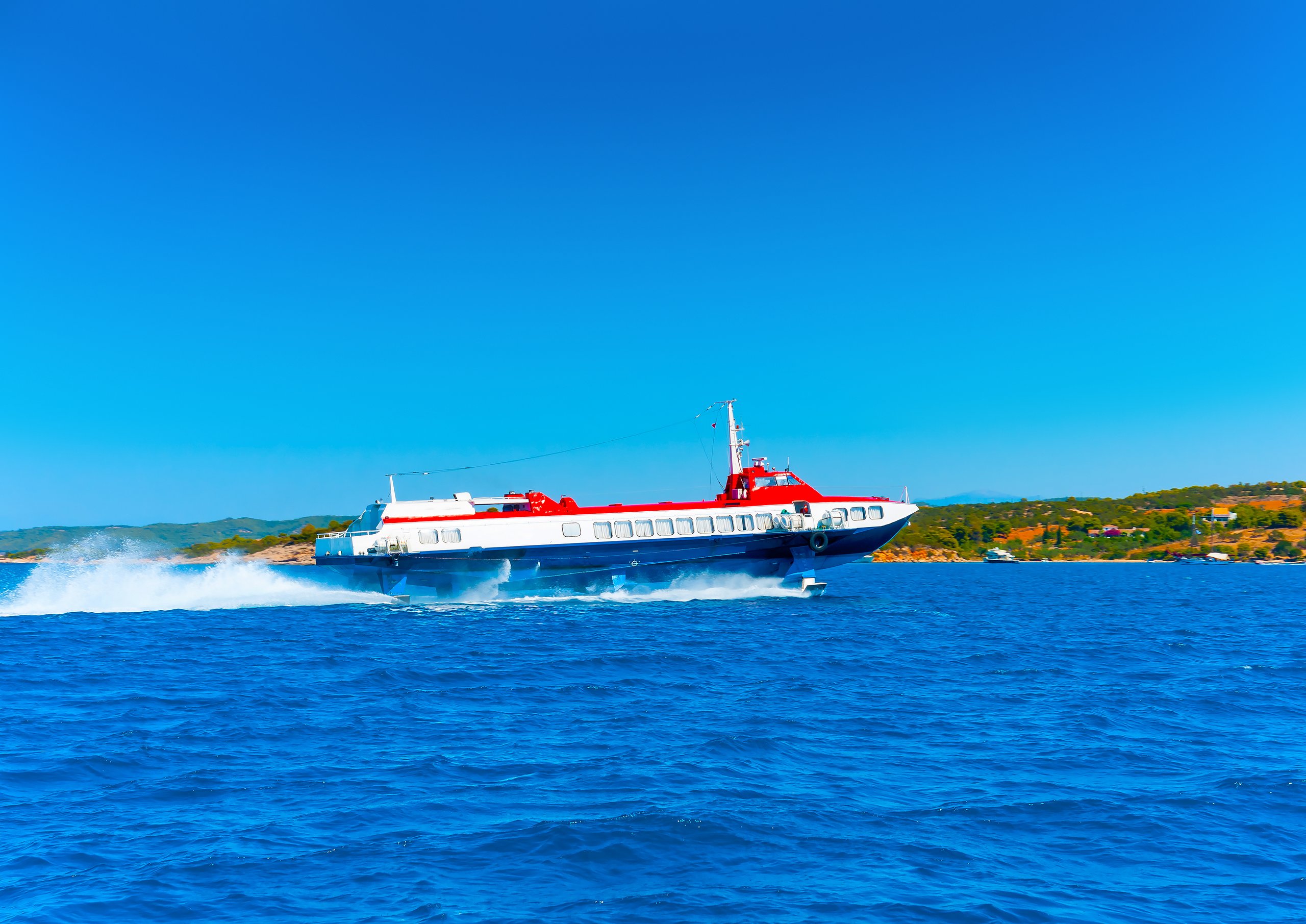
I used to catch a ferry from Ermioni across to Hydra, which has a busy port, but the island itself allows no cars, motorbikes or bicycles. It’s a pleasant walk around the village, quiet and reminiscent of times gone by. The island is easy to get to with several catamarans and high speed “Flying Dolphin” hydrofoils skimming across the water from Piraeus every day during the summer.
Moped or horse drawn carriage?
Another island I used to love visiting is Spetses. Here they don’t allow private cars in the town, but there are a few taxis and buses. However, they do permit bikes and mopeds, with some restrictions in tourist areas. This is for the safety of pedestrians and the traditional horse-drawn carriages the island is famous for. I even saw someone trying to transport a fridge on a moped once!
Boat or water taxi?
On the “no vehicle” islands, having a home near the sea also gives you the option of either buying a boat or taking a water taxi. There are also some lovely paths around the coast and between the villages that will encourage you to walk more.
When you can’t park near your house
We met a retired British lady who was living in a modern bungalow, in an unusual gated village called Porto Hydra. Her house had a postage stamp garden but it was on a pretty canal with moorings.
Living alone in a place with no shops, no bus service and not owning a boat, meant she relied on her car. But she couldn’t park near her house. Residents had to park in a car park and walk to their homes. Which is fine, until you have to carry your shopping, dog food and a gas bottle along paths and across canal bridges to your home.
Even in our village it was difficult to park near the house. The stone streets were narrow and although no one had allocated parking spots, the few corners where you could fit a car, had already been claimed by other residents.
Narrow village streets
When we packed a container with all our furniture and belongings in England, we hadn’t thought about how it would reach the house in Greece. The lorry managed to get up a narrow road to the top of the village, but then was stuck, unable to turn around. So, it had to reverse all the way back down.
Thinking quickly, we managed to get him to park it in a builder’s yard on the outskirts and hire a man with a small pick-up truck to ferry our belongings up to the house. It took ages to unload and it was getting dark, but we managed it.
When your situation changes
Meanwhile, the lady in Porto Hydra had taken in three stray dogs. But as she got older she had found it more difficult walking them. The priority for her was that they were safe and she could just let them out into a garden. So, we helped her find somewhere more suitable and she moved to an old single storey house with a huge fenced in garden.
When she stopped driving, her old car sat there getting covered in dust and leaves. Seeing we didn’t have a car she wanted to give it to us. But, at the time it was better to keep it in her name and just take out insurance for us to drive it.
When retiring to Greece it is worth bearing in mind that even though you may feel fit and healthy now, you don’t know what is around the corner. Even younger people can get a bad back that stops them from driving for a while. Especially if you are renovating your property yourself.
Who really needs a car in Greece?
If you buy a countryside home, I would say a car is essential. Small villages with no shops or medical centre might also have little or no public transport. When visiting in the summer, villages with holiday homes or tourist appeal might have a summer bus service, but it probably stops running outside the summer season.
Catch a lift
Taxis and water taxis could be an option for occasional trips to nearby towns and beaches. In time, once you’ve made some local friends, you might find someone who will drive you to important appointments or give you a lift when they are going to the city anyway.
We made friends with a Greek guy with a van, who offered to take my husband with him on a trip he had to make to Athens. He kindly helped him pick up a new mattress and light fittings.
Bus services
KTEL (intercity buses) are a reliable and affordable way to travel between major towns and cities, particularly to the Kifissos KTEL Bus Station in Athens. Alternatively, at Athens airport you can catch a bus to one of three ports and then hop on a ferry to your favourite island. The main tourist islands with a year-round population tend to have the best public transport.
Catching the bus
The majority of bus and coach travel in Greece comes under the KTEL network. It’s made up of 62 regional bus companies. You can find schedules on the KTEL website and prices are very reasonable.
A bus from Nafplio to Athens, which would take up to two and a half hours by car currently costs €15.70 a ticket. For one person, this is cheaper than the car, as fuel currently costs around €17.90 one way and tolls €5.50.
One Christmas time I caught a bus to Athens Kifissos bus station and then the X93 into Athens Airport terminal. From there I got a flight to London. Ryanair, EasyJet and British Airway all run flights to London over the Christmas period, so you don’t have to miss family get-togethers.
Travel by bus and hydrofoil
On my return journey from Athens Airport, I caught a bus to the port of Piraeus. Traffic was busy, but the bus driver did his utmost to get us to the ferry terminal on time. He was weaving in and out of traffic and even overtook a taxi, which was pretty hair-raising.
From Piraeus I have travelled on a hydrofoil and a Catamaran. You can find ferries on the ferries.gr website. A high-speed journey of about 2 hours 20 minutes currently costs €46.
Trains and metro
For those who live on the outskirts of Athens the train and the metro are great for getting into the city fast and cheap. A standard metro ticket costs just €1.20 (2026 price) for 90 minutes, and can be used on the metro, buses, trolleybuses and trams. Line 3 (Blue) connects Piraeus via Syntagma to Athens International Airport.
If you have a ferry crossing before your flight I’d recommend stopping at least one night in Athens before you are due to fly. In bad weather ferries can face long delays. We had this happen to us once, but we had booked a hotel, which we spent about three hours in before rushing to the airport. Preferably, find a hotel close to the metro or bus line.
Can foreigners drive a car in Greece?
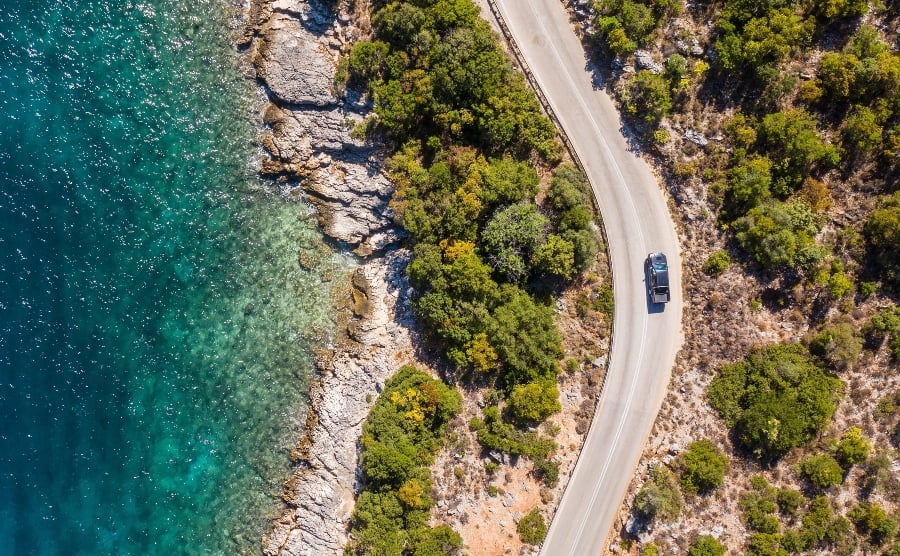
Foreign visitors with a valid driving licence can drive a car in Greece. Although the legal driving age is 18, most car rental companies insist you are over 21 years old, and they might charge under 25s more than older drivers. For holiday-home owners finding a good deal on a rental is the best option.
Driving on the right
If you are used to driving on the left, it can feel strange at first to have the steering wheel on the other side of the car and to be driving on the right. It’s reaching for a gear stick that isn’t there and driving around the right side of the roundabout that feels really strange.
It takes some concentration at first. The only time my husband forgot, was when his mind was distracted by how much he had just paid for a bathroom suite. Luckily, it was a quiet road and he saw the car coming towards him in plenty of time to realise he was on the wrong side of the road.
Roundabout confusion
There aren’t too many roundabouts in Greece, but when you do come across one you should be extra cautious. Although European rules say that cars on the roundabout have the right of way, older Greeks often still believe that you should give way to the right, therefore stopping on the roundabout to allow cars on. So, watch out for vehicles pulling out in front of you or suddenly stopping on the roundabout.
Buying a car in Greece
I have heard of some garages letting foreign citizens from non-EU countries buy a car with just a Tax Identification Number. But then the buyer discovers that without proof of residency they can’t get insurance, so can’t legally drive it.
What do I need to buy a car in Greece?
If you are legally resident in Greece and hold a residence permit, you can buy a car with the following:
- A Tax Identification Number (Greek: ΑΦΜ).
- A valid residence permit.
- A passport or identity card for identification.
- A residential address in Greece.
- Mandatory vehicle insurance.
The registration is completed through the Tax Authority and the Ministry of Transport. Find out more about registering a car in Greece on the gov.gr website. There is an English translation button on the top right of the page (EN).
Do you pay road tax in Greece?
Road tax in Greece is referred to as a “circulation fee” which in Greek is pronounced “teli kykloforias”. The amount you pay in road tax each year can depend on when the car was registered for the first time in the EU and its engine capacity. If registered after 1 November 2010 road tax is calculated based on CO2 emissions. There are calculation tables on gov.gr.
It has to be paid by 31 December for the following year. If you are late a surcharge is added. The easiest way to pay is from your banking app or at a bank or post office. If you have an accountant, get them to do it.
In the last year Greece has been increasing checks on vehicles with unpaid tax, no insurance and overdue KTEO (technical inspections). So don’t listen to holiday-home owners who boast about how long they’ve got away with having a car in Greece without these documents.
Do cars have to be regularly tested in Greece?
Greece does test cars for roadworthiness. These inspections, or MOTs as they are called in the UK, are known as KTEO (Kentro Technikou Elegchou Ochimaton). This mandatory test is done every two years, but initially four years after buying a new car.
Where to look for a car in Greece
When looking online for a car as an English speaker Car.gr is the portal expats tend to recommend. It can be switched to English and it advertises thousands of second-hand cars from both private sellers and dealerships.
Even if you decide to buy locally, it can be useful to check what the going rate is for that age and model. At least buying from a local dealer you have some protection if you discover any problems with the vehicle. Under EU law dealers should provide a warranty of at least a year.
Are second hand cars cheaper in Greece?
The most common car in Greece is the Toyota, so out of interest I looked up a Toyota Aygo, 2007, with just over 100,000 on the clock in Greece, in the UK and the US. UK car prices in general seem to be the cheapest, with the Toyota AYGO on Auto Trader priced at €1,974 (£1,696), while a car with similar speck in Greece cost €5,900 euros (Car.gr). The US doesn’t sell the Toyota AYGO because it is too small, but the Toyota Yaris, which is a bit bigger was priced at €5,435 ($6,300 on Cars.com).
Conclusion
If you live in a Greek town with all the facilities you need and good transport links in the form of ferries and buses, you can get by without a car. However, choosing a property in a more isolated location will make it necessary to buy or hire some form of transport.
Having a car does make it easier to go on days out, explore the surrounding countryside and discover secluded beaches. However, trips into Athens can work out more affordable on public transport. Plus, by using a car only when really necessary you will help protect the environment and save fuel.