

The Greek climate is well known for its hot summer season and mild winters. When choosing an area that best suits your lifestyle it’s worth considering what the climate is like in the seasons you plan to spend at your Greek property. Do you want lazy summer days on the beach or to spend spring mornings exploring Greece’s historic sites?
In a country that is spread out over almost 51,000 square miles (131, 957 sq km) and includes 227 inhabited islands and 12 major mountain ranges, there can be some weather variations. You might find a property on higher ground or on the coast, where a breeze can make the temperature feel much fresher. Which season’s climate would suit your lifestyle best?
Contents
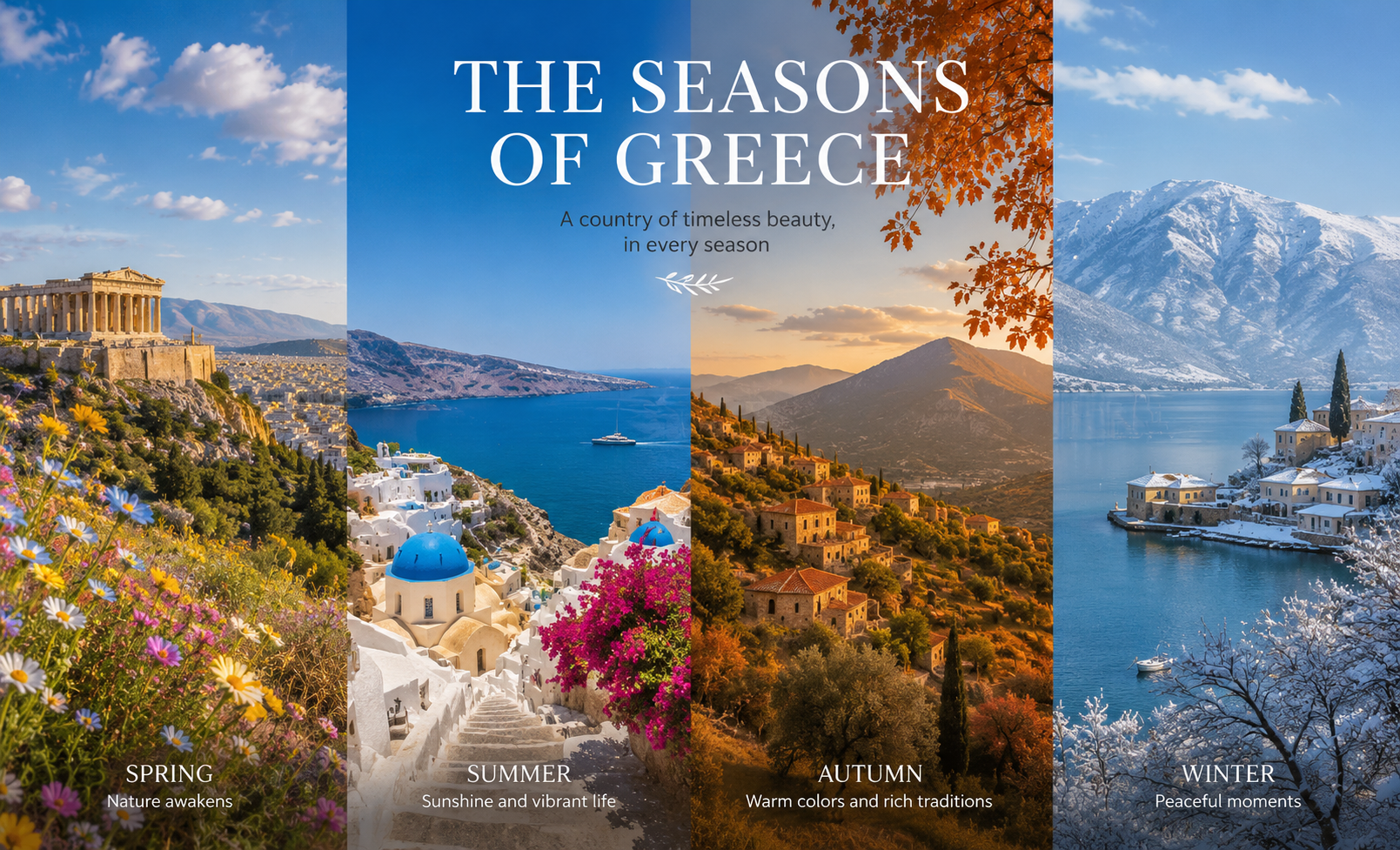
Spring in Greece
Spring is my favourite season in Greece. Running from March to May, it’s comfortably warm, with temperatures gradually rising from 15°C to 27°C as June approaches. March can bring some rain, but temperatures are generally ideal for all outdoor activities.
While May temperatures hover around 21°C (70°F) summer heat can suddenly arrive at the start of June with temperatures above 27°C (81°F). You can comfortably swim in the sea from June to October, and June is generally when you’ll start seeing tourists arrive.
Your spring lifestyle in Greece
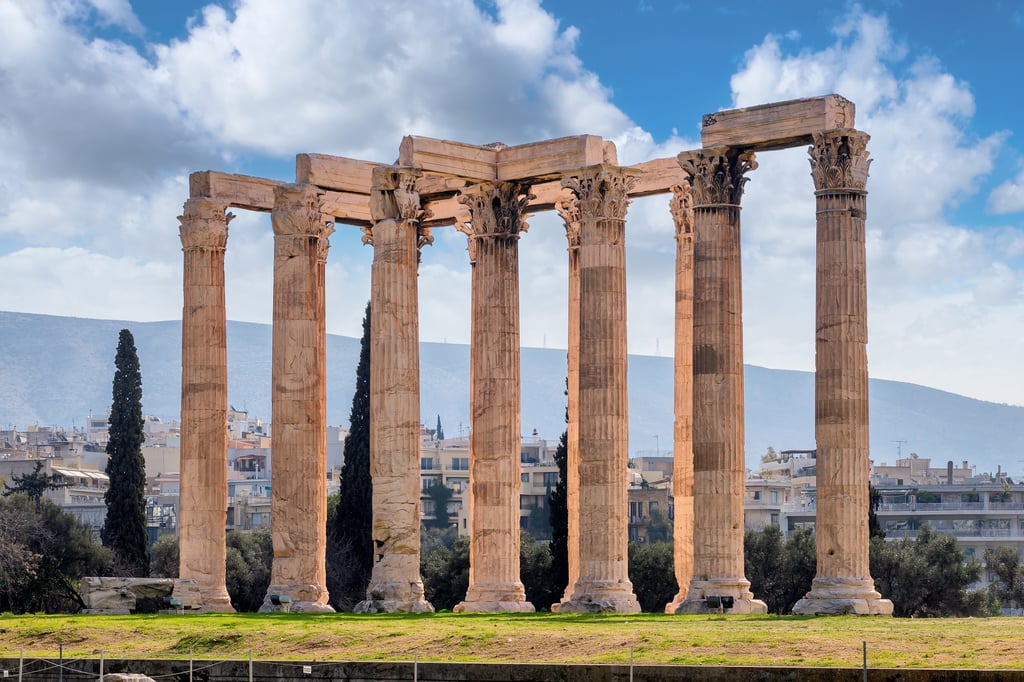
Sightseeing – This is a fantastic season in which to visit archaeological sites, particularly in Athens and the Peloponnese. Among the most wonderful are the Acropolis in Athens, Temple of Olympian Zeus, Mycenae (Legendary Kingdom of Agamemnon), Ancient theatre of Epidaurus, and Ancient Olympia.
Countryside walks – After the winter rains, the land is at its greenest, with wildflowers. You can enjoy leisurely drives into the mountains, long walks, island hopping and water sports before the holiday makers arrive.
Prepare for summer season – It’s also a time to get jobs done around the house and make your outside areas look beautiful, ready for summer evenings spent dining outside with friends.
Start the day early – Having your own accommodation will also allow you to enjoy incredible sunrises and cool early morning walks before the day visitors turn up. You’ll see the fishermen bringing in their catch and our friends used to feed the stray cats and visit an octopus that hid in the rocks nearby.
Summer in Greece
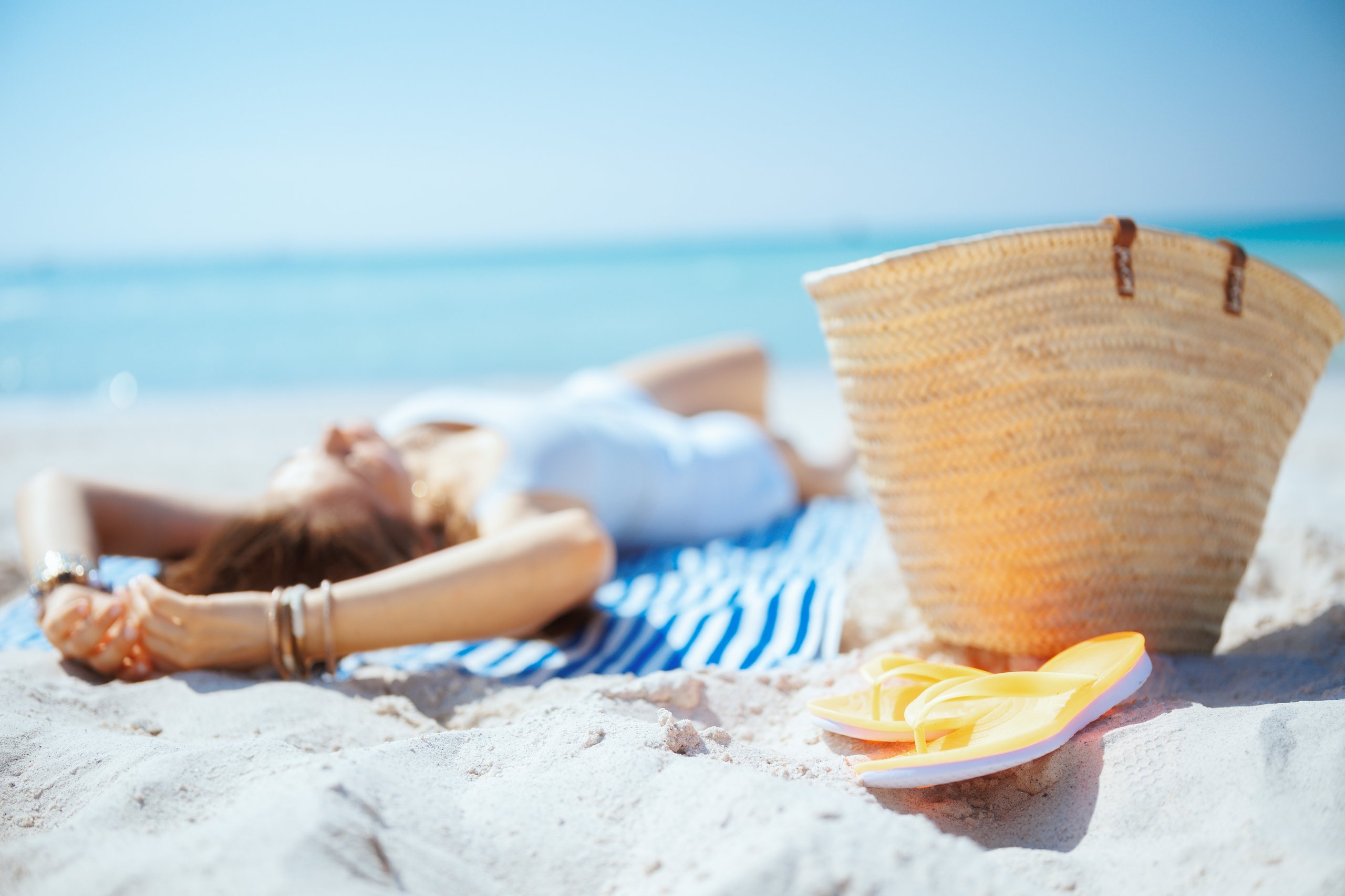
Summer delivers guaranteed sunny beach weather across the Greek islands and mainland. On the mainland it can reach 35°C–37°C (even higher during a heatwave). Most people choose a lifestyle by the coast at this time to enjoy the refreshing sea breezes. Spending time on the clear blue waters of Greece is an experience that makes you appreciate how beautiful our planet is.
How long is a Greek summer?
Traditionally, summer is from June to August, however, the good temperatures can start in May and run through to October. Holiday operators and airlines are finding that the demand from travellers has increased in the months either side and have been lengthening their summer season operations to meet this.
How hot is the summer season in Greece?
July and August is when temperatures really peak. It brings hot, dry weather with average temperatures exceeding 30°C (86°F). You are practically guaranteed no rain and lots of sunshine. The difference in the high temperature in Thessaloniki in the north and Heraklion on Crete is only about 3°C, and a sea breeze can make all the difference. Even the islands in the northern Aegean sea can average highs of 27°C to 30°C.
Your summer lifestyle in Greece
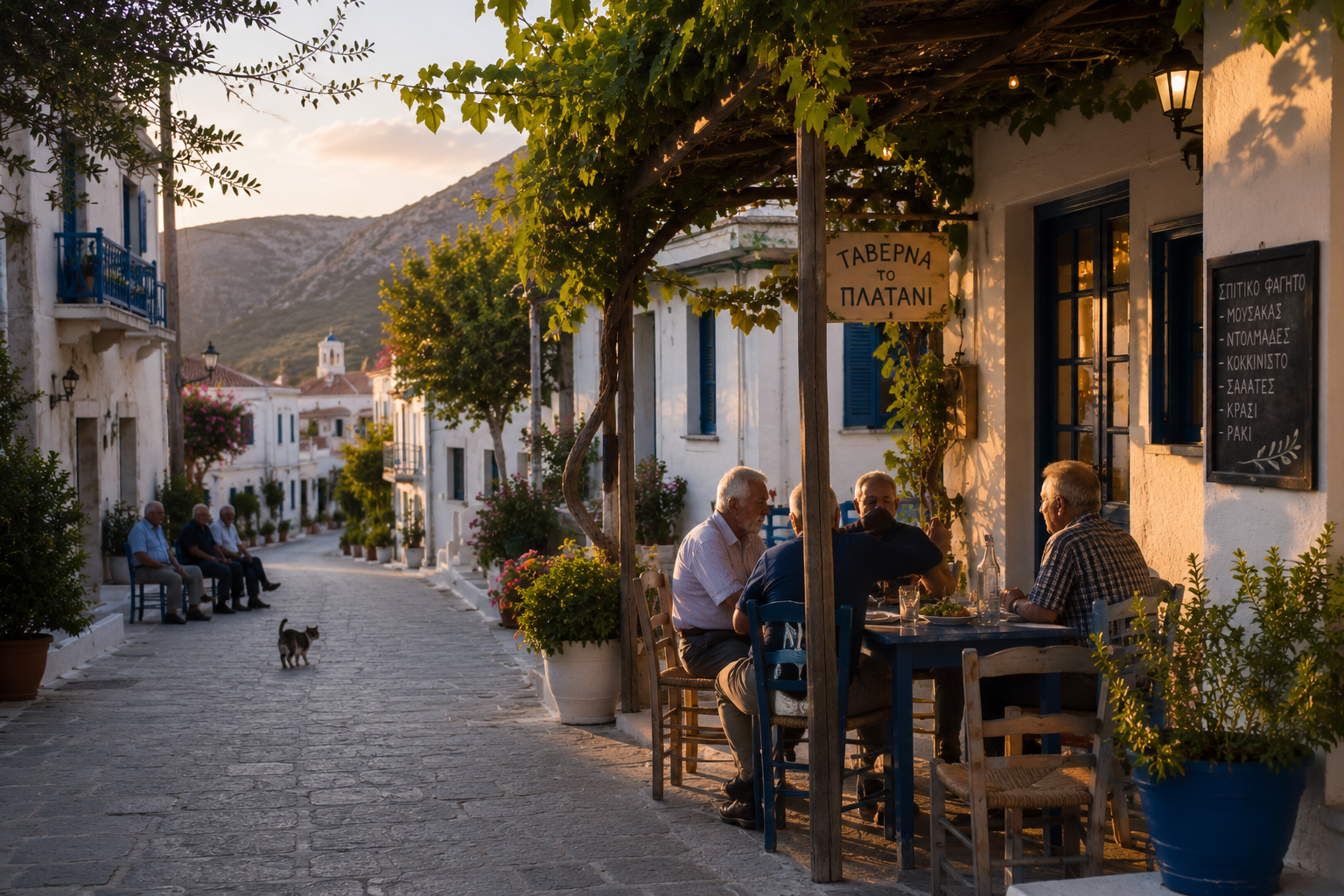
Imagine waking up every morning to blue skies. As you sip your morning coffee the biggest decision you need to make is whether to sunbath, go for a swim, take a boat trip or pick up some fruit from the market. You could invite friends round for dinner on the terrace or spend a relaxing evening at a family run taverna.
Out on the water
If you enjoy sailing you will want to check the wind conditions. The Meltemi winds can be challenging for a novice sailor but exhilarating for the experienced. The islands with the least wind are those that are sheltered by mountains, such as the Ionian Islands, Saronic Islands and Sporades. If a boat is high on your wish list see “Buying a home with a boat in Greece – the islands and marina towns”.
Welcoming guests
If your new lifestyle in Greece is to involve providing holiday accommodation or having friends come to stay, you could potentially receive guests from April to October. As well as the work involved on change over days, you will want to be available to guests to deal with questions and any problems. So, we tended to not go far during this period, but did try out the local tourist offerings to be able to make recommendations to guests.
Travel out of peak season
If you are limited to 90 days in 180 at your holiday home, the long season means you could avoid the high temperatures of July and August, and choose to holiday in the weeks before and after. Check schedules with the nearest airport and airlines. If you are flexible on dates and travel light, the flight prices can be very reasonable.
Autumn in Greece
The Autumn season in Greece is from September to November. However, September still feels like summer and is possibly the best month to be in Greece. The sea, the weather and even the light is warm. Average temperatures drop in the Autumn, but still feel pleasant as they hover around the mid-twenties Celsius.
Your autumn lifestyle in Greece
As the tourist season begins to wind down, anyone who runs a restaurant or provides holiday accommodation will be looking forward to a holiday themselves.
Become part of the community
In this season, the restaurants feel more relaxed and owners will appreciate your regular visits. They will begin to recognise that you are not there just for a week and will have more time to chat. You will feel more part of the community at this time of year and be welcomed in shops and restaurants like an old friend, rather than just as a potential customer.
Harvest festivals
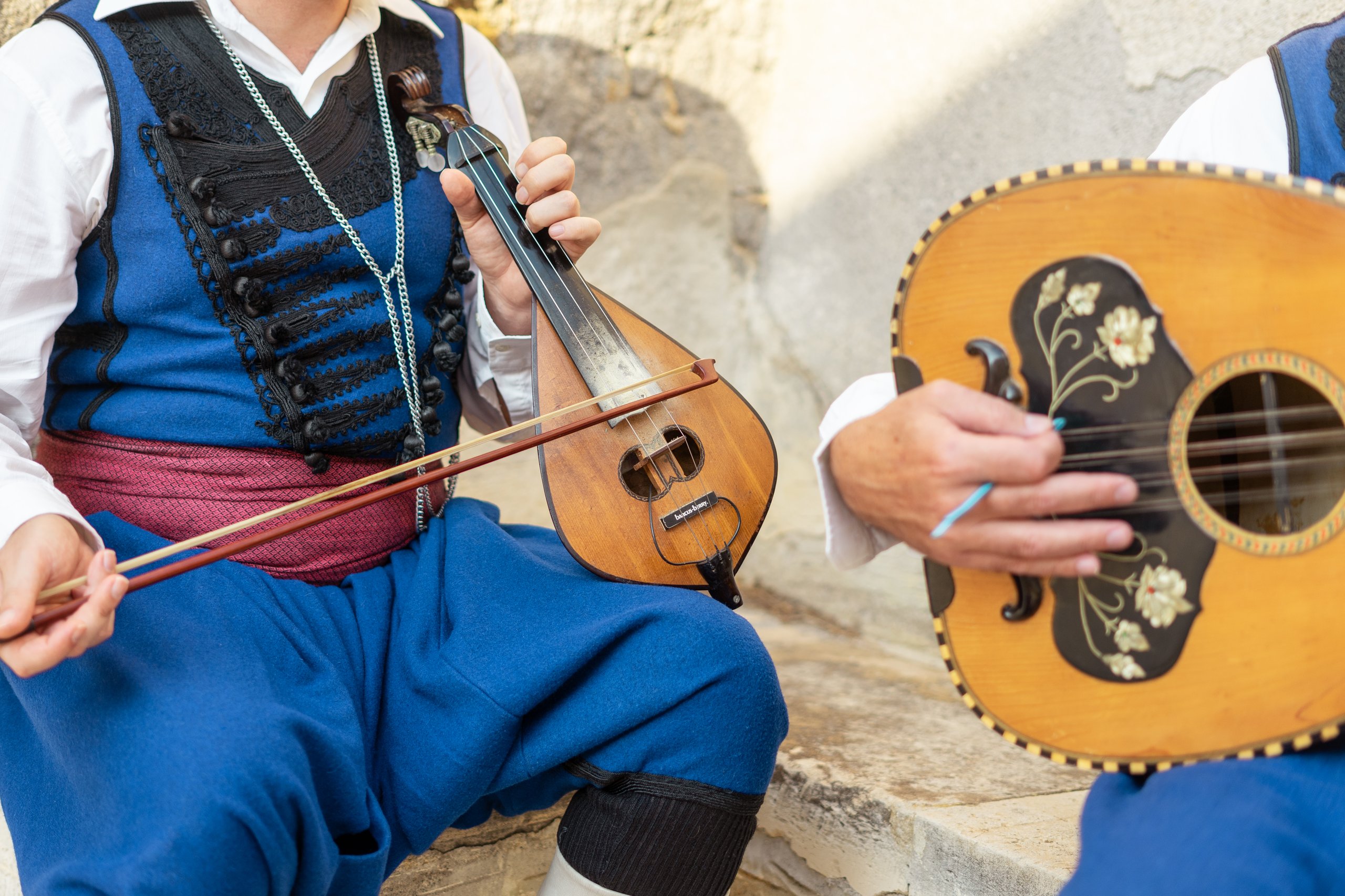
For those with vineyards or olive groves, there is more work to come. In September there are grapes to be picked and pressed. Then in October and November is the olive harvest. October is also the month when communities get together to distil raki. There may also be festivals you can go to that celebrate the new harvests, alongside events with music and dancing.
Outdoor activities
This is a good time of year to visit Athens and archaeological sites across Greece. Temperatures are perfect for any outdoor activities, such as hiking, cycling, water sports and the sea is still a good temperature for swimming.
Winter in Greece
Winter in Greece is December to February. The climate in this season can be a little more changeable, but you will still get plenty of nice days. Temperatures average between 10°C to 15°C (50°F to 59°F) in the coastal areas with cooler climates in the mountains. Most rainfall comes during these winter months, particularly in Northern Greece and the Ionian islands.
Your winter lifestyle in Greece
Some of the most touristy villages become very quiet in winter, so many restaurants close for a winter break. I met one Greek restaurant owner who opens a restaurant in Australia during Greece’s winter months, so he could live in a constant summer.
Go to town
Winter is a good time to go shopping in Athens or in your nearest big town. If you check the resident population figures, those towns with families living there year-round will also have year-round shops and other facilities. A good example is Chania on Crete, which has a city population of 55,000 and caters for thousands more who live in the surrounding area. “Your home from home could be in Chania”.
Places that are easy for Athenians to get to for weekend breaks also stay open. Crete, Rhodes, Corfu and Kos have particularly mild winters and offer a year-round lifestyle. Also towns in the Peloponnese, such as Kalamata and Nafplio.
Winter activities
Winters don’t get really cold, unless you live in the mountains. On wet days you could visit a museum. Outdoor activities might include visiting the mountain villages, hiking or skiing. To brighten up midwinter some communities will build floats, make costumes and organise a carnival procession in February.
FAQs about the Greek climate
Athens is generally hotter than the islands as it traps heat, while the islands have more sea breezes. If you want lots of hot sunshine, with a long summer and mild winters, you’ll find the top temperatures on the islands in the south and east. Three islands that have guaranteed hot summers are Crete, Karpathos and Rhodes.
Crete offers long hot summers with temperatures reaching 30-35°C. The south coast gets some of the highest temperatures. The mild year-round climate is ideal for a relaxed lifestyle. You can enjoy dining on the waterfront, hiking in the Samaria Gorge and visit the villages during their cultural festivals. See over 2,000 properties for sale on Crete.
Karpathos temperatures average above 30°C and can exceed 35°C. Located between Crete and Rhodes this island is quieter than its neighbours and offers a relaxing lifestyle and great hiking trails. The Meltemi winds make it a summer hotspot for kitesurfing and windsurfing.
Rhodes has long hot summer days, with temperatures often above 30°C. You could spend your time, exploring the medieval old town, dining at tavernas, relaxing on the beach or sailing around the coast. For those with lots of energy there are water sports and a lively nightlife.
The islands in the North Aegean, such as Thassos, generally experience lower summer temperatures due to cool breezes from the north. Highs average 27-30°C in July and August. Crete usually gets wind December to February, and in July.
The famous Meltemi wind blows from June to September, mostly from the north and north-west. It can rise up in the afternoon and die down in the evening. But sometimes it can be stronger and last for days. Locations that get the Meltemi winds can feel much fresher and less humid.
The Cyclade Islands are exposed to winds, such as Mykonos, Paros, Naxos, Tinos, Andros and Evia. The islands of Rhodes and Kos also get a breeze. See examples of properties for sale in the Cyclades.
In July, August and September the water temperatures average between 24°C and 26°C. Even in October it can be over 20°C. In the north, the water temperature drops to 13°C at the end of February, while around the islands and Peloponnese they might drop to around 15°C.
When I compared the weather for Thessaloniki, Athens, Heraklion (Crete), and Kalamata (Peloponnese) on weatherspark.com, I noticed that while Thessaloniki has between three and five rainy days in a month throughout the year, Athens Kalamata and Heraklion had hardly any rain in the summer. Heraklion and Kalamata seem to get nearly all their rain over nine days in December and January.
To see snow in Greece, you need to go into the mountains. In northern Greece, the Pindus Mountains get thick snow and Kaimaktsalan in Macedonia has the highest ski resort in Greece. However, the largest ski resort is in central Greece on Mount Parnassus, near Delphi. There are even places in the Peloponnese where you can swim and ski in one day.
The seasons in Greece that best suit a very active lifestyle are spring and autumn. At these times of the year, temperatures are more comfortable for doing activities outdoors. However, warm summer evenings are wonderful for dining outside. You’ll just need to take it easy during the hottest part of the day. The mild winters are short and you don’t get days and days of grey skies; downpours tend to be sudden and over quickly. Within minutes the sun comes back and dries everything. And if you want to cool down you can drive into the mountains.