



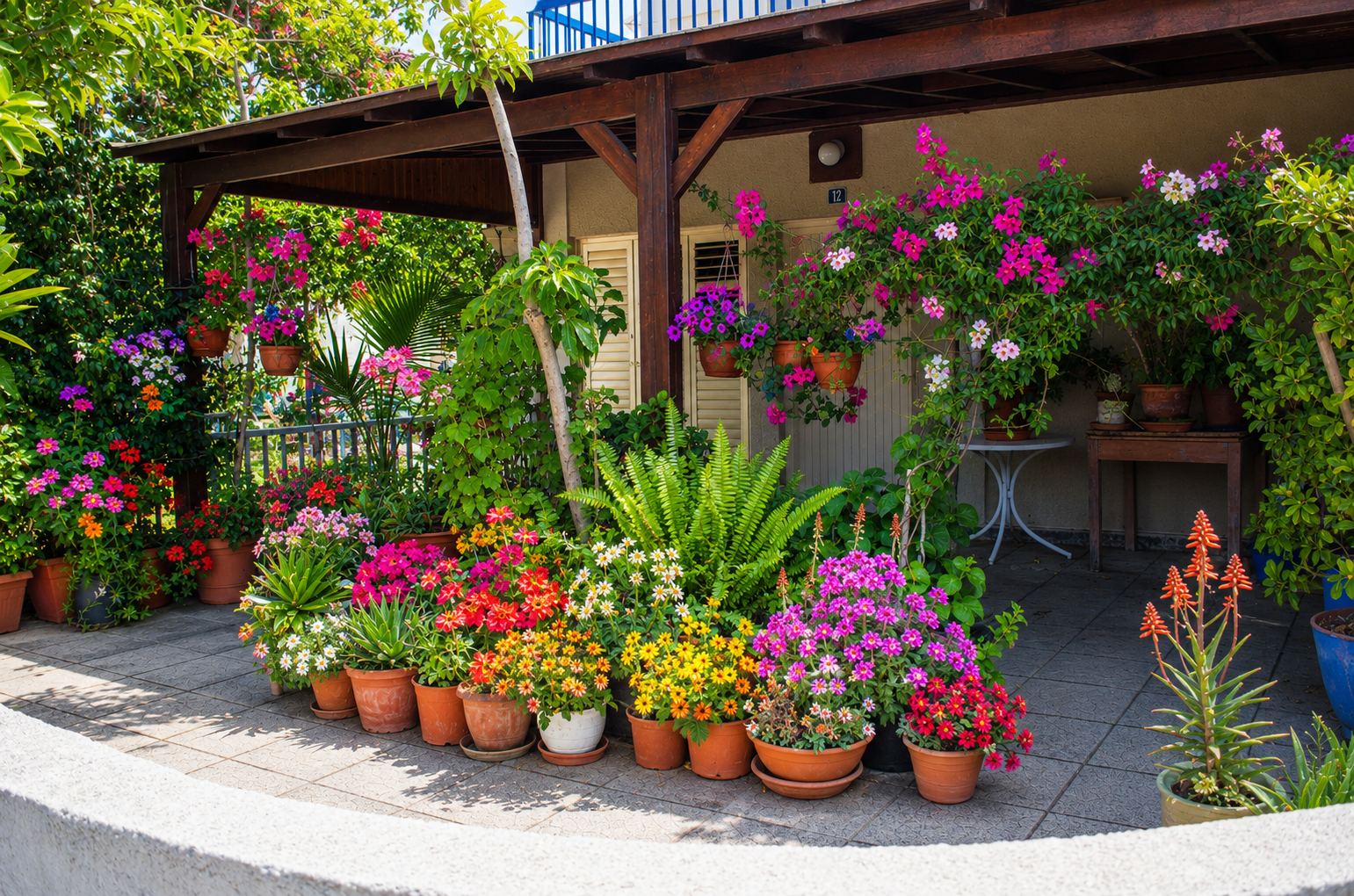
Designing a garden from scratch is one of the most rewarding parts of building a life in Cyprus. Here’s what thrives, what needs extra care and what not to bring with you.
Picture the garden you’ll have in a year or two: bougainvillea spilling pink and purple along a sun-warmed wall, the scent of citrus blossom drifting through an open window, herbs within reach of the kitchen door. That picture is one of the real pleasures of moving to Cyprus, but getting there from a bare or half-finished plot takes a little local knowledge first. Whether you’ve inherited a mature garden or you’re starting from scratch, choosing what to grow well means understanding what the island’s climate and soil will and won’t allow.
In short: build a Cyprus garden around Mediterranean natives and buy them locally rather than bringing plants from the UK. Bougainvillea, roses, herbs such as rosemary and lavender, olives, citrus, almonds and stone fruit all do well in the heat and alkaline soil. Apples and pears struggle at low altitude, gardenias need acidic potting compost rather than open ground and spring bulbs such as tulips need a spell in the fridge before planting. Cooler winters in the Troodos mountains bring frost and, most years, actual snowfall, so mountain gardens follow a different calendar to the coast.
Contents
Two ways to shape a Cyprus garden
There are broadly two routes into Cyprus garden design. The first is to bring in a landscaping professional, who will visit your property, talk through the flowers, bushes and trees you like, and advise on what suits your plot and its measurements. Cyprus has a healthy number of established landscaping businesses, and a good one will save you several seasons of trial and error.
The second option is to plan and plant the garden yourself. It takes longer, and there will be some mistakes along the way, but it’s a satisfying way to make a new garden feel truly yours: choosing every rose bush and fruit tree because you want it there, rather than because it was on someone else’s plan. Many people combine the two, asking a professional to handle the layout, irrigation and any hard landscaping, then filling the beds themselves over the following seasons.
Whichever route you take, it’s worth knowing what actually grows well here before you set foot in a nursery.
Ready to picture it for real?
Browse Cyprus homes with gardens already waiting to be planted.
Explore Cyprus properties with gardens →What you can’t bring from the UK
It’s tempting to want to bring a favourite rose bush or a packet of seeds saved from a UK garden. In practice, this isn’t always a good idea. Since Brexit, Great Britain has been treated as a third country under EU plant health rules, and importing plants, cuttings or seeds without a phytosanitary certificate is prohibited. Cyprus additionally requires an import licence from its Department of Agriculture, plus a certificate from the plant’s country of origin.
The practical sticking point is that, since April 2022, the UK’s Animal and Plant Health Agency can only issue a phytosanitary certificate for plants grown and inspected on registered professional premises, not for a private garden or home-saved seed. For most homeowners, that removes any lawful route for bringing their own plants over. In July 2026, Cyprus’s Department of Agriculture again reminded travellers not to bring plant material into the country, citing the risk that pests such as the red palm weevil pose to the island’s olive, vine and citrus crops.
The upside is that Cyprus’s nurseries and garden centres are well stocked and reasonably priced, and buying locally means starting with plants already suited to the soil and climate you’re gardening in.
Getting to know Cyprus’s growing conditions
Cyprus has an intense Mediterranean climate, and the lowlands and the Troodos mountains behave almost like two different countries. On the central plain, July and August daytime temperatures average around 36°C, dropping to a milder 27°C in the Troodos mountains. Winters split just as sharply: coastal towns and villages rarely fall below double figures, while January temperatures in the higher Troodos villages average around 3°C, with frost and, in most winters, snowfall above 1,000 metres.
Rainfall follows the same pattern in reverse. Roughly 60% of the island’s annual rainfall, itself only around 480mm, falls between December and February, while the summer months (May–October) are almost completely dry. Cyprus’s soil is largely alkaline limestone too, which matters more than most new gardeners expect: acid-loving plants will struggle here unless you compensate with the right compost.
These conditions also shape how you water. Drip irrigation on a timer, set to run in the early morning or after sunset, does far more for plant health than an occasional heavy soak, and a good layer of mulch around the base of shrubs and trees will cut down on evaporation through the hottest months. Most established Cyprus gardens run almost entirely on this kind of low, steady watering rather than daily hosing.
| When | What to plant |
|---|---|
| February–April | Summer bloomers: roses, bougainvillea, sunflowers |
| September | Trees and bushes for mountain gardens, ahead of the first frosts |
| Late November | Daffodils, narcissus, snowdrops |
| December | Pre-chilled tulips and hyacinths |
Your Cyprus garden in summer
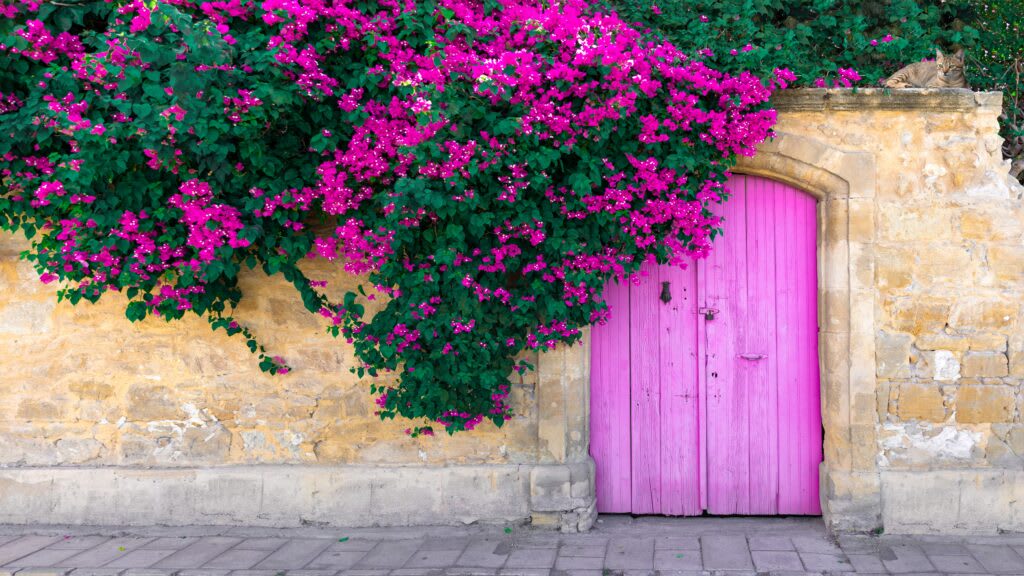
Once the heat sets in properly, look to plants that can handle full sun and long dry spells.
Bougainvillea is a Cyprus classic: this trailing climber shrugs off drought once established and comes in shades of pink, red and purple. Give it room to spread along a wall or fence, since it grows generously.
Roses are now available well beyond the classic reds, whites and yellows. A little afternoon shade extends the life of each bloom in the heat.
Mediterranean herbs – lavender, rosemary, sage and thyme are some of the toughest plants you can grow here, thriving in the same poor, free-draining, alkaline soil that many flowering plants dislike. Trim them regularly to keep a neat shape and use the cuttings to flavour your cooking as they grow.
Sunflowers need little introduction: reliable, cheerful and well suited to a hot, sunny spot.
Begonias also grow well in Cyprus, but they’re the exception on this list. They prefer shade over full sun, and need considerably more watering through summer than the plants above.
Trees worth the wait
Fruit and nut trees reward patience, and most of the classics do well in Cyprus.
Olive trees are a Cyprus staple: extremely hardy and happy in the alkaline soil that many other plants find difficult.
Citrus trees – oranges, lemons and grapefruits – crop through the winter months. Extra watering in summer produces noticeably larger fruit.
Almond and walnut trees have both been grown on the island for centuries and need only a short winter chill before flowering.
Stone fruit and pomegranates – plums, peaches, apricots, nectarines and pomegranates all do well. Choosing lower-chill varieties gives the most reliable results.
Apples and pears need considerably more winter cold than most other fruit trees, often 700 hours or more below 7°C, which lowland and coastal Cyprus rarely provides. They’re a realistic option in the higher Troodos villages or with specially bred low-chill varieties, but they shouldn’t be the first trees you plant in a coastal garden.
A note on soil: why gardenias need special treatment
Gardenias are a popular choice for their fragrance, but Cyprus’s alkaline limestone soil is the opposite of what they need. Grown in open ground here, they typically develop yellowing leaves as they struggle to access iron and other nutrients from alkaline soil. The easy fix is to grow gardenias in containers filled with ericaceous or acid compost rather than planting them directly into garden beds.
Your Cyprus garden in winter
If you’re planting bushes or trees in the mountain areas, aim to get them into the ground by September, ahead of the first frosts. Cooler months also bring some of the prettiest colour in a Cyprus garden, provided you choose bulbs with realistic expectations.
Daffodils, narcissus and snowdrops are well suited to Cyprus and will happily naturalise, needing little or no cold spell to flower. Plant them in late autumn for a spring display.
Tulips, crocuses and hyacinths are a different story. In a climate this warm, they need six–16 weeks in the fridge before planting, to mimic the cold winter they’d normally experience, and even then, they rarely return well the following year. Most gardeners in Cyprus treat them as one season of colour rather than a permanent fixture.
Pansies and violets make reliable bedding plants for the cooler months, flowering through autumn, winter and spring before the summer heat takes over.
Poinsettia, orchids and other houseplants
Some popular “winter” plants – poinsettia, Christmas cactus and orchids – are better off as houseplants in Cyprus rather than garden subjects. All three do best indoors or in a sheltered, shaded spot, away from both the summer sun and the winter chill.
Patience pays off
A well-planned Cyprus garden takes a season or two to find its feet, but choosing the right plants from the outset, and buying them locally, will save a good deal of trial and error. Work with the climate rather than against it, and a Cyprus garden can be productive and colourful for most of the year.