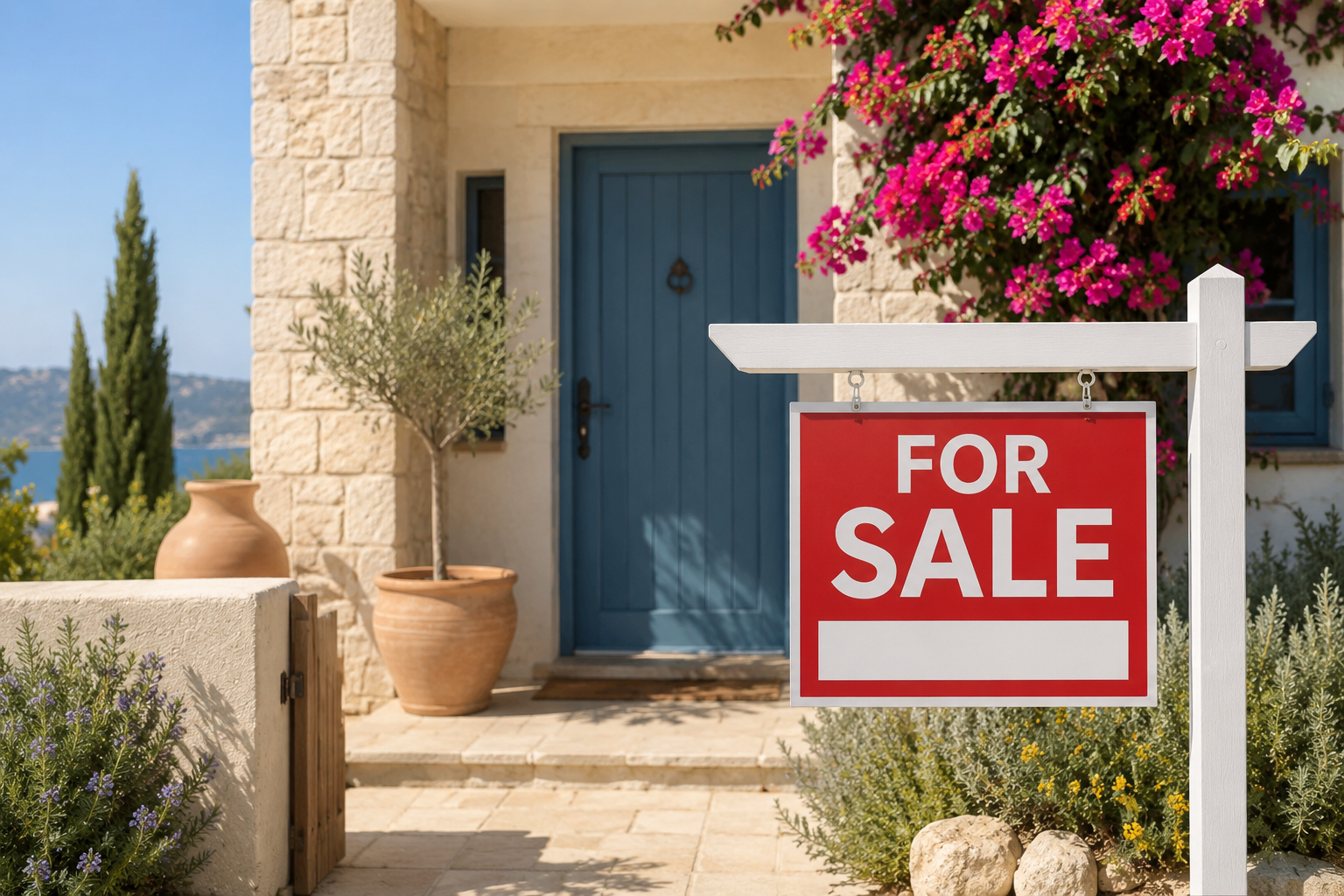

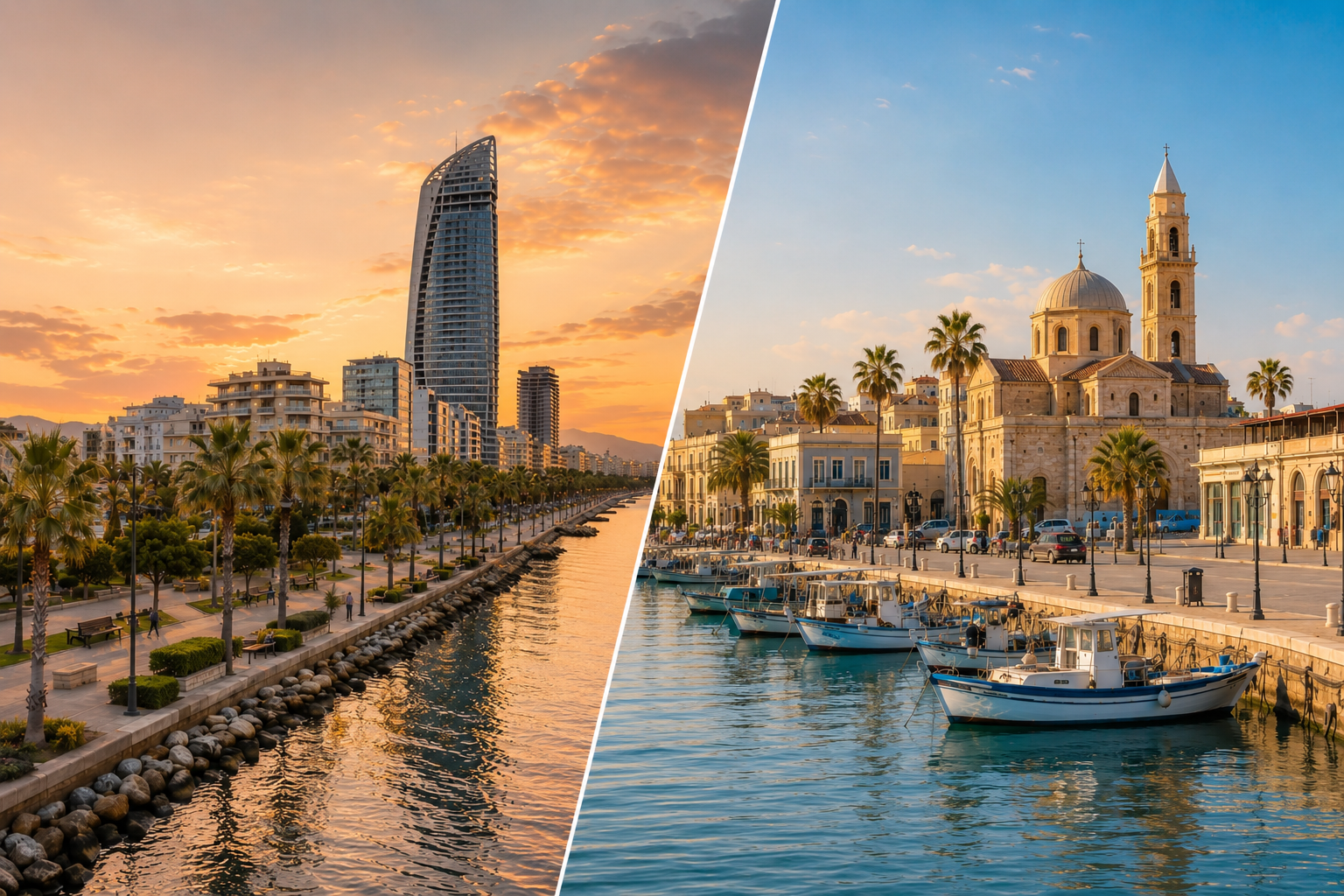

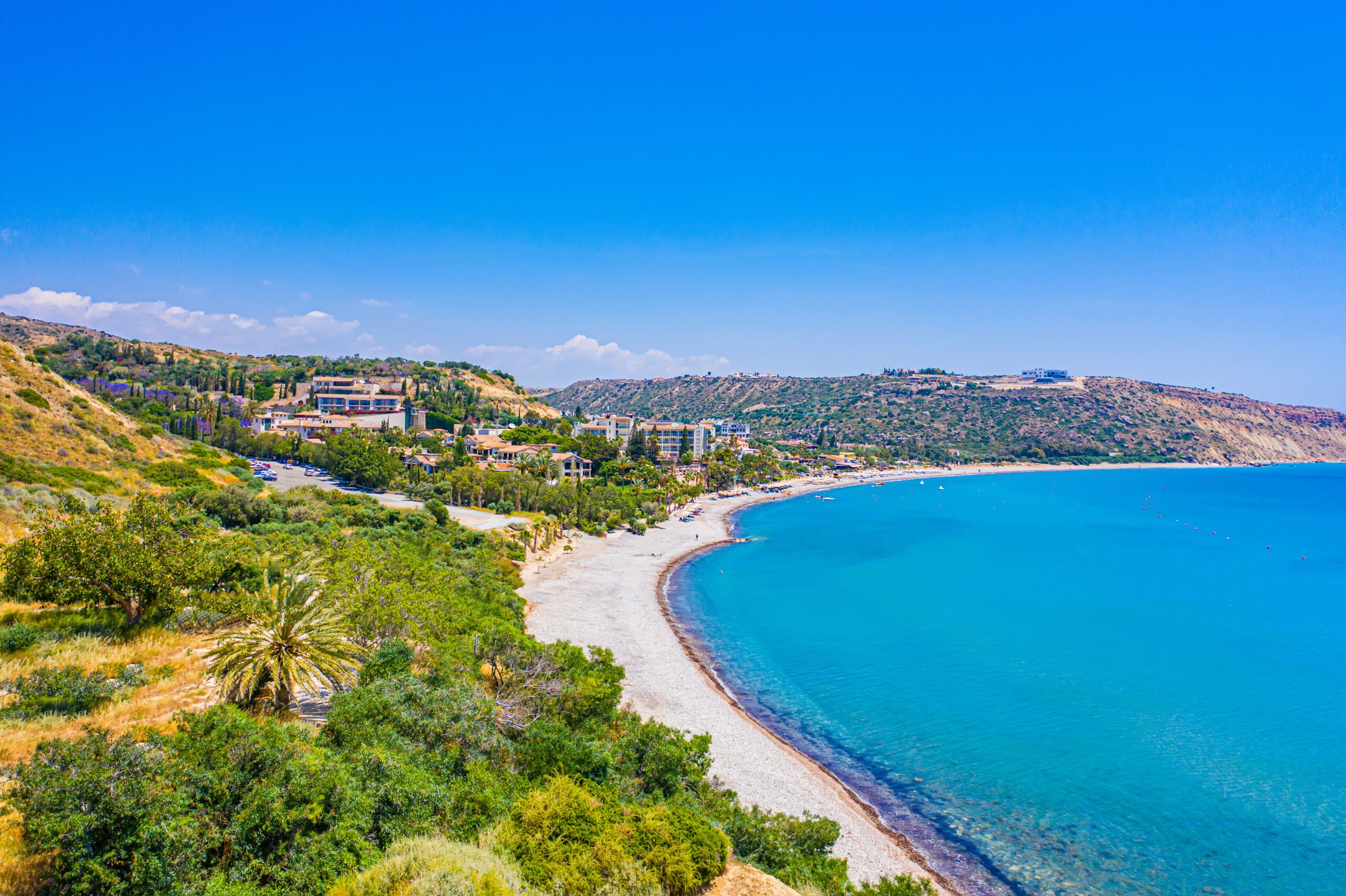
Cyprus’s coastline is best known for its resort towns, but tucked between the beaches and the hills are villages where Mediterranean life still moves at its own pace.
Here, mornings start with the boats coming in rather than sunbeds being staked out, and the loudest sound most evenings is the odd dog barking somewhere up the hill. If you’re picturing a home somewhere between a sandy beach and a proper village square, three places are worth putting on your shortlist.
Three Cyprus villages stand out for buyers after coastal life away from resort towns. Pomos, on the wild north-west coast, centres on a working fishing harbour, with villas typically €315,000–€900,000 (£267,750–£765,000). Pervolia, near Larnaca airport, has a long Blue Flag beach and villas from €330,000–€735,000 (£280,500–£624,750). Pissouri, between Limassol and Paphos, splits into a hillside village and beach community, with villas typically €348,000–€810,000 (£295,800–£688,500).
Download the Cyprus Buying Guide
Contents
Pomos: a working harbour on the wild north-west coast
Pomos sits on the edge of Paphos Forest, in the far north-west of the island, and it still feels like one of Cyprus’s more remote corners. Home to somewhere in the region of 500 to 600 residents, the village revolves around its small fishing harbour, where boats return each afternoon with the day’s catch and a handful of tavernas serve it up a few hours later, often with little more ceremony than a plastic tablecloth and a view of the water.
Right beside the harbour is Kanalli beach, a shingle stretch with views out towards the surrounding hills – calm rather than dramatic, and rarely crowded even in August. If sand is more your style, Paradise beach and Pachiammos beach are both a short drive away, and offer the wide, soft-sand experience that Kanalli doesn’t. For a change of pace, the village’s own Natural History Museum, housed in the local cultural centre, has a small collection of Cyprus rocks, fossils and native wildlife, including a mouflon and a loggerhead turtle – worth an hour if you or the grandchildren fancy something other than the beach.
Pomos is genuinely rural, and that’s precisely the point for many buyers. Paphos itself is about an hour away by car (roughly 55km), and Paphos International Airport is a little further again, at around 70km. For a couple planning a slower retirement or a family after a quiet holiday base away from resort crowds, that distance is a feature rather than a drawback – forest walks, birdwatching and long, uninterrupted evenings are the appeal here, not nightlife. Villa prices run from about €315,000 (£267,750) for a three-bedroom property with a pool up to €900,000 (£765,000) for larger homes, with a handful of premium seafront villas listed above €1.8 million (£1.53 million).
Pervolia: a long Blue Flag beach minutes from Larnaca airport
Pervolia, on the south-east coast in the Larnaca district, has grown considerably since the turn of the century – its population rose from under 2,000 residents in 2001 to over 3,000 at the last confirmed census, with the summer population swelling well beyond that. What hasn’t changed is its position: this is about as convenient as coastal Cyprus gets, with Larnaca International Airport only six to nine kilometres away, a drive of ten to 20 minutes rather than the near hour some transfer companies still quote.
The village’s beach, Faros – named for the historic lighthouse that marks Cape Kiti nearby – is a Blue Flag stretch of fine, pale sand with calm, shallow water that suits families well, and a good spot for an early swim before the day’s heat sets in. Pervolia itself has tavernas, bars and cafés, and the neighbouring village of Kiti, five minutes away, adds shops, schools and a wider choice of restaurants, including the well-regarded seaside dining at THETA Mediterranean. History buffs can also visit the Venetian-era watchtower at Rigena, close by, while the wider Larnaca Salt Lake area is within easy reach for a change of scenery.
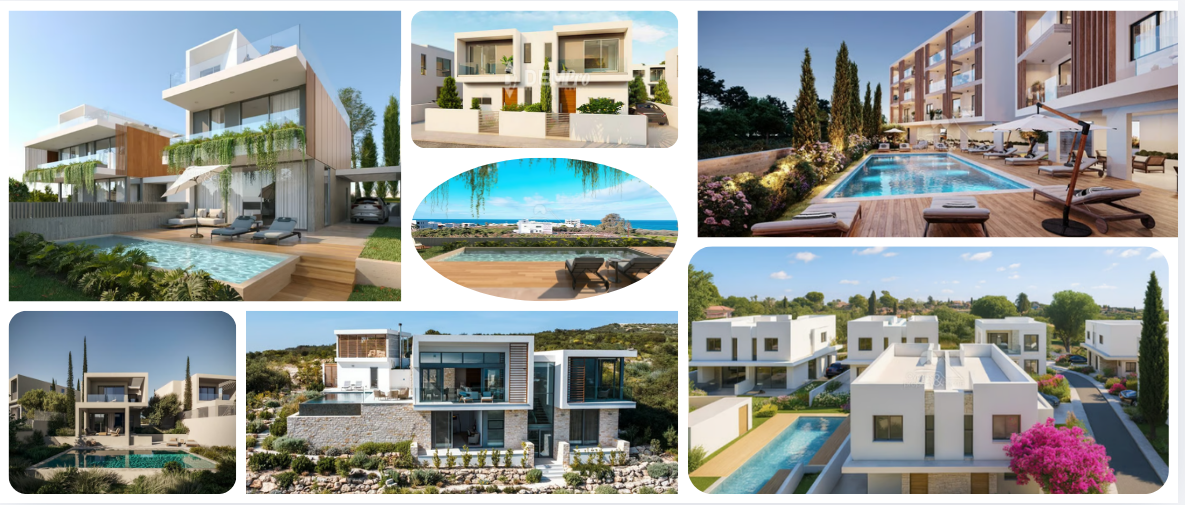
Property here spans a wide range. Standard new-build villas with a private pool typically sell for €330,000–€735,000 (£280,500–£624,750), while a handful of beachfront developments reach €1.8 million–€3.9 million (£1.53 million–£3.315 million). For buyers who want an active, close-to-the-airport base without sacrificing beach life – whether that’s a couple wanting easy flights home to see family, or a landlord after strong rental demand near the airport – Pervolia is a great choice.
Pissouri: a hillside village with its own beach community – and one important caveat
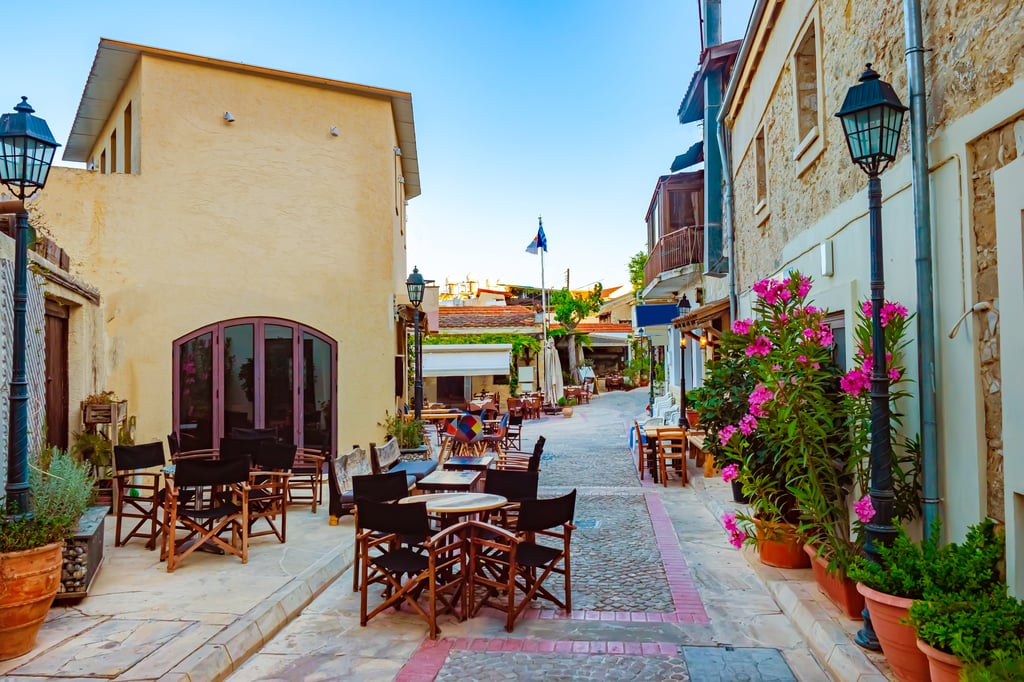
Pissouri, roughly midway between Limassol and Paphos, is really two places. The original village sits inland on the Cape Aspro ridge, about three kilometres from the coast and 150 metres above it, where farmers still work the surrounding fields within earshot of the sea. Pissouri Bay, a five-minute drive downhill, is the separate beach community: hotels, tavernas, watersports and a Blue Flag beach front the water, while the village above keeps its own square, bank, supermarket and clinic.
This split character, along with genuine rural life, has drawn a growing expat community – mostly British – to a village of around 1,100 permanent residents. In the village itself, the Gothic-style Church of Apostolos Andreas, built by villagers in the late nineteenth century and finished with an elaborately carved iconostasis in 1890, remains a focal point, alongside an open-air amphitheatre that hosts events throughout the year, from concerts to local festivals. Limassol and Paphos are both around half an hour’s drive away, making Pissouri a sensible base for buyers who want village life without giving up easy access to either city – and a popular choice among the couples in their fifties and sixties who make up much of the market here.
One development is worth flagging clearly for any buyer considering the area. Since 2012, part of the Limnes area of Pissouri has been affected by a reactivated ancient landslide, and in 2024 the authorities designated the worst-affected sections a permanent “White Zone”, banning construction or renovation there and requiring around fifty households to leave their homes. The affected area covers roughly one square kilometre out of a community of around 55 square kilometres, so the great majority of Pissouri – including the main village and much of the Bay – is unaffected. It does mean that anyone buying in Pissouri should ask their lawyer and surveyor to check a property’s exact position against the designated zone before proceeding – a straightforward step, and one your legal team should be well used to handling. With that check done, villa prices in the wider village typically run to €348,000–€810,000 (£295,800–£688,500), with premium sea-view and off-plan homes reaching €1.1 million–€1.35 million (£935,000–£1.1475 million).
Planning your move to coastal Cyprus
Whichever of these three villages you’re drawn to, buying in Cyprus involves transferring a significant sum from sterling into euros, often in more than one instalment as a purchase progresses. Smart Currency Exchange can help you plan those transfers, lock in exchange rates ahead of time and avoid the fees typically charged by the high street banks.