




Retirement in France offers an active and adventurous new start in life where you’re only as young as you feel. But post-Brexit, or as a third-country national, how do you retire to France?
While retiring to France has become a little more bureaucratic since Britain left the European Union, Brexit has certainly not meant you need to abandon your dreams.
Indeed, British people have been retiring to France since as soon as the Napoleonic Wars were over. And not just the British. Abraham Lincoln’s widow Mary retired to Pau, near the Pyrenees in the Victorian era.
So please banish the idea that there is any barrier to retiring to France. But there is a process to go through, and Your Overseas Home – and our partners – will be there to help you through.
Contents

Best places to retire in France
Retirement in France offers a combination of adventure and relaxation, a potentially lower cost of living yet an enhanced lifestyle. It’s a country where people smile at you in the streets and offer a quick “bonjour!”.
The weather is generally warmer than the UK and avoids the extremes of North America. It’s a country where good healthcare is a priority and there are social events specifically for retirees. The countryside has been looked after, with effective preservation of the best of the countryside, buildings and villages.
No wonder that many of the 150,000 or so registered British expatriates living in France have moved there for retirement. There are a similar number of Americans.
Where are they moving? When Your Overseas Home surveyed buyers in France, 74% of those looking for retirement in France were buying a house or cottage in the countryside or village. One in five wanted a seaside home and only one in 20 wanted a city apartment.
A garden was the most requested feature, with a view and being within walking distance to shops also very popular. Being completely practical, however, convenient parking also featured highly on many people’s requirements.
Geographically, the top choice for retirees was Nouvelle Aquitaine, by some distance, with 44% saying it was their top choice. For those from the UK the regions of Brittany, Normandy and the Loire followed. For North Americans, Occitanie and Provence were popular options.
Visas and residence permits when you retire to France
If you’ll only be in France for part of your time, you can stay in the Schengen Area of the European Union for up to 90 days in every 180 without any need for a visa. That is the whole Schengen Area, however. You cannot stay 90 days in France and then another 90 in Spain.
For a permanent retirement there you will require a French Long Stay Visa (Visa de Long Séjour).
You must apply before you move to France, via French consulates in the UK, USA or wherever you currently reside.
There are various types of long-stay visa. Most retirees opt for a Visa de Long Séjour valant Titre de Séjour – Visiteur (VLS-Visiteur).
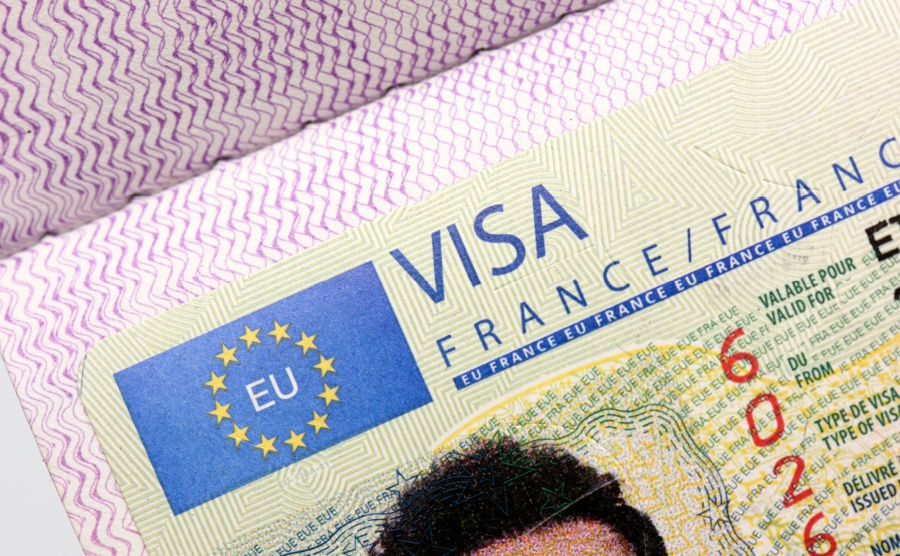
Once you have this and have arrived in France, you apply for a five-year Carte de Séjour. Should you decide to stay beyond that time, you will apply for a Carte de Séjour Permanent from your local Prefecture.
You can’t apply for your VLS-Visiteur more than 90 days before arriving in France, but don’t leave it much less than two months either.
The application is made online, and then you must attend an appointment at the consulate. You attend the appointment with all the documents, plus private health insurance, and the visa is usually issued within two weeks.
Bear in mind that during those two weeks, the consulate will keep your passport. You will be called into the consulate to collect your passport and can travel to France with your visa.
Income required for a visa
To obtain a VLS you must prove you have an income at least as high as France’s minimum working wage (SMIC). As of early 2026 this is around €1,400 net per month (€17,000+ per year), or about €2,100 for a couple (€20,000-25,000 per year). If showing it as regular income is a problem (perhaps you are just retiring now) you can instead show that as a year’s income ready in the bank.
Income can be a pension coming in, rental income from the UK, investment income or other financial resources you have. What it is not allowed to be, however, if you are retired in France, is the income you are receiving from work.
Your long, active French retirement
The cliché is that you’re retiring to France to take it easy, potter about, grow old gracefully. Which may sound nice, but it doesn’t have to be like that.
People retire young in France and with plenty of vim and energy left it should be a whole new lease of life. Some will work, perhaps running a gite or helping out with voluntary groups in France. Others will take to art, starting to write, paint, sketch or other creative pursuits.

There are exciting sports to take up in France, from surfing to cycling, or with the ski slopes easy to drive to.
Buying in France should mean you get more for your money, including a garden the size of which you could only dream about in the UK. That offers the chance to grow crops – perfect for those long lunches you’ll be enjoying – have some livestock or chickens, or just enjoy your own outdoor space.
And of course, it has been proven that learning a new language – and negotiating a new culture too – helps keep your brain young too.
Healthcare when you retire to France
Retirement tends to come at an age when you can no longer automatically count on great health. But fortunately you can rely on excellent quality healthcare in France.
How you access healthcare when you retire to France depends on your nationality and residency status. Below is an overview of how the system works for different groups of retirees.

Healthcare in France for EU retirees
EU citizens retiring to France can access the French state healthcare system under EU coordination rules. Once you become a resident, you are generally entitled to register with the French healthcare system and access healthcare on the same basis as French citizens.
As with French nationals, the state typically reimburses around 70% of most healthcare costs, with the balance paid either out of pocket or covered by a top-up insurance policy (known as a mutuelle), which is usually inexpensive.
If you have a long-term or chronic condition, reimbursement rates may increase to 100%.
Healthcare in France for British retirees
An agreement between the UK and the EU means that British retirees can access state healthcare in France in certain circumstances. For short stays in France before becoming resident, the GHIC (Global Health Insurance Card) has replaced the EHIC and provides emergency cover only. This should be supplemented with full health or travel insurance.
However, when you apply for a passive income, long stay visa you will need to have obtained health insurance. Once settled, if you receive a UK state pension you can claim UK-funded healthcare in France on the same basis as a French citizen, using an S1 form. You obtain this from the NHS Overseas Healthcare Service. You then register this S1 form with your local French state health reimbursement office. The S1 entitles you to .
As healthcare in France is reimbursement-based, the state generally covers around 70% of costs, with the remainder paid by you or your mutuelle. If you have a chronic illness, reimbursement may rise to 100%. As an S1 holder, you are also entitled to a GHIC, which you can use when travelling in other EU member states and even in the UK when visiting.
Healthcare in France for third country retirees
Retirees from non-EU countries such as the USA do not benefit from EU or UK reciprocal healthcare arrangements. In most cases, you will need comprehensive private health insurance when you first arrive in France. After legally residing in France for at least three months, you can usually apply to join the French healthcare system under the Protection Universelle Maladie (PUMA), subject to meeting residency requirements.
Once accepted into the system, healthcare works in the same way as for French citizens, with around 70% of costs reimbursed by the state and the remainder covered by you or a mutuelle. During the application and waiting period, which can take several months, it is essential to maintain full private health insurance to ensure continuous cover.
For all retirees, registration with the French healthcare system can take up to six months. After three months of residence, you can apply for a temporary social security number, which allows you to start receiving reimbursements. This temporary number usually becomes permanent after a further three months, at which point you can apply for a Carte Vitale, the health card that simplifies medical reimbursements in France.
Receiving your pension after you retire to France
It’s easy to claim your UK pension in France, whether a state, private or government pension. You will need to inform the Department for Work and Pensions and then you can have your pension paid into your French or UK bank account.
There are tax implications of course, and you can easily be caught out if unaware. For example, in the UK, from the age of 55 you can take 25% of your pension pot tax-free. If you take 25% out once resident in France you will be taxed on it just like income tax.
There are also a range of tax-efficient pension vehicles to consider, such as SIPPS and QROPS, so it is highly advisable to speak to a tax and pensions expert.
Inheritance tax and wills when you retire to France
The inheritance tax for residents in France is high by global standards and applies to everything over €100,000 (as in 2022). You can mitigate some of that, but only if you get organised early.
For those domiciled in France, inheritance tax is payable on all worldwide assets. Inheritance tax isn’t paid by a spouse, only by the next generation.
Speaking of heirs, bear in mind that in France you are required to pass a set portion of your assets to your children. It is essential to get good financial advice when buying a property in France, as well as legal advice on your will.
If you’re ready to take the next step and retire to France, we’re here to help you every step of the way. Our experienced property consultants can guide you through your options, answer your questions, and connect you with trusted experts. Book an appointment today to start planning your move with confidence.
You can also explore our complete guide to buying property in France for a step-by-step overview of the process, and visit our France location hub to discover the best places to buy a home that fits your lifestyle in retirement.
FAQs about how to retire to France
Yes, UK citizens can still retire to France after Brexit, but they must follow the rules for third-country nationals. This typically means applying for a long-stay visa and proving sufficient income. Brexit hasn’t prevented retirement to France, it has simply introduced a few more bureaucratic steps.
To retire to France on a long-stay visa, you must show income equal to at least the French minimum wage – currently around €1,400 net per month or approximately €2,100 for a couple. This can be from pensions, savings, or other passive income streams. You should find that living expenses are a little cheaper than the UK, USA, Australia and others.
You may pay tax on your pension in France, depending on your residency and how you receive it. Lump sums taken after moving may be taxed as income. It’s wise to get professional advice to ensure tax efficiency, especially when considering SIPPs or QROPS.
Yes, it’s advisable. French inheritance law can override your wishes if not properly structured. Spouses are protected, but children have forced heirship rights. A French-compliant will and guidance from a legal expert can ensure your estate is handled as you intend.
It can be, but like most things, it depends how much effort you put in. By learning French, enquiring about ways to make connections at the mairie, joining things, and by keeping an open and friendly face, you should soon settle in.