


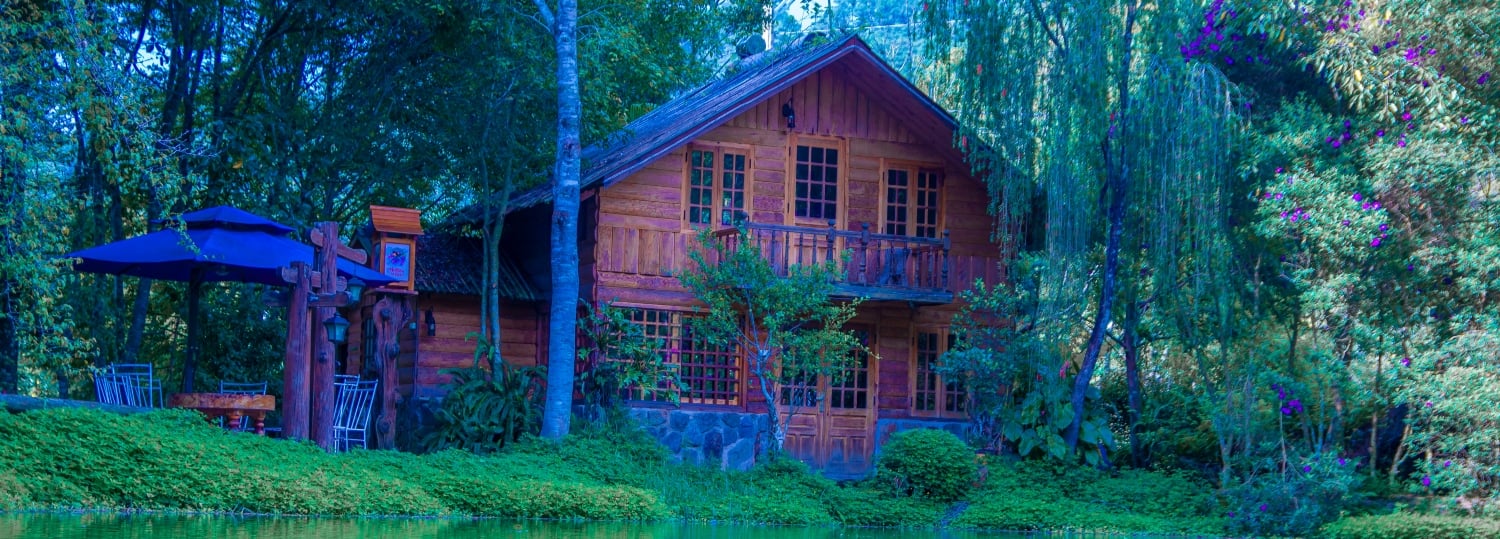
A cabin by a Canadian lake. A chalet in the mountains. A timber-framed cottage with a wood stove and a dock. For many overseas buyers, this is the version of Canada they want to own. Recreational property remains one of the most asked-about categories on this site.
But Canada’s federal foreign-buyer rules complicate the picture. Since 1 January 2023, most non-Canadians have been barred from buying residential property in Canada’s urban areas. The rule was extended in 2024 and now runs to 1 January 2027. The good news is that the law was designed around urban housing affordability, not rural cottage country. If you understand where the line is drawn, buying recreational property in Canada is still very much on the table.
This guide explains who can buy what, where, and what to budget for.
Key takeaway: Foreign buyers may still purchase recreational property in Canada, but the answer depends on buyer status, location and property type. The federal Prohibition on the Purchase of Residential Property by Non-Canadians Act applies in census metropolitan areas and census agglomerations. Properties outside those zones – including most cottages, cabins and rural homes – are not covered by the federal ban. Provincial taxes may still apply. Always confirm eligibility with a Canadian lawyer before making an offer.
Contents
- Can foreigners buy recreational property in Canada?
- What counts as recreational property
- Why rural location matters
- Where international buyers might look
- Key checks before buying
- Costs to budget for
- Renting out a Canadian recreational property
- Does buying property help with residency?
- What should I do next?
- Summary
- Frequently asked questions
Can foreigners buy recreational property in Canada?
In short, often yes – but it depends. The federal Prohibition on the Purchase of Residential Property by Non-Canadians Act applies to anyone classed as a “non-Canadian”. The Act uses that label for anyone who is not a Canadian citizen, a permanent resident, or a person registered under the Indian Act. Most international buyers fall into the non-Canadian category.
The Act prohibits non-Canadians from buying residential property in Canada until 1 January 2027. Breaching the rule carries a fine of up to CAD 10,000 (£5,700), and a court can order the property to be sold.
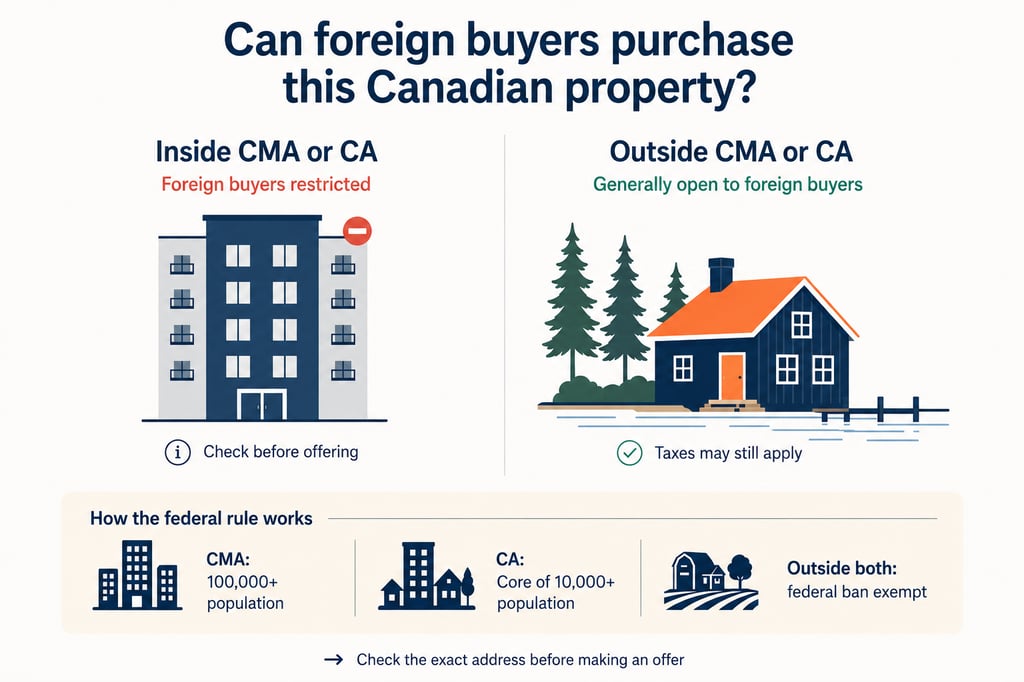
The critical word is “residential”. The Regulations under the Act define residential property by location as well as type. Property situated outside a census metropolitan area (CMA) or census agglomeration (CA) – broadly, rural and small-town Canada – sits outside the federal ban. Vacant land and buildings with four or more dwelling units also fall outside the rules. For a fuller picture of the financial side, our guide to planning your finances to buy property in Canada sets out the wider cost framework.
It is also worth knowing which group you fall into, because the rules treat different buyers very differently:
| Buyer type | Federal rule | Practical effect |
|---|---|---|
| Non-Canadian (no citizenship or PR) | Subject to the federal ban in CMAs/CAs | Rural and recreational property remains available |
| Canadian citizen or PR living abroad | Not subject to the ban | Can buy anywhere, but non-residency affects tax |
| Temporary resident in Canada (work permit, student) | May qualify under strict conditions | Specific tests on permit validity, tax filings and price |
If you are unsure which category you fit, take legal advice in Canada before signing anything.
What counts as recreational property
Canadian terminology shifts from province to province, but recreational property generally covers anything bought primarily for leisure rather than as a main home. The category typically includes:
- Cottages and cabins on lakes, rivers or coastlines
- Ski chalets and mountain homes
- Rural homes used seasonally
- Hunting lodges and remote bush properties
- Waterfront homes with private docks or shoreline
- Seasonal properties in resort areas
What matters for the federal ban is not the marketing label but the location and the building. A “cottage” sitting inside a census agglomeration is still treated as residential property and falls inside the prohibition. That can include a building on the edge of a larger town that markets itself as a cottage. A four-season home in a remote township usually does not. The wording is determined by Statistics Canada’s classification, not by how the listing is described.
Download the Canada Buying Guide
Why rural location matters
The Regulations carve out an exception for property that sits outside a census agglomeration or a census metropolitan area. That single carve-out is the legal basis for almost every recreational purchase by a non-Canadian today.
The definitions matter:
- A census metropolitan area (CMA) must have a total population of at least 100,000, with 50,000 or more in the core.
- A census agglomeration (CA) must have a core population of at least 10,000.
- Anything outside both is treated as exempt from the federal ban.
Around 15% of Canada’s population lives outside CMAs and CAs. That gives you a sense of how much of the map is open to foreign buyers. Large parts of Ontario’s cottage country fall outside these zones. So does much of Atlantic Canada, the BC interior, the Alberta foothills and most of the Prairie lake belts.
Do not guess. Even within a single region, the boundary can fall along a road, a township line or a stretch of shoreline. Canada Mortgage and Housing Corporation (CMHC) publishes an online tool that lets you check whether a specific address sits inside a CMA, CA or neither. Your Canadian lawyer should confirm the classification in writing before you waive any conditions on an offer.
Where international buyers might look
The list below is not a “best places” ranking. It is a working list of regions where foreign buyers can buy without bumping into the federal ban. The right choice depends on what you want: lake access, mountain views, ski terrain, year-round use or rental income.
| Region | Typical property | Why it works |
|---|---|---|
| Ontario cottage country (Muskoka, Haliburton, Kawarthas) | Lakefront cottages and four-season homes | Large parts sit outside any CMA/CA; classic Canadian cottage culture |
| Town of the Blue Mountains, Ontario | Ski chalets and waterfront homes | Outside the Collingwood CA in many areas; ski and lake combined |
| Quebec – Laurentians and Eastern Townships | Lake cottages, ski chalets | Strong second-home market; close to Montreal but largely rural |
| Atlantic Canada (Nova Scotia, New Brunswick, Newfoundland) | Coastal homes, rural acreages | Most coastal communities are rural; relatively affordable |
| BC Interior (Kootenays, Shuswap, Cariboo) | Lake homes, ranches, ski-adjacent properties | Outside Metro Vancouver and other designated regions |
| Alberta foothills and lake country | Acreages, cabins | Outside Calgary and Edmonton CMAs |
| Prairie lake regions (Manitoba and Saskatchewan) | Lake cottages, rural homes | Quiet markets, lower prices, large rural footprint |
If you want a sense of how rural Canada actually lives, our property buyer’s guide to the Canadian Prairie Provinces is a good starting point. For year-round access, our piece on what overseas buyers need to know about Canadian winters covers the practical side of cold-climate ownership.
Key checks before buying
Recreational property comes with its own checklist, separate from anything urban buyers worry about. In our experience, the issues that catch out international buyers tend to be the ones that don’t appear in any listing.
Location classification. Confirm CMA/CA status in writing. This is non-negotiable.
Road and winter access. Some cottage roads are private, maintained by an association, or unploughed in winter. Ask whether the road is municipal, who maintains it, and what it costs.
Water supply and septic. Many rural Canadian properties rely on a well and a septic system rather than mains. A septic inspection is a separate report from a building inspection. Costs to replace either run into the thousands.
Shoreline and water rights. Cottage shorelines often sit on Crown land or are subject to provincial shoreline rules. Docks, boathouses and shoreline alterations usually need permits. The rules vary by province.
Wildfire and flood risk. Insurance is harder to get in some BC and Alberta wildfire zones and along flood-prone rivers. Get an insurance quote before you firm up the offer, not after.
Zoning and short-term rental rules. Many municipalities have tightened short-term rental rules. If you plan to let the property, confirm whether short-term rental is permitted at that exact address.
Title and easements. Rural properties often carry easements for access, utilities or shared shorelines. The title search should flag these.
Heating, insulation and seasonal use. A summer cottage may not be insulated or plumbed for winter. If you want year-round use, the conversion cost can be significant. If you don’t, you need to know how to winterise it.
Costs to budget for
The federal ban is the eligibility question. The cost question is separate, and it can change the maths quickly. International buyers should plan around the following:
| Cost | Typical range | Notes |
|---|---|---|
| Land transfer tax | 0.5% to 2.5% of price | Varies by province; Ontario charges up to 2.5% on amounts over CAD 2m |
| Legal fees | CAD 1,500 to CAD 3,500 (£855 to £2,000) | Higher for rural or complex titles |
| Building inspection | CAD 500 to CAD 1,000 (£285 to £570) | Septic and well inspections cost extra |
| Survey | CAD 1,500 to CAD 3,500 | Often needed for rural and waterfront titles |
| Title insurance | CAD 250 to CAD 600 | One-off cost at closing |
| Property tax | 0.5% to 1.5% of assessed value per year | Varies widely by municipality |
| Insurance | From CAD 1,500 per year (£855) | Higher in wildfire, flood or coastal zones |
| Currency transfer | Bank or specialist fees | Currency moves can materially change the price |
Some provinces add extra taxes for non-residents even when the federal ban does not apply:
- Ontario charges a 25% Non-Resident Speculation Tax (NRST) on residential purchases by foreign buyers across the whole province. Toronto adds a further 10% Municipal NRST. These taxes can apply even where the federal ban does not.
- British Columbia charges a 20% Additional Property Transfer Tax in designated regions (Metro Vancouver, the Fraser Valley, the Capital Regional District, the Nanaimo Regional District and the Central Okanagan). BC also charges a Speculation and Vacancy Tax on foreign owners – 2% of assessed value, rising to 3% from 2026.
- Nova Scotia charges a 5% Non-Resident Deed Transfer Tax on residential purchases of three or fewer dwellings.
One last point worth flagging. The federal Underused Housing Tax (UHT) is a separate annual 1% federal tax. It applies to vacant or underused residential property owned by non-residents and certain corporations. Even where no tax is owed, an annual return may still be required.
Currency timing matters more than most buyers expect. A CAD 600,000 cottage at one exchange rate can cost meaningfully more or less in your home currency a few weeks later. Many buyers we help use a currency specialist to fix a rate or schedule transfers around the purchase timeline. That can be a more flexible option than relying on a single bank transfer on closing day.
Renting out a Canadian recreational property
You can let out a recreational property in Canada as a non-resident, but the tax and regulatory layers are real.
Non-residents are subject to a 25% withholding tax on gross rental income, payable to the Canada Revenue Agency. Filing a Canadian tax return (Section 216 election) allows you to be taxed on net rental income instead, which is almost always more favourable. Most non-residents appoint a Canadian resident as an agent for tax purposes.
Short-term rental (Airbnb-style) rules vary by municipality. Some cottage townships permit short-term lets freely; others restrict them to certain zones, cap the number of nights, or ban them outright. Confirm the position with the municipality before you build short-term rental income into your figures.
Our guide on renting out your property in Canada made simple walks through the tax mechanics, management options and local rule changes in more detail.
Does buying property help with residency?
No. Buying property in Canada – recreational or otherwise – does not grant any immigration status. There is no Canadian “golden visa” route through real estate. Spending more than six months a year in Canada as a foreign national usually requires a visitor visa or other authorisation. It may also carry tax-residency consequences.
If you want to spend significant time in Canada, residency is a separate immigration question that needs to be solved on its own terms. The property purchase does not move you any closer to it.
What should I do next?
If you are considering buying recreational property in Canada, a short checklist will save you time:
- Confirm your buyer category. Are you a non-Canadian, a citizen or PR living abroad, or a temporary resident? The rules treat each group differently.
- Identify the property location’s classification. Use the CMHC online lookup tool, then have your lawyer confirm in writing.
- Speak to a Canadian lawyer before making an offer. Eligibility is your responsibility, not the agent’s or the seller’s.
- Plan your currency transfer early. A specialist can help fix a rate or build a transfer plan around the purchase timeline. Talking to a currency specialist before you start viewing is sensible.
- Budget for the full cost. Land transfer tax, legal fees, inspections, insurance, property tax and any provincial non-resident tax should all sit in your figures before you firm up an offer.
Summary
The federal Prohibition on the Purchase of Residential Property by Non-Canadians Act runs to 1 January 2027. It applies to most non-Canadians buying residential property inside CMAs and CAs. Rural and recreational property outside those zones sits outside the ban, which keeps cottages, cabins, ski chalets and rural homes open to international buyers. Provincial taxes, the federal Underused Housing Tax and standard purchase costs all still apply, and short-term rental rules vary by municipality. Confirm classification, take legal advice and budget the full cost before making an offer.
Frequently asked questions
Yes, in most cases. The federal foreign-buyer ban runs to 1 January 2027, but the Regulations exempt property outside census metropolitan areas and census agglomerations. Most Canadian cottage country falls outside those zones. The exemption applies to the property’s location, not to its marketing description, so the classification must be confirmed for the specific address before purchase.
Yes. The Prohibition on the Purchase of Residential Property by Non-Canadians Act came into force on 1 January 2023. It was originally due to expire on 1 January 2025, and was extended in February 2024 to 1 January 2027. The Act and its Regulations remain in force in their current form, with the rural exemption and other carve-outs unchanged.
Sometimes. Provincial taxes apply on top of the federal rules. Ontario charges a 25% Non-Resident Speculation Tax province-wide, with a further 10% Municipal NRST in Toronto. British Columbia charges a 20% Additional Property Transfer Tax in designated regions plus a Speculation and Vacancy Tax. Nova Scotia charges a 5% Non-Resident Deed Transfer Tax. The federal Underused Housing Tax may also apply.
No. Property ownership confers no immigration status in Canada and there is no investor visa linked to real estate. To spend significant time in Canada you usually need a visitor visa or another form of authorisation. Anyone considering both residency and a property purchase should treat them as two separate decisions, ideally with advice from a Canadian immigration lawyer.
CMHC publishes an online lookup tool that returns the classification for a specific address. Statistics Canada’s Standard Geographical Classification is the underlying source. Your Canadian lawyer should also confirm the classification in writing before you firm up an offer. Boundaries can run along a single road or shoreline, so confirmation by address is essential rather than relying on the regional name.
Yes. The Regulations exclude vacant land from the federal ban, even where the land is zoned residential or mixed-use, and even inside a CMA or CA. This makes vacant land one of the more straightforward purchase categories for non-Canadians. The picture for building on the land afterwards is more complex. Our guide to buying land to build a home in Canada sets out the practical considerations.
Sources
- Department of Justice Canada – Prohibition on the Purchase of Residential Property by Non-Canadians Act, full text
- Department of Justice Canada – Prohibition on the Purchase of Residential Property by Non-Canadians Regulations, full text
- Canada Mortgage and Housing Corporation – Prohibition on the Purchase of Residential Property by Non-Canadians Act overview and FAQ
- Department of Finance Canada – Announcement of two-year extension of the foreign-buyer ban to 1 January 2027 (4 February 2024)
- Government of Ontario – Non-Resident Speculation Tax
- Government of British Columbia – Additional Property Transfer Tax for foreign entities and taxable trustees
- Canada Revenue Agency – Underused Housing Tax