

Florida draws overseas buyers for good reasons: year-round sun, no state income tax and a property market that continues to attract serious British and international interest. But Florida also sits in one of the most active hurricane corridors in the world. If you’re buying here, hurricane-proofing your Florida home isn’t optional – it’s a core part of protecting your investment.
The good news: Florida has spent more than 30 years developing some of the most rigorous hurricane-resistant construction standards in the United States. If you know what to look for before you buy, you can make a confident decision and keep your insurance bill in check.
Key takeaway: No property in Florida is fully hurricane-proof, but homes built to the Florida Building Code (FBC) after 2002 typically suffer 72% less wind damage than older structures. Buyers should check a property’s build date, its compliance with the FBC and whether it meets the optional FORTIFIED Home standard. The right specification can significantly reduce your insurance premiums.
Contents
Florida’s building code: what it covers
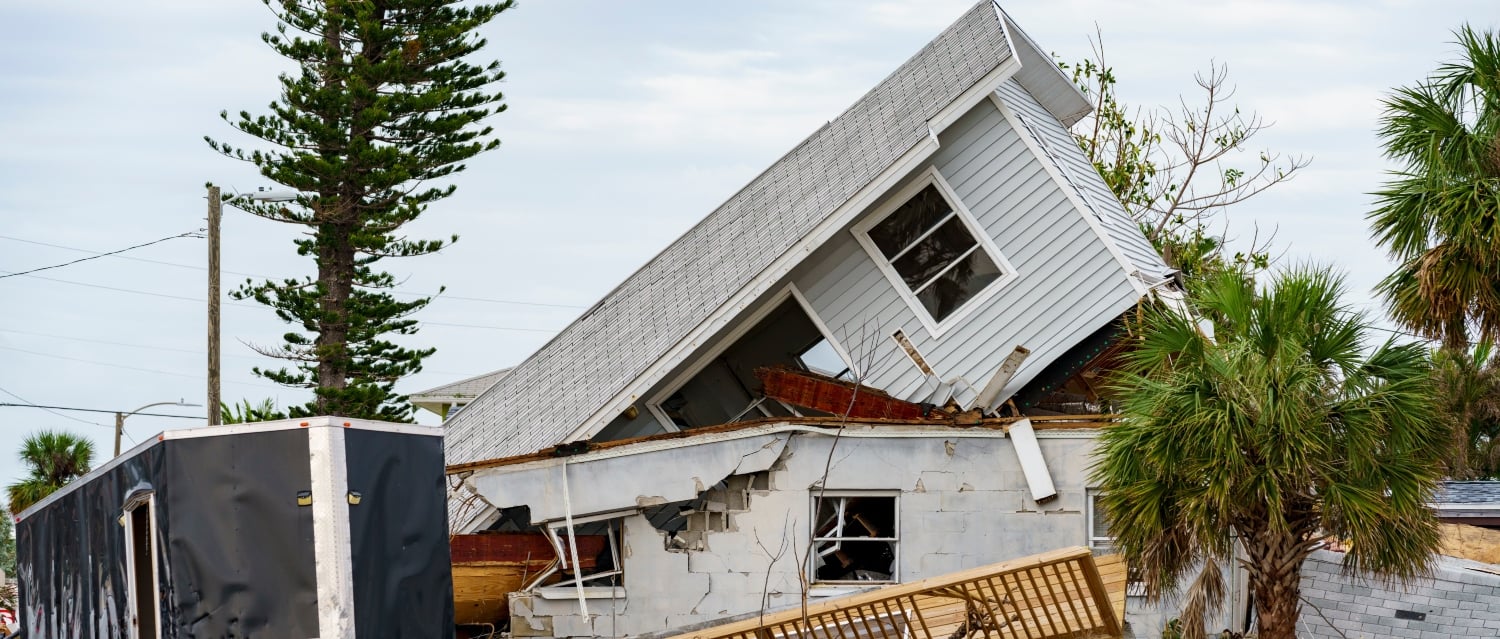
Florida’s approach to hurricane-resistant construction traces directly back to Hurricane Andrew in 1992. The Category 5 storm flattened entire neighbourhoods across South Florida and exposed widespread failures in how homes had been built. In response, the state introduced the Florida Building Code (FBC), which became mandatory for all new construction in 2002 and is updated every three years.
The FBC requires new homes to be engineered for wind speeds based on their location. These range from 110 mph in lower-risk inland areas to more than 180 mph in High-Velocity Hurricane Zones (HVHZ). The HVHZ covers Broward and Miami-Dade counties, where the standards are the strictest in the country. In those areas, every opening in the building – windows, doors and eaves – must use lab-tested, wind-resistant components.
Research published by the International Code Council confirms a striking finding. Homes built under the FBC suffer up to 72% less wind damage than those built under older local standards. For buyers considering a property built before 2002, that gap matters – and it should shape the way you negotiate on price.
The FORTIFIED Home standard
Beyond the FBC minimum, there’s a voluntary certification scheme worth knowing about. It’s the FORTIFIED Home standard, created by the Insurance Institute for Business and Home Safety (IBHS). The scheme was updated at the start of 2025 to reflect newer research on high-wind and wind-driven rain performance. The updates included tighter roof-deck fastening requirements and stricter performance standards for roof-mounted vents.
FORTIFIED certification comes at three levels.
| Level | What it covers | Typical premium saving |
|---|---|---|
| Bronze | Roof deck, roof covering, roof-to-wall connections | Moderate |
| Silver | All Bronze features plus openings (windows, doors) | Significant |
| Gold | Complete building envelope – the highest standard | Substantial |
Gold-standard properties offer the most comprehensive protection and tend to attract the largest insurance discounts. Properties certified to any FORTIFIED level can also be easier and cheaper to insure overall. Only a few thousand properties nationally hold Gold certification, but adoption is growing in Florida’s Gulf Coast and Panhandle regions.
What to check before you buy
Before committing to any Florida property, ask the estate agent (realtor) for proof that the home meets FBC requirements. At minimum, request documentation showing the build year and the permits obtained during construction. This tells you whether the property was built to current code – or whether you’ll need to factor retrofit costs into your offer.
For older properties, a Windstorm Inspection is worth arranging. A qualified inspector will assess the property’s ability to withstand hurricane-force winds and identify any features that could increase storm damage risk. Inspectors look for concrete block (CBS) construction, gable-end bracing and secondary water-resistant barriers beneath the roof covering. They’ll also check for hurricane straps or clips connecting the roof structure to the walls.
You should also commission a wind mitigation inspection. This produces a standardised form – the OIR-B1-1802 – that documents all the property’s wind-resistant features. The inspection costs around $75 (£60) to $150 (£120). It’s one of the most cost-effective things a buyer can do, because insurance companies use the form to calculate premium discounts. In our experience, buyers who arrange this inspection before closing are far better placed to negotiate their cover.
Whether you’re looking at a historic Florida home or a new build, the construction era will affect every aspect of your storm exposure. Our piece on choosing between a new build and a historic home in the US walks through the wider trade-offs. For the full buying process, our guide to how to buy property in the USA covers every step from making an offer to completion.
Hurricane-resistant features that matter most
When you’re viewing a Florida property, these are the features that make the most meaningful difference to its storm resilience.
Roof design and construction
The roof is the most vulnerable part of any home in a hurricane. Hip roofs have four slopes meeting at a central ridge. They perform considerably better than gable roofs, which have two triangular end walls that catch wind. Wind uplift on a hip roof is around 40% lower than on a gable design, and hip roofs are now widely preferred in Florida construction.
Metal roofing, when properly anchored, can withstand winds of 160 mph and has a lifespan of 50 years or more. Self-adhering secondary water-resistant barriers fitted beneath the main roof covering are also important – they prevent leaks if the outer roof is damaged. Many insurers require them as a condition of cover.
Impact windows and doors
In 2026, the Wind-Borne Debris Region has been expanded under updated regulations. Impact-rated windows and doors are no longer just a desirable upgrade in many parts of Florida – they’re the required baseline for insurance eligibility. Impact glass uses laminated layers and reinforced frames. The result: it resists both wind pressure and flying debris, keeping the building envelope intact even if the outer pane cracks.
Expect to pay around $700 (£560) to $1,600 (£1,280) per window installed. Impact windows also remove the need to fit hurricane shutters manually before a storm. That’s a real practical advantage for overseas buyers who may not be on-site when one approaches.
Foundation and elevation
Coastal properties should be elevated on pilings to protect against storm surge, with the living space above FEMA’s Base Flood Elevation (BFE). Many Florida builders now go one to three feet above the minimum BFE requirement as standard. That extra height – known as freeboard – adds another layer of safety and can reduce flood insurance premiums.
Construction material
Concrete block construction (CBS) and insulated concrete forms (ICF) both offer substantially greater wind and debris resistance than timber frame. ICF walls combine reinforced concrete with high-density foam insulation. They can outperform standard CBS in extreme wind events. The added construction cost is typically 15% to 20% more than timber frame. That’s usually offset by lower insurance premiums and reduced maintenance over time.
The cost of retrofitting an older home
If you’re considering a property built before 2002, retrofitting it to meet current standards is possible but involves meaningful cost. In general terms:
| Property age | Retrofitting cost (USD) | Notes |
|---|---|---|
| Built 2002 or later | Little to no cost | Already built to FBC |
| Built 1993–2001 | $15,000–$45,000 (£12,000–£36,000) | Moderate upgrades needed |
| Built before 1992 | $60,000+ (£48,000+) | Structural upgrades may be limited |
Homes that pre-date Hurricane Andrew’s building reforms are the most problematic. Some structural upgrades simply aren’t possible without removing walls. In our experience, buyers focused on security and low running costs are better served by newer construction. The exception is a pre-1992 property that has already been substantially upgraded and carries documentation to prove it.
Florida’s My Safe Florida Home programme offers grants of up to $10,000 (£8,000) toward wind-resistance improvements. The catch: it’s only available to homeowners with a homestead exemption, meaning the property must be their primary residence. Most overseas buyers using a Florida property as a holiday home or rental won’t qualify. Budget on the assumption you’ll fund any retrofit yourself.
How hurricane-proofing affects your insurance
Florida has the most expensive homeowners insurance market in the United States. The average annual premium reached around $6,000 (£4,800) in 2025 – more than three times the US national average. The reason is straightforward: insurers price for risk, and Florida’s storm exposure is exceptional.
The right hurricane-resistant features can take a real bite out of that bill. Florida law requires insurers to offer premium discounts for certified hurricane loss-mitigation features. Homes with impact windows, a hip roof, concrete construction and a secondary water barrier can qualify for annual premium reductions of between 25% and 45%. On a $6,000 base premium, that represents savings of $1,500 (£1,200) to $2,700 (£2,160) a year.
The wind mitigation inspection (OIR-B1-1802) is the key document for accessing these discounts. Submit it to your insurer before your first premium payment rather than afterwards. Currency timing matters too. The dollar–pound rate can swing by several percentage points across a single buying timeline, and your funds will need to move at some stage. Speaking to a currency specialist early gives you the option to fix a rate rather than gamble on the market.
Planning to let the property when you’re not using it? Read our guide to rental income tax for overseas buyers in Florida alongside the insurance picture.
What should I do next?
If you’re at the serious planning stage for a Florida purchase, three steps will protect both your investment and your nerves.
- Arrange a Windstorm Inspection and a wind mitigation inspection before you commit to the property. A standard home inspection is not the same thing. Use a licensed Florida inspector and ask for the OIR-B1-1802 form.
- Speak to an insurer about indicative premiums based on the property’s wind mitigation report. This is the single best way to find out what you’ll actually pay before you complete.
- Plan your currency transfer with a specialist. Property prices in the US are quoted in dollars, and exchange rate movement can add or subtract tens of thousands of pounds from your effective cost.
Want the bigger picture? Take a look at our piece on why overseas buyers should be watching Florida right now. Or browse our round-up of where to buy property in central and western Florida.
Summary
- Florida hurricane season runs from 1 June to 30 November. Storm resilience should be a non-negotiable part of your buyer checklist.
- The Florida Building Code, mandatory since 2002, sets minimum standards for wind resistance. Homes built to post-2002 standards suffer around 72% less wind damage than older properties.
- Broward and Miami-Dade counties sit within the High-Velocity Hurricane Zone and apply even stricter rules to all new construction.
- The voluntary FORTIFIED Home standard (updated in 2025) offers Bronze, Silver and Gold certification levels, with Gold providing the most comprehensive protection.
- A wind mitigation inspection (OIR-B1-1802) costs $75 (£60) to $150 (£120) and can trigger insurance premium savings of 25% to 45%.
- Retrofitting a pre-1992 home can cost $60,000 (£48,000) or more. Newer construction is generally the lower-risk and lower-cost option for overseas buyers.
Frequently asked questions
No home is completely hurricane-proof. The accurate term is hurricane-resistant. Modern Florida homes built to current FBC standards are engineered to survive Category 5 winds of 157 mph or more with minimal structural failure. But extreme storms such as Hurricane Ian in 2022 have shown that no construction is invulnerable. The goal is resilience – minimising damage and enabling faster recovery.
FORTIFIED is a voluntary certification from the Insurance Institute for Business and Home Safety. It goes beyond the Florida Building Code minimum, with stricter requirements for roof-deck fastening, wind-driven rain performance and whole-building envelope protection. Properties with FORTIFIED Gold certification typically qualify for the largest insurance discounts and tend to hold their value well in the resale market. Whether the upfront cost is justified depends on the property’s location and age, but in active hurricane zones it often makes financial sense.
Florida requires insurers to offer premium discounts for certified hurricane-mitigation features. With the right combination of impact windows, hip roof, concrete construction and a secondary water barrier, annual savings of 25% to 45% are achievable. On Florida’s average premium of $6,000 (£4,800), that means up to $2,700 (£2,160) a year. A wind mitigation inspection – which costs $75 to $150 – is the starting point for accessing these discounts.
Ask for the property’s build year and any permits issued during construction. Request documentation showing compliance with the Florida Building Code. Find out whether the property has had a Windstorm Inspection or wind mitigation survey completed and, if so, request the reports. If the property is older, ask what hurricane-resistance upgrades have been made and whether they are documented.
Not necessarily. Impact windows are designed to keep the building envelope intact during a storm, which is the function hurricane shutters serve. A property with certified impact-rated windows and doors throughout generally doesn’t need separate shutters. This is a meaningful practical advantage for overseas buyers, who may not be present when a storm approaches.
Sources
- Florida Building Code – Florida Building Commission
- FORTIFIED Home Standard (2025 update) – Insurance Institute for Business and Home Safety
- Wind mitigation inspection form OIR-B1-1802 – Florida Office of Insurance Regulation
- Base Flood Elevation requirements – FEMA
- My Safe Florida Home programme – mysafeflhome.com
- Florida hurricane mitigation discounts statute (Florida Statute 627.0629) – Florida Statutes