




Turkey could become one of the world’s most tax-friendly destinations for expats and entrepreneurs, thanks to a fiscal initiative revealed by the government in what it called its ‘year of reforms’. Could zero tax for foreigners in Turkey tempt expats from the Middle East?
At the end of April President Erdogan highlighted his plans to make Turkey a major player in the global economy and a hub for foreign investment. Integral to this is the ‘Türkiye Century Strong Center for Investment Program‘, a reform plan that includes a zero tax scheme for qualifying foreigners who move to the country. Foreign companies and entrepreneurs who set up shop in Turkey would also be in Iine for significant benefits.
Yet to be presented as a bill and passed by parliament, these financial carrots are timely. They are seen as a bid to fill a gap left by Middle Eastern states, which could be deemed less appealing to foreign investors since the Iran crisis started. The changes could also make Turkey more attractive for tax purposes than other popular European destinations.
Contents
Zero tax for foreigners in Turkey
As part of Erdogan’s planned tax reforms, foreigners who relocate to Turkey could apply for a 20-year exemption from tax on foreign-source income and capital gains. This could include earnings from overseas businesses, investments, dividends or employment. Any income earned within Turkey would still be subject to local tax rules.
Another proposed perk is that applicants would see their inheritance tax liability in Turkey slashed to just 1% from the standard 10%.
To date, full legislative details are yet to be published. But one condition already specified is that applicants must not have been a Turkish tax resident during the three years prior to arriving in Turkey. Other eligibility criteria could include minimum investment or income thresholds, industry-specific contributions and residency/ visa requirements. Watch this space for more details.
Tax relief for Turkish-owned assets
In a further bid to lure capital back to the country, the package would offer a reduced tax rate for asset repatriation to Turkey within a set window of time.
This could apply to both overseas Turkish citizens and companies who return to Turkey with assets currently held abroad. Assets could include cash, gold and securities.
Live tax-free as a Turkish citizen
One residency route that would complement the proposed zero-tax scheme could be Turkey’s Citizenship by Investment (CBI) scheme. This enables applicants and their family to become Turkish citizens by investing a minimum $400,000 in property or $500,000 in other approved financial classes. A less permanent option could be to gain Turkish residency by investment, which requires purchasing property worth a minimum $200,000.
Standard income tax in Turkey is charged at progressive rates from 15% to 40%. It is levied on all income, which for foreign residents would include worldwide income, before any double-taxation relief is applied. If the 20-year tax exemption is implemented, the CBI option could be an easy way for foreigners to be Turkish residents and pay no or very little tax, depending on their circumstances.
Turkey and tax compared to other countries
In recent decades, low tax schemes have become a popular way for countries to lure foreign residents to their shores. As things stand, Turkey’s proposed 20-year zero-tax scheme would make it one of the most favourable to expats.
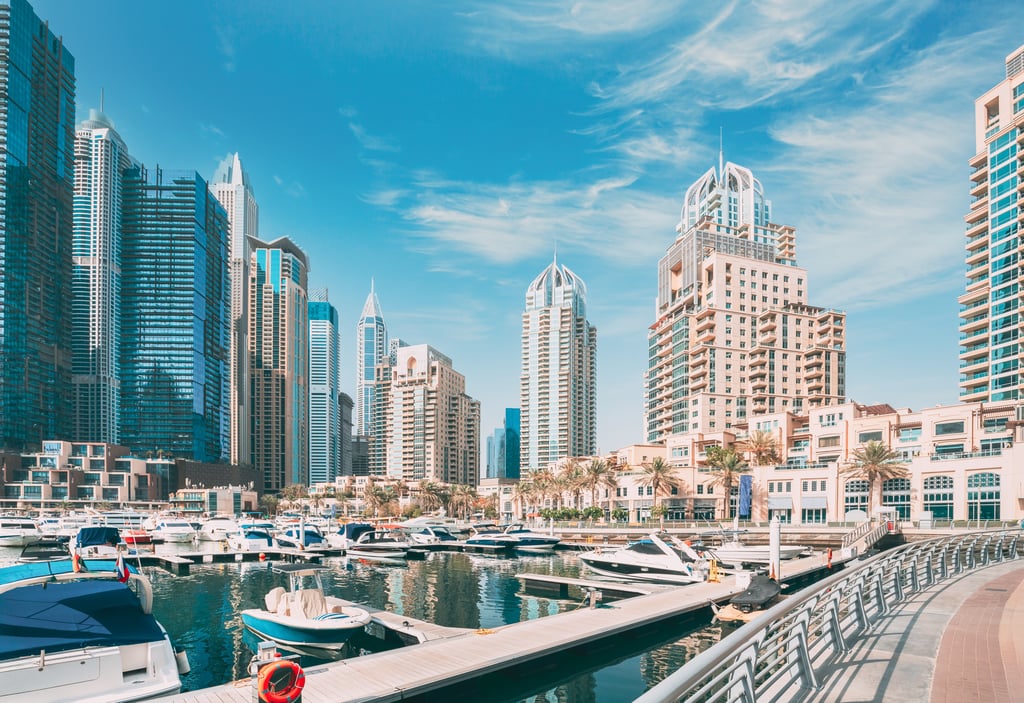
By comparison, Dubai (UAE) has a 10-year golden visa (residency by investment) that requires a real estate purchase worth at least two million AED (approx. £402,000). Once resident in the emirate, there is no personal income tax, capital gains or inheritance tax.
In Europe, Portugal’s Non-Habitual Resident (NHR) regime was hugely popular and saw many foreign individuals paying zero tax on foreign source income (or flat 10% on pensions after 2020) for a fixed ten-year period. In 2024 the original scheme was scrapped and a more restrictive alternative, known as the Incentivised Tax Status (ITS) introduced.
Spain has its Special Expat Tax Regime (SETR), or ‘Beckham Law’. This exempts individuals residing in the country from taxation on worldwide passive or investment income. But it only lasts up to six tax years and you need to be earning over a certain threshold for it to really be beneficial.
Italy and Greece both offer schemes for foreign retirees offering them a flat tax rate of 7% on foreign-source income for a limited period – in Italy it is applicable only in southern regions. Both also have schemes for HNWIs which cap annual tax paid on foreign-source income (€300,000 in Italy and €100,000 in Greece). Both valid for the first 15 years of residency, applicants often obtain residency status using an investment visa.
Tax breaks for foreign trade in Turkey
President Erdogan’s proposed reforms will also favour foreign businesses and entrepreneurs who choose Turkey. A statement from Turkey’s Investment & Finance Office laid out plans to boost international trade, attract overseas investment and position Istanbul’s Finance Centre as a key regional hub, similar to Hong Kong and Singapore.
Measures include significant reductions in corporate tax rates for exporters and manufacturers based in Turkey and near-total exemptions on transit trade income. Companies based in the Istanbul Financial Centre will benefit the most, namely a 100% corporate income tax exemption on transit trade (95% tax exemption if outside the financial centre).

Buying property in Turkey
Turkey’s foreign property market is concentrated along its Aegean and Mediterranean coastlines, where its diverse beach resorts attract predominantly lifestyle owners and permeannt expats.
Especially desirable areas include the Bodrum Peninsula, with its upmarket marina developments and hip nightlife, scenic Kalkan set around a stunning bay with its foodie scene, the boutique waterfront resort of Gocek, hillside villa communities in Oludeniz and around the Blue Lagoon, and cosmopolitan Antalya with its championship golf resorts at Belek.
More affordable resorts that offer something for most budgets include Altinkum, Marmaris, Fethiye area, Side, Alanya, Dalyan and Cesme.
Meanwhile, investors typically focus more on Istanbul and the modern new-build projects around its centre and in the growing suburbs. Other urban investment spots include Izmir, Antalya and Ankara. Investing in any of these is a popular – but not exclusive – route to obtaining citizenship through the Citizen by Investment scheme.
Next steps
It’s important to note, while the planned tax reforms above are serious proposals by President Edogan and his government, they are yet to be passed by the Turkish Government. Neither has a draft of the full legislation been made public, so finer details are yet to be confirmed.
The key takeaway is that in light of the changing worldwide financial landscape, Turkey is on a path to become a global economic hub, one that is highly attractive to foreign expats, including entrepreneurs and HNWIs.
Chances are it will become more appealing in terms of taxation for expats in the coming year or so. Look out for updates on the progress of these proposals. Needless to say, when planning a move to a new jurisdiction, Turkey or anywhere in the world, always take take advice from a tax professional. They will assess your entire worldwide estate and assets, to ensure you make the right decisions according to individual profile.
Frequently Asked Questions
To live in Turkey longer than 90 days, foreigners typically apply for a short-term residence permit. This can be renewed every 1–2 years and after 8 years of continuous residency, a long-term residence permit may be obtained.
A popular fast-track option is Turkey’s Citizen by Investment (CBI) scheme. This requires the purchase of property worth at least $400,000 but grants immediate citizenship and with it the right to reside in Turkey. A less permanent residency by investment option requires a property purchase worth at least $200,000.
Are there restrictions on foreign property purchases?
No, all nationalities from countries with reciprocal agreements with Turkey, including EU, US and UK citizens, can buy real estate freely in the country. As in many countries, there are ownership restrictions in military and border zones and on the size of permitted plot.
Does the property purchase process take long in Turkey?
No, it’s comparatively fast. Foreigners generally need military clearance, but this verification process is realtively quick now using digital technology. Hiring an independent lawyer is highly recommended. A typical cash purchase can be around 4 weeks, even less. New-build will depend on the construction stages of the builder.
Is Turkey an expensive place to live?
By comparison to the UK and USA, Turkey is regarded as significantly cheaper. Shopping, eating out and general bills are all lower – it’s somewhere where your monthly pension or income stretches a lot further. Foreign retirees move there to enjoy a sunny lifestyle and standard of living they wouldn’t be able to afford back home, especially if you shop like the locals. Of course, there are upmarket areas in Istanbul and certain tourist resorts where prices are higher, but this is not representative of typical day-to-day Turkey.
Can property be purchased in US dollars?
Possibly, but it’s not a given. It is not unusual for property transactions to be done in US dollars in Turkey, even Sterling. It will depend on the vendor or developer and often the value of the property – it’s more common with newer projects in Istanbul. Historically, Turkey is a trading nation that connects traders from the East and West, so businesses have always been flexible with currencies. Expect to always use Turkish lira for day-to-day living.