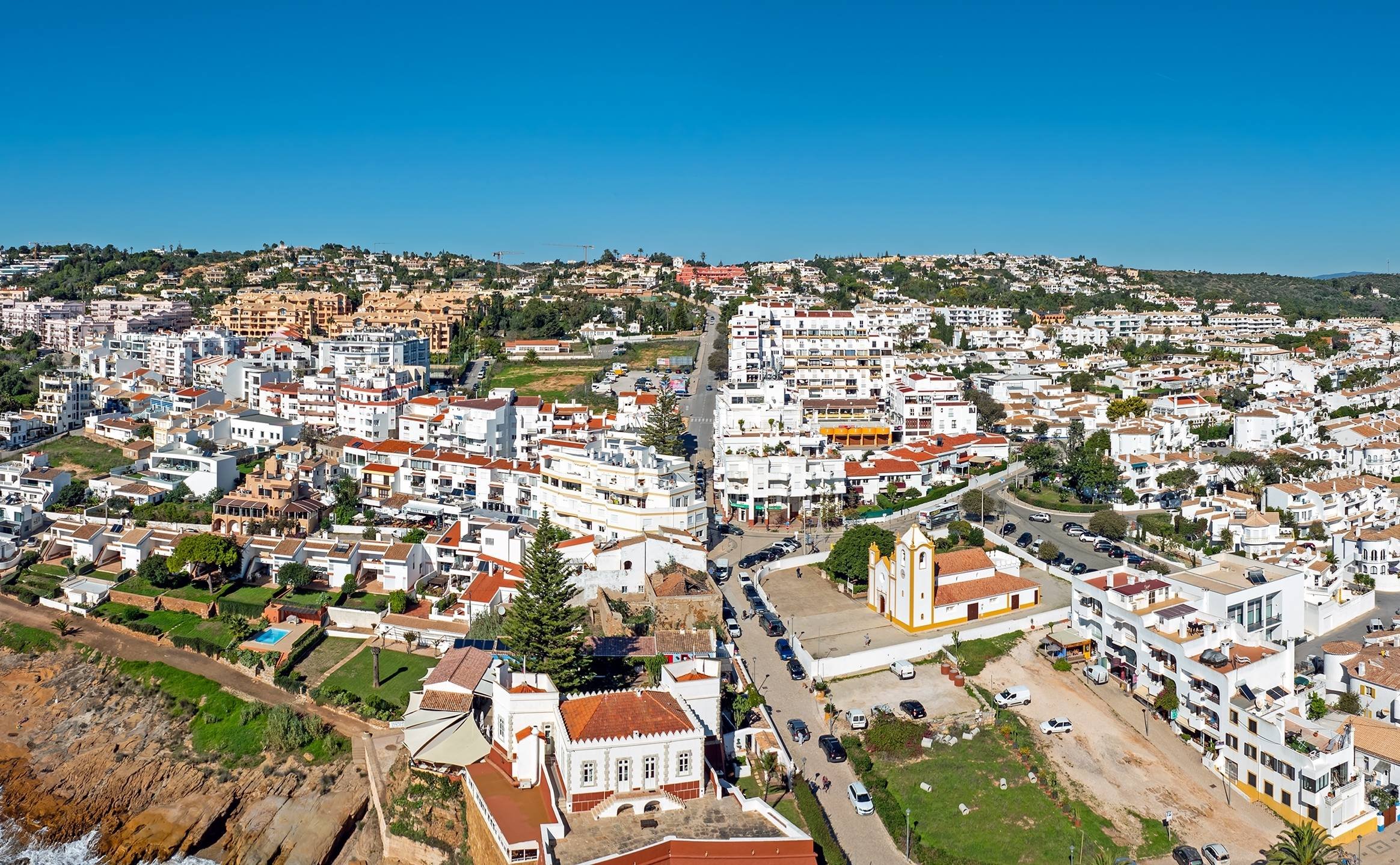




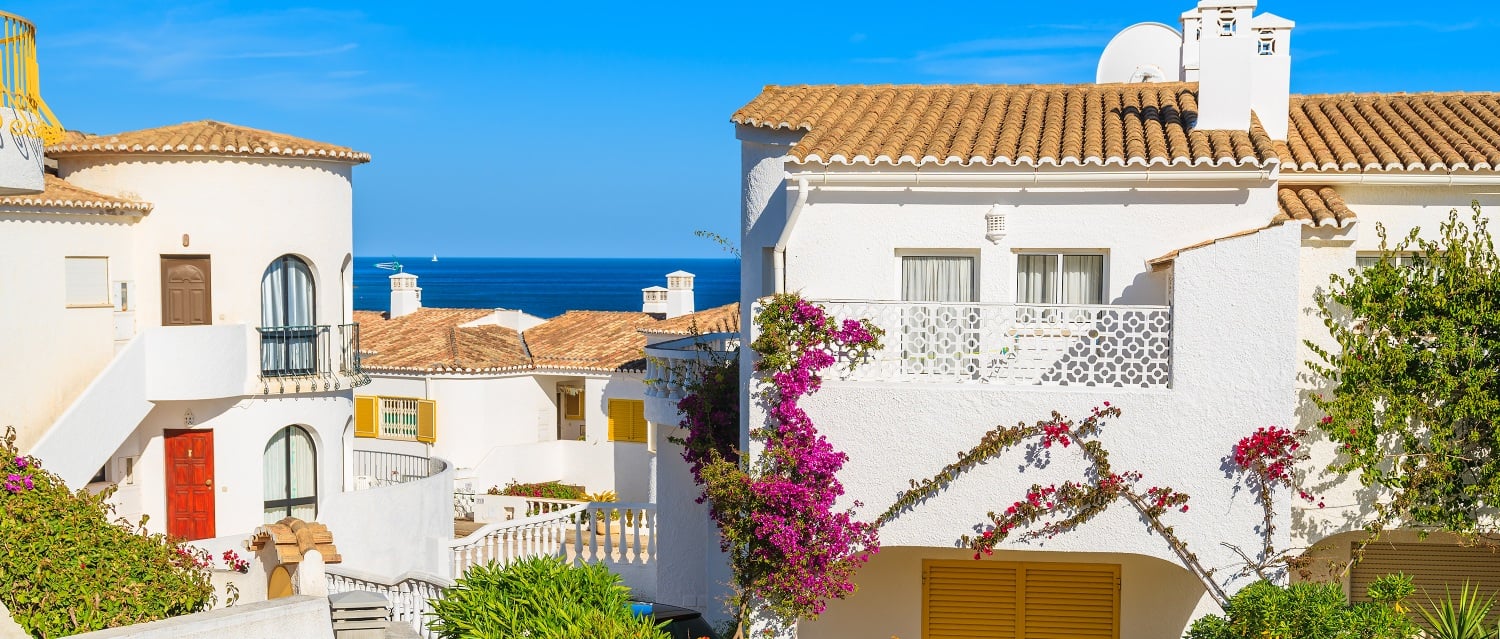
Portugal has long attracted overseas buyers with the prospect of a property that pays its way. Warm summers, consistent tourist demand and a favourable exchange rate for sterling have made the Alojamento Local (AL) model – Portugal’s licensed short-term rental system – a standard part of many buyers’ investment calculations.
But 2026 is a pivotal year. Three significant regulatory developments have reshaped the landscape since late 2024: a new national licensing framework under Decreto-Lei 76/2024, sweeping containment rules introduced by Lisbon in December 2025 and EU Regulation 2024/1028, which came into force on 20 May 2026. Taken together, these changes make location-specific due diligence more important than ever for anyone planning to rent out property in Portugal.
Key takeaway: Short-term rentals in Portugal need an Alojamento Local (AL) licence via the national RNAL system. Licences became permanent and transferable in November 2024, but Lisbon’s parishes and a growing number of other municipalities now cap or block new registrations. From 20 May 2026, EU Regulation 2024/1028 forces platforms to verify licence numbers and remove unlicensed listings automatically.
Contents
- What is an Alojamento Local licence?
- How the national rules changed in November 2024
- How to register for an AL licence
- Lisbon’s December 2025 containment rules
- The picture across Portugal’s other markets
- EU Regulation 2024/1028: what changes on 20 May 2026
- Tax on AL rental income for UK non-residents
- Can a condominium block your rental?
- What should I do next?
- Summary
- Frequently asked questions
- Sources
What is an Alojamento Local licence?
Alojamento Local – usually shortened to AL – is Portugal’s licensed category for short-term tourist accommodation. Any property rented to guests for periods of up to 30 days must hold an AL registration number, displayed on all listings and at the property entrance. Operating without one carries fines of up to €40,000.
Four licence categories exist under Portuguese law:
| Category | What it covers | Capacity limit |
|---|---|---|
| Moradia | Standalone house or villa rented as a unit | 9 bedrooms, 27 guests |
| Apartamento | Self-contained apartment unit | 9 bedrooms, 27 guests |
| Estabelecimento de hospedagem | Rooms rented separately to different guests | 27 guests total |
| Quartos | Rooms in the owner’s primary residence | 3 rooms maximum |
The estabelecimento de hospedagem category carries a significant tax advantage: the simplified regime treats just 15% of gross income as taxable – compared with 35% for apartments and villas. Many buyers who are purchasing to rent rooms rather than an entire unit find this the most tax-efficient structure.
How the national rules changed in November 2024
Decreto-Lei 76/2024, published on 23 October 2024 and in force from 1 November 2024, reversed most of the restrictions introduced by the previous government’s Mais Habitação (More Housing) programme. The key changes for buyers are:
Licences are now permanent. DL 76/2024 scrapped the five-year validity with mandatory renewal. Once granted, an AL registration does not expire.
Licences are transferable on sale. This was one of the most damaging provisions of Mais Habitação – licences had become personal and non-transferable, meaning buyers could not acquire a property’s rental permit with the property itself. DL 76/2024 restores transferability, with important exceptions in containment zones (see below).
The national freeze on apartment registrations has ended. Portugal now allows new AL registrations for apartments across most of the country, subject to any local containment rules.
The government scrapped the extraordinary AL tax (CEAL), with retrospective effect from 31 December 2023.
Guest capacity was reduced from 30 to 27, and convertible beds cannot exceed 50% of fixed beds – a minor operational change.
The broad direction of travel is pro-investor at national level. The PSD/AD coalition government has been consistent in supporting Portugal’s short-term rental market, while simultaneously giving municipalities the tools to manage local pressure. That balance defines the 2026 landscape.
How to register for an AL licence

Registration is a comunicação prévia com prazo – a prior notification with a deadline – rather than a permit requiring prior approval. The process runs through the ePortugal national portal or directly with the relevant local council (câmara municipal).
You will need:
- A valid habitation licence for the property
- Civil liability insurance (meeting the standards of Portaria 248/2021)
- An energy performance certificate (certificado energético)
- Tax registration at the Portuguese tax authority (AT) under activity code CAE 55201
- Property ownership documents and identification
Once submitted, the câmara municipal has 60 days to oppose the registration – extended to 90 days in designated containment zones. If no opposition arrives within that window, the council treats the application as approved by tacit consent. Turismo de Portugal then issues the RNAL number (in the format XXXXX/AL), which must appear on all online listings and at the property entrance on the mandatory AL identification plaque.
Lisbon’s December 2025 containment rules
Lisbon passed the most consequential municipal AL restriction in Portugal’s history in late 2025. Approved on 27 November and taking effect from 6 December 2025, the amended Regulamento Municipal do Alojamento Local (RMAL) introduced a ratio-based containment system that halved the previous density thresholds.
The two containment tiers
The system operates on two tiers. Absolute containment applies where AL registrations represent 10% or more of a parish’s permanent housing units – no new AL registrations are permitted. Relative containment applies between 5% and 10%, where new registrations require special authorisation and face severe restrictions.
Why the parish map keeps moving
Lisbon’s containment map is not fixed, and this is the detail buyers most often miss. The Câmara Municipal de Lisboa (CML) recalculates each parish’s ratio monthly, and a February 2026 clean-up that cancelled around 6,765 inactive or uninsured AL registrations – about 40% of the city’s total – has already pushed several parishes across the containment threshold more than once. Santa Maria Maior (above 65% – the most saturated parish in Portugal) and Misericórdia have sat in absolute containment throughout 2026 regardless of monthly movement. Santo António, São Vicente, Arroios, Estrela and Alcântara have each moved between absolute and relative containment at least once this year as the registration count has shifted – press reports from April and July 2026 don’t even agree on which tier some of them currently sit in. Before assuming a parish’s status either way, check the CML’s live monitoring map rather than a fixed list, including this one.
What happens to licences already in place
Looking at a move to Portugal?
Browse property listings on our portal or speak to an expert who knows the country.
Existing licences remain unaffected. They carry forward permanently under the national framework. However, a critical provision changes the calculus for buyers: in absolute and relative containment zones, an apartment or moradia AL licence expires when the property is sold. The buyer cannot inherit the registration. The only exceptions are inheritance, transfers between spouses and family reorganisation. This means buying a Lisbon city-centre apartment with an active AL licence does not give the buyer any right to continue operating it as a short-let property.
Buyers interested in property in Lisbon with a rental component should treat the historic core as a market where short-term letting income cannot be assumed, and obtain explicit written confirmation from the relevant câmara municipal about the target property’s status before exchanging contracts.
The picture across Portugal’s other markets
The Lisbon rules are the most restrictive, but other municipalities have followed with containment rules of their own, and the picture has shifted in several of them since the spring.
| Location | Status | AL threshold for absolute containment | Outlook |
|---|---|---|---|
| Lisbon historic core | Closed | 10% | No new licences; licence dies on sale |
| Lisbon outer parishes | Mixed | 10% (citywide trigger) | Open in lower-density parishes |
| Porto historic core | Restricted | 15% | Five parishes closed to new licences |
| Porto outer parishes | Open | 15% | New licences available |
| Algarve | Mostly open | No binding regional cap | Lagoa and Faro now restrict locally; most municipalities remain open |
| Funchal, Madeira | Closed (apartments) | Permanent containment regulation (March 2026) | Standard apartments effectively unavailable |
| Silver Coast | Open | Municipal-level only | Generally accessible |
Porto
Buying in Porto presents a more nuanced picture than Lisbon, and the restricted zone is larger than it first appears. Porto operates at a 15% containment threshold, and five historic-centre parishes are currently closed to new registrations: Vitória (around 60%), São Nicolau (around 47%), Sé (around 39%), Santo Ildefonso (around 35%) and Miragaia (around 21%). Outer parishes such as Campanhã (approximately 1% ratio) remain fully open. The city updated its regulation following DL 76/2024 but has not adopted Lisbon’s automatic licence-death-on-sale provision. You can check a specific address against Porto’s live containment map.
Algarve
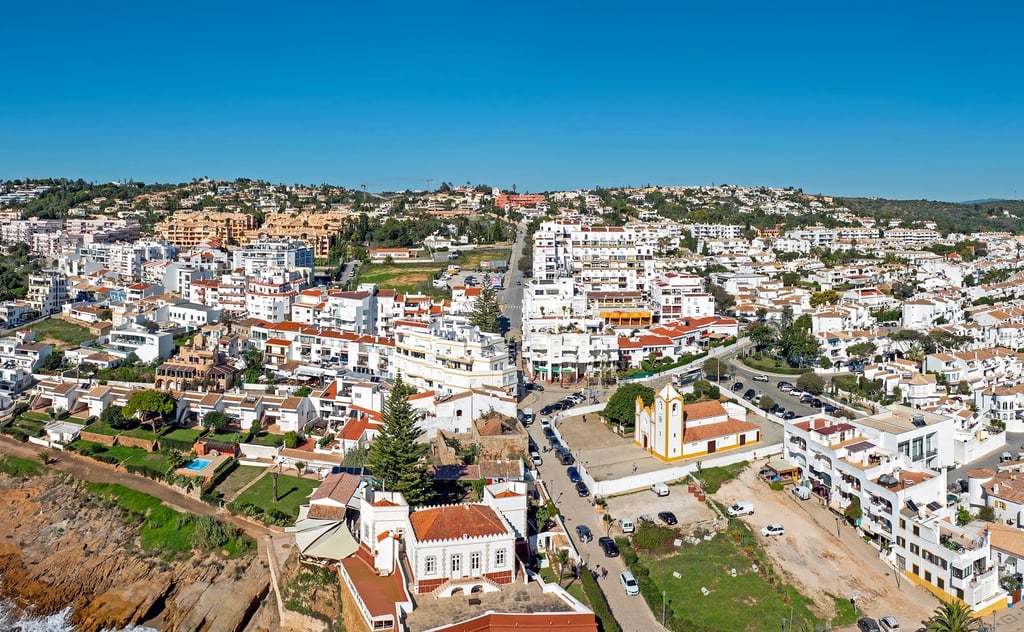
The Algarve remains one of the more straightforward entry points for overseas buyers looking at short-term rental income, though “broadly open” no longer means unrestricted everywhere. Despite hosting roughly 40,000 AL units – around one-third of Portugal’s national total – the region has no binding regional freeze or unified containment framework. Individual Algarve municipalities may apply for containment zoning under DL 76/2024 powers, and Lagoa has already done so, with Faro’s own proposal in progress. Most other Algarve municipalities remain broadly admissible, but check the specific município before building your figures around rental income.
EU Regulation 2024/1028: what changes on 20 May 2026
EU Regulation 2024/1028, signed on 11 April 2024, applies in full from 20 May 2026. It does not create new licensing requirements. Instead, it builds a data infrastructure layer on top of existing national systems – and makes enforcement systematic for the first time.
Three obligations matter for AL operators:
Platforms must verify registration numbers. Under Article 7 of the Regulation, Airbnb, Booking.com, Vrbo and all other short-term rental platforms must collect registration numbers from hosts, display them publicly and conduct random validity checks. Platforms must report any invalid or fraudulent numbers to authorities.
Platforms must share activity data monthly. Platforms will transmit each property’s registration number, address, listing URL, number of nights rented and number of guests per night to Portugal’s Single Digital Entry Point. This makes compliance monitoring automated rather than reliant on physical inspections.
Non-compliant listings face removal. Where a registration number is found to be invalid, suspended or fraudulently obtained, platforms must remove the listing. Under the previous enforcement system, unlicensed properties could persist on platforms indefinitely if inspectors did not physically find them. After 20 May 2026, this is no longer possible.
For existing AL holders, the action is straightforward: verify that the data on your RNAL registration – exact address, floor, letterbox number, property type and guest capacity – precisely matches what platforms hold. Machine-to-machine verification will flag any mismatch. You do not need to re-register; your existing number remains valid.
Portugal is well-positioned for this transition. The national RNAL database already exists, and ASAE (the food and economic safety authority) has conducted over 12,000 inspections. The EU regulation amplifies existing enforcement rather than creating parallel bureaucracy.
Tax on AL rental income for UK non-residents
How AL income is taxed
AL income is classified as Category B (business and professional income) under the Portuguese tax code, not as passive rental income. For the vast majority of UK buyers who are non-resident in Portugal, this produces a predictable effective tax rate under the simplified regime.
Under the simplified regime – the default for operators with gross revenue below €200,000 – a coefficient determines the taxable portion of gross income. For non-residents, a flat 25% IRS rate then applies to that taxable amount.
| Property type | Taxable coefficient | Effective rate on gross income |
|---|---|---|
| Moradia or apartamento (standard) | 35% | ~8.75% |
| Moradia or apartamento (in containment zone) | 50% | ~12.5% |
| Estabelecimento de hospedagem (rooms) | 15% | ~3.75% |
VAT, the UK–Portugal treaty and moving your money
Non-resident AL operators should also be aware of two changes that took effect in mid-2025. From 1 July 2025, non-residents lost eligibility for the small-business VAT exemption and must now register for VAT, charge 6% VAT on stays and appoint a fiscal representative in Portugal. Failure to do so carries penalties. A fiscal representative typically charges between €200 and €600 per year; the cost is modest relative to rental income but should be factored into viability calculations.
The new UK–Portugal Double Taxation Convention, signed in September 2025 and in force since 29 December 2025, prevents double taxation. Portugal retains the primary taxing right on income from Portuguese property; the UK grants a credit for Portuguese tax paid. UK residents must declare AL income to HMRC but should not face additional UK liability where Portuguese tax already covers the amount.
For a fuller picture of Portugal’s property tax system, and the interaction with capital gains tax when you eventually sell, it is worth speaking to a specialist in Portuguese tax for non-residents before committing.
If you’re moving rental income back to the UK, or paying Portuguese taxes and fees from sterling, exchange rate movement affects what you actually keep. Our Currency Transfer and Property Purchases Explained guide covers how buyers manage that exposure, and Smart Currency Exchange‘s specialists can talk through a plan for your specific transfers.
Can a condominium block your rental?
DL 76/2024 significantly changed the balance of power between AL operators and their neighbours. Under the previous Mais Habitação law, condominiums held near-veto power over AL activity. That has been substantially rolled back.
You no longer need prior condominium consent to register a new AL – with the exception of hostels (estabelecimentos de hospedagem in collective buildings), which still need assembly approval.
Condominiums can still challenge an existing AL operation, but the bar is now higher. Opposition requires a vote exceeding 50% of the building’s permilagem (proportional share), must cite proven and repeated disturbances to normal building use, and the final decision rests with the president of the câmara municipal – not the condominium. A successful ban cannot exceed five years.
This is a meaningful improvement from an investor’s perspective. Condominium opposition remains possible but procedurally demanding, and capricious interference is harder to achieve than it was under the 2023 rules.
What should I do next?
Already operating an AL? The immediate priority is verifying that your RNAL data matches your platform listings exactly, since enforcement under EU Regulation 2024/1028 is now live. Non-resident operators who have not yet registered for VAT should address this promptly – penalties apply.
Buying with the intention to short-let requires a different starting point. Contact the specific câmara municipal first and find out whether the target parish or bairro sits in a containment zone, at what ratio and whether an existing licence would survive transfer to you. In central Lisbon, assume it will not.
Outside containment zones, the registration process is straightforward and the effective tax rate for UK buyers is competitive. Many buyers we speak with find the Algarve, Silver Coast and emerging Lisbon parishes the most accessible starting points in 2026.
Our how to buy property in Portugal guide covers the full purchase process from offer to completion. Income-focused buyers will find that investing in Portuguese property covers the wider picture beyond short-term lets. Once you own, managing your Portuguese property covers property management, tax filing and maintenance from abroad.
Summary
Portugal’s short-term rental market split further apart in 2026. Nationally, DL 76/2024 made AL licences permanent, transferable and cheaper to hold – good news for buyers outside a containment zone. Lisbon and Porto moved the other way, closing large parts of their historic centres to new registrations, and Lisbon licences now expire automatically on sale within those zones. The Algarve, Silver Coast and most of the country remain accessible, though Lagoa, Faro and Funchal show that local restrictions can appear anywhere under sustained tourist pressure. From 20 May 2026, EU-wide platform checks make a correctly matched RNAL number essential rather than optional. Confirm a property’s specific parish or município status before relying on rental income in your figures – and check it again close to completion, since these maps move monthly.
Frequently asked questions
Can I get an AL licence for a Lisbon apartment in 2026?
In Lisbon’s historic core – Santa Maria Maior and Misericórdia – the answer is no, and this has held throughout 2026 despite monthly ratio changes. Nearby parishes, including Santo António, Arroios, Estrela and São Vicente, have swung between absolute and relative containment more than once this year as registration numbers shift. Always check a parish’s current status on the CML’s live monitoring map before assuming either way – a fixed list, including this one, can go stale within weeks.
Which parts of Porto are open to new short-term rental licences?
Porto’s containment zone covers five historic-centre parishes, not just the best-known three: Vitória, São Nicolau, Sé, Santo Ildefonso and Miragaia are all closed to new AL registrations under the 15% threshold. Outer parishes, including Campanhã at around a 1% ratio, remain open. Porto has not adopted Lisbon’s rule that a licence expires automatically on sale, so transferability follows the national DL 76/2024 default.
Will an existing AL licence transfer to me when I buy a Portuguese property?
At national level, yes – DL 76/2024 restored transferability. However, Lisbon’s December 2025 regulation creates an important exception: in absolute and relative containment zones, an apartment or villa AL licence expires upon the property’s sale. Only licences transferred through inheritance, between spouses or through family reorganisation are protected. Outside Lisbon’s containment zones, and outside any other municipality’s equivalent restrictions, the national rule of transferability applies.
What does EU Regulation 2024/1028 mean for my existing AL property?
If you already hold a valid RNAL number, no re-registration is required. The regulation obliges platforms to verify registration numbers and share rental activity data with Portuguese authorities from 20 May 2026. The practical action for existing operators is to check that the data on your RNAL registration – exact address, property type, capacity – matches what Airbnb or Booking.com holds for your listing. Discrepancies will be flagged automatically.
How much tax will I pay as a UK non-resident with an AL property in Portugal?
Under the simplified regime, the taxable share of gross AL income depends on property type: 35% for apartments and villas, 15% for room rentals and 50% in containment zones. A flat 25% IRS rate then applies, producing effective rates of roughly 8.75%, 3.75% and 12.5% on gross income. You must also charge 6% VAT on stays and file quarterly returns through a Portuguese fiscal representative. The UK–Portugal tax treaty, in force since December 2025, prevents double taxation.
Is the Algarve still a good option for short-term rental investment in 2026?
The Algarve remains broadly accessible, with no binding regional freeze or unified containment framework as of mid-2026. Two municipalities have moved to restrict new registrations: Lagoa has introduced its own containment rules, and Faro has a containment proposal under way. Most other Algarve municipalities remain open to new AL applications. Check the specific município before committing to a purchase built around short-term rental income.
Sources
- Decreto-Lei n.º 76/2024, de 23 de outubro – official summary of changes to the Alojamento Local regime: Turismo de Portugal – business portal
- EU Regulation 2024/1028 on data collection and sharing for short-term accommodation rental services: EUR-Lex official text
- Lisbon municipal AL regulation (RMAL) amendment, Aviso n.º 29926-A/2025/2: Diário da República
- Funchal municipal containment regulation, Aviso n.º 6712/2026/2: Diário da República
- Porto Alojamento Local containment zones – live interactive map: Câmara Municipal do Porto
- UK–Portugal Double Taxation Convention – status and effective dates: HMRC Double Taxation Relief Manual, DT15600
- Portugal AT – CAE code 55201 and AL tax registration: Portal das Finanças
- RNAL registration portal: ePortugal
- Turismo de Portugal – Alojamento Local information: Turismo de Portugal