
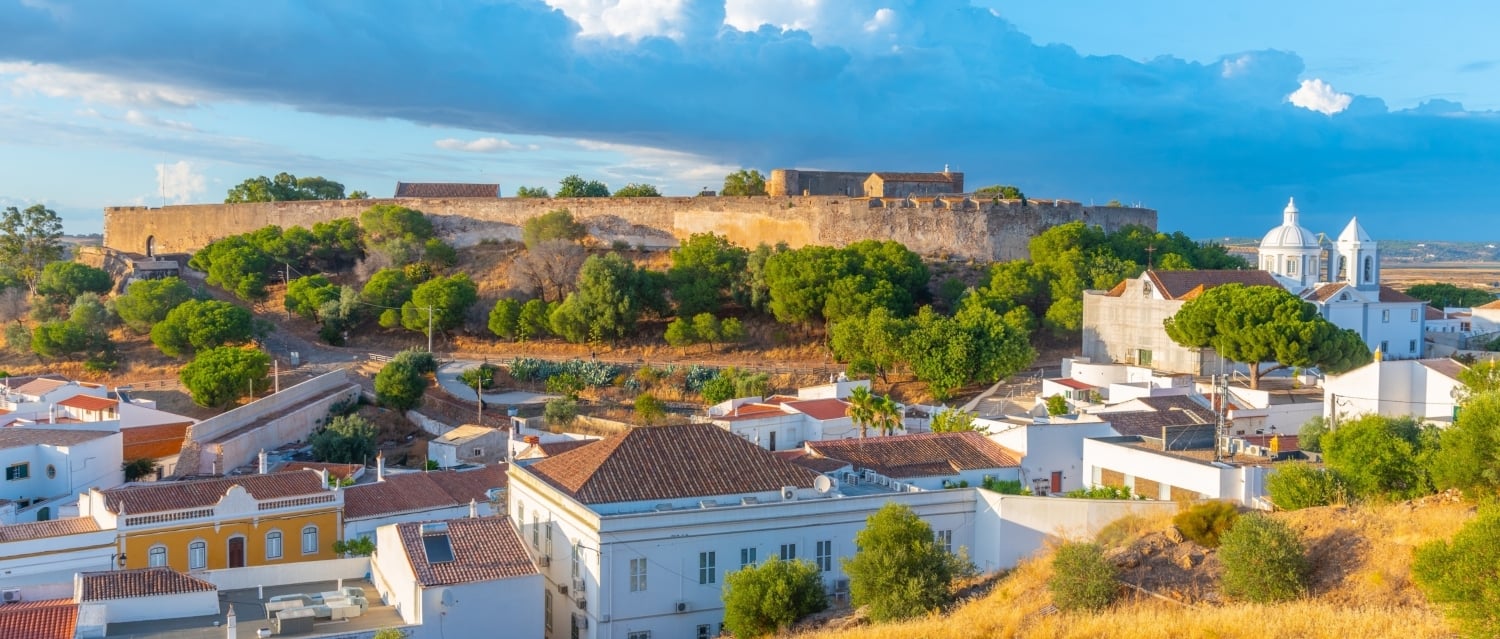
Building property in Portugal gives you more control than buying a finished home, especially if you want a specific layout, energy standard or location away from the main resorts. The practical reality is that the plot, planning status and local council process matter far more than the drawings.
For UK buyers, the safest approach is to treat the land purchase as a legal and planning project first, then a building project second. This guide explains what to check before you buy land, how planning permission works, what costs to budget for and where self-build projects most often go wrong.
Answer first: Building property in Portugal is possible for foreign buyers, but the land matters more than the house design. Before you commit, confirm the plot’s urban classification, PDM rules, infrastructure access, planning route and build budget. The main caveat is local variation: each Câmara Municipal applies planning rules and timelines differently.
Contents
- Can foreigners build property in Portugal?
- Buying land in Portugal: urban vs rustic land
- Why the PDM matters before you buy
- Planning permission and the Câmara Municipal
- What does it cost to build a house in Portugal in 2026?
- Taxes and fees when buying land
- Timeline from land search to moving in
- Does building property in Portugal qualify for the Golden Visa?
- What should I do next?
- Summary
- Frequently asked questions
- Sources
Can foreigners build property in Portugal?
Foreigners can buy land and build property in Portugal, provided the land is legally suitable for the project and the correct permissions are in place. Portugal does not generally restrict foreign buyers from owning property or land.
That does not mean every attractive plot is buildable. Your solicitor and architect should check the land registry, tax record, planning classification, access, utilities and any restrictions before you sign a binding contract.
For the wider buying process, link this article to YOH’s existing guide on how to buy property in Portugal and the legal requirements of buying property in Portugal.
Looking at a move to Portugal?
Browse property listings on our portal or speak to an expert who knows the country.
Buying land in Portugal: urban vs rustic land
The first question is not “can I afford to build here?” but “can I legally build here?”
Portugal distinguishes between solo urbano and solo rústico. In broad terms, urban land is land that is already urbanised, built on or allocated for urban development in the relevant local plan. Rustic land is land that is not classified as urban and is often intended for agriculture, forestry, conservation, natural resources or similar uses.
That distinction can make or break the purchase. A rustic plot may look good value, but it may not allow a normal residential build. Some rural properties can be extended, rebuilt or adapted under specific rules, but you should never assume this before written professional checks.
Ask for:
- Caderneta predial – the tax record showing the property’s fiscal classification and value
- Certidão permanente do registo predial – the land registry certificate
- PDM extract – the local planning classification
- Topographic survey – boundaries, levels and access
- Confirmation of services – water, electricity, sewage or approved alternatives
- Architect’s planning opinion – ideally before paying a deposit
The caderneta predial identifies the property, its location, characteristics, owners and taxable value. It is one of the first documents your lawyer should review.
Why the PDM matters before you buy
Every municipality has a Plano Diretor Municipal, usually shortened to PDM. This is the local planning framework that controls land use, density, building height, setbacks, protected areas and other conditions.
The PDM is not a loose guidance document. Municipal plans define land-use rules and bind both public bodies and private owners.
For buyers, this means the estate agent’s phrase “possibility to build” is not enough. You need to know what is allowed in writing.
A PDM check should answer:
| Question | Why it matters |
|---|---|
| Is the land urban or rustic? | Rustic land may not allow a residential build. |
| Is residential construction allowed? | Some land allows agricultural, tourism or support buildings only. |
| What is the maximum build area? | The plot size does not equal the house size. |
| What are the height and setback rules? | These affect design, views and privacy. |
| Are there protected zones? | REN, RAN, coastal, forest or heritage rules can restrict work. |
| Are utilities available? | Bringing in water, electricity or drainage can change the budget. |
| Is access legal and practical? | Rural tracks can create legal and build-access problems. |
If the plot is in a coastal, agricultural, ecological or wildfire-risk area, add more time and specialist advice. These restrictions can affect design, approvals and insurance.
Planning permission and the Câmara Municipal
Most self-build projects involve the local Câmara Municipal, or municipal council. Depending on the location and type of project, the route may involve a full licence, prior communication or another form of municipal control.
Portugal’s RJUE framework sets out the legal regime for urbanisation and building. It includes rules for construction, reconstruction, alteration and enlargement, and distinguishes between licences and prior communication for different types of work.
A sensible first step is often a Pedido de Informação Prévia, or PIP. This is a formal request to the Câmara asking whether a proposed operation is viable and what legal, planning and infrastructure conditions apply. A PIP can cover issues such as building volume, alignment, height, layout, use, infrastructure connections and estimated municipal charges.
A typical professional team includes:
- Solicitor or lawyer – checks title, planning risk, contracts and tax
- Architect – assesses feasibility, prepares drawings and leads design
- Engineer – covers structural, thermal, water, drainage and technical designs
- Surveyor or topographer – confirms boundaries and site levels
- Builder or contractor – prices and carries out the work
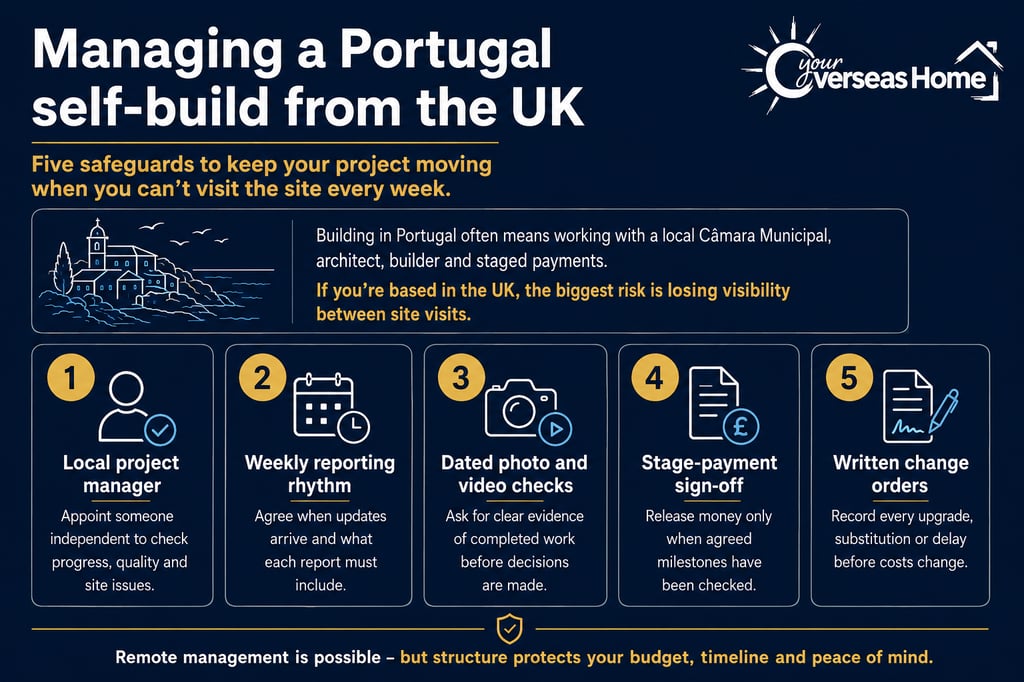
- Project manager – useful if you will not be in Portugal throughout the build
For many UK buyers, the architect becomes the day-to-day project lead. Choose someone who has already worked with the relevant Câmara and understands local approval habits.
What does it cost to build a house in Portugal in 2026?
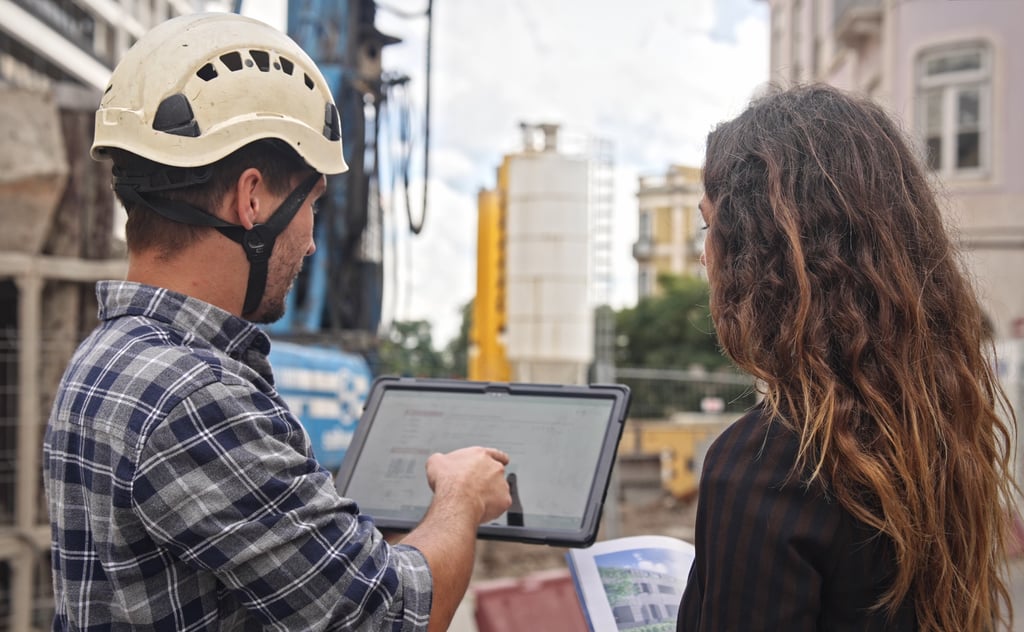
As a working guide, many self-build buyers should budget from around €1,100 to €1,700 per m² (£925 to £1,430 per m²) for a standard new-build home, before land, taxes, professional fees, utility connections, landscaping, pools and major site works. Higher-spec villas, difficult plots, Lisbon, the Algarve and coastal areas can go well beyond this.
There is no single official “market cost per m²” for a private self-build. The official 2026 average construction value for IMI purposes is €570 (£479) per m², but that is a tax valuation figure, not a market build quote. Industry cost guides for 2026 commonly place standard new-build housing closer to the €1,000–€1,600+ per m² range, with premium projects higher.
Recent INE data also shows why quotes need updating. In March 2026, Portugal’s new housing construction costs were estimated to be 5.8% higher year on year, with materials up 3.7% and labour up 8.2%.
Indicative build budget
| Cost item | Typical budget approach |
|---|---|
| Land | Highly local; check buildability before price. |
| Construction | Often €1,100–€1,700 per m² for standard builds; more for premium projects. |
| Architect and technical design | Often a percentage of build cost or staged fixed fees. |
| Engineering and surveys | Budget separately from architectural design. |
| Municipal fees | Vary by municipality and project size. |
| Utility connections | Can be modest in serviced areas and costly in rural areas. |
| Contingency | Keep at least 10–15% aside, more for rural or complex plots. |
| Currency movement | Important because land, design and build payments happen in stages. |
The staged-payment point is important. You might pay for the land, then architects, then municipal charges, then builder instalments over many months. A movement in the pound-euro rate between those stages can alter your real budget, so speak to Smart Currency Exchange early rather than converting ad hoc.
Taxes and fees when buying land
Buying land in Portugal can trigger IMT and Imposto do Selo, just as buying a finished home can. The Portuguese tax authority explains that property purchases are generally subject to IMT and stamp duty, with IMT calculated on the higher of the transaction value or taxable patrimonial value.
The rate depends on the nature and use of the property. For example, the IMT code includes different treatment for main homes, other urban properties and rustic properties. It lists 5% for rustic property acquisitions and 6.5% for other urban property acquisitions, while residential property has progressive tables.
Annual IMI also matters once you own the land or completed property. IMI is charged on the taxable patrimonial value of urban and rustic property in Portugal. The standard annual rates are generally 0.3% to 0.45% for urban property and 0.8% for rustic property, although municipalities set urban rates within national limits.
For a full internal link, use YOH’s guide to the costs of buying property in Portugal.
Timeline from land search to moving in
A straightforward build can still take two years or more from first search to moving in. Rural plots, planning objections, utility connections and contractor availability can stretch that further.
| Stage | Typical timing | What happens |
|---|---|---|
| Land search | 1–6 months | Shortlist plots and test basic suitability. |
| Legal and planning checks | 2–8 weeks | Lawyer and architect review title, PDM, access and restrictions. |
| PIP or feasibility stage | 1–4 months | Optional but useful for higher-risk plots. |
| Design and technical projects | 2–5 months | Architect and engineers prepare drawings and documents. |
| Municipal approval route | 3–12+ months | Depends on Câmara, complexity and external consultations. |
| Builder tender and contract | 1–3 months | Compare quotes, schedule and payment stages. |
| Construction | 12–24 months | Groundworks, structure, services, finishes and inspections. |
| Completion and handover | 1–3 months | Snagging, documentation, utilities and final payments. |
The safest contract structure sets clear payment milestones, retention, delay terms, change-order rules and specification details. Do not rely on a one-page quote if the build includes structural work, imported materials, a pool, underfloor heating or extensive landscaping.
Does building property in Portugal qualify for the Golden Visa?
No, not for a new property-based Golden Visa application. Portugal’s ARI programme still exists, but the property purchase route was removed from the current Golden Visa framework. AIMA’s official ARI page sets out the investment residence regime, while the 2023 housing reform changed the legal framework around housing and investment routes.
If residency is part of your plan, look separately at Portugal’s visa routes. Buying or building a home can support your life plan, but it should not be treated as a current Golden Visa route.
What should I do next?
Before you view plots, build your advisory team. At minimum, speak to a Portugal property lawyer, an architect who knows the local Câmara and a currency specialist.
Ask the lawyer to check title, tax records and any restrictions. Ask the architect to review the PDM and give a written view on buildability. Ask Smart Currency Exchange to help plan staged euro payments so the build budget is not exposed to avoidable exchange-rate risk.
Useful next reads:
- How to buy property in Portugal
- The step-by-step process of buying property in Portugal
- The costs of buying property in Portugal
- Portugal’s Silver Coast property guide
- Properties for sale in Portugal
Summary
Building property in Portugal can work well if you want control over design, energy performance and location.
The biggest risk is buying land before confirming what can legally be built.
Check the PDM, land classification, access, services and any protected-area restrictions before signing.
A PIP can give useful formal guidance from the Câmara Municipal.
Budget carefully: land, construction, taxes, professional fees, utilities and contingency all need separate lines.
The Golden Visa property route is no longer available for new applicants.
Get legal, architectural and currency advice before you commit to a plot.
Frequently asked questions
Yes. Foreign buyers can buy land in Portugal, but owning land does not mean you can automatically build on it. Your solicitor and architect should check title, tax records, land classification, PDM rules and infrastructure access before you commit.
Sometimes, but you should assume nothing until you have written professional advice. Rustic land is not the same as urban building land. Some rural buildings may be extended or rebuilt under specific rules, but normal residential construction may be restricted or refused.
A PIP, or Pedido de Informação Prévia, is a formal request to the local Câmara Municipal asking whether a proposed development is viable and what planning conditions apply. It can be useful before buying a plot with uncertain development potential.
A standard new-build house often needs a working budget of around €1,100 to €1,700 per m² (£925 to £1,430 per m²), excluding land, taxes, professional fees, utility connections and contingency. Premium projects, difficult sites and prime locations can cost more.
Allow roughly 18 months to three years from land search to moving in. The build itself may take 12 to 24 months, but planning checks, design, municipal approval, utility connections and builder availability can add significant time.
Building or buying property does not automatically give you residence rights. The property-based Golden Visa route has ended for new applicants, so UK buyers planning to spend more than 90 days in Portugal should check the relevant visa route with an immigration specialist.
Sources
- Diário da República – RJUE, Portugal’s legal regime for urbanisation and building. https://diariodarepublica.pt/dr/detalhe/decreto-lei/555-655682
- Diário da República – Pedido de Informação Prévia under RJUE. https://diariodarepublica.pt/dr/legislacao-consolidada/decreto-lei/1999-34567875-45233375
- Diário da República – land classification, urban and rustic soil. https://diariodarepublica.pt/dr/legislacao-consolidada/lei/2014-57377208
- Diário da República – 2026 average construction value for IMI purposes. https://diariodarepublica.pt/dr/detalhe/portaria/471-2025-992662013
- Autoridade Tributária e Aduaneira – IMT and stamp duty on property purchase. https://info.portaldasfinancas.gov.pt/pt/apoio_ao_contribuinte/Cidadaos/Casa_e_propriedades/Compra_da_casa/Paginas/default.aspx
- Autoridade Tributária e Aduaneira – IMI and AIMI rules. https://info.portaldasfinancas.gov.pt/pt/apoio_ao_contribuinte/Cidadaos/Casa_e_propriedades/Imposto_anual/Paginas/default.aspx
- AIMA – ARI residence permit for investment. https://aima.gov.pt/pt/viver/autorizacao-de-residencia-para-investimento-art-90-o-a
- Diário da República – Lei n.º 56/2023 housing measures. https://diariodarepublica.pt/dr/detalhe/lei/56-2023-222477692
- INE/Webinq – 2026 new housing construction cost index update. https://webinq.ine.pt/