
Finding affordable property in Portugal is still possible, but the definition of “affordable” has changed. The idea that Portugal offers low-cost homes almost everywhere no longer matches what buyers are seeing in 2026.
The practical question is not simply “where is cheap?” It is “where does my budget still buy a safe, useful home without taking on the wrong risks?” This guide looks at the areas where value still exists, what different budgets can realistically buy and the checks you should make before committing.
Answer-first: Affordable property in Portugal in 2026 is easiest to find in Central Portugal, parts of the Alentejo and selected inland towns. The Silver Coast can still offer relative value, but not always low prices. The Algarve, Lisbon and Porto are mainly premium markets, so buyers need to balance price, access, resale potential and renovation risk.
Contents
- Portugal house prices in 2026
- What counts as affordable property in Portugal?
- Best places to find affordable property in Portugal in 2026
- What different budgets buy in Portugal
- Can you still find affordable coastal property in Portugal?
- Buying costs and taxes to budget for
- Checks to make before buying a lower-priced property
- Can foreigners buy affordable property in Portugal?
- Should you get a mortgage for affordable property in Portugal?
- Where should you avoid if affordability is the priority?
- Common mistakes budget buyers make
- What should I do next?
- Summary
- Frequently asked questions
Portugal house prices in 2026
Portugal’s property market has moved quickly. Lisbon, Porto and the Algarve continue to shape many buyers’ expectations, but they do not represent the whole country.
Official Portuguese housing data is best used as sold-price evidence, while portal asking prices show what sellers hope to achieve. Local agent evidence then helps you understand what is negotiable in practice.
| Data type | What it tells you | How to use it |
|---|---|---|
| Official sold-price data | What homes have actually sold for | Useful for national and municipal trends |
| Asking prices | What sellers are currently asking | Useful for live search expectations |
| Local agent evidence | What buyers are negotiating in practice | Useful before viewing or offering |
As a rule, treat asking prices as a starting point, not a valuation. A town may look expensive online but still have negotiable older properties. The reverse can also be true: a low headline price may hide renovation costs, poor access or legal complications.
If you are at the early search stage, start by browsing property for sale in Portugal, then compare those listings with the areas below. That gives you a live sense of what your budget buys before you book viewings.
What counts as affordable property in Portugal?
For an international buyer in 2026, “affordable” usually falls into one of four practical budget bands.
| Budget | What it may buy | Main trade-off |
|---|---|---|
| Under €100,000 (£84,000) | Inland village houses, small apartments or renovation projects | Limited resale market, possible works and fewer services |
| €100,000 to €175,000 (£84,000 to £147,000) | Habitable homes in inland towns or smaller regional areas | Usually away from prime coast and major cities |
| €175,000 to €275,000 (£147,000 to £231,000) | Better-condition homes in secondary towns and some coastal apartments | More competition, especially near the sea |
| €275,000+ (£231,000+) | Stronger choice in Silver Coast towns, city edges and some inland Algarve areas | Still limited in prime Lisbon, Porto and Algarve hotspots |
If you want the lowest purchase price, look inland. If you want year-round services, transport, hospitals and a broader resale market, expect to pay more.
In our experience, the best-value purchase is rarely the cheapest house on the list. It is usually the one with clear title, manageable renovation needs, realistic running costs and a location that still works after the first few visits.
Best places to find affordable property in Portugal in 2026
Affordable property in Portugal is now highly local. Two towns in the same district can have very different prices, especially when one is coastal and the other sits inland.
The areas below are worth shortlisting, depending on what you want from the purchase.
Central Portugal
Central Portugal remains one of the strongest areas for value-led buyers. It works particularly well if you want space, village or small-town living, mountain access and lower price expectations than the coast.
Towns and municipalities to consider include Fundão, Belmonte, Penacova, Arganil, Góis, Tábua and Oliveira do Hospital. They are not interchangeable. Some are better for year-round services, while others suit buyers who are comfortable being car-dependent.
| Area | Why buyers consider it | Buyer fit |
|---|---|---|
| Fundão | Lower prices, access to Castelo Branco and Covilhã, practical town services | Relocation buyers and remote workers |
| Belmonte | Low price signals and older housing stock | Buyers comfortable with a thinner resale market |
| Penacova | Lower prices within reach of Coimbra | Buyers wanting countryside without being too remote |
| Arganil and Góis | Strong inland value, rural homes and renovation options | Buyers who want space and accept longer drives |
Central Portugal is often where budgets below €150,000 (£126,000) start to make more sense. But older stone houses need careful checks. Roofing, damp, insulation, access, drainage and planning status matter as much as the purchase price.
If your search includes land or a major rebuild, read our guide to building property in Portugal before you view. It explains rustic land, local planning rules and why a cheap plot is not always a buildable plot.
Alto Alentejo and inland Alentejo
The Alentejo can still offer strong value, especially in inland areas such as Nisa, Crato, Gavião and parts of Portalegre district. This is a different proposition from buying near Lisbon, Comporta or coastal Alentejo, where prices can be far higher.
Lower prices here often reflect distance from airports, lower population density and thinner resale demand. That does not make the area a poor choice. It simply means you should buy for long-term use rather than assuming a fast resale.
A budget of €120,000 to €180,000 (£101,000 to £151,000) can be more meaningful here than in the Algarve or Lisbon region. It may give you access to a townhouse, small rural home or property with outdoor space, depending on condition.
Inland Algarve
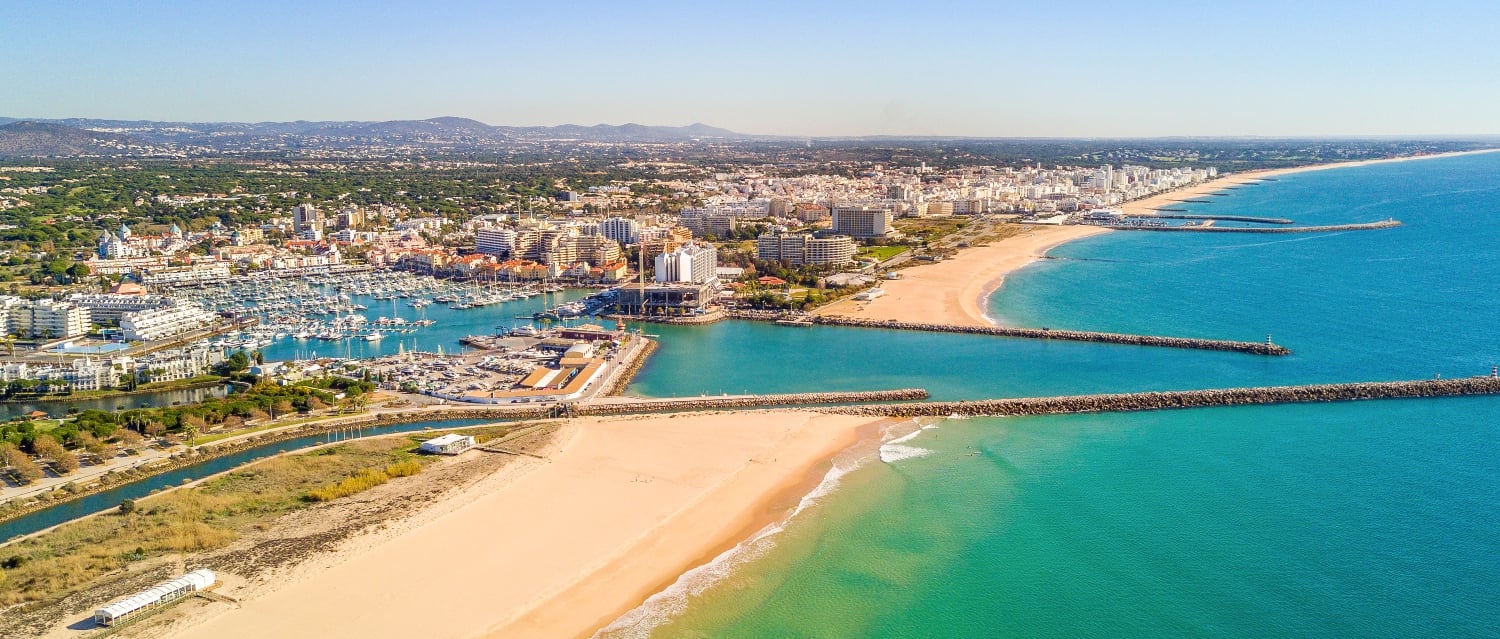
The Algarve is not a low-cost region overall. Prime areas such as Lagos, Loulé, Tavira, Portimão and Vila Real de Santo António now sit well above most buyers’ definition of affordable.
That said, some inland Algarve municipalities remain more accessible. Alcoutim is one of the clearest examples for buyers who want the Algarve climate and a quieter inland setting without paying coastal prices.
The trade-off is simple: the cheaper Algarve is generally not the beach-on-your-doorstep Algarve. You will need a car, you may be further from healthcare and rental demand can be more seasonal or limited than in coastal resort areas.
For a fuller comparison of Portugal’s two most searched buyer regions, read our guide to Algarve vs Silver Coast Portugal.
Silver Coast and central coast
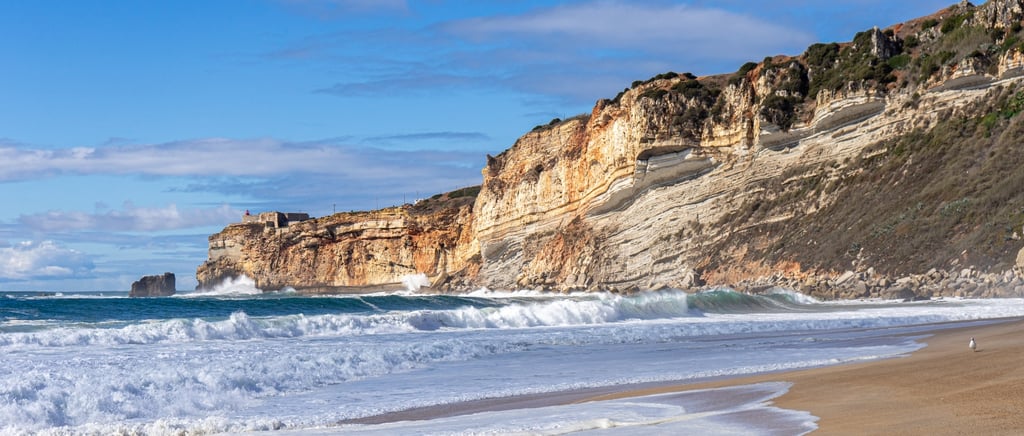
The Silver Coast still deserves a place in an affordability article, but it should be described as relative value rather than cheap. Nazaré, Peniche, Óbidos and parts of Caldas da Rainha are no longer bargain markets in any normal sense.
Better-value options may include Marinha Grande, some parts around Leiria and selected inland-adjacent towns. Figueira da Foz can also appeal to buyers who want a working coastal city rather than a resort-first location.
For many buyers, the Silver Coast offers the middle ground: lower prices than the prime Algarve, more coastal access than inland Portugal and stronger year-round services than some small villages. But sub-€100,000 (£84,000) coastal homes are now usually small, dated or in need of work.
Northern and interior Portugal
Northern interior areas can offer some of Portugal’s lowest price-per-square-metre figures. Districts such as Guarda, Vila Real and Bragança include towns where homes can be far cheaper than the national median.
This is worth considering if your priority is space and you are not dependent on an airport every few weeks. Towns such as Sabugal, Gouveia, Pinhel, Vila Pouca de Aguiar and Mogadouro can be useful starting points.
The main caution is liquidity. A home can be inexpensive to buy but harder to sell later. If this might be a five-year move rather than a long-term base, focus on towns with better services, transport and local demand.
What different budgets buy in Portugal
The table below is a practical guide, not a valuation. Property condition, energy performance, outside space, access and distance from services can change the price significantly.
| Budget | More realistic locations | What to expect |
|---|---|---|
| €75,000 (£63,000) | Inland villages, parts of Guarda, Castelo Branco, Coimbra interior and Bragança | Renovation projects, small homes or properties needing modernisation |
| €125,000 (£105,000) | Central Portugal, Alto Alentejo and some northern interior towns | Habitable houses or apartments, often away from prime tourist areas |
| €175,000 (£147,000) | Regional towns, smaller inland hubs and some Silver Coast alternatives | Better-condition homes with more services nearby |
| €250,000 (£210,000) | Silver Coast towns, city edges and some inland Algarve areas | Good search budget, but still limited in prime coastal hotspots |
| €350,000 (£294,000) | Secondary coast, inland Algarve and larger towns | More flexibility on condition, location and outdoor space |
If you are moving permanently, budget for more than the property. A cheaper house can become expensive if it needs a new roof, upgraded electrics, heating, legal regularisation or major insulation work.
If you are buying a holiday home, be honest about travel time. A property that is 90 minutes from the airport may be fine for longer stays, but less useful for long weekends or family visits.
Can you still find affordable coastal property in Portugal?
Coastal affordability is where expectations need the biggest reset. The cheapest homes in Portugal are inland. The coast is now a premium in most regions, even where the town is not internationally famous.
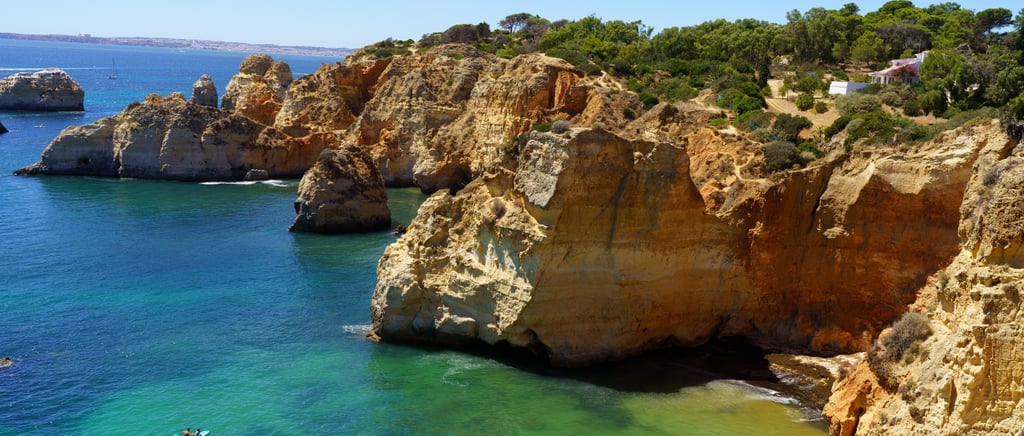
That said, buyers still have options if they are flexible.
The Silver Coast can work if you compare it with the Algarve rather than with inland Portugal. Marinha Grande, Figueira da Foz and less tourist-heavy towns around Leiria may offer a better balance of price and access than the most searched coastal resorts.
On the Algarve, affordability generally means moving inland or accepting a smaller apartment. A two-bedroom apartment near the beach in a sought-after town will usually sit in a very different price band from a village house in the interior.
Good questions to ask before chasing a low coastal price:
- Is the property genuinely near the sea, or simply in a coastal municipality?
- Is it habitable year-round, or mainly a summer-use property?
- Is there parking, storage and heating?
- Are there condominium fees?
- Is short-term rental allowed, if that matters to your plan?
- Would the property still suit you if rental rules changed?
If rental income is part of your plan, check Portugal’s Alojamento Local rules before you buy. Rules can vary by municipality, and housing pressure has made tourist lets a more sensitive issue. Our guide to short-term rental rules in Portugal explains what landlords need to check in 2026.
Buying costs and taxes to budget for
Your buying budget should include the property price plus taxes, legal costs and purchase expenses. In Portugal, the main buyer taxes are IMT, which is the property transfer tax, and stamp duty.
For 2026, mainland Portugal’s IMT table for a permanent home starts at 0% up to €106,346 (£89,000), then uses rising marginal bands. Different bands apply to second homes and to the autonomous regions, including Madeira and the Azores. The Portuguese Tax Authority sets these out in its 2026 IMT tables.
You should also budget for:
| Cost | Typical planning point |
|---|---|
| IMT | Depends on price, use and location |
| Stamp duty | Usually 0.8% of the purchase price or taxable value |
| Lawyer | Often around 1% to 2%, depending on work required |
| Notary and registration | Varies by transaction |
| Survey or technical report | Optional, but many buyers choose one for older homes |
| Mortgage costs | Valuation, arrangement and bank fees may apply |
| Currency movement | Important when your funds are in pounds or dollars |
The lower the property price, the more important fixed costs become as a percentage of your total spend. On a €90,000 (£76,000) property, a few thousand euros of legal, registry or repair costs can materially change the deal.
For a fuller breakdown, read our guide to the costs of buying property in Portugal.
Checks to make before buying a lower-priced property
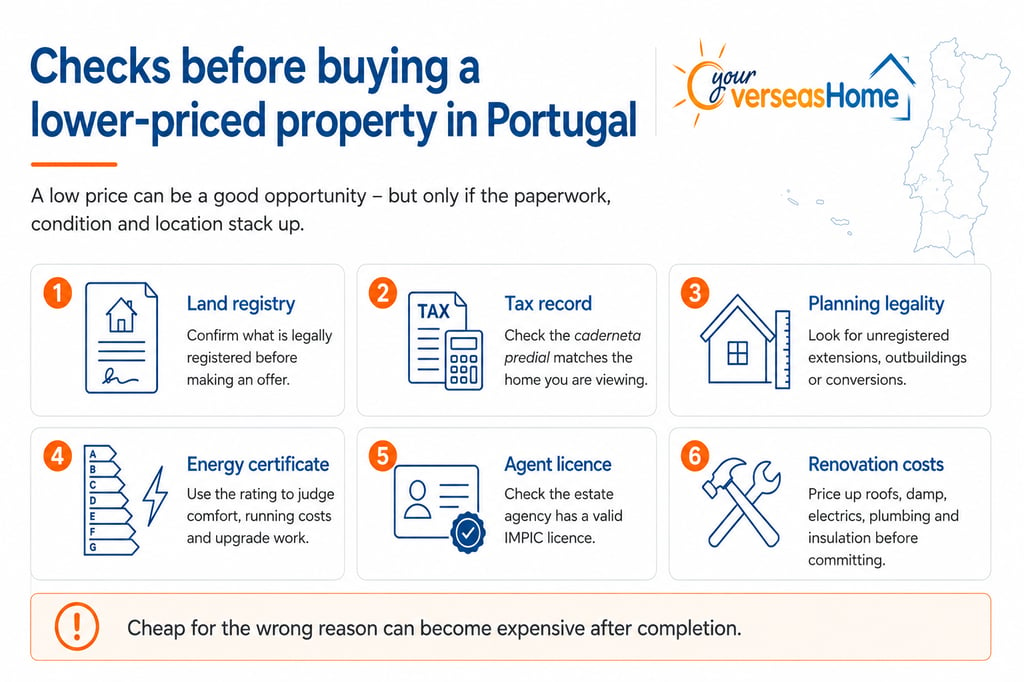
A lower price is not a problem by itself. The risk is buying a property that is cheap for reasons you have not yet found.
Before you offer, ask your lawyer or buyer’s agent to check the following.
Land registry
The certidão permanente predial shows the property’s registered details and any pending registration requests. Justiça.gov.pt says this certificate shows all registrations made about the property and pending registration requests, and that it is used when buying or selling a property.
Tax record
The caderneta predial gives the property’s tax details, including its taxable value and registered characteristics. Your lawyer can compare it with the physical property and the land registry.
Planning and building legality
Older rural homes can have extensions, outbuildings or conversions that are not correctly recorded. This does not always stop a purchase, but it can affect financing, renovation plans and future resale.
Energy performance
Portugal has an energy certification system for buildings. The official Sistema de Certificação Energética dos Edifícios explains that the energy certificate can identify measures to improve comfort and reduce energy costs, and can support renovation planning.
Agent licensing
Portuguese estate agencies should hold an IMPIC licence. You can use the official IMPIC licence search to check a company’s licence number, name, district and municipality.
Renovation costs
Affordable inland homes can need more work than the listing photos suggest. Roof repairs, damp treatment, rewiring, plumbing, windows and insulation can quickly add up.
If the property is priced well below local averages, there is usually a reason. Your job is to find that reason before you sign.
Can foreigners buy affordable property in Portugal?
Yes. Foreign buyers can buy property in Portugal, including lower-priced homes, without needing to be resident first. The buying process still requires the usual paperwork, including a Portuguese tax number, known as a Número de Identificação Fiscal (NIF).
Gov.pt describes the NIF as a form of personal identification that is essential for purchasing goods or services, entering contracts and opening bank accounts. Foreign nationals, resident or non-resident in Portugal, can apply if they need to comply with tax obligations or exercise rights before the Portuguese tax administration.
Residency is a separate issue. If you are a UK, US or other non-EU buyer and want to live in Portugal full time, you need to match your property plan with the right visa or residency route. Property ownership alone does not automatically give you residence rights.
For the wider process, read our guide on how to buy property in Portugal.
Should you get a mortgage for affordable property in Portugal?
Some overseas buyers buy lower-priced homes in cash. Others use a mortgage to keep more funds available for renovation, furnishing or currency planning.
If you need finance, speak to a broker before viewing seriously. Some banks may be less willing to lend on low-value properties, renovation projects or homes with legal documentation issues. The property must also satisfy the lender’s valuation and risk checks.
You can read more in our guide to getting a mortgage in Portugal as an international buyer.
If your money is in pounds or dollars, also plan the exchange rate early. A small movement in the euro can change your budget by thousands before completion. Smart Currency Exchange can help you understand your options for timing payments and protecting a purchase budget.
Where should you avoid if affordability is the priority?
You do not need to avoid Portugal’s expensive areas altogether. But you should be realistic about what they are likely to offer.
Lisbon, Cascais, Oeiras, Porto city, Lagos, Loulé, Tavira, Albufeira and many popular Algarve coastal towns are unlikely to be the best first search areas for affordable property. You may still find smaller apartments or renovation stock, but you will usually compete with local buyers, investors and international demand.
If your maximum budget is under €175,000 (£147,000), start inland or in secondary towns. If your maximum budget is closer to €300,000 (£252,000), you can widen the search to parts of the Silver Coast, regional city edges and selected inland Algarve areas.
Looking at a move to Portugal?
Browse property listings on our portal or speak to an expert who knows the country.
Common mistakes budget buyers make
Many buyers find affordable property in Portugal by being patient and realistic. The problems usually come when the budget is allowed to drive the whole decision.
Avoid these common mistakes:
- Comparing inland prices with coastal expectations
- Assuming a low asking price means a good deal
- Underestimating renovation costs
- Ignoring access, parking and winter comfort
- Buying too far from healthcare or transport if you plan to retire there
- Forgetting tax, legal and currency costs
- Treating rental income as guaranteed
- Skipping independent legal checks
A good affordable purchase should still pass the same tests as a higher-priced one. You need clear ownership, realistic repair costs, a location that works for you and a sensible exit plan.
What should I do next?
Start by setting two budgets: your property budget and your total ownership budget. The second one should include purchase taxes, legal fees, currency movement, repairs, furnishings, travel and at least the first year of running costs.
Then shortlist areas by trade-off, not just price. If you want the lowest purchase price, focus on Central Portugal, Alto Alentejo and the northern interior. If you want coast, look at relative-value areas and accept that the budget will need to rise.
When you have a shortlist, speak to a Portugal specialist before booking viewings. They can help you understand which areas fit your plans, what to ask agents and how to avoid spending time on properties that look cheap for the wrong reasons.
Useful next steps:
- Search property for sale in Portugal
- Read how to buy property in Portugal
- Check Portugal property buying costs
- Compare Algarve vs Silver Coast Portugal
- Speak to a Your Overseas Home property consultant
Summary
Affordable property in Portugal still exists in 2026, but it is more concentrated than it used to be.
Central Portugal, Alto Alentejo and parts of the northern interior are the strongest starting points for lower budgets.
The Silver Coast can offer relative value, especially compared with the Algarve, but it should not be treated as a low-cost region across the board.
The Algarve, Lisbon and Porto are mainly premium markets, with affordability limited to smaller homes, inland areas or compromises on condition.
Budget buyers need to check title, planning, energy performance, renovation costs and agent licensing before committing.
A realistic purchase plan should include taxes, legal fees, exchange-rate risk and the cost of making the home comfortable year-round.
Frequently asked questions
Inland regions like the Alentejo and Serra da Estrela offer some of the lowest prices in Portugal. Renovation-ready cottages can be found for under €50,000 in certain areas.
Yes, international buyers can freely purchase property in Portugal. Many overseas buyers choose more affordable areas outside of major cities and resort hubs to maximise their investment.
Yes – particularly in smaller towns, inland regions, or coastal areas like the Silver Coast or eastern Algarve. Properties in need of modernisation offer especially good value.
Expect to pay 8–10% on top of the purchase price for taxes, legal fees and notary costs. Currency exchange fees may also apply if buying in euros from abroad.
Not necessarily. Many buyers use savings, especially for properties under €100,000. However, local mortgages are available and can be arranged with help from a broker experienced in working with international buyers.