


Italy continues to capture the imagination of overseas buyers in 2026 – and for good reason. From sun-drenched coastlines to vineyard-covered hills and vibrant historic cities, buying property in Italy is about more than bricks and mortar. With the right preparation, professional support and a clear understanding of the process, your Italian dream can become a secure, well-planned reality.
Italy has a way of getting under your skin. It might have started with a summer in Puglia, a train ride through Tuscany or a week spent wandering through Rome’s backstreets. At some point, the thought shifts from “I love coming here” to “Could I actually have a place of my own?” Turning that idea into something concrete is perfectly possible in 2026 – but it means looking beyond the romance and understanding how the system really works.
Download the Italy Buying Guide
Contents
- Why buying property in Italy still makes sense
- Step one – decide where and what you want
- Can foreigners buy property in Italy
- Understanding the true costs
- The property buying process explained
- Mortgages and financing
- Renting out your property
- After you buy – management and responsibilities
- How to buy with confidence
- Summary
- FAQs about buying property in Italy
Why buying property in Italy still makes sense
Italy combines lifestyle appeal with relatively accessible pricing compared with other Western European markets. While the romantic pull is obvious, it’s still worth weighing the advantages alongside the potential drawbacks.
From a pricing perspective, Italy remains competitive, but you’ll find major contrasts by region. Calabria averages €958 per square metre, while the highest asking prices for homes are in Trentino Alto Adige, where properties averaged €3,701 per square metre at the start of 2026*. That variation gives you choice – whether you want a €60,000 Sicilian apartment, a restored farmhouse in Umbria or you’re assessing property investment opportunities in Italy for rental income or long-term growth.
Beyond pricing, Italy offers:
- No restrictions on foreign ownership
- A structured, legally protected buying system
- Established tax regimes for retirees and high-net-worth individuals
The key is understanding how the system works before you commit.
*Source: Immobiliare.it
Step one – decide where and what you want
Before you start booking flights or contacting agents, pause and think carefully about where in Italy genuinely fits your lifestyle – not just your holiday memories. The region you choose will shape everything from your budget and rental potential to your year-round experience of daily life.
If lakeside elegance appeals, Lake Como offers grand villas, mountain scenery and strong international demand – but prices reflect that prestige. If you love history layered with water, Venice delivers atmosphere like nowhere else, though ownership there comes with higher costs and strict renovation rules.
For a balance between culture and manageability, towns such as Lucca in northern Tuscany combine walkable historic centres with a steady year-round population. Tuscany more broadly remains a favourite for overseas buyers, particularly if you picture cypress-lined drives and stone farmhouses. Just remember that the closer you are to Florence or Chianti, the higher the price per square metre is likely to be.
If you want better value without sacrificing beauty, look beyond the obvious. Umbria offers a similar landscape to Tuscany but often at a lower entry price, with peaceful hill towns and a strong sense of community. Abruzzo gives you an unusual combination of mountains and coastline, along with some of the most affordable property in central Italy.
Further south, Sicily continues to attract buyers seeking sunshine, character and lower purchase prices. In parts of the island, you can still find substantial townhouses or countryside homes for a fraction of what you would pay in northern Italy – but you’ll need to think about infrastructure, seasonality and renovation logistics.
Once you’ve narrowed down the region, refine your property type. Are you looking for a lock-up-and-leave apartment, a village townhouse, a lakeside villa or a rural home with land? Do you want something ready to move into, or are you comfortable managing renovation work from abroad?
If you are considering a renovation project, it’s important to approach incentives with caution. While tax credits for energy efficiency and structural upgrades still exist, the generous 110% “Superbonus” scheme of previous years has now been significantly scaled back. Today’s incentives are more targeted and modest, so your renovation budget should stand on its own merits rather than relying on state subsidies.
The clearer you are at this stage, the more focused your search becomes.
Can foreigners buy property in Italy
Yes. EU citizens can buy freely, and most non-EU citizens also face no ownership restrictions.
However, buying property does not automatically grant residency.
Non-EU buyers wishing to stay beyond 90 days in any 180-day period must apply for an appropriate visa, such as:
- Elective residence visa for retirees
- Digital nomad visa
- Investor visa (based on business or bond investment, not property purchase)
Residency planning should sit alongside your property search, not after it.
Understanding the true costs
Buying in Italy involves more than the headline price. According to our cost breakdown guide, typical additional purchase costs range between 7% and 15%, though they can reach 20% in complex cases.
Here’s a simplified overview of the taxes and fees you can expect to pay:
| Cost | Typical amount | Notes |
|---|---|---|
| Notary fees | 1%–3% | Mandatory for all purchases |
| Registration tax | 2%–9% | Based on cadastral value |
| Legal fees | 1%–2% | Independent lawyer recommended |
| Estate agent commission | 3%–5% + VAT | Usually payable by buyer |
If buying a new-build, VAT applies instead of registration tax, at 4%, 10% or 22% depending on classification.
Ongoing ownership also brings IMU property tax for second homes, typically between 0.76% and 1.14% depending on municipality.
Currency is another critical factor. Even small exchange rate movements between offer and completion can add thousands to your final cost, so it’s wise to fix your rate to avoid nasty surprises.
The property buying process explained
Italy’s buying process follows clear stages:
- Offer – proposta di acquisto
- Preliminary contract – compromesso with deposit, typically around 10%
- Final deed – rogito signed before a notary
The notary is legally required and ensures the transaction complies with Italian law. However, the notary is neutral and does not act in your personal interest.
That’s why appointing an independent bilingual property lawyer is strongly recommended.
Your lawyer should:
- Verify title and ownership
- Check for debts and planning irregularities
- Confirm building compliance
- Review contracts before you sign
Skipping due diligence is one of the most common and costly mistakes overseas buyers make.
Mortgages and financing
It is possible to get an Italian mortgage as a non-resident.
Typical lending parameters in 2026 include:
- Loan-to-value of 50–60% for non-residents
- Maximum terms up to 25 years
- Debt-to-income ratio around 33%
Mortgage approval can take 6–12 weeks. If financing is required, secure pre-approval before signing binding agreements.
Renting out your property
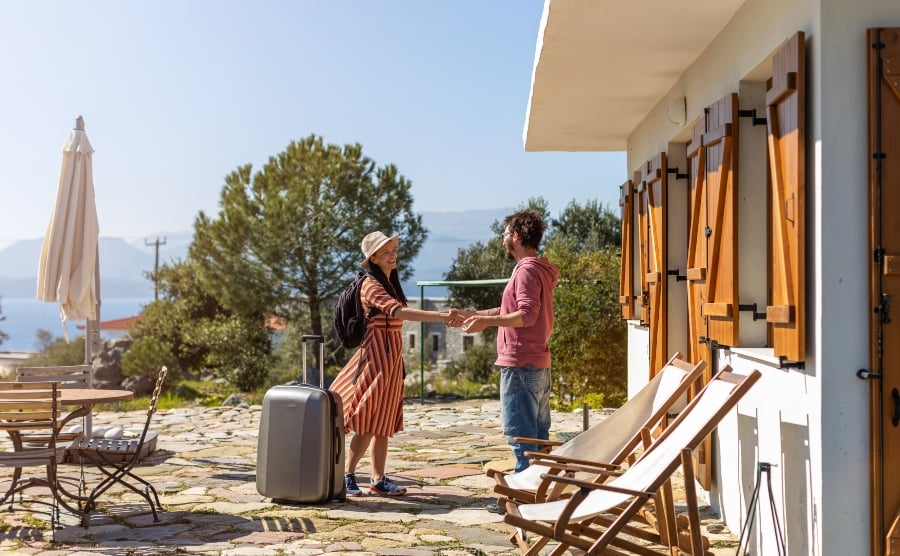
If rental income is part of your plan, it is essential that you understand the rules before you buy.
Long-term rentals can opt for the cedolare secca flat tax regime, typically 21%.
Short-term lets now require a national identification code (CIN), which must be displayed on all listings. Non-compliance can result in significant fines. In cities such as Venice and Florence, additional local caps and restrictions apply, so always verify the rules before buying with rental income in mind.
If you own multiple holiday rentals or operate at scale, you may be treated as a commercial business and subject to VAT and additional registration.
Professional property management typically costs 10%–30% of rental income.
After you buy – management and responsibilities
Ownership responsibilities include:
- IMU and other local taxes
- Utilities and waste charges
- Maintenance – budget roughly 1% of property value annually
- Insurance
If you’re not resident full-time, appointing a local manager provides oversight and peace of mind.
How to buy with confidence
Most pitfalls are preventable.
Before committing, make sure you:
- Budget beyond the headline price
- Appoint an independent lawyer
- Commission appropriate surveys, especially for older homes
- Confirm residency and tax implications
- Protect against currency volatility
Summary
Buying property in Italy in 2026 is entirely achievable for overseas buyers. You can choose between city apartments, coastal homes and rural retreats at prices that remain competitive within Europe. With realistic budgeting, independent legal support and clear residency planning, your Italian property dream can become a confident, well-informed decision.
FAQs about buying property in Italy
Yes. UK citizens can legally buy property in Italy without restriction. The purchase process is the same as for Italian buyers, although you’ll need a codice fiscale (Italian tax number) to complete the transaction. However, buying a property does not automatically grant residency. If you want to stay in Italy for more than 90 days in any 180-day period, you’ll need an appropriate visa, such as the elective residence visa.
Not exactly. Some small municipalities – particularly in southern regions – advertise relocation incentives of up to €30,000 to attract new full-time residents. These schemes typically require you to transfer your permanent residency, meet age limits (often under 40), and in some cases start a local business. They are not designed for second-home buyers or holiday homeowners, and strict conditions apply.
Common pitfalls include underestimating the time the process takes, failing to budget for purchase costs of 10–15% on top of the price, and skipping proper surveys or legal checks. Buyers can also be caught out by language barriers, renovation restrictions on older or protected buildings, and currency fluctuations between offer and completion. Most of these risks are avoidable with an independent lawyer and thorough due diligence.
Yes. Foreigners, including non-EU nationals, can generally buy property in Italy without legal barriers. The only significant restrictions apply to sanctioned individuals. As with UK buyers, ownership does not confer residency rights. You can own a property and use it for holidays without becoming a resident, provided you respect Schengen stay limits.