
Moving to Spain is a learning curve. Sometimes everything falls into place, while for many, the path has hurdles to overcome. We look at the true experience of one of our copywriters and what she would do differently now.
I moved to Spain 20 years ago, not from the UK but from France where I had been living for 12 years. The move was mainly for my husband’s work as he needed to be closer to Barcelona. I thought we did a lot of research, both virtually and on the ground, spending six weeks in the depths of winter in a seaside town in Catalonia. We rented an apartment within walking distance of the centre and the sea and “lived” like locals. Or so I believed.
Eventually, we returned to our pretty home in France and set about making regular trips across the border to find an apartment to buy… having sold the French home first. I cannot remember how many times we drove down the A9 towards Perpignan and the Spanish border. We explored the surrounding area and felt comfortable with our choice of location.
We found a two-bedroom apartment right in the pedestrianised town centre, housed on the first floor of a building built in the 1930s. We used English agents based in the town, who were supposed to guide us through the Spanish system. We thought it wouldn’t be that different from France, as both countries still used the Napoleonic code for certain laws, such as inheritance.
As well as journalism, I am also an interior designer (retired from that now) and planned to gut the apartment, strip it back and modernise it, keeping the original features. Before we could start on the project, the fun began…..
Contents
7 lessons from 20 years of living in Spain
1. Get the right estate agent
Our English agents – two partners – were very pleasant and willing. They answered our questions and drove us to various local offices to discuss utilities and the like. We were introduced to the Notario who would oversee the sale (a practice similar to property purchase in France). The price was agreed upon, and we drove to our new home full of anticipation.
We had engaged a local solicitor, recommended by our agents. She spoke English and we had a long and detailed correspondence. We secured a mortgage from a bank in town. Everything seemed set well until the morning of the purchase.
2. Last minute shock
Our solicitor informed us that we were expected to pay €70,000 in cash! She had already arranged this, unknown to us, with the bank. My instinct was to withdraw there and then but we had already invested a lot of time and money in the apartment, and the thought of starting all over again was depressing to say the least.
At the Notario’s office, we learned that the apartment was in fact owned by one of the estate agent’s friends, who had returned to the UK, effectively bankrupt and with debts on the apartment, which we had to pay. In fact, they were a comparatively small amount but this was the first we had heard of it. Our solicitor already knew and said it was nothing to worry about.
The sale went through, but I know now we should have stopped it once the “surprises” became public. Of course, the agents, solicitor and Notario all knew each other well and worked in unison.
3. Find an independent lawyer
I would never employ a lawyer suggested by the agency again.
It is difficult to manoeuvre your way through Spanish bureaucracy without professional help, especially when newly arrived. There are, though, many ways to find a reputable lawyer. Online research is one, using youroverseashome.com is an example. Alternatively, you can verify a lawyer’s status through the Abogacía Española National Census. Every practising lawyer in Spain must be registered with a local Bar Association (Colegio de Abogados).
Many foreign embassies, such as the British Embassy, maintain lists of English-speaking lawyers categorised by region in Spain.
Speak to a Spain property expert
4. Ask questions
We thought we had asked the right questions of the agents and the solicitor. It became clear that we had not. We should have gone into details:
- Is there a debt on the property?
- Who is the actual owner? Is there more than one owner?
- Is the property a subject of inheritance? If so, do all the beneficiaries agree to the sale?
- What is the procedure when paying for the property? Beware of being asked for a percentage in cash. It is now illegal but continues to be suggested.
- Ask your lawyer to check any mortgage contract you are considering. I mention this because my bank had to reimburse me €9,000 some time after the purchase. As with other banks, they had inserted an illegal clause in the small print concerning interest paid on the mortgage.
We found builders through DIY shops and by speaking with locals. In fairness, they were generally good, on time and the apartment took on its new appearance without too many hitches. We planned to live in it until we found a house nearby and would then let it out. It was small for our needs and we were paying for the storage of most of our earthly goods.
5. Living in pedestrianised districts
At first, the idea of being central and just a few steps from the sea was one of the reasons we chose this apartment. Over time, the disadvantages began to outweigh the advantages.
Noise
The narrow streets trap sounds and magnify them. Kids would play football or kick the ball against a wall opposite for what seemed like a lifetime. It was almost like torture – kick…bounce…kick…bounce… Luggage on wheels being pulled along late at night, groups of young people returning from a late-night bar – all sounds were magnified.
Access
We could drive the car up to the door to unload, but being pedestrianised, we had to park elsewhere. We found private parking a five-minute walk away, at €40 a month, which was vital, especially during the summer, when tens of thousands of holidaymakers would descend on the town. I imagine that the same parking spot would cost €60 or €80 a month now.
Try to find an apartment with parking, even if it costs extra.
6. Social life
We were in that town for three years, eventually renting a large apartment (still with no parking) and letting out our two-bedroom apartment. At least we were able to have all our belongings in one place.
There was a significant expat community there. We got to know quite a lot of people of different nationalities, but it wasn’t easy to break the ice with locals. I spoke basic Spanish when we arrived and after three years, I spoke it well. Of course, in Catalonia they also speak Catalan and at that time I felt I couldn’t take on another language, though later on I did a course at a local adult college, mainly out of courtesy to local people. I still use Spanish 95% of the time.
We settled in well enough and life was pleasant. Then it changed.
7. Life changes
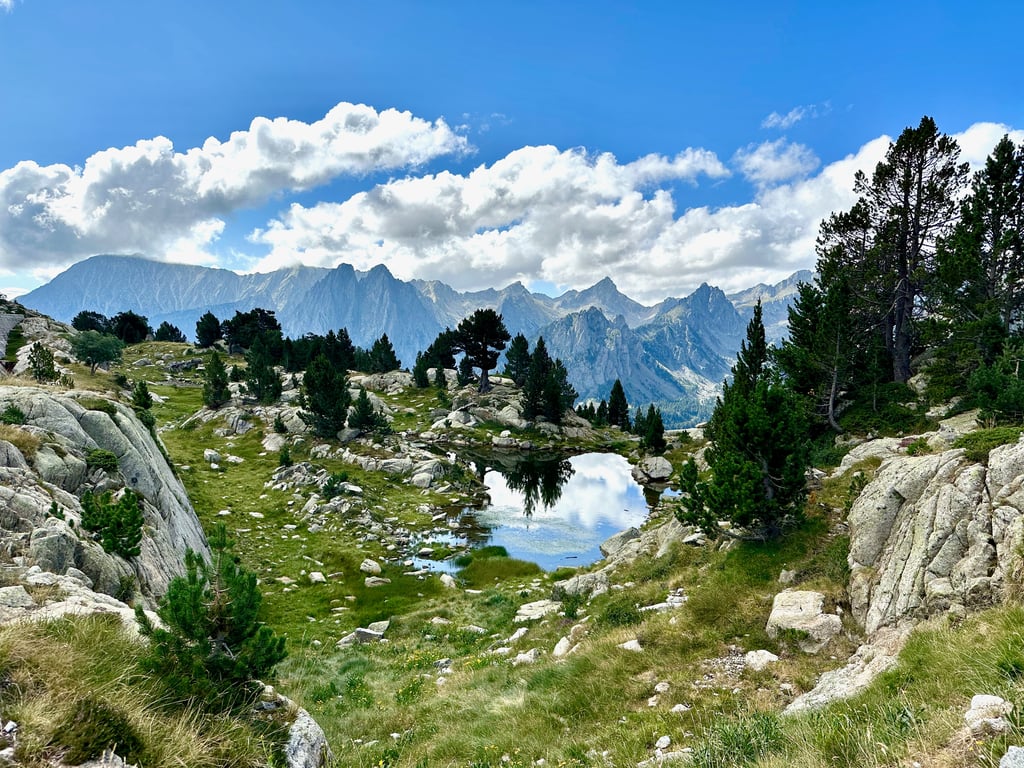
I moved to another town, 30 minutes away and rented a large apartment, not in a pedestrianised district, fairly central but still with no parking. It was on the top floor and had extensive views from the terraces, even looking towards the Pyrenees.
I was still letting out our original apartment to tourists, so I had to go there weekly to oversee the cleaning and laundry, though I had a wonderful team of ladies from Honduras who worked for me. In 2014 I sold it to a French couple.
My new town, not so new really, as I have been here since 2009, is not by the sea but 4km inland. I don’t live in a pedestrianised area and I rent a lovely apartment with a garden and parking. The locals here are very friendly to allcomers and I have some good, kind Catalan friends in my small social circle.
In 2012 I persuaded a local cinema to show films in the original version (English, French, Japanese or more). To do this I needed 100 signatures in favour, so I joined the U3A Costa Brava, which currently has around 450 members of different nationalities. With their help, I obtained the necessary signatures and made new friends. We now regularly have original version films with Spanish subtitles and I am a member of several U3A groups, including Local Interest, Cookery, Walking and Petanca (boules in France).
It is a good idea to look for a similar organisation to the U3A when you first arrive. People will help you find your way, you will be able to socialise and learn about your new area and begin to feel part of a community.
I have no regrets about moving to Spain. Our first encounters were unfortunately not ideal but since then I have made it my business to learn about the pitfalls as well as the positives of such a move. I studied Spanish geography, history and civil life, and read about mortgages and other financial necessities. 20 years on and I am very much a part of my town’s energy, working with locals and people of other nationalities. Here’s to the next 20 years!