

Dreaming of a place in the sun that works all year round? Tenerife combines spectacular landscapes, a sunny climate and strong property appeal. Here’s everything you need to know to about buying on this Canary Island.
Tenerife has long held a special place in the hearts of overseas buyers. For some, it’s the easy winters, warm enough for breakfast on the terrace and a dip in the sea before lunch. For others, it’s the thrill of exploring volcanic peaks, traditional towns and a coastline backed by beach bars and whale reserves. But before you start browsing for bungalows in the south or penthouses in Costa Adeje, it’s worth understanding the full picture. Keep reading to learn more…
Buying property in Tenerife means purchasing a home on Spain’s largest Canary Island, popular with retirees, holiday-home buyers and investors. Budgets start from around €170,000 for a one-bedroom apartment and rise past €600,000 for a villa in Costa Adeje. Add roughly 10–12% for taxes and fees, and check holiday-let licensing rules before buying with rental income in mind
Contents
Why buy property in Tenerife?
Tenerife is the largest and most populated island in the Canary Islands. Retirees and holidaymakers in search of winter sun have been coming to the island for decades, but it’s now also drawing in remote workers, younger families and investors looking for year-round value.
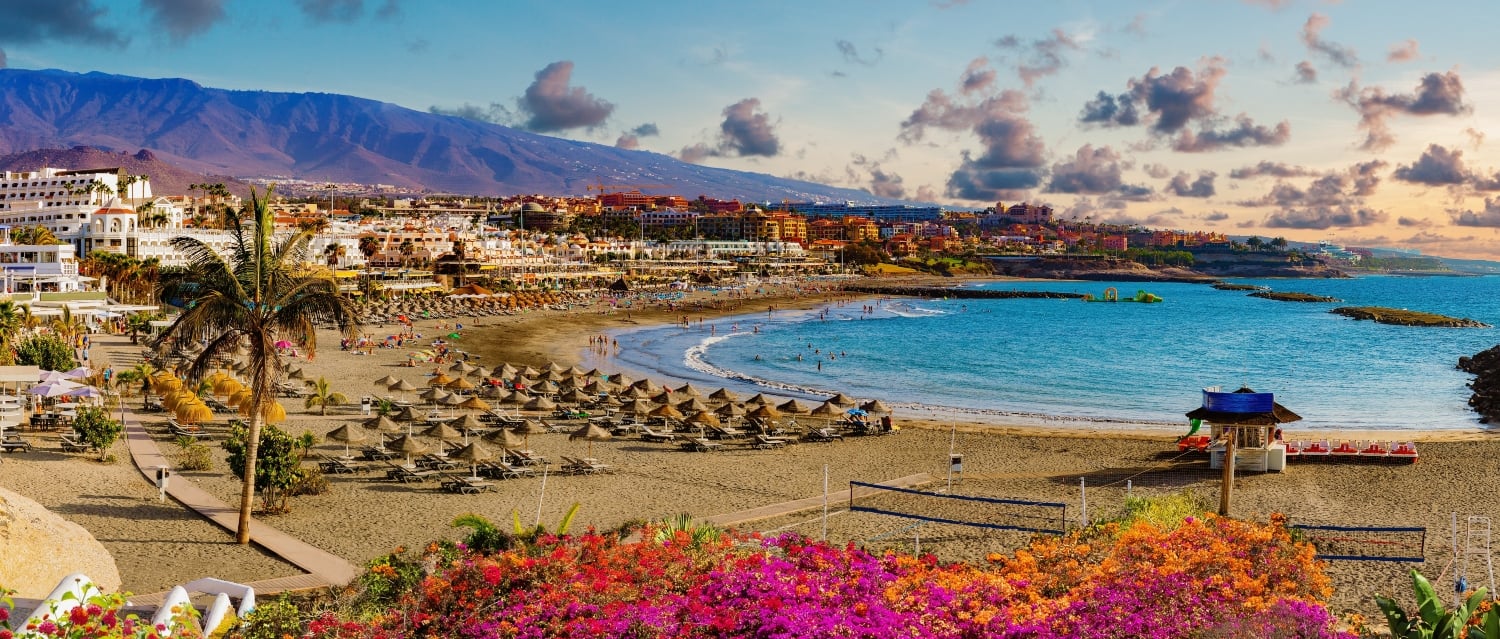
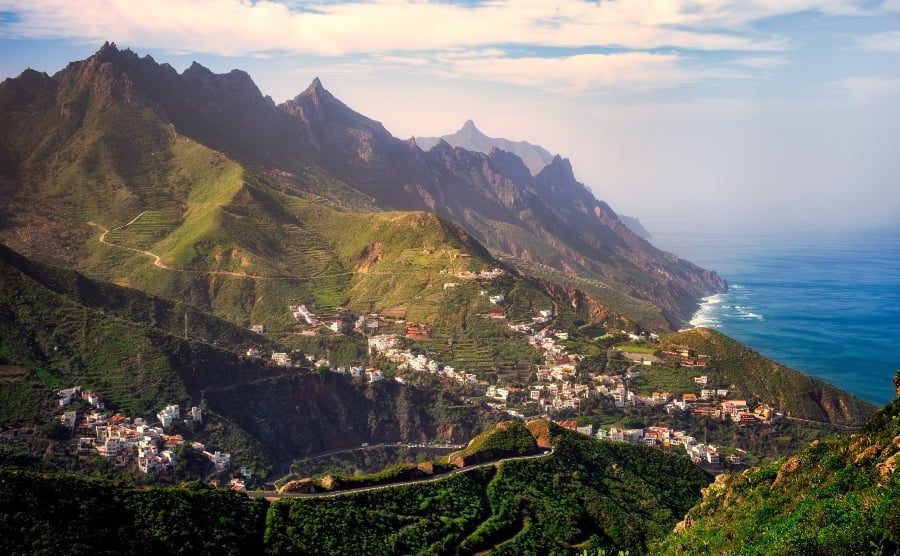
The island is home to more than 3,000 hours of sunshine annually, a vibrant tourism industry and a remarkable mix of beach, volcano, city and forest. The north of the island is cooler and greener, with avocado farms and historic towns. The south offers dry heat, golden beaches and family-friendly resorts.
You’ll find UNESCO sites, botanical gardens, marine reserves, mountain hikes and Spain’s highest peak, Mount Teide – all on one island.
What’s the weather like?
Tenerife enjoys a subtropical climate tempered by Atlantic breezes and trade winds, meaning it rarely gets too hot or too cold. From March to October, daily highs typically stay in the 20s (°C), peaking around 30°C in August. January is the coldest month but still often reaches 20-21°C.
The south tends to be drier and hotter – one reason it’s so popular with visitors – while the north gets more rain and cloud cover, supporting its lush landscape.
Occasionally, calima winds from the Sahara bring dry, dusty conditions.
If you’re hoping to use your home year-round or even move permanently, the climate makes Tenerife one of the most attractive options in Spain.
Tenerife property market update
Tenerife has seen strong, sustained property price growth in recent years. Official data from Spain’s National Statistics Institute (INE) shows Canary Islands house prices rose 10.7% year on year in the first quarter of 2026, with new-build prices up 12% [1]. The region’s own statistics office, ISTAC, puts the average appraised value of free-market housing at €2,233.7 per square metre in the same period, up 13.6% year on year [2]. Prices had already climbed sharply before that: by the end of 2024, the average Canary Islands property price stood at around €216,000, up 47% over the previous five years [3]. The rises reflect limited housing supply, sustained demand from overseas buyers and a strong local tourism economy.
That said, the island still offers better value than mainland hotspots like Barcelona or Marbella. Here’s what you can expect to get for your budget:
| Property type | Approximate budget | Typical location |
|---|---|---|
| One-bedroom apartment with pool access | €170,000-€230,000 | Los Cristianos, Puerto de la Cruz |
| Townhouse or older finca | €140,000-€200,000 | Rural or northern areas |
| Family villa | €350,000+ | Costa Adeje, La Caleta |
| Luxury penthouse or new-build villa | €600,000 | Costa Adeje, Golf del Sur |
If you’re specifically looking for a new-build, Tenerife leads the Canaries in terms of modern developments and off-plan properties, particularly in Costa Adeje.
Search homes for sale in Spain
Is Tenerife a good investment?
Tenerife continues to offer rental yield potential, especially for holiday lets, though the rules changed significantly at the end of 2025. Under the Canary Islands’ new holiday-let law (Ley 6/2025, in force since 13 December 2025), each municipality now decides which zones permit short-term letting, and can cap, pause or prioritise residential use over new registrations. Across the region, holiday lets are generally capped at 10% of a municipality’s homes, new licences typically require the building to be at least 10 years old, and a community of owners can vote to ban new holiday lets in a building altogether. Large parts of southern Tenerife, including areas of Adeje and Arona, are classed as saturated tourist zones with tighter restrictions on new licences. Crucially, an existing holiday-let licence does not automatically transfer with the sale, so anyone buying with rental income in mind should confirm the property’s licensing position with an independent lawyer before exchanging contracts.
The Canary Islands also benefit from lower property taxes than many parts of mainland Spain. The transfer tax (ITP) on resale properties is 6.5% in Tenerife, well below Valencia’s general rate of 9% or Catalonia’s 10%. Combined with year-round tourist interest, that makes Tenerife a solid choice for lifestyle buyers and investors alike.
Where to buy in Tenerife
Tenerife’s towns and resorts each offer something slightly different depending on your priorities.
- Santa Cruz de Tenerife: Tenerife’s capital, a working port city with cultural attractions, stylish shops and one of the largest carnivals in the world.
- La Laguna: a World Heritage-listed university town with colonial architecture and cool, walkable streets.
- Costa Adeje: upmarket, well-developed and close to golf courses and luxury resorts.
- Los Cristianos: a long-standing favourite for British buyers with sandy beaches, a marina and excellent services.
- Playa de las Américas: popular with younger buyers and holiday lets thanks to its nightlife and beach scene.
- Puerto de la Cruz: quieter and greener, ideal if you want a more laid-back pace while still having amenities.
How easy is it to get to Tenerife?
You can fly direct to Tenerife from most major UK airports year-round. The island has two airports: Tenerife South (Reina Sofía), which serves most international flights, and Tenerife North (Los Rodeos), which is primarily used for inter-island and domestic Spanish routes.
A flight from London takes approximately four and a half hours. If you’re already in Spain or visiting another Canary Island, regular ferries run between Tenerife and destinations such as Gran Canaria and La Gomera.
Steps to buying property in Tenerife
Here’s how to approach buying in Tenerife with confidence:
- Start researching: set your budget and explore properties online. Decide whether you’re looking for holiday lets, long-term living or both.
- Build your team: you’ll need an estate agent, an English-speaking property lawyer, a currency specialist like Smart Currency Exchange, and potentially a mortgage advisor.
- Plan a viewing trip: narrow down your preferred towns and book viewings. Factor in travel time between each property to avoid burnout.
- Make an offer: if your offer is accepted, you’ll sign a reservation contract and pay a deposit. Your lawyer will handle due diligence and coordinate with the notary.
- Finalise the purchase: you’ll sign the title deed (escritura pública) in front of a notary and pay the remaining balance, plus applicable taxes and legal fees.
Speak to a Spain property expert
Final thoughts
Whether you’re picturing lazy mornings with coffee on your own terrace or the excitement of owning a holiday rental in a top-performing market, Tenerife ticks a lot of boxes. It’s got the weather, the infrastructure and the lifestyle buyers crave – just make sure your purchase is guided by people who understand both the dream and the detail.
FAQs about buying property in Tenerife
Yes – British buyers can purchase property in Tenerife with no restrictions. Since the UK is now outside the EU, you’ll need to follow Spain’s standard rules for non-EU nationals, but property rights themselves are unaffected.
Owning property does not grant residency rights. As a UK national, you can stay in Tenerife for up to 90 days in any 180-day period without a visa. If you want to stay longer, you’ll need to apply for the relevant residency permit.
Yes – Tenerife offers year-round tourism, strong rental demand and lower property taxes than many parts of mainland Spain. With average property prices in the Canary Islands rising by nearly 50% over the past five years, buyers have seen both lifestyle and investment returns. Just be sure to take legal advice on short-term rental regulations if you plan to let your property.
It depends on the building and the municipality. New rules introduced at the end of 2025 restrict where new holiday-let licences can be granted, and licences do not automatically transfer between owners. Speak to a Spain property expert before assuming a property can be let short-term.
Sources:
[1]: Press Release: Housing Price Index (HPI). Base 2025. First quarter 2026
[3]: Canarian Weekly – Property prices in the Canary Islands have risen by 47% in five years
You might also like: