




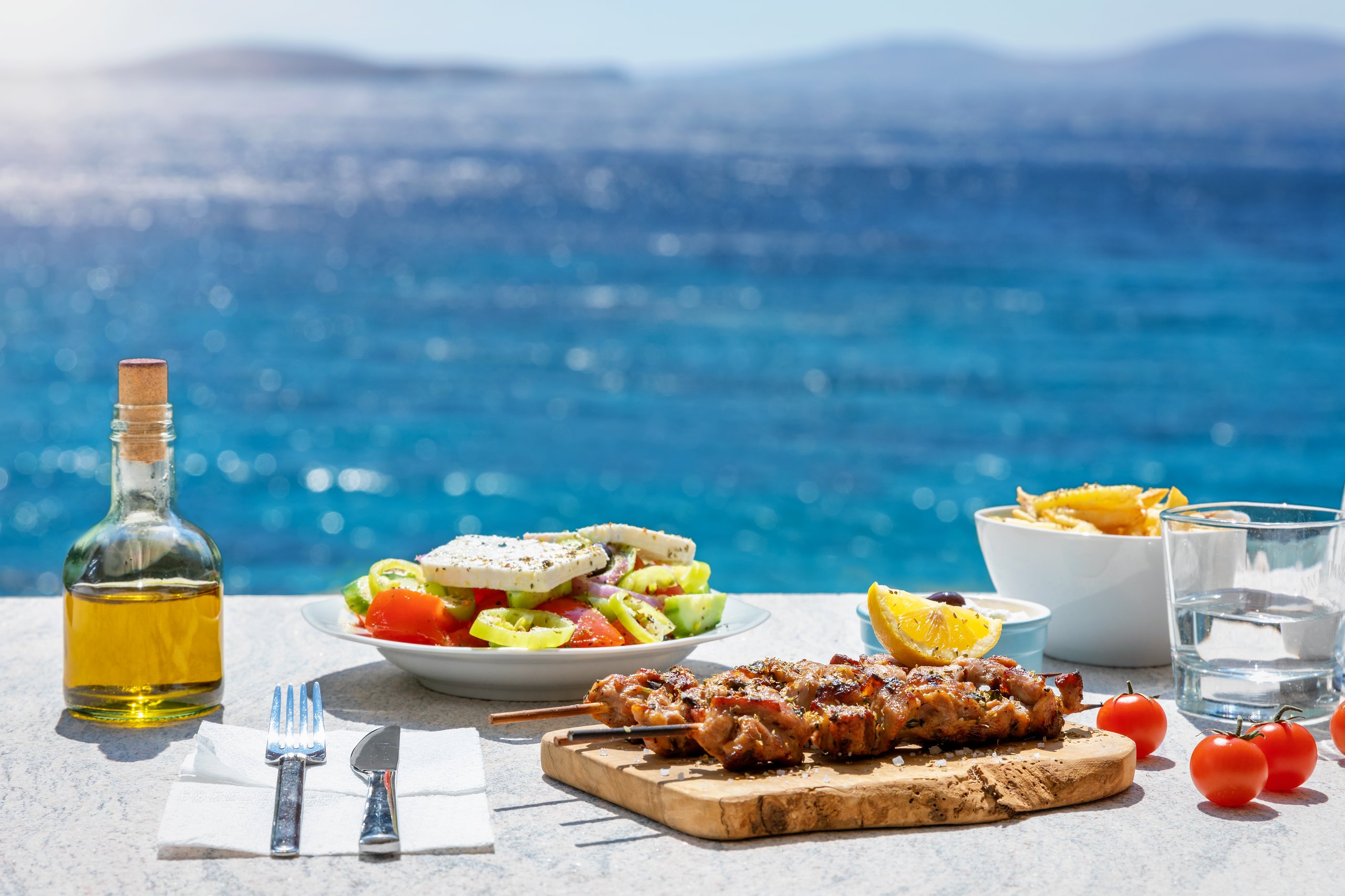
Greek cuisine is built on olive oil, seasonal produce and recipes passed down through generations. This guide explores the essential dishes, regional variations and dining customs that define food in Greece, helping you understand not just what Greeks eat, but why they eat it that way.
Greek cuisine reflects the country’s landscape, history and strong sense of community. Shaped by island coastlines, mountain villages and centuries of trade and migration, it centres on simple ingredients prepared with care and shared generously. From slow-cooked stews to small plates served with ouzo, food in Greece is closely tied to daily life, religious tradition and regional identity.
Contents
The foundations of Greek cuisine
At the heart of Greek cuisine is the Mediterranean diet. Olive oil is the primary fat, used in cooking, dressings and even baking. Seasonal vegetables – tomatoes, aubergines, courgettes, peppers and greens – form the backbone of many meals. Pulses such as lentils, chickpeas and beans are everyday staples, particularly during Orthodox fasting periods when meat and dairy are avoided.
Herbs play a defining role. Oregano, thyme and dill are widely used, alongside mint in savoury dishes. Cinnamon and cloves often appear in meat-based recipes, giving many dishes a warm, gently spiced depth that surprises first-time cooks.
Cheese is another pillar of Greek cooking. Feta is the best known, but regional cheeses vary widely, from graviera in Crete to kefalotyri used in grating and frying.
Everyday meals in Greece
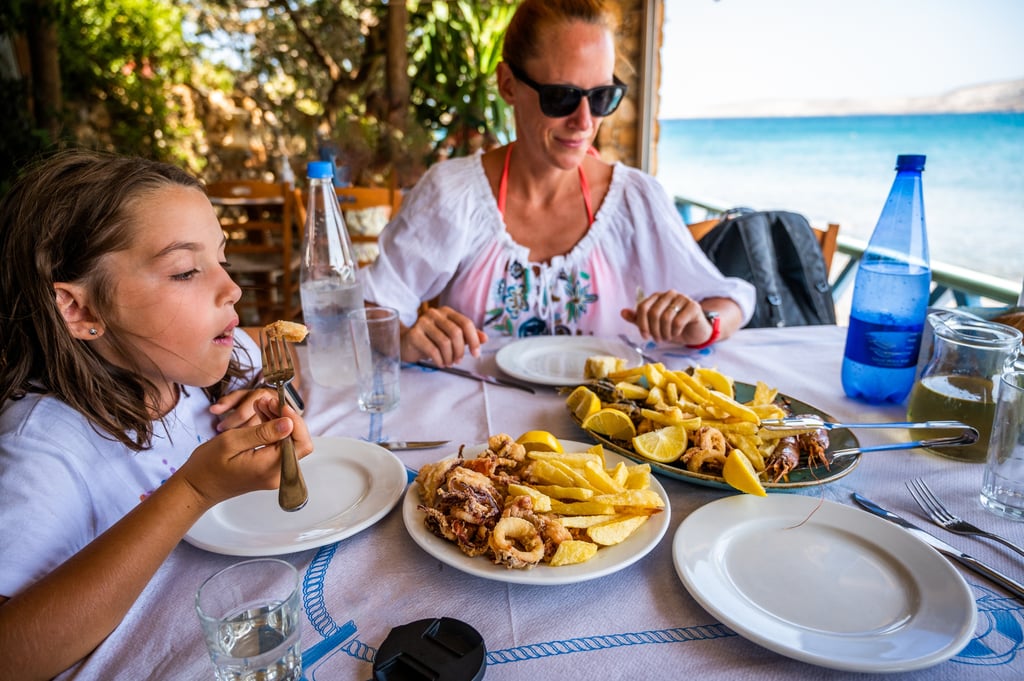
Lunch has traditionally been the main meal of the day. A typical home-cooked lunch might include a vegetable-based casserole, a salad and bread. Dishes such as spanakopita – spinach and cheese pie wrapped in filo pastry – or gemista – vegetables stuffed with rice and herbs – are common.
Bread is almost always present on the table and is used to mop up sauces. Greek salads combine tomatoes, cucumber, olives and feta with olive oil and oregano. Meals are balanced rather than elaborate, with an emphasis on freshness.
Dinner is often lighter, particularly in summer, and may consist of grilled fish, souvlaki or a selection of small dishes known as mezze.
Iconic Greek dishes
Moussaka
Moussaka is one of Greece’s most recognised dishes. Traditionally layered with potato, aubergine, minced meat and topped with béchamel sauce, it is associated with family gatherings and special occasions. The meat sauce is typically flavoured with thyme, cinnamon and cloves, then simmered with tomatoes and red wine. The béchamel is enriched with eggs and cheese, creating a golden crust when baked.
Although tavernas may fry the vegetables, home cooks often bake them for a lighter result.
Stifada and kleftiko
In mountain regions, meat dishes are more prominent. Stifada is a slow-cooked beef or veal stew made with small onions and tomatoes, cooked gently until the meat becomes tender. Kleftiko, traditionally lamb marinated in garlic, lemon and olive oil, is wrapped and slow-roasted, producing soft, fragrant meat.
Souvlaki and grilled seafood
On the coast, fish and seafood dominate. Octopus grilled over charcoal, sardines and whole sea bream are common. Souvlaki – skewered meat grilled and often served with pita and tzatziki – is popular across the country as a casual meal.
The role of legumes and fasting
Legumes are central to the Greek diet. During Orthodox fasting periods, many households prepare lentil stews, chickpea dishes or fasolada – a white bean soup considered a national dish. Even those who do not strictly observe fasting often follow the tradition of meat-free meals on certain days.
These dishes demonstrate how Greek cuisine balances nutrition, affordability and flavour.
Dips and mezze
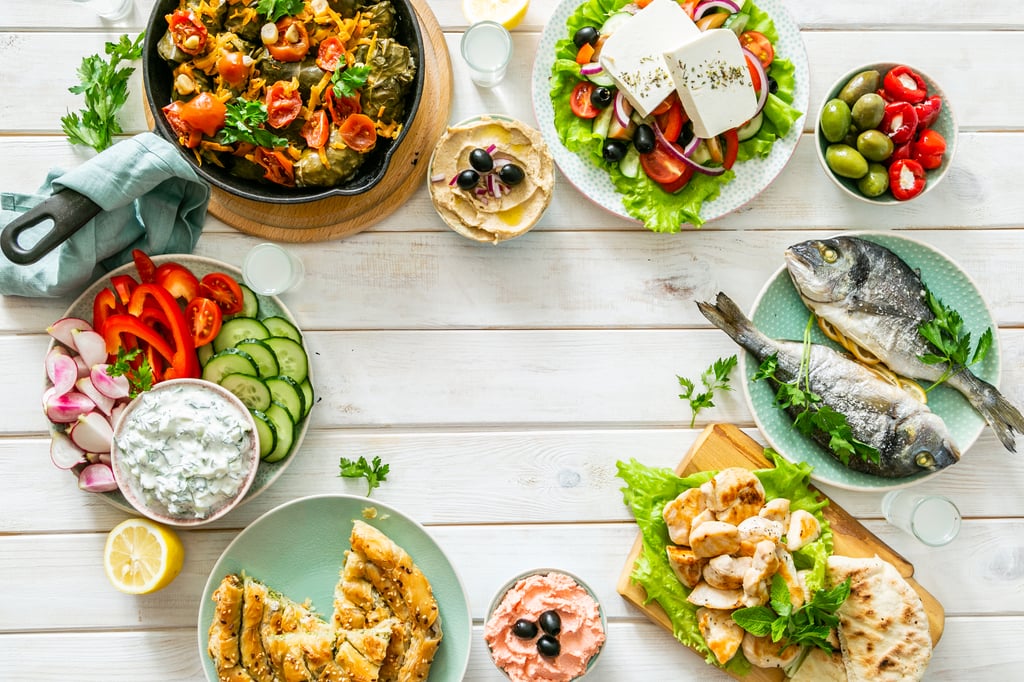
Greek tables frequently feature a variety of dips. Tzatziki – yoghurt mixed with cucumber, garlic, dill, olive oil and lemon – is perhaps the most famous. It accompanies grilled meats and is served with bread or vegetables.
Other popular dips include:
- Fava – a smooth yellow split pea purée, especially associated with Santorini
- Melitzanosalata – a smoky aubergine dip
- Tyrokafteri – a spicy blend of feta, yoghurt and chilli
- Skordalia – a garlic dip made from bread or potato blended with olive oil and vinegar
Mezze brings these elements together. Similar in concept to tapas, mezze consists of small, shared plates – olives, dolmades, fried cheese and seafood – served alongside wine, ouzo or raki. Sharing is essential to the ritual.
Regional specialities
Greek cuisine varies significantly by region.
- Crete is known for pies such as katsounia and for dishes that highlight wild greens and local cheeses.
- Kefalonia is famous for its three-meat pie, kefalonitiki kreatopita, combining filo pastry with different meats, cheese and spices.
- Santorini is associated with fava and tomato fritters made from locally grown tomatoes.
- Northern Greece often uses pistachios in baklava, while other regions favour walnuts or almonds.
Celebratory foods also differ. On Crete, gamopilafo – a creamy rice cooked in meat broth – is served at weddings and symbolises abundance. At Easter, lamb is traditional, while Christmas menus may feature pork or turkey.
Speak to a Greece property expert
Desserts and sweets
Greek desserts are often sweetened with honey and scented with citrus or cinnamon. Baklava layers filo pastry with nuts and syrup. Galaktoboureko combines custard-filled filo with syrup poured over the top. Loukoumades – small fried dough balls drizzled with honey – are served at festivals and celebrations.
Sweets are frequently offered to guests as a gesture of hospitality.
Ingredients and seasonality
Cooking in Greece revolves around what is grown locally. Weekly markets – laiki agora – offer fresh fruit, vegetables and herbs. Many households grow oregano, thyme or mint in small gardens or pots. In rural areas, olive and fruit trees are common.
Seasonality determines the menu. Courgette fritters appear when courgettes are abundant, tomato dishes when tomatoes are at their peak. This close link between garden and kitchen defines Greek home cooking.
Table etiquette and dining customs
Greek dining is governed by custom. Guests wait to be invited to sit and begin eating only after hearing “kali orexi”. Dishes are placed in the centre and shared. Meals are leisurely, with conversation as important as the food itself.
Bread is used freely to gather sauces, and it is acceptable to sample from shared plates. Drinks such as ouzo are sipped slowly alongside food.
Outdoor cooking and kitchens
Given Greece’s climate, outdoor cooking is common. Barbecues are used to prepare skewered meats and simple summer meals. Keeping heat outside during warmer months is practical as well as traditional.
Summary
Greek cuisine is defined by generosity, seasonality and a respect for tradition. It balances vegetables, grains and legumes with modest portions of meat and fish. Meals are social occasions, shaped by regional identity and family recipes. To understand Greek food is to understand Greek life – unhurried, communal and grounded in the land.
FAQs about Greek cuisine
Greek food is built on olive oil, fresh seasonal vegetables, grains, legumes, seafood and modest amounts of meat. Herbs such as oregano, thyme and dill are widely used, along with lemon and garlic for brightness. Meals are simple, ingredient-led and designed to be shared, often accompanied by bread, salad and wine. Seasonality and regional produce play a central role, and many dishes reflect Orthodox fasting traditions that favour plant-based cooking on certain days.
While favourites vary by region, these dishes are widely recognised across the country:
1. Moussaka – layered aubergine, minced meat and béchamel bake
2. Souvlaki – grilled meat skewers
3. Greek salad – tomato, cucumber, olives and feta
4. Tzatziki – yoghurt, cucumber and garlic dip
5. Spanakopita – spinach and feta filo pie
6. Dolmades – stuffed vine leaves
7. Stifada – slow-cooked meat stew with onions
8. Fasolada – white bean soup
9. Grilled octopus – often served with olive oil and lemon
10. Baklava – filo pastry layered with nuts and syrup
These dishes represent a balance of vegetables, meat, seafood and sweets that characterises Greek cooking.
Not necessarily. Greek hospitality is generous, and hosts often serve more than you can comfortably eat. Leaving a small amount on your plate can signal that you are satisfied. If you completely clear your plate, your host may assume you are still hungry and offer more. Meals are meant to be relaxed and sociable rather than rushed, so eating slowly and enjoying conversation is more important than finishing every bite.