



For many, the dream of French life involves long drives through the countryside and easy trips to the local boulangerie. But while the roads are often quieter than in the UK, the administrative side of motoring in France has changed significantly since Brexit.
In our experience, the decision often comes down to a simple choice: do you spend time and money re-registering a UK vehicle, or do you navigate the higher second-hand prices of the French market? Here is what you actually need to know about owning a car in France in 2026.
Buying and owning a car in France requires navigating the digital ANTS registration system and understanding post-Brexit import rules. While you can import a UK vehicle duty-free under ‘transfer of residence’ rules, many buyers find it easier to buy locally.
The process of owning a car in France
Transitioning to life on French roads involves more than just driving on the right. Whether you are bringing a cherished vehicle from the UK or starting fresh with a local purchase during a viewing trip in France, there are specific legal milestones you must hit to remain compliant. From navigating digital portals to understanding local priority rules, here are the 10 facts that will define your experience.
1. Second-hand car prices remain high
Many buyers are surprised to find that second-hand cars in France are often 20–30% more expensive than in the UK. Because the market for left-hand drive vehicles is smaller and people tend to keep their cars for longer, a budget of €15,000 (£12,500) might only get you a high-mileage family hatchback. However, French cars are generally well-maintained, and the lack of salt on the roads in southern regions means less risk of rust.
2. The ANTS system has replaced prefectures
You can no longer visit your local prefecture to register a vehicle. All registrations are now handled via the ANTS online portal. When you buy a car, the seller must provide a code de cession, which you use to apply for your carte grise (registration document).
The process is entirely digital, and while it was designed to be efficient, many buyers find the website temperamental. If you aren’t fluent in French or comfortable with digital portals, many local garages (or ‘garagistes’) are authorised to handle the registration for a small fee of around €50 (£42). Expect to pay between €250 (£210) and €400 (£340) for the transfer itself, depending on the vehicle’s horsepower and your region.

3. Importing a UK car: The ‘transfer of residence’ rule
If you are moving to France permanently, you can often import your UK car duty-free. To qualify, you must have lived in the UK for at least 12 months and owned the car for at least six. You will need to obtain a Certificate 846A from French customs (Douanes) to prove your exemption.
Without this exemption, you face 10% customs duty and 20% VAT. For a car worth £20,000, that’s an extra £6,000 in costs before you even consider the paperwork. This is why many buyers we help choose to sell in the UK and buy a left-hand drive model once they arrive.
4. Technical modifications for UK imports
If you do choose to import, your car must pass a French contrôle technique (CT). For a UK car, this almost always requires changing the headlamp units to point the correct way – simple stickers are not enough for the permanent test.
You will also need a Certificate of Conformity (CoC) from the manufacturer to prove the car meets EU standards. If the car was originally made for the UK market and doesn’t have a CoC, you may have to go through a ‘DREAL’ inspection, which is more rigorous and expensive.
5. Crit’Air stickers are mandatory in 43 cities
France has introduced Low Emission Zones (ZFEs) in most major urban areas, including Paris, Lyon and Marseille. To enter these zones, your car must display a Crit’Air sticker. These cost approximately €4 (£3.40) and are valid for the life of the car.
The sticker ranks your car from 1 to 5 based on its emissions. Many older diesel cars (typically pre-2011) are now banned from major city centres during certain hours. Driving without one in a restricted zone can result in a €68 (£58) fine.
6. Insurance and the UK no-claims bonus
Third-party liability insurance is mandatory in France, even for vehicles kept on private driveways. While French insurers are not legally required to recognise UK no-claims history, many specialist expat brokers will do so if you provide a formal, translated letter from your previous UK insurer.
Many buyers we help choose a ‘tous risques’ policy (fully comprehensive) for better protection on rural roads, where wildlife (such as wild boar) can be a hazard. Expect to pay between €400 (£340) and €900 (£760) per year for a standard family car.
7. The Contrôle Technique (CT) cycle
The French equivalent of the MOT is the contrôle technique. For cars older than four years, this inspection must be carried out every two years. It is notoriously strict, covering 133 inspection points, including things often ignored in the UK like the condition of your registration plate or the alignment of your spare wheel. It costs between €70 (£60) and €90 (£76). If your car fails, you usually have two months to fix the issues and return for a contre-visite.
8. The ‘priorité à droite’ trap
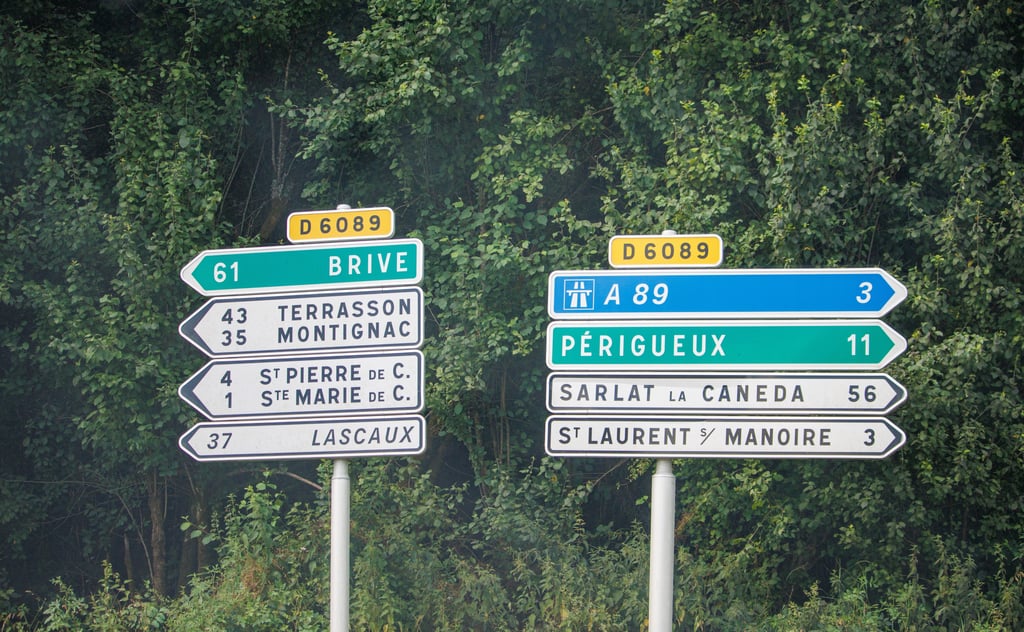
One of the most important driving rules to understand is priorité à droite (priority to the right). Unless signs indicate otherwise (look for the yellow diamond sign), traffic joining from a side road on the right has priority. This is particularly common in rural villages and can be a shock for UK drivers.
If you see a yellow diamond with a black diagonal line, your priority has ended. Always look for the ‘X’ in a triangle sign, which specifically indicates that priority to the right applies at the upcoming junction. You can find more detail on driving abroad via official UK government guidance.
9. Mandatory in-car equipment
To stay legal, you must carry a high-visibility vest (kept inside the cabin, not the boot) and a warning triangle. While the law requiring drivers to carry their own breathalysers was officially scrapped, most experienced drivers in France still keep a kit in the glovebox for peace of mind. You must also carry your original carte grise and insurance certificate whenever you are driving.
10. Driving licence exchange requirements
Under the current UK-France agreement, if your licence was issued before 1 January 2021, it remains valid until it expires. However, if it was issued after this date, or if you have become a French resident, you must exchange it for a French permis de conduire within 12 months of arrival.
The process is a direct exchange via the ANTS portal and does not require a new driving test. Be aware that the French system uses a ‘points-back’ method (starting with 12 and losing them for offences), which is the opposite of the UK’s ‘points-on’ system.
What should I do next?
- Speak to a currency specialist about your French car purchase
- Search latest property listings in rural France
- Download the 2026 France Buying Guide
Summary
Owning a car in France is a practical necessity for most expats, especially those moving to rural areas. While the administration – from the ANTS registration portal to Crit’Air emissions stickers – can seem daunting, the process is logical once you understand the requirements.
For most UK buyers, selling their right-hand drive vehicle and buying a local French car is the path of least resistance, avoiding the cost of modifications and the complexity of customs paperwork.
Download the France Buying Guide
Frequently asked questions
Yes, visitors can drive using their UK licence. If you become a resident, you must exchange it for a French one within 12 months if your licence was issued after 1 January 2021.
The cost of the carte grise depends on the vehicle’s horsepower and your region, but it typically ranges from €250 (£210) to €400 (£340) for a standard family car.
Yes. If you drive into any of the 43 French cities with a ZFE (Low Emission Zone), you must have the sticker, even if you are only there for a few days.
It is not difficult, but you must be proactive. Ask your UK insurer for a ‘proof of no claims’ letter and use a specialist expat broker in France who is used to dealing with UK-to-France moves.