




Spring arrives slowly in Canada, but when Easter comes, the country makes up for lost time. Here’s what to expect from the holiday – from how the public days off work to a giant Easter egg on the Alberta prairies.
If you’re making Canada your home, Easter offers a first glimpse of the country at its most sociable. Winter loosens its grip, spring cautiously arrives, and families across the country come together for a holiday that blends centuries-old traditions with a distinctly Canadian warmth. Here’s what you can expect.
Download the Canada Buying Guide
Contents
How the public holidays work
Easter in Canada can catch newcomers off guard, so it’s worth getting to grips with how the days fall before you make plans.
Good Friday is a statutory holiday in most provinces and territories, meaning shops, schools and many businesses will be closed. Easter Monday is a different matter. In most of English Canada, Easter Monday is not a public holiday – so don’t automatically assume you’ll have a four-day weekend. Quebec is the exception: employers there can choose between giving staff Good Friday or Easter Monday off, meaning practice varies depending on where you work. If you work for a federal organisation – the Canadian equivalent of a civil servant – you’re likely to receive both days off regardless of where you live.
The upshot: check your province and your employer before making plans.
A spiritual occasion and a family one
For many Canadians, Easter carries genuine religious significance. Church services on Good Friday and Easter Sunday draw large congregations across the country, and the traditions of Lent and Holy Week are observed with care in communities of all sizes.
For others, Easter is primarily a family occasion – a welcome marker in the calendar after what can be a long, cold winter. As temperatures begin to climb and the first signs of spring appear, the mood lightens noticeably. It’s the kind of holiday that invites people outdoors, and Canadians make the most of it.
Decorating and hunting for eggs
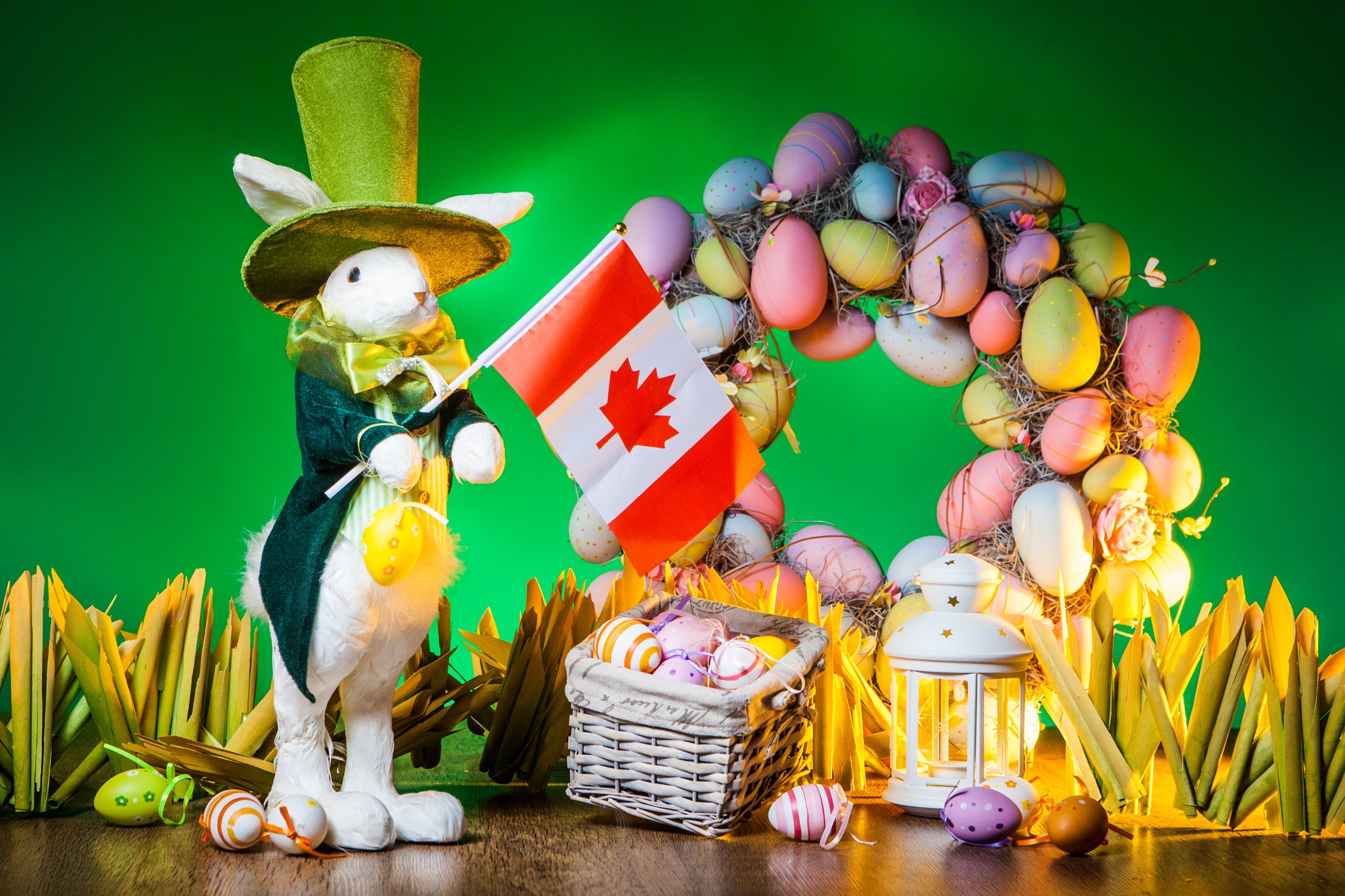
One of the most visible Easter traditions in Canada is the decorating of Easter eggs. Children use dyes, paints and craft supplies to transform ordinary eggs – real, hollowed-out ones or store-bought plastic versions – into brightly coloured works of art. The decorated eggs are then hidden around the house or garden, and the hunt begins.
Community egg hunts are held in parks and public spaces across the country, often organised by local authorities or community groups. These events typically include a prize for whoever finds a special golden egg – a detail that tends to add a competitive edge to proceedings, regardless of the age of the participants.
Chocolate in abundance
As in the UK, chocolate plays a central role in Easter in Canada. In the weeks leading up to the holiday, supermarkets and grocery stores gradually dedicate more shelf space to Easter confectionery – eggs in every size, foil-wrapped bunnies and novelty chocolates of all descriptions. If you have a sweet tooth, you’ll find no shortage of options.
One tip worth knowing: once the holiday is over, stores tend to reduce the price of leftover Easter stock significantly. It’s become something of a tradition in itself – hunting the post-Easter sales for discounted chocolate.
The Easter table
Hot cross buns exist in Canada, but they’re far less common than in the UK. You’ll find them in some supermarkets and bakeries in the weeks before Easter, though they tend to be a quieter presence on the shelves than British visitors might expect.
The Easter meal itself is a proper family affair. Baked ham is the most common centrepiece – glazed and slow-cooked, often served with roasted potatoes and seasonal vegetables. In Quebec and Atlantic Canada, baked beans made with maple syrup are a well-loved side dish, drawing on a deep regional tradition. Dessert varies by household and region, but apple pie and butter tarts both make regular appearances on Easter tables across the country.
One of the world’s largest Easter eggs
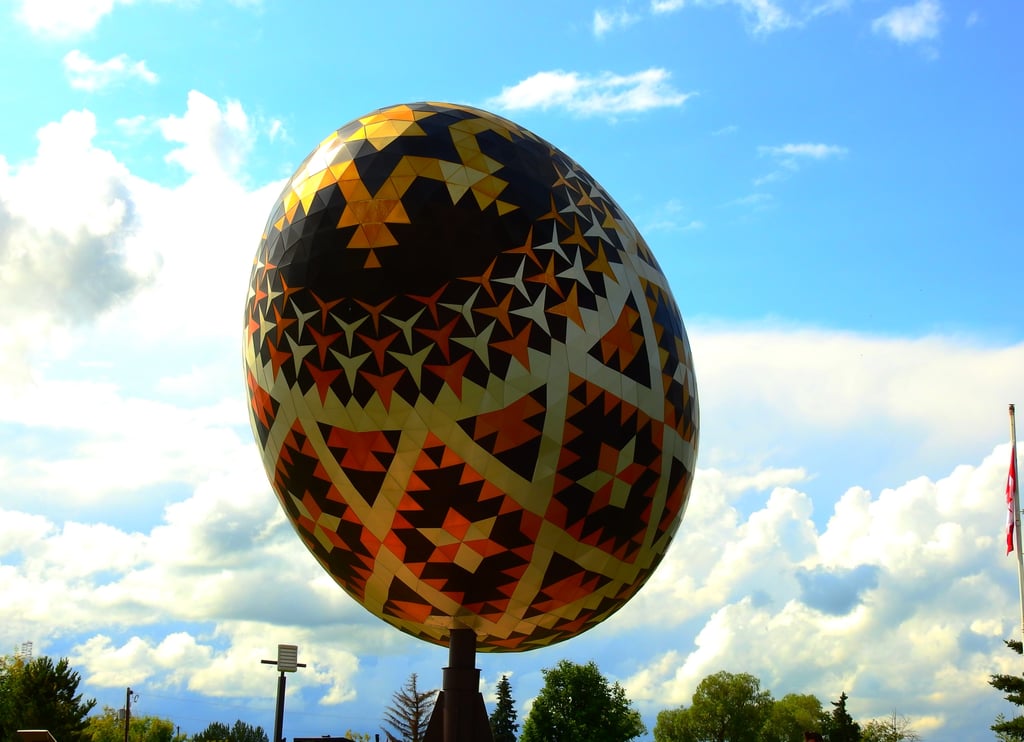
Canada is home to one of the world’s most remarkable Easter landmarks: the giant pysanka in Vegreville, Alberta. A pysanka is a traditional Ukrainian Easter egg, decorated using a wax-resist method, and the Vegreville version is on a different scale entirely.
Standing 9.4 metres tall and weighing around 2,270 kilograms, it was constructed in 1975 to honour the Ukrainian-Canadian communities who helped settle the region. The project took more than 12,000 hours to complete. Today it’s a well-known landmark along the Yellowhead Highway and a point of genuine local pride – a reminder of the cultural threads that run through Canadian identity.
If you’re exploring Alberta, it’s well worth the detour.
Easter and the Canadian calendar
For anyone considering a move to Canada, Easter is a useful lens through which to understand the country a little better. It sits at the point where winter finally gives way – not always gracefully, but visibly – and the country exhales. Communities come together, families travel, and the landscape, after months of grey and white, starts to show colour again.
Easter is a good time of year to be in Canada. And if you’re thinking about making the move permanent, our guide to buying property in Canada is a helpful place to start.