
Australia’s big cities get most of the attention. But if the pace and price of Sydney or Melbourne don’t appeal, the country has a remarkable range of small towns worth serious consideration – from an underground opal-mining community in the South Australian outback to a rainforest village teeming with wildlife in Queensland.
Whether you’re drawn to coast, wilderness or counterculture, Australia’s smaller towns offer something the cities can’t: space, character and a way of life that feels genuinely different. Here are ten that stand out.
Download the Australia Buying Guide
Contents
1. Penguin, Tasmania
Few towns commit to a theme quite like Penguin, a small coastal community on Tasmania’s north-west coast named after the fairy penguin by botanist Robert C Gunn. The penguin is celebrated everywhere here – most famously in the form of Big Penguin, a three-metre fibreglass sculpture that has become a local landmark. The little penguins themselves can be spotted near the shoreline at dusk.
Beyond the birds, Penguin has a well-regarded Sunday market with over 100 stalls selling crafts, fresh produce and local wine. The town sits between Burnie and Ulverstone, with Devonport around 20 minutes away by car. It’s a good base for exploring the broader north-west coast, which offers beaches, national parks and the Dial Range for walking.
Median house price: approximately A$635,000. Best suited to those looking for an affordable coastal lifestyle at a quieter pace than Hobart.
2. Coober Pedy, South Australia
Coober Pedy is one of the most genuinely unusual places to live anywhere in Australia. Located in the heart of the South Australian outback, around 850 kilometres north of Adelaide, the town sits in such extreme heat that most of its residents live underground. Known as dugouts, these subterranean homes maintain a cool, stable temperature year-round and range from simple two-bedroom dwellings to large family homes with swimming pools and entertaining spaces.
It’s not only homes that are built below ground. The town has underground churches, pubs and shops, and the landscape above ground is equally striking – the Breakaways Reserve offers an alien-like terrain of coloured mesas that has doubled as a film location for productions including Mad Max Beyond Thunderdome.
Coober Pedy is the opal capital of Australia, producing the vast majority of the world’s supply. There are working mines to visit and a four-day opal festival each year. It’s a community like no other, but it suits a particular kind of buyer – one who’s comfortable with remoteness, heat and a slower, self-sufficient way of life.
Median house price: entry-level properties can be found for well under A$100,000, with more substantial homes ranging up to A$400,000+. Prices have softened in recent years. Adelaide is the nearest major city – a nine-hour drive, or accessible by regular flights.
3. Nimbin, New South Wales
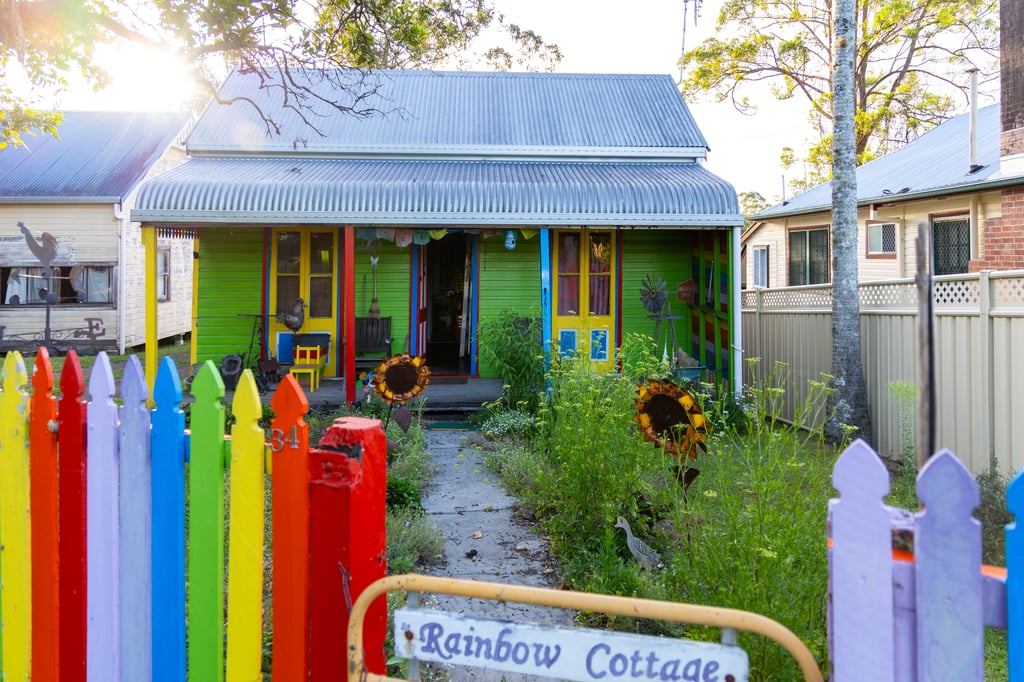
Nimbin has been Australia’s counterculture capital since the 1973 Aquarius Festival drew artists, musicians and activists to this small town in northern New South Wales. It never quite lost that identity. The main street is a vivid mix of murals, independent cafes and shops selling everything from crystals to locally grown produce, and the surrounding hills are home to a longstanding community of alternative lifestylers, artists and small-scale farmers.
The town is known for its annual MardiGrass festival, a cannabis law reform event that has taken place since 1993. There’s also a broader wellness scene – massage therapists, natural remedy practitioners and retreat centres are well represented. Outside the town, the Nightcap National Park and its waterfalls offer good walking, and the hinterland is genuinely lovely.
Nimbin attracts buyers who want something different from suburban Australia. The property market includes conventional homes as well as lifestyle blocks with off-grid setups. The Gold Coast is roughly an hour and 40 minutes away; Brisbane is around three hours. The median house price in the wider area has risen significantly in recent years, with many properties marketed at over A$800,000, though more affordable options can still be found in the surrounding villages.
4. Kuranda, Queensland
Kuranda sits within the Wet Tropics of Queensland World Heritage Area – a rainforest estimated to be around 100 million years old and home to some of Australia’s most distinctive wildlife. The village itself is small and walkable, with markets, galleries, restaurants and cafes spread through the forest canopy just 30 minutes from Cairns.
The wildlife draw is real. Birdworld houses over 350 free-flying birds, the Australian Butterfly Sanctuary is the largest of its kind in the southern hemisphere and Kuranda Koala Gardens offers the chance to get close to koalas, wombats and kangaroos. You can take boat trips on the Barron River, ride the Kuranda Scenic Railway up from the coast or glide above the treetops on the Skyrail cableway.
For those considering a permanent move, the town offers a laid-back rainforest lifestyle with good community infrastructure and easy access to Cairns. Property prices in the area have risen with the broader Queensland market. Expect to pay from around A$700,000 upwards for a house, though the market is relatively small and stock can be limited.
5. Tilba, New South Wales
Central Tilba is one of New South Wales’s best-preserved 19th-century towns, listed on the New South Wales State Heritage Register for its intact Victorian streetscape. The colourful shopfronts and timber buildings look much as they did over a century ago, and the town has resisted the kind of development that has changed similar communities elsewhere.
The area is known for its award-winning dairy – the ABC Cheese Factory has been producing tilba-style cheeses since 1891 – and for Mount Gulaga (formerly Gulaga), a sacred site for the local Yuin people that offers walking tracks with views to the coast. The town featured in River Cottage Australia, which helped raise its profile with food lovers.
Tilba sits within the Eurobodalla region, roughly midway between Sydney and Melbourne on the Sapphire Coast. It’s popular with weekenders and tree-changers. Property prices in the surrounding area reflect this – the Eurobodalla median for houses sits around A$700,000, with coastal properties and character homes often commanding considerably more.
6. Port Fairy, Victoria
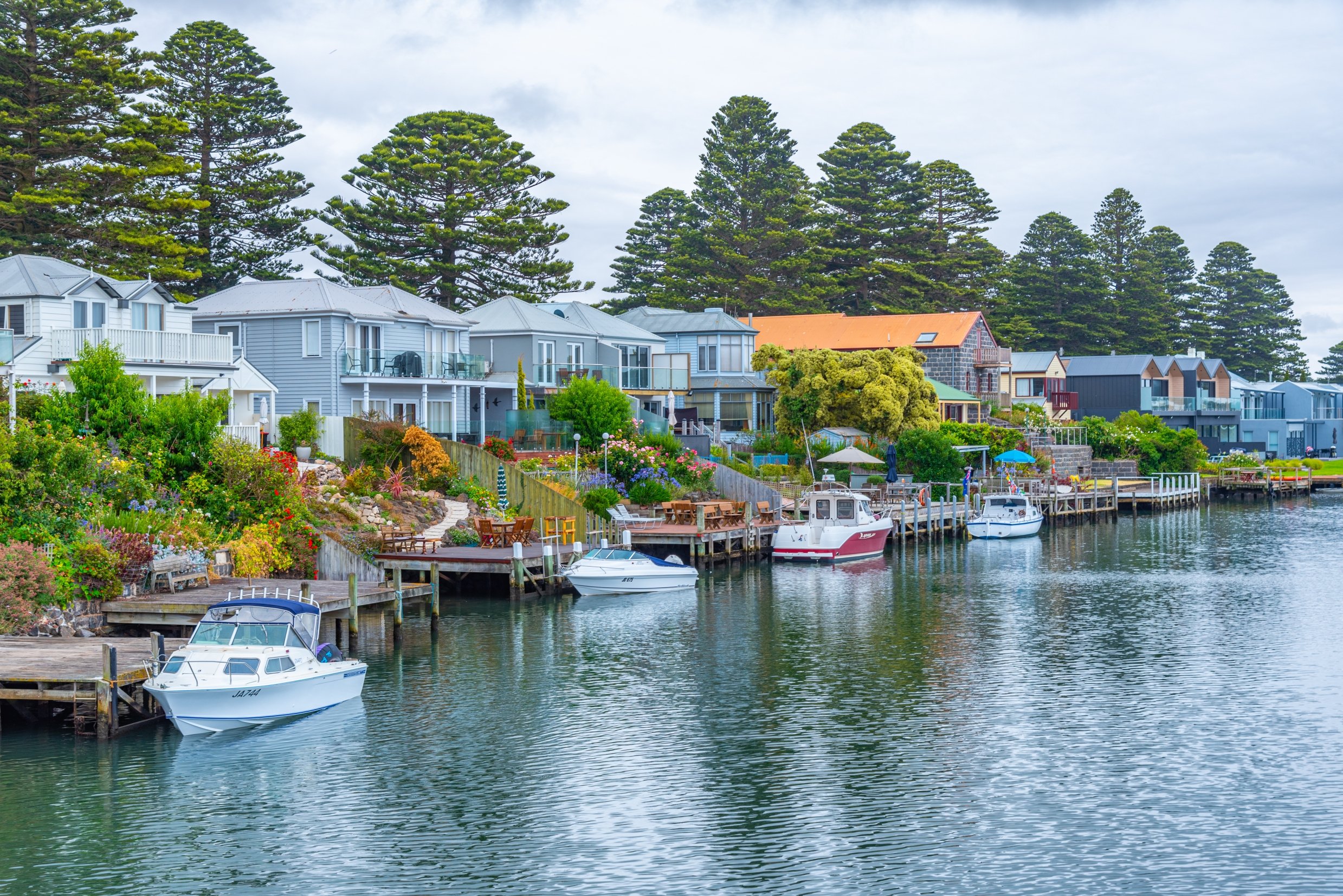
Port Fairy (main image) marks the western end of the Great Ocean Road, and it carries that coastal setting with some style. The town has more than 50 National Trust-classified buildings, a mix of bluestone cottages and white-painted historic homes that line streets running down to the harbour. It’s a working fishing port – fresh fish and seafood are local staples.
Every March, the Port Fairy Folk Festival brings some of Australia’s best-loved acoustic and world music acts to the town. It’s one of the country’s longest-running folk festivals, and tickets sell quickly. Outside of that, Port Fairy has strong galleries and craft shops, good beaches for swimming and snorkelling (particularly Pea Soup Beach on Griffiths Island), and a golf course consistently rated among Victoria’s finest.
Melbourne is around three and a half hours away; Geelong is closer at roughly two hours. The median house price sits at around A$850,000-$920,000, reflecting strong demand for coastal lifestyle properties along this stretch of Victoria.
7. Cowaramup, Western Australia
Cowaramup – known locally as Cowtown – sits in the heart of the Margaret River wine region, about 30 minutes south of Busselton. Life-size fibreglass cows are scattered through the town as a nod to its farming heritage, and the annual Deja Moo Country Fair has become a fixture in the local calendar.
Beyond the humour, Cowaramup is a genuinely good base for exploring Margaret River. The region is among Australia’s finest for wine, cheese and artisan food producers, and the surrounding area takes in beaches, limestone caves and jarrah forest. It’s grown considerably as a residential community in recent years, attracting families as well as retirees drawn by the lifestyle and proximity to the coast.
Busselton is the nearest larger town. Property prices have risen sharply with the broader Western Australian market – the median house price in Cowaramup is now around A$1M-$1.2M, up significantly over the past few years.
8. Lightning Ridge, New South Wales
Lightning Ridge, close to the Queensland border in outback New South Wales, is the world’s primary source of black opal – one of the rarest and most valuable gemstones. Mining is central to the town’s identity, and visitors can fossick for stones, tour active mining operations and attend the four-day opal festival held each July.
The town also has a collection of unusual attractions that add to its appeal. The Artesian Bore Baths, fed by two-million-year-old underground water at a steady 40 degrees Celsius, are popular with locals and visitors alike. The Bottle House Museum – constructed from glass bottles by a former resident – and Amigo’s Castle, built by Italian immigrant Angelo Megahey over several decades, are among the more memorable things to see.
Lightning Ridge is too small to produce a reliable median house price, but properties in the town can be found at very affordable levels compared with the NSW average. The nearest regional centre, Dubbo, has a median house price of around A$530,000 and is roughly four hours away by road.
9. Yamba, New South Wales
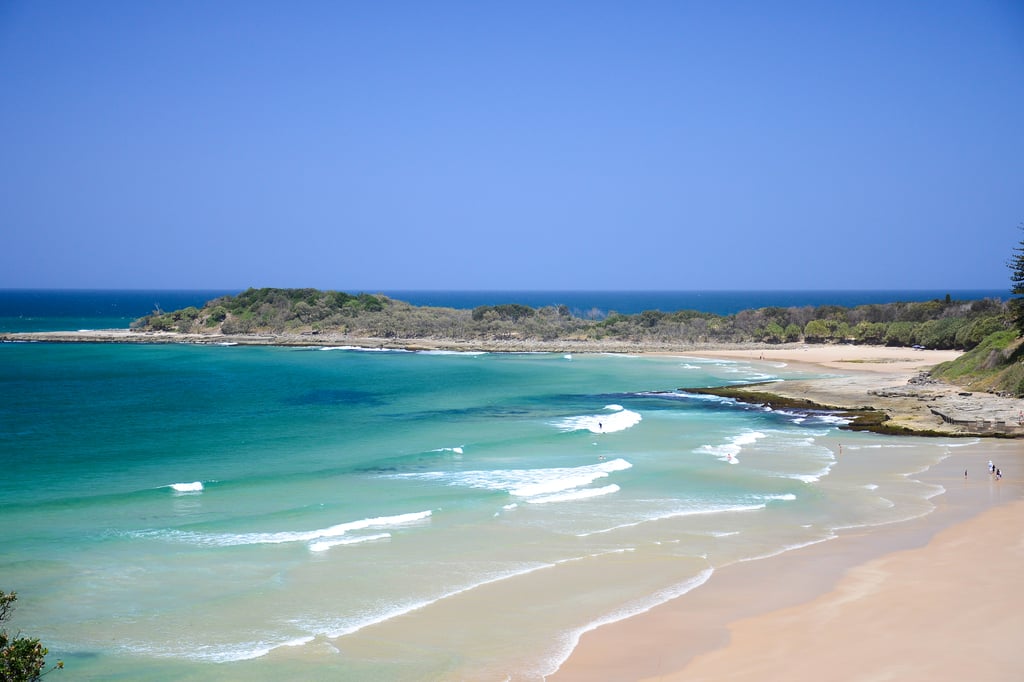
Yamba sits at the mouth of the Clarence River on the New South Wales far north coast and has spent the past decade becoming one of the state’s most talked-about lifestyle destinations. It offers most of what Byron Bay has – surf beaches, a relaxed culture, good restaurants – with fewer crowds and, at least historically, more accessible prices. The comparison is relevant: Yamba is sometimes described as Byron Bay before Byron Bay happened.
The town is known for its prawns, celebrated each year at the Yamba Prawn Festival. The surrounding area includes Yuraygir National Park – the longest stretch of undeveloped coastline in New South Wales – as well as the Clarence River hinterland, which offers good walking and cycling. Dolphin and whale sightings are common from the headland.
Brisbane is around three hours by road. The median house price is now in the region of A$925,000, reflecting the town’s shift from affordable alternative to sought-after destination. It’s still better value than comparable coastal towns further south, but buyers should budget accordingly.
10. Echuca, Victoria
Echuca sits on the Murray River – Australia’s longest river – at the point where it meets the Campaspe, and it wears its history visibly. The port precinct, one of the best-preserved in the country, tells the story of the riverboat era that made Echuca a commercial hub in the 19th century. Today, you can cruise the Murray on restored paddle steamers, kayak from the town’s edge or simply watch the river from the old wharf.
The town also has a strong food and drink scene for its size, with craft breweries, a gin distillery, contemporary wineries in the surrounding region and good access to local produce. Museums are a particular feature – the Echuca Moama region has more than 20, ranging from the National Holden Motor Museum to the Great Aussie Beer Shed and Twisted Science.
Melbourne is around two and a half hours south. The median house price is approximately A$550,000-$600,000, making it one of the more affordable towns on this list relative to what it offers.