
La Rioja, the Basque Country and Navarra are three of Spain’s most rewarding regions for overseas buyers – and three of the most overlooked.
Northern Spain tends to lose out to the Costa del Sol and the Balearics – but it shouldn’t. If you’re willing to look further north, La Rioja, the Basque Country and Navarra offer something genuinely different: dramatic landscapes, world-class food and property prices that, across much of the region, are far more approachable.
These three regions sit just south of the Pyrenees, within easy reach of France. Getting here is simpler than many people assume – Brittany Ferries runs regular sailings from Portsmouth to Bilbao and from Plymouth to Santander, and the AP-8 motorway through the Basque Country is one of Spain’s better-connected corridors.
This is authentic, unhurried Spain. You’ll need a working level of Spanish, and in the Basque Country you’ll quickly discover that Euskara – the ancient Basque language with no known relatives among the world’s language families – is very much alive. In cities like Bilbao and San Sebastián everyone speaks Spanish, but in smaller inland towns such as Durango, and across much of northern Navarra, Basque is the primary social language.
Download the Spain Buying Guide
Contents
La Rioja: wine country and wide-open space
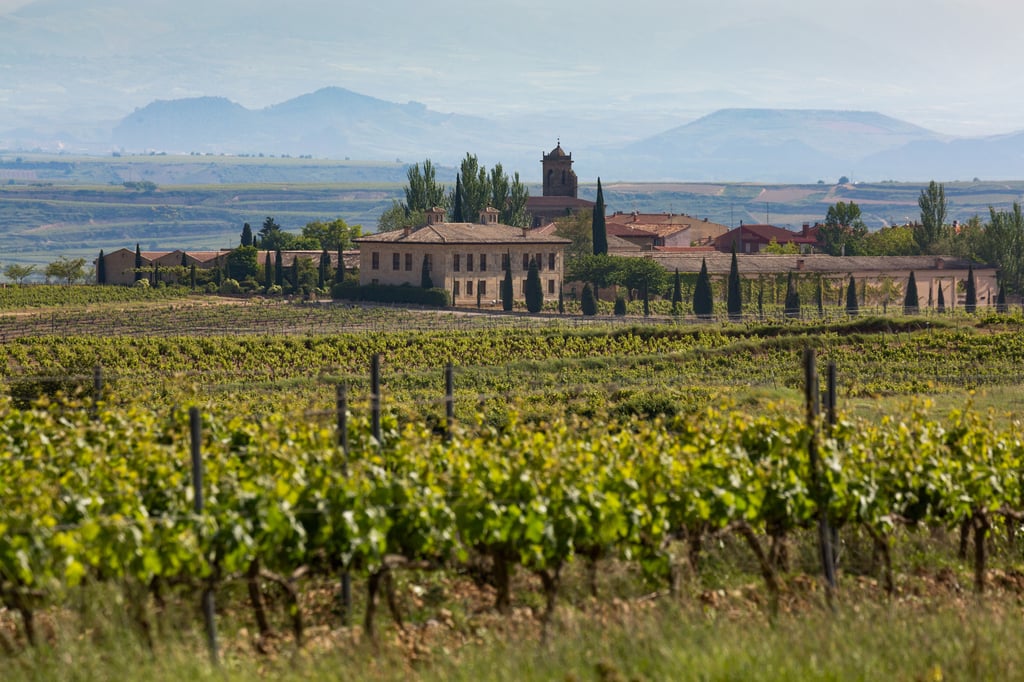
La Rioja is Spain’s smallest region, with a population of just over 300,000 – and about 65 people per square kilometre. If space and quiet are what you’re after, few places in Spain can match it.
The name itself comes from the River Oja, which joins the Ebro – the region’s other main waterway – and flows through a landscape of gently rolling hills, vineyards and oak and beech forests. The highest peaks reach around 2,000 metres, and while the climate is continental, with temperatures ranging from around 12°C in cooler months to 32°C in summer, the air here feels cleaner and cooler than you’d find on the coasts. Rainfall is modest – 300 to 600mm annually – and the seasons are properly distinct.
Wine is central to everything here. The vineyards that produce some of Spain’s most celebrated reds are a constant presence in the landscape, and the region draws visitors who come specifically to eat and drink well. That said, La Rioja is not a tourist-heavy destination. Life here revolves around farming, food production, local festivals and the outdoors – horse riding, hiking, fishing and, in winter, skiing.
Where to look in La Rioja
Logroño is the regional capital and home to roughly half of La Rioja’s population. That still makes it a relatively small city, and that’s part of its appeal. The old town has a density of tapas bars – here called pinchos bars – that would be remarkable anywhere in Spain, let alone in a city this size. The pilgrim route to Santiago de Compostela passes through, bringing a steady stream of walkers but nothing approaching the crowds you’d find in the south.
Transport connections are improving, though this remains the region’s main practical limitation. The nearest airports are Vitoria (around 57km) and Pamplona (65km), with Bilbao’s international airport around 106km away. Trains run to Logroño from Madrid’s Atocha station and via Irún and Miranda de Ebro.
Property prices in Logroño are reasonable for a regional capital. A three-bedroom apartment in a good district starts at around €220,000 (approx. £188,000) and a villa with a pool from €315,000 (approx. £268,000). Prices across the wider region are lower still.
La Rioja is well suited to those planning to live on a UK state pension, freel ance income or rental income from a UK property, particularly outside Logroño. The cost of living is low compared to Spain’s main urban centres.
The Basque Country: prosperity, culture and coast
The Basque Country operates on a different scale from La Rioja. It’s one of Spain’s wealthiest regions – with the highest average income in the country – and it feels it. The restaurants are excellent, the cities are well maintained, and there’s a self-confidence here that comes from a strong cultural identity and a buoyant economy anchored in aeronautics, energy and financial services. BBVA and Iberdrola, two of Spain’s largest companies, are both headquartered here.
The coastline is rugged Atlantic rather than Mediterranean: high cliffs, small fishing inlets and beaches where the waves arrive with some force. The mountains run in two parallel ranges, enclosing a high plateau in between. The climate in the coastal areas is oceanic – mild year-round but wetter than you might expect, with rain spread fairly evenly across the seasons.
San Sebastián
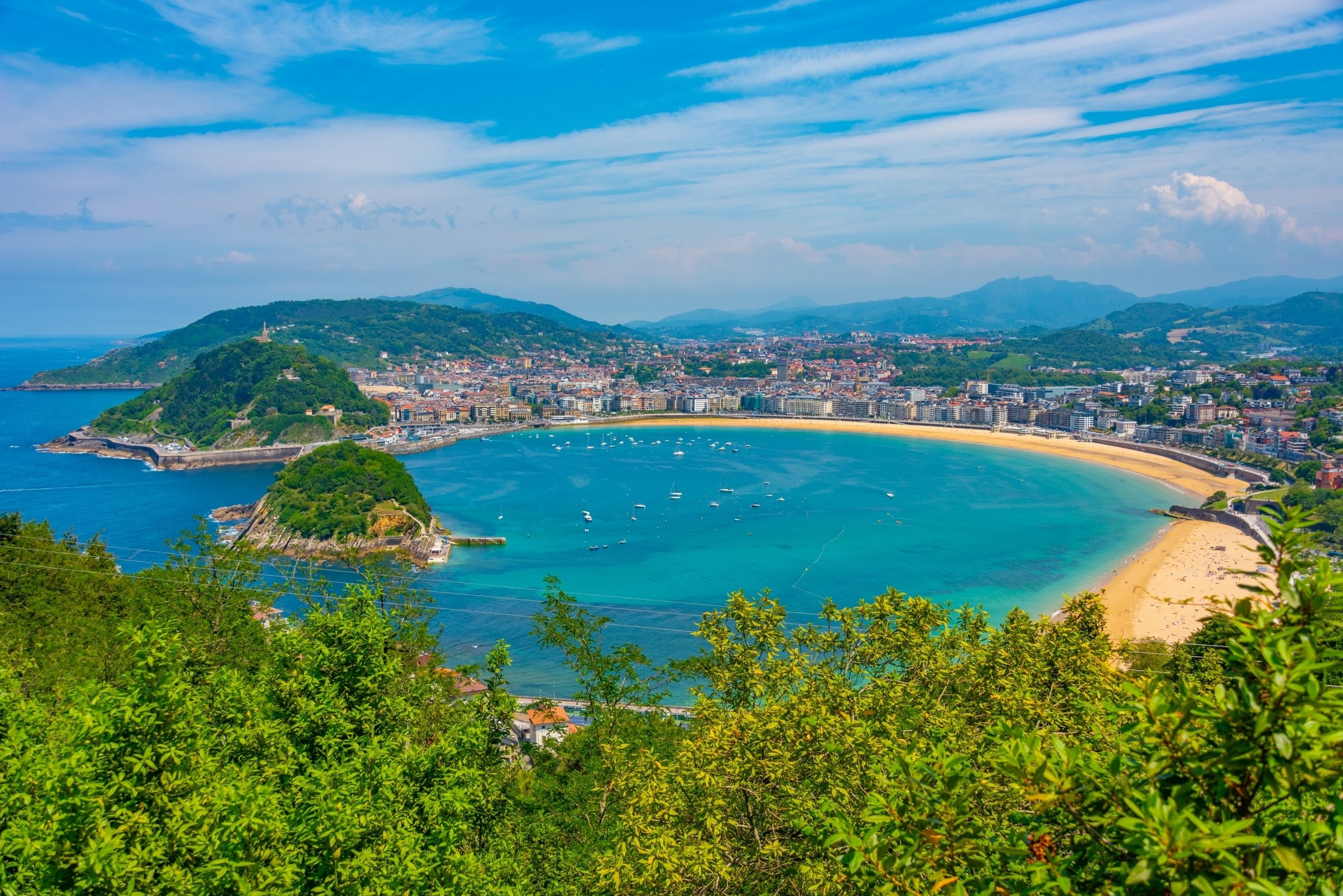
San Sebastián (known in Basque as Donostia) has a genuine claim to being one of the best places to eat in the world. The concentration of Michelin-starred restaurants per capita is among the highest anywhere, and the pintxo bars of the old town are an experience in themselves. The city sits on the Bay of Biscay, with Playa de la Concha providing a sheltered arc of sand that’s widely regarded as one of Europe’s finest urban beaches.
The old town is compact, walkable and genuinely beautiful – cobbled streets, ornate ironwork, the covered La Bretxa market. The climate is comfortable rather than hot: rarely cold enough to need a heavy coat, rarely warm enough to demand air conditioning.
San Sebastián isn’t as affordable as the rest of the region and property here can be more expensive than anywhere else in Spain on a per-square-metre basis. A three-bedroom apartment starts at around €300,000 (approx. £256,000), though at that price you’re likely looking at the outer districts or a property needing some work – central neighbourhoods such as Antiguo, Gros and Centro command considerably more. A three-bedroom villa starts from €440,000 (approx. £375,000).
San Sebastián’s airport offers domestic connections to Barcelona and Madrid. Bilbao International Airport is around an hour’s drive away, with a broader range of European routes. Biarritz airport, just over the French border, is roughly 20 minutes closer still.
Bilbao
Bilbao is the Basque Country’s largest city and its commercial hub. It sits about 16km inland from the Bay of Biscay, surrounded by two small mountain ranges, and has an oceanic climate with mild temperatures, moderate rainfall and relatively dry summers.
The city has changed considerably since the late 1990s, when the opening of the Guggenheim Museum in 1997 – its titanium exterior designed by Frank Gehry – transformed Bilbao’s international profile. The museum now draws over a million visitors a year and remains the centrepiece of a riverfront that has been comprehensively regenerated.
Beyond the Guggenheim, Bilbao has 18 parks – more than any other Spanish city – and a food culture that runs deep, from the pintxo bars of the Casco Viejo to the city’s celebrated Mercado de la Ribera. Public transport is excellent: a metro system connects the city centre to outlying suburbs and the coast, and the central Casco Viejo is best explored on foot.
Property is more accessible here than in San Sebastián. Three-bedroom apartments start at around €175,000 (approx. £149,000) and a three-bedroom semi-detached house from €420,000 (approx. £358,000).
Plentzia and Sopelana
For buyers who want Basque coast living without the city price tag, these two small towns around 30 minutes from Bilbao by metro are worth a look. Both have beaches, good surfing and a relaxed quality of life, with easy access to Bilbao for work or days out.
Durango
Inland, about 30km southeast of Bilbao, Durango sits in a valley framed by snow-capped peaks and the Ibaizabal river. It has a population of around 29,000 and an active bar and restaurant scene centred on a pretty old town with a fine baroque cathedral. Bus connections to Bilbao run every 30 minutes, and there are train services to both Bilbao and San Sebastián.
Durango is also set to benefit from the Basque Y high-speed rail project, which by 2026 is connecting Vitoria, Bilbao and San Sebastián with significantly faster journey times. For buyers weighing up inland versus coastal living, that’s a meaningful shift in the commuter calculus.
Each December, Durango hosts the Basque Country’s most important cultural fair, with concerts, exhibitions, performing arts and events for all ages.
A three-bedroom apartment in Durango starts at around €330,000 (approx. £281,000) and a four-bedroom semi-detached house from €375,000 (approx. £320,000).
Navarra: the Pyrenees, pilgrims and Pamplona
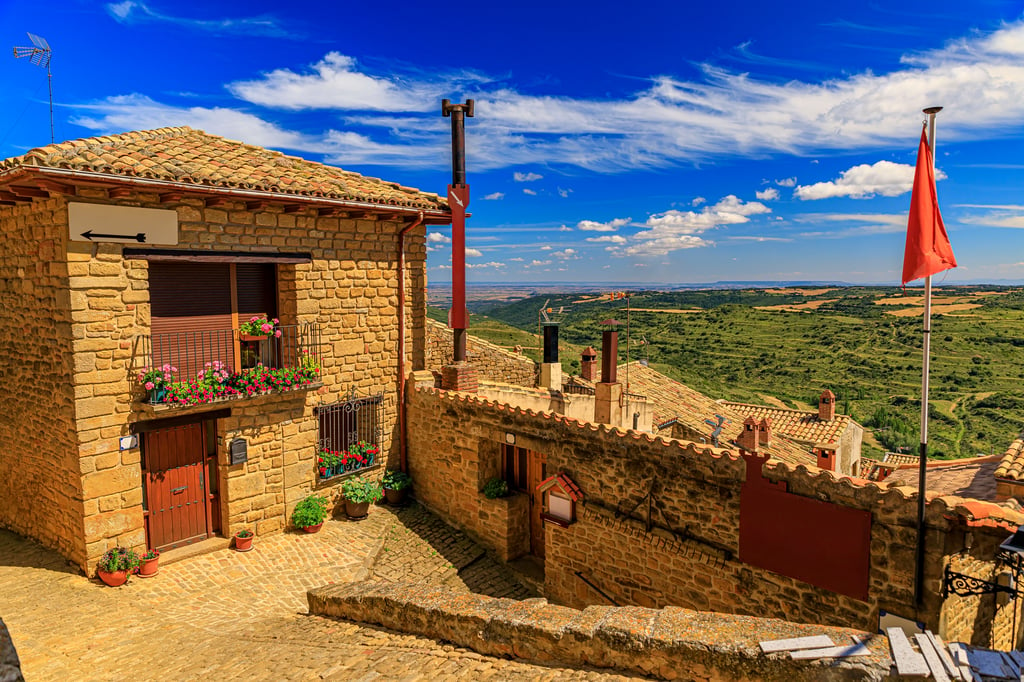
Navarra borders both the Basque Country and France, and shares something of both – a Pyrenean north of forests and mountain passes, a fertile central valley through which the Ebro flows, and a southern plain dotted with lagoons and vineyards. The total population is around 640,000, spread across a region with 50 nature reserves and a strong agricultural tradition.
Basque is spoken widely in the north of the region alongside Castilian Spanish, and the landscape shifts noticeably as you move from the mountains down to the Ribera wine region. Navarra produces lamb, white asparagus and beef of real quality, and its wines – once best known for rosé – have been moving decisively towards reds.
Transport connections are good. Pamplona’s airport serves routes to Madrid and Barcelona, and Bilbao International Airport is around 119km away. Biarritz airport, on the French side of the border, is 78km away.
Pamplona
For most people, Pamplona means one thing: the running of the bulls during the San Fermín festival each July. Ernest Hemingway immortalised it in The Sun Also Rises, and the city still draws visitors in their thousands for the event. But Pamplona is a city worth knowing beyond those eight days in July.
The old town is largely pedestrianised, with medieval walls still standing in substantial sections. Plaza del Castillo, the main square, is a broad, arcaded space where life moves at a reassuringly unhurried pace. Taconera Park – the oldest in the city – is well kept and genuinely pleasant, and the city has invested in cycling infrastructure that makes it easy to get around without a car.
Property prices are relatively high for Navarra. A three-bedroom apartment with a covered terrace costs around €305,000 (approx. £260,000) and a three-bedroom terraced house from €325,000 (approx. £277,000).
Olite
Around 42km south of Pamplona, Olite is one of Navarra’s most rewarding smaller towns. Its Roman walls are largely intact, and the medieval castle – once the seat of the Royal Court of the Kingdom of Navarra – still dominates the skyline. The town has a population of around 4,000 and a Parador hotel that occupies part of the castle complex.
Today, Olite is surrounded by vineyards and produces good wines in a Mediterranean microclimate of hot dry summers and mild, wetter winters. A Wednesday market draws people in from the surrounding villages, and the Classical Theatre Festival held each summer makes good use of the medieval setting.
Property here is considerably more affordable than in Pamplona. A three-bedroom apartment starts at around €120,000 (approx. £102,000) and a three-bedroom terraced house from €172,000 (approx. £146,000).
Tudela
Navarra’s second city, with a population of around 36,000, Tudela sits on the River Ebro and is among Spain’s most historically layered towns. Founded in its current form during the Moorish period, it was a place where Muslims, Jews and Mozarab Christians coexisted for around 400 years – a history that left its mark on the architecture and urban fabric.
Tudela is the capital of the Ribera wine region and has a strong local food culture built around its vegetables: artichokes, asparagus, lettuce hearts and chard are local specialities, celebrated each spring at the city’s vegetable festival. The town’s large squares, lined with bars and restaurants, give it a lively feel that belies its size.
Fans of Game of Thrones will recognise the nearby Bardenas Reales Natural Park, a semi-desert landscape that doubled as the Dothraki Sea in Season 6.
Property prices in Tudela are among Navarra’s most accessible. A three-bedroom apartment starts at around €125,000 (approx. £106,000) and a detached three-bedroom house in a good residential area from €262,000 (approx. £223,000).
Is northern Spain right for you?
Northern Spain won’t suit everyone. If you’re looking for reliable summer sunshine, a large English-speaking expat community or the kind of infrastructure that southern Spain has built up over decades, you’ll find less of all three here. But if you want to live somewhere with genuine character, real seasons, outstanding food and wine, and a lifestyle that feels distinctly Spanish rather than tailored around expat communities, these regions deserve serious consideration.
The ability to speak Spanish – and ideally some Basque if you’re heading to the Basque Country or northern Navarra – will make a real difference to how well you integrate.
Speak to a Spain property expert
Property prices quoted are approximate and intended as a general guide. Exchange rates fluctuate, so it’s worth speaking to a currency specialist before making financial decisions. Our partner Smart Currency Exchange can help you lock in a favourable rate and protect your budget throughout the buying process.