
North-west Spain has been quietly underselling itself for years – which is precisely why buyers who’ve discovered it tend to keep quiet about it.
If you’re drawn to traditional Spanish life, dramatic coastlines, remarkable food and property prices well below the national average, the north-west deserves your attention. The region – covering Galicia, Asturias, Cantabria and Castile y León – is easy to reach year-round and offers a genuinely different experience to the Mediterranean costas. Think fewer tourist crowds, lower cost of living and a way of life that hasn’t been packaged for export.
Download the Spain Buying Guide
Contents
How bad is the weather, really?
The Costa Verde (Green Coast) lives up to its name – but the climate is far milder than many buyers expect. Annual sunshine averages between 1,700 and 2,200 hours across the region. Head west towards Vigo and Pontevedra, and you’re looking at more than 2,000 hours a year; Santander in the east comes in at around 1,650. For context, Cornwall averages around 1,750 hours and western Ireland fewer than 1,300.
Yes, it rains here more than the Costa del Sol. The far west around Vigo and Santiago de Compostela receives roughly 1,900mm of rain annually – about 50% more than the wetter parts of the UK. But travel east along the northern coast towards Oviedo and that figure drops to closer to 900mm. Crucially, most of the rainfall comes in winter, between November and March, leaving summer largely clear.
Inland areas such as Lugo, which sits at around 450 metres, can see frost and snow in winter – but that’s not a drawback if you’re interested in the region’s ski resorts, which you’ll find between León and Oviedo at Pajares and San Isidro.
Property prices in north-west Spain
Overseas buyers are a smaller presence here than on the southern costas, where foreign demand has long been concentrated. That’s changing, however – Asturias and Galicia have both recorded some of the strongest growth in foreign property purchases in the country in recent years, as buyers look beyond the saturated costas towards areas that still offer value and authenticity. North-west Spain is increasingly on the radar for international buyers who want something more genuine than a resort apartment.
Prices have risen sharply across Spain since 2022, and the north-west is no exception – but the region still offers meaningful value relative to the national average. According to the latest data, listing prices per square metre are roughly as follows:
- Galicia: around €2,209/m²
- Cantabria: around €2,583/m²
- Asturias: around €2,317/m²
- Castile y León: around €1,307/m²
- Spain as a whole: around €2,709/m²
Cantabria and Asturias have seen some of the sharpest rises in Spain over the past two years – Cantabria was up nearly 20% year-on-year in 2025 – so buyers who moved quickly have already seen strong gains. Galicia has risen more modestly, recording around 7.6% growth in early 2026, and Castile y León remains one of the most affordable regions in the country. Coastal properties command a premium over inland ones throughout the region, and the gap between the north-west and the Balearics or Madrid (both now above €5,000/m²) remains very wide.
Galicia
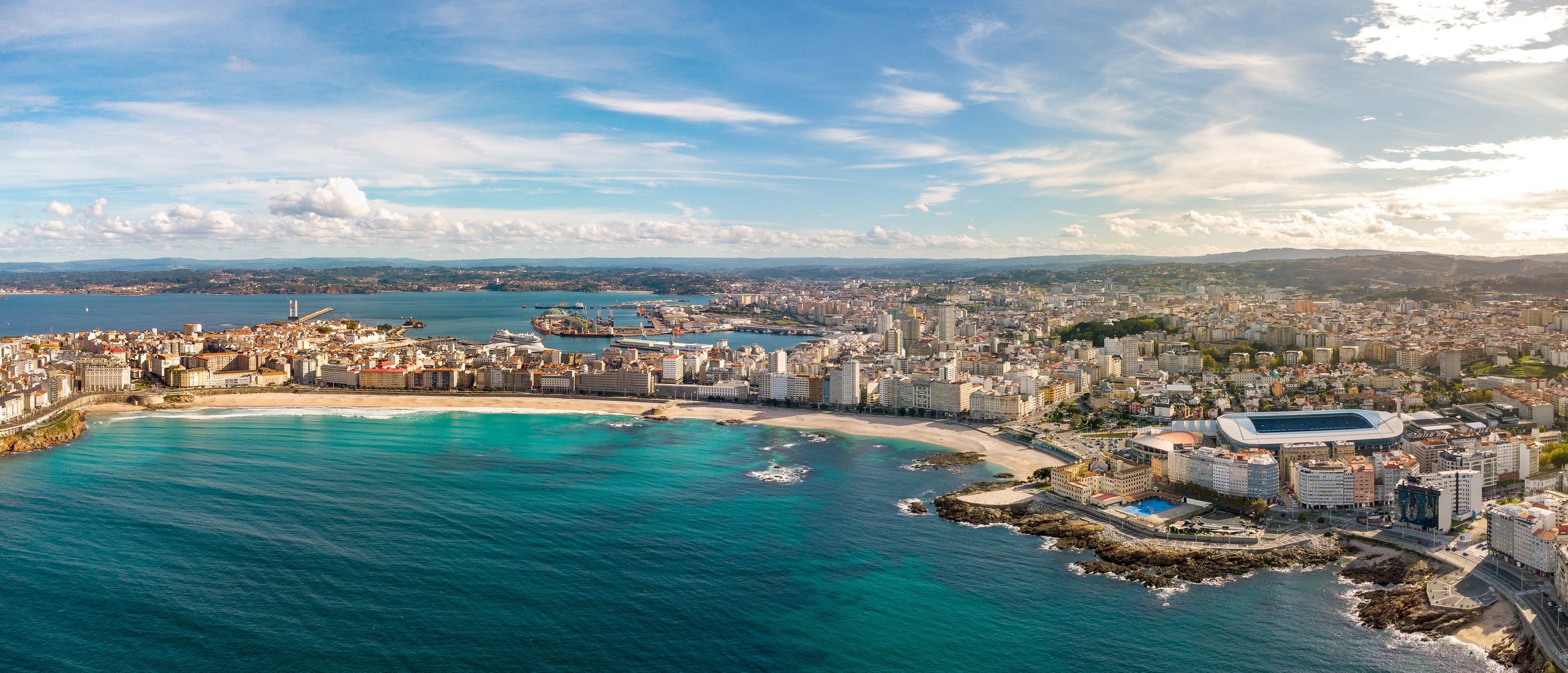
At the furthest north-western tip of Spain, Galicia occupies a distinctive corner of the country – geographically, culturally and linguistically. It shares its southern border with Portugal, its eastern border with Castile and León and Asturias, and faces the Atlantic on its western and northern flanks. That ocean has shaped everything here, from the extraordinary 1,660km of coastline to the local cuisine and the character of the people.
The comparison with Ireland is one you’ll hear often. The landscape is soft, green and frequently rain-swept. The local language, Galego – closely related to Portuguese – is spoken widely and with real pride. Galicia has strong Celtic roots, and the culture reflects this; you’ll hear bagpipes here, not just guitars.
Santiago de Compostela and beyond
Most people know the regional capital as the destination for pilgrims walking the Camino de Santiago. The city’s cathedral, dating back to the 9th century, sits at the heart of a UNESCO World Heritage Site that attracts visitors from around the world – whether for religious reasons, personal challenge or simply the experience of completing one of Europe’s great long-distance walks.
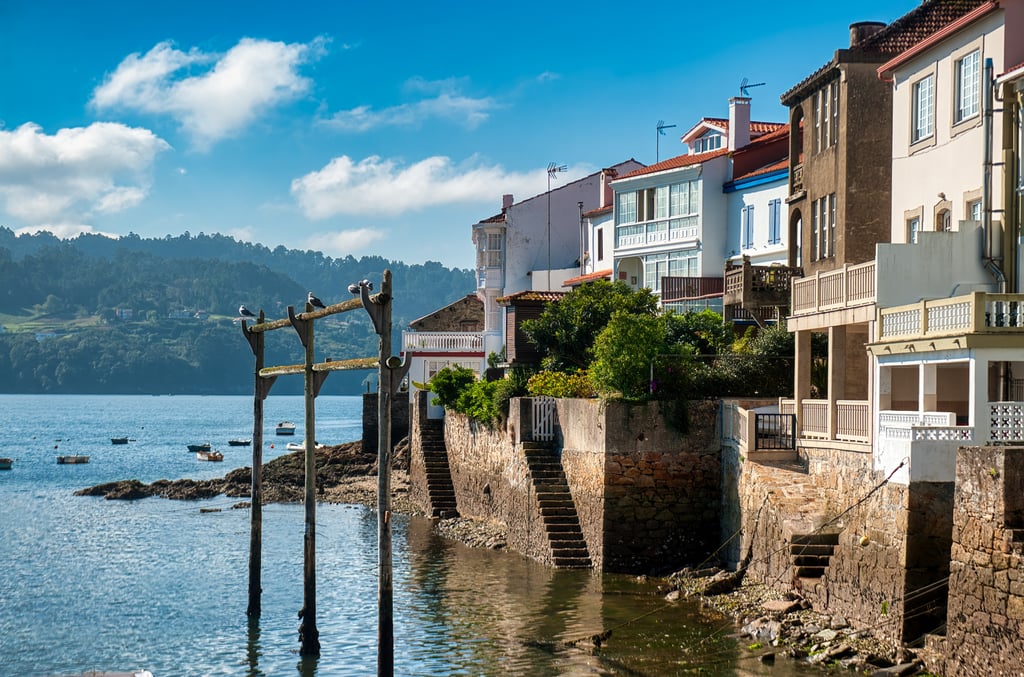
Beyond the city, Galicia offers four distinct provinces – A Coruña, Lugo, Ourense and Pontevedra – ranging from busy Atlantic ports to quiet mountain towns. Lugo and Ourense sit in the mountainous interior; the southern coast, around Pontevedra and Vigo, is more developed and draws the majority of tourists and expats.
The appeal for property buyers
Galicia is one of the most affordable places to buy property in Spain, particularly inland. The lifestyle is unhurried and the food – especially the seafood – is exceptional. Fishing remains a major industry, and dishes like pulpo a la gallega (Galician-style octopus) are the real article here, not a restaurant approximation.
The expat community is small. Those who have made their home here tend to value that, and the region hasn’t developed the infrastructure of English-language estate agents and services you’d find on the Costa del Sol. Some agents do speak English, but it’s not a given. Come prepared, ideally with a working knowledge of Spanish.
Getting to Galicia
Galicia has three international airports. A Coruña Airport handles mainly domestic and Portuguese routes, with a Vueling service from London Heathrow. Santiago de Compostela is the second busiest airport in northern Spain and is served from several UK cities by easyJet, Ryanair and Vueling. Vigo Airport connects to wider Europe, including the UK via Iberia. The region is also accessible by rail from Madrid.
Cantabria
Cantabria is small but varied – a region of dense forests, green valleys, a rugged Atlantic coast and some of Spain’s most significant prehistoric heritage. The Gulf Stream gives it a temperate climate: summers are warm without being extreme, winters mild by northern standards.
The Picos de Europa National Park, shared with Asturias and Castile y León, is one of the highlights. The mountains here are striking, the walking is serious and the landscapes are unlike anything you’d find on the Mediterranean coast. It’s the kind of place that keeps drawing people back.
History and culture
The region’s caves are extraordinary. Altamira, El Soplao, Del Valle and Las Pasiega all contain prehistoric art of international importance. Above ground, the religious architecture of Santo Toribio de Liébana Monastery and other medieval buildings reflects a long and layered history.
Cantabrians enjoy their festivals. La Vijanera – a winter carnival celebrated on the first Sunday of the year – is one of Spain’s oldest. La Folía in April sees a parade of traditional fishing boats at San Vicente de la Barquera. The SAUGA folk music festival takes place in August.
Food and where to live
The cuisine leans heavily on the sea – clams, mussels, sea bass, hake and tuna all feature prominently – alongside veal, game and pork. Cantabrian pastries, particularly the local puff pastry specialities, are worth knowing about.
Expats tend to base themselves in or around Torrelavega, in the Renedo de Piélagos area, or further inland near Cabezon de la Sal. The region is compact enough that most of it is within easy reach wherever you settle.
Getting to Cantabria
Seve Ballesteros-Santander Airport is the main point of entry, with Ryanair flights from Edinburgh and London Stansted. Brittany Ferries also sails to Santander from Plymouth and Cork – a comfortable option if you’re bringing a car.
Castile y León
The largest region in Spain – and in the European Union – Castile y León is formed from two historic kingdoms joined in 1983. The medieval legacy here is substantial: six UNESCO World Heritage Sites, more than any other Spanish region, including the old city of Salamanca, the Roman aqueduct at Segovia and the cathedral city of Burgos.
Who it suits
This is Spain at its most traditional and, for some buyers, most appealing. The cities are culturally rich and architecturally remarkable. The countryside is vast, sparsely populated and genuinely tranquil. The people here have a reputation for being reserved and self-sufficient – warm once you’re known, but not immediately effusive.
Castile y León suits buyers who want peace, space and immersion in Spanish culture. It’s said that people here speak the purest Castilian Spanish, which makes the region popular with those learning the language. It’s not the obvious destination if you want guaranteed sunshine and a ready-made expat community – but for buyers after something real, it has a great deal to offer.
Salamanca
The regional capital is one of Spain’s most appealing cities. Its old quarter is a UNESCO World Heritage Site, lined with sandstone palaces, university buildings and churches built across centuries of scholarship and ambition. The university – one of the oldest in Europe – still draws students from around the world, giving the city an energy and internationalism that might surprise first-time visitors.
There’s also a practical angle for English speakers: Salamanca has a thriving English-language teaching sector, and part-time work for native speakers is not hard to find. The city attracts young families as well as students. Beyond the capital, Ciudad Rodrigo is a quieter alternative – a medieval hill town of around 14,000 people – while La Alberca is a traditional village popular with day visitors.
Segovia
Towards the south-east of the region, Segovia is one of the best-preserved historic cities in Spain. The Roman aqueduct – built in the 1st or 2nd century AD and still standing in the city centre – is acknowledged as the most significant civil engineering work to survive from Roman Spain. The Alcázar royal palace and the Gothic cathedral (the last of its kind built in Spain) complete a remarkable collection of landmarks.
The old city and its aqueduct were granted UNESCO status in 1985. An ongoing expat community exists here, though it’s smaller and quieter than you might find in some parts of the country.
Getting to Castile y León
The region’s own airports serve mainly domestic routes. The nearest international hub is Madrid Barajas, around 102 miles away, served by British Airways, easyJet, Iberia Express and Ryanair among others. Main rail lines connect the region to Madrid, and the Paris–Lisbon main line passes through.
Asturias
The Celtic, Roman and Moorish influences that have shaped Asturias over centuries are still visible in the architecture and culture today – particularly in the ancient pre-Romanesque churches scattered across the region. Oviedo, the regional capital, holds a UNESCO World Heritage Site and has the feel of a sophisticated, traditional Spanish city.
Spanish is essential in Asturias. The region has a much smaller English-speaking population than the southern costas, and you’ll get more out of living here – and integrate more comfortably – if you arrive with the language.
Landscape and climate
Rocky coastal cliffs give way to a mountainous interior, and this geography produces a notably varied climate. Summers are humid rather than dry, winters cold. It’s a long way from the experience of the Costa del Sol – but for buyers after dramatic natural scenery and a more atmospheric way of life, Asturias is compelling.
Local cuisine
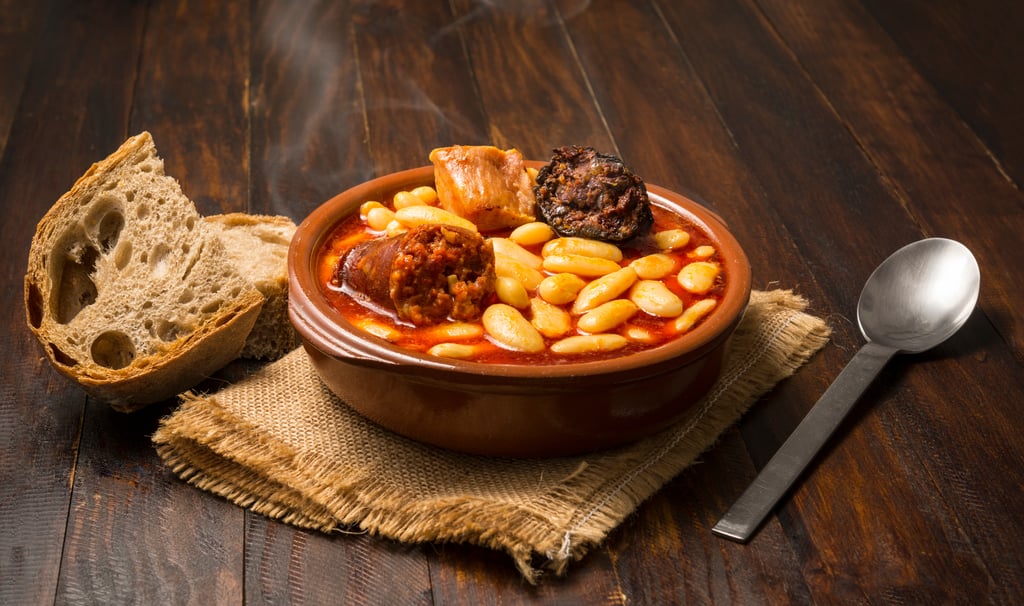
Asturian cuisine has a strong identity: fabada asturiana – a hearty stew of white beans, chorizo, black pudding and sausage – is one of Spain’s most celebrated regional dishes, alongside pote asturiano, a lamb and potato stew. Apple orchards thrive in the Asturian climate, making this the heartland of Spanish cider. Sidrerías – cider houses where the drink is poured from height to aerate it – are a social institution here.
Getting to Asturias
Asturias Airport connects the region to the rest of Spain and wider Europe, with easyJet operating a service from London Stansted. The east of the region can also be reached via Santander Airport in Cantabria. National rail links connect Asturias to the rest of Spain.