
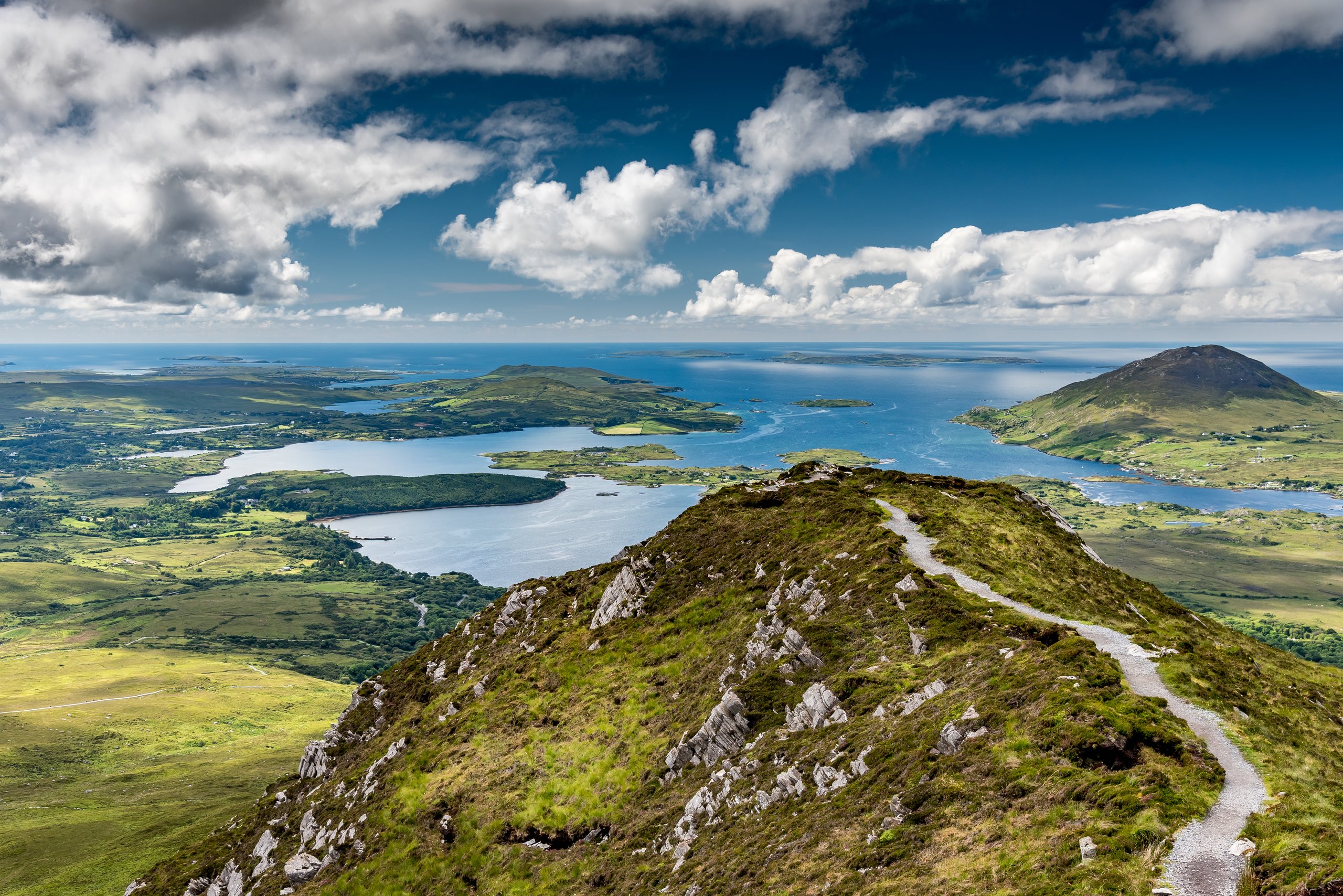

Ireland’s west coast has long attracted surfers from across Europe – and increasingly, those visitors are starting to ask a different question: what would it take to stay?
The Wild Atlantic Way stretches for around 2,500 kilometres from Donegal in the north to Cork in the south, taking in some of the most powerful and consistent Atlantic surf in Europe. For UK buyers in particular, buying property in Ireland comes with a significant practical advantage that no other country can offer. Thanks to the Common Travel Area, no visa, residency permit or bureaucratic process stands between you and a life on the coast.
This guide is for anyone thinking seriously about making that move – whether you want a permanent base near your favourite break, a holiday home to escape to when the swell picks up or a coastal property with strong rental potential.
What you need to know about buying property in Ireland as a UK citizen
UK citizens have the right to live, work and buy property in Ireland without any visa or residency requirements, under the long-standing Common Travel Area (CTA) agreement. There is no time limit on stays, no application process and no 90-day rule. Unlike buying in an EU country post-Brexit, there are no restrictions on property ownership either. The main practical considerations are around tax residency, financing and the legal buying process.
Download the Ireland Buying Guide
Contents
Why Ireland works for surfers
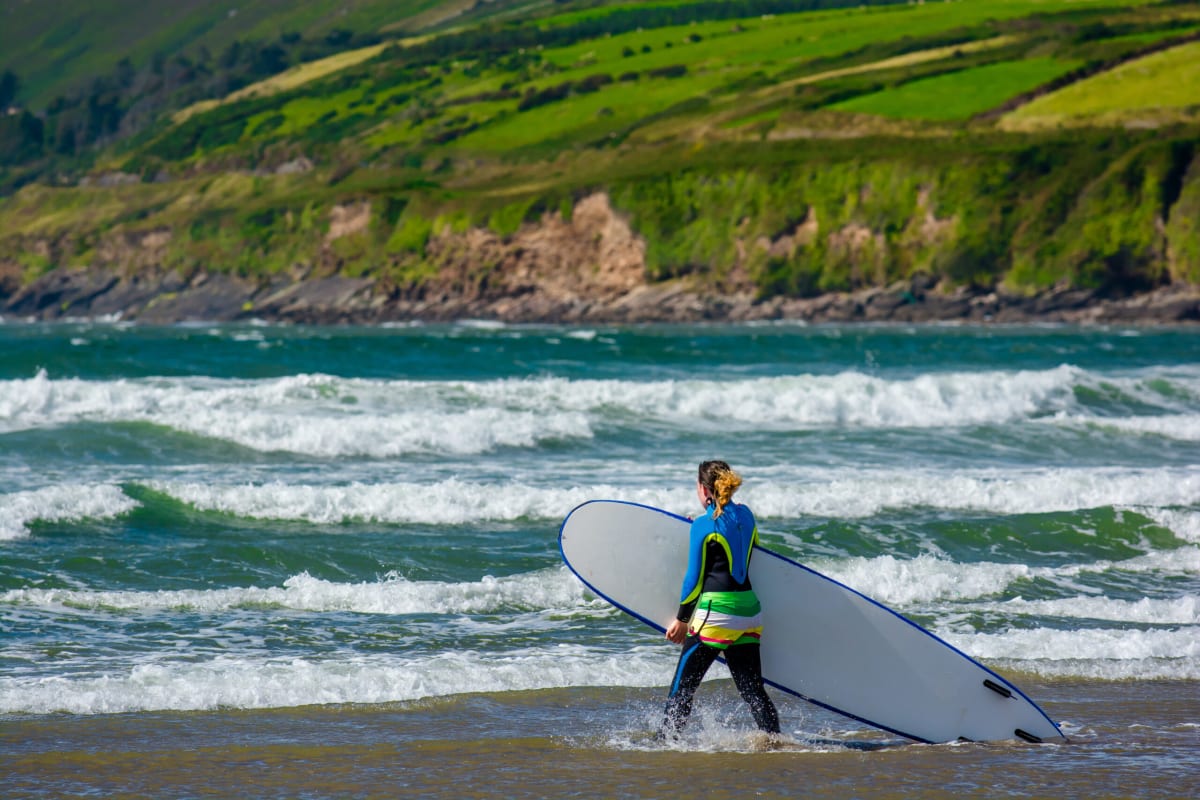
The surfing on Ireland’s Atlantic coast is world-class by any reasonable measure. Bundoran in County Donegal is widely regarded as the surfing capital of Ireland, with The Peak – a reef break in the middle of town – producing powerful A-frame waves that fire on virtually any swell above two feet. Tullan Strand, just north of the town, offers a more forgiving beach break suitable for all levels.
Lahinch in County Clare draws surfers from across the world with its consistent beach break and the reef break known as Aill na Searrach, which produces some of the most powerful waves in the region. The town has a well-established surf culture, good schools and plenty of life beyond the water.
Further north, Strandhill in County Sligo picks up swells in almost any direction, making it one of the most consistent surf spots on the coast. It sits roughly halfway between Bundoran and Easkey, meaning a base here puts you within striking distance of several world-class breaks. After a session, the village is known for its seaweed spa at Voya – a very Irish way to warm up.
For those who prefer fewer crowds, Achill Island in County Mayo offers a variety of breaks across different conditions, with Keel Beach particularly well regarded for consistent swells. The island is connected to the mainland by a bridge, making it a practical base rather than a remote outpost.
September and October are generally considered the best months for surf in Ireland – solid Atlantic swells arrive, water temperatures are at their warmest after summer, and the beaches are quieter. Winter brings the biggest waves but also the harshest conditions. Summer is gentler, better suited to learning or improving.
The Common Travel Area: a genuine advantage for UK buyers
When UK buyers consider moving to an EU country, the post-Brexit paperwork is now a real factor. Spain requires a visa application before you move. Portugal has its own residency process. France requires you to demonstrate sufficient income. All of these are manageable, but none of them are simple.
Ireland is different. The Common Travel Area is a long-standing arrangement that predates both British and Irish membership of the EU. Under it, British and Irish citizens can move freely, reside in either country, and enjoy associated rights including the right to work, study and access health services. There is no time limit on stays – this is not the 90-day rule that applies in the Schengen Area. British citizens can arrive with a UK passport and remain indefinitely.
In practice, this means that buying a home in Ireland and living there full-time requires no immigration paperwork at all. You do need to establish ordinary residency – generally after a year of living there – to access public healthcare and social benefits on the same basis as Irish citizens, but the process of moving itself involves no visa, no permit and no application fee.
It is worth noting that the CTA covers British and Irish citizens only. If your partner or family members are not British or Irish citizens, they will need to apply for residence separately under Irish immigration rules. If this applies to you, it is worth taking legal advice before committing to a purchase.
What are summers in Ireland actually like?
For anyone considering a holiday home, the question of weather is a fair one. Ireland’s reputation for grey skies is not entirely unfounded – but the picture is changing. Met Éireann’s own climate projections confirm that Ireland’s warming trend is expected to continue, with maximum and minimum temperatures projected to increase across all future scenarios.
Summer 2025 was Ireland’s warmest on record since 1900, with an average temperature of 16.19°C – nearly 2°C above the long-term average. Six of Ireland’s ten warmest summers on record have occurred since 2000. For context, summer water temperatures on the west coast typically sit between 14°C and 17°C – cooler than Cornwall but warmer than Scotland, and entirely manageable in a good wetsuit.
The surf community here has never waited for sunshine. What the Atlantic coast offers in summer is long evenings, fewer crowds in the water and, increasingly, warm enough days to make life outside the water genuinely pleasant. The trade-off with winter – raw power, dramatic light, empty line-ups – is one many surfers actively seek out.
Property prices on the Wild Atlantic Way
Ireland’s property market has been rising steadily. According the Central Statistics Office, the median price of a newly built home in Ireland in 2025 was €375,000 (£315,000). Prices outside Dublin rose by 9.2% in the year to August 2025 – faster than the capital, reflecting strong demand for coastal and rural properties.
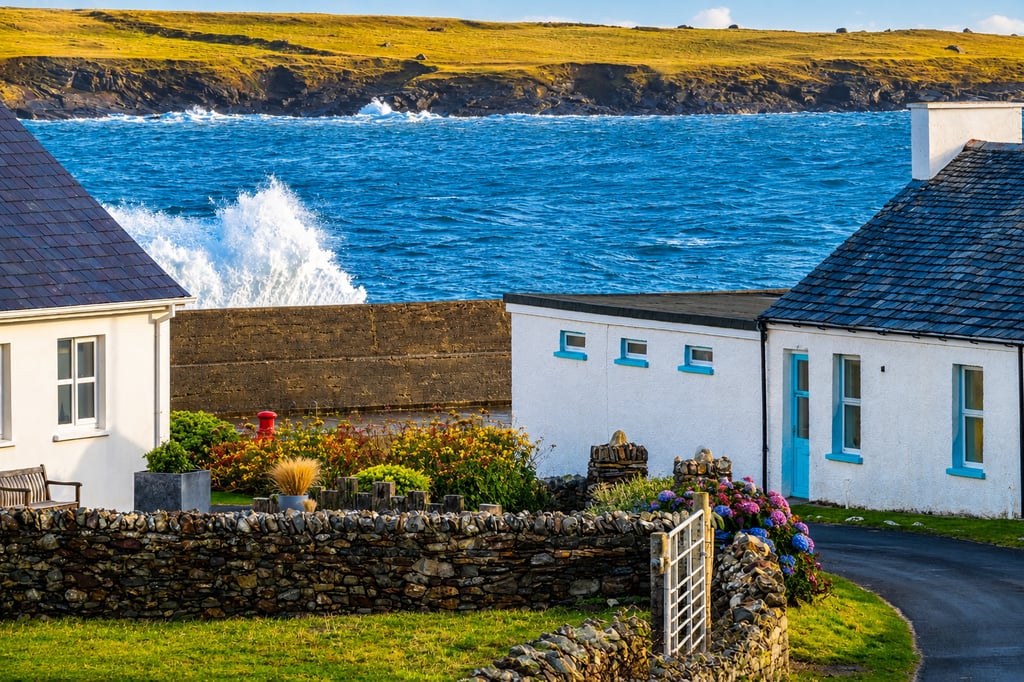
Coastal towns along the Wild Atlantic Way vary considerably. Bundoran and Strandhill tend to offer more affordable entry points than Lahinch, which has seen sustained demand from both domestic and international buyers. Achill Island offers some of the most competitively priced coastal property in the west, with the added draw of genuine remoteness.
As a general guide, a three-bedroom house within walking distance of a surf beach typically starts at around €300,000 (£252,000) in more affordable spots such as Bundoran or Achill Island, and can reach €600,000 (£505,000) or more in established surf towns like Lahinch and Strandhill where demand is strongest. But bear in mind that the market moves quickly and these figures should be verified with a local agent before making decisions. Holiday homes in popular surf towns can generate useful rental income during peak season, particularly in August and September.
What should I do next?
If you are seriously considering buying property in Ireland, the next step is to speak to people who know the market. A local solicitor – the Irish term for what in England would be a conveyancing solicitor – is essential. Irish property law has its own processes, and title deed issues can arise, particularly with older rural properties.
Currency planning is also worth thinking about early. The euro–sterling rate has a direct impact on your purchasing power, and locking in a rate before you exchange can protect you from market movements. Our currency specialists at Smart Currency Exchange can talk you through your options.
Summary
The Wild Atlantic Way offers consistent, world-class surf across all ability levels, with Bundoran, Lahinch, Strandhill and Achill among the standout locations. UK buyers have a clear advantage: the Common Travel Area means no visa, no time limits and no residency application required. Irish summers are measurably warmer than a generation ago, with Met Éireann recording 2025 as the warmest summer since 1900. Property prices outside Dublin rose by over 9% in 2025; coastal and surf-town properties are in strong demand. A local Irish solicitor and early currency planning are the two most important practical steps before committing to a purchase.
FAQs
Yes. Under the Common Travel Area, UK citizens have the right to live and buy property in Ireland without a visa, residency permit or time limit on stays. No application process is required.
Bundoran in Donegal, Lahinch in Clare, Strandhill in Sligo and Achill Island in Mayo are the most established surf communities on the Wild Atlantic Way, each with a mix of breaks suitable for different levels.
Coastal properties in surf towns perform well for short-term rentals, particularly in the summer months. August and September tend to be the strongest weeks for both surf and visitor numbers. As with any property investment, location, condition and local demand all affect returns.
Yes – a qualified Irish solicitor is essential. They handle title searches, contracts and the legal transfer of ownership. Title deed issues are not uncommon with older rural or island properties, so choosing a solicitor with local experience is advisable.