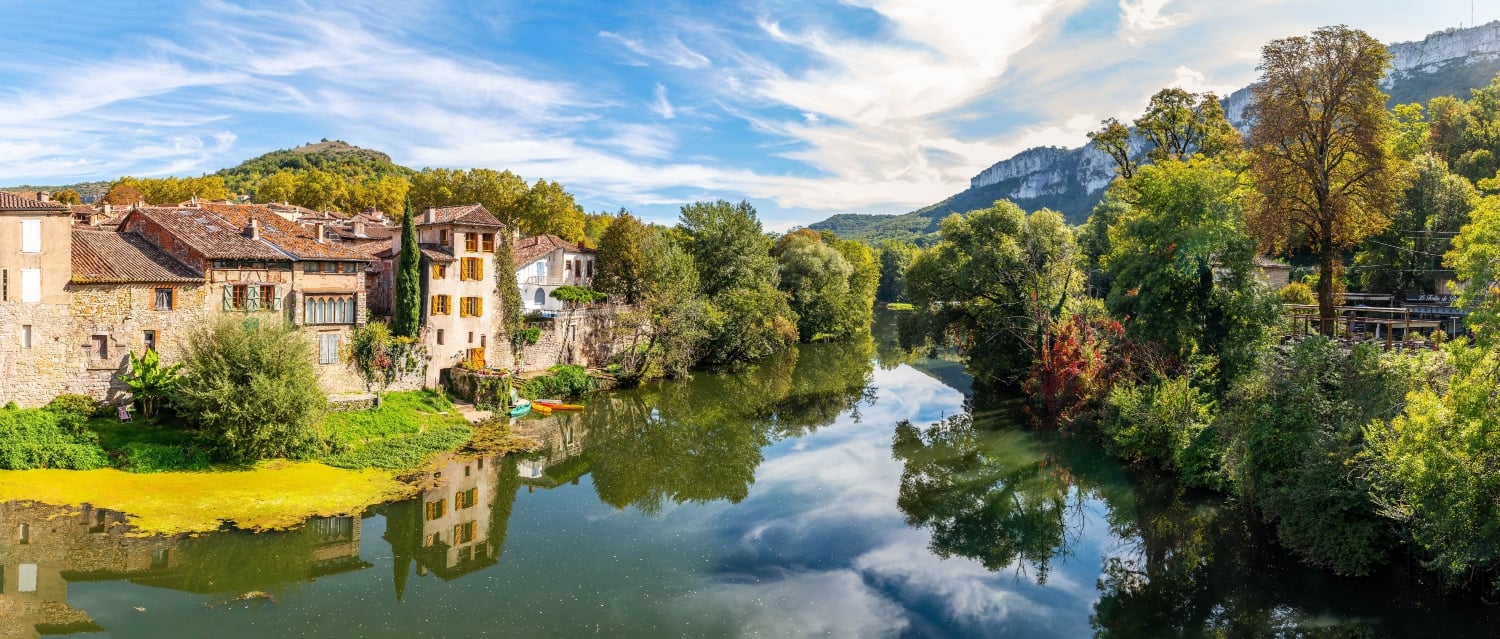

It’s hard to say whether it’s the sight, smell or sound of a French market that makes it so compelling. I still remember when I first went to France as a young teenager (ok, a while ago now…!) and was completely overwhelmed by the whole market experience.
If you’re feeling the same, let me offer a few tips on how to get the best from the experience as a local, not just a tourist.
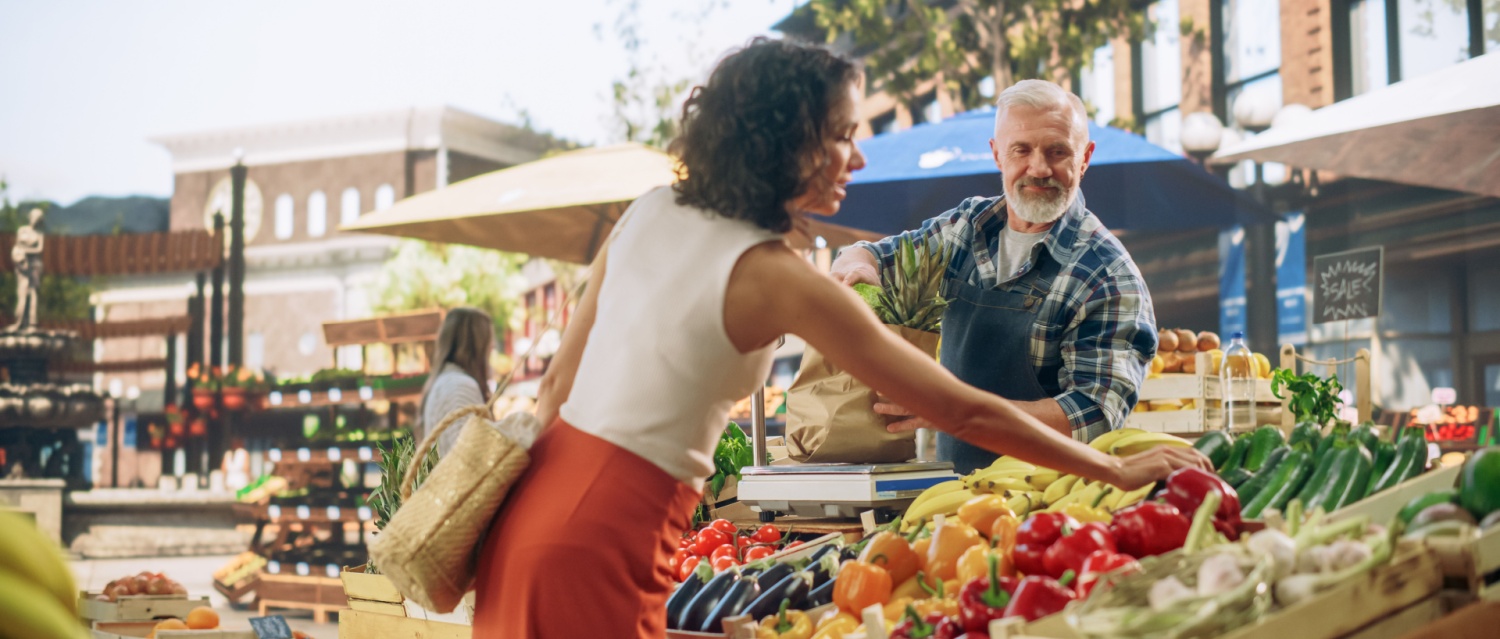
Going to the market in France seems to make one come alive and be in touch with one’s senses, such is its nature. It is not only about grabbing a bargain, although you certainly can do that. It is also the feeling of belonging to a community, catching up with friends and admiring the displays of goods so often most artfully arranged.
And the best thing of all? When the market finishes it’s all expertly cleared up and an hour or so later, you wouldn’t know it was ever there!
Get there early!
Many years ago I worked in Paris for a year and stayed with my then pen-friend’s grandmother in the suburbs. She was a wonderful lady, proud of her garden full of fruit trees. I have a vivid memory of Saturday mornings when she would get up very early in order to be first at the market.
She never wrote a list, rather simply went to browse and buy what seemed to her to be the best produce. She would come home several hours later, laden with goodies.
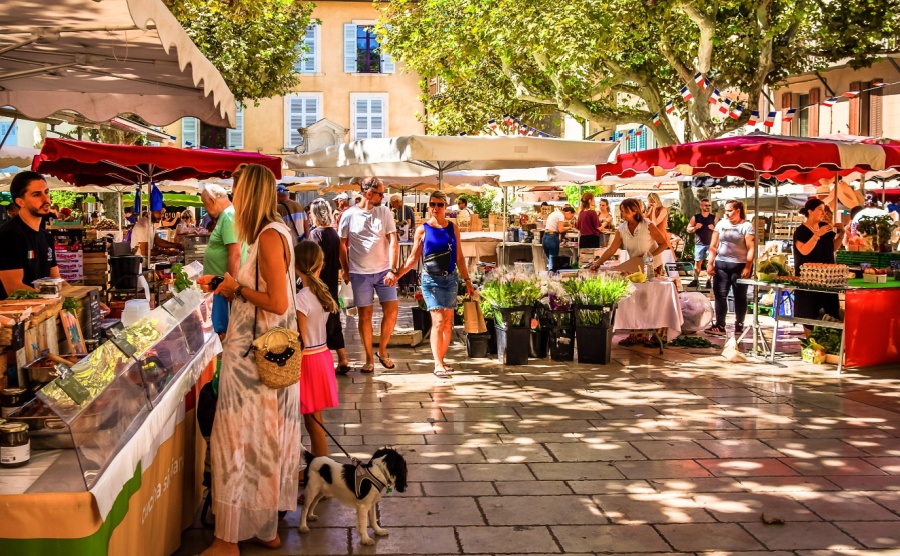
Most markets open during morning hours, although this does vary. Some adjust their hours according to the season. Keen marketgoers often appear around 7am at opening time.
I still recommend being there early. Looking back on many holidays in France over the years, getting to the local market was always the best way of settling in and getting to know the place. It never disappointed; there was always something interesting to see or to buy.
Why markets still matter in France
There is a huge difference between visiting a country and living there, but when I started living in France, if anything, my enthusiasm for them increased.
For the French, markets are a deeply entrenched way of life. Like for my friend’s grandmother, the market represents a kind of ritual, a part of life never to be missed.
The tradition of French markets is centuries old. They began as places for agricultural workers to meet and exchange goods and have since become beloved fixtures of French life. You will find markets in most towns and villages in France, and their popularity has not diminished even in this age of online shopping. They still offer the chance to catch up with friends, discuss local news, and, of course, buy local produce.
France is still a country steeped in tradition, and markets appeal not only to tourists in the summer months but hold year-round appeal for locals and visitors alike.
France’s best markets?
Such is the central importance of markets to the French way of life that TF1, the very popular French commercial television network, runs an annual competition to find the best market in the country.
Its Votre plus beau marché competition celebrates local flavour, community and tradition. The competition sees 24 regional markets from across France and its overseas territories vie for the title.
Among the 24 markets in the running last year were well-loved regional favourites such as the market of Saint-Quay-Portrieux in Brittany and the market in Lyons-la-Forêt in Normandy, each known for its scenic setting and local produce.
In Provence, the market of L’Isle-sur-la-Sorgue was selected in recognition of its vibrant stalls and Provençal specialities. Meanwhile in Nouvelle-Aquitaine, markets such as Royan and the historic market in Salies-de-Béarn stood out for their mix of fresh seafood, regional wines and artisan products.
The competition culminated in the Halles de Béziers in the south of France being crowned the most beautiful market of 2025, a testament to the enduring appeal of local markets as centres of community life and celebration of regional produce.
Your own favourite French market
You will no doubt have your own favourite market. Having asked around among friends and colleagues, some popular French markets include Dieppe, in Normandy. Indeed my friends in Sussex tend to pop over on the ferry on a Friday night, spend a night in the town – or maybe on the town! – and then stock up a large bag of goodies for the return journey.
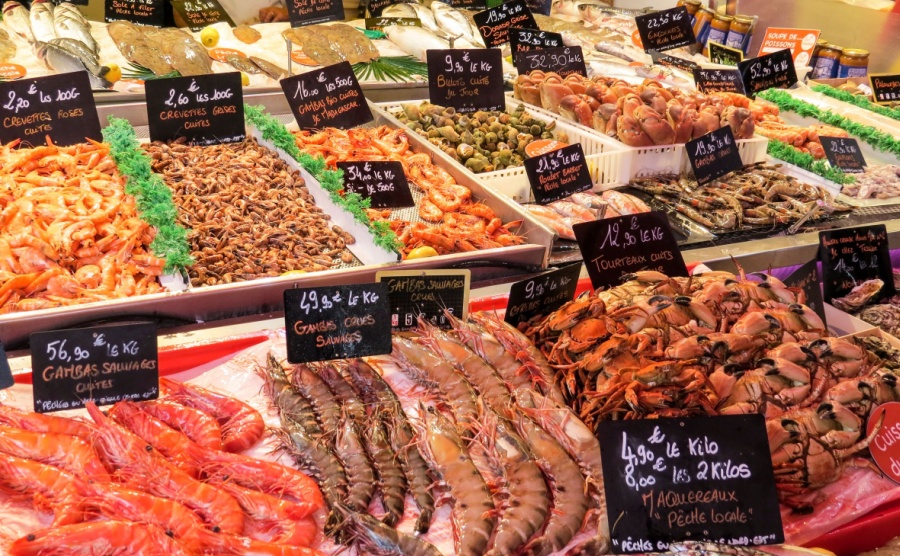
Another friend recommends the market at Arles. But when she went she only discovered at the airport that she had only booked a 15kg bag on easyJet but had 23kg worth of goodies. She was not leaving anything behind, so she paid the excess and they were very expensive tomatoes and courgettes – but worth it!
If you’re in Aix-en-Provence, catch the bus up to Lourmarin, which has an absolutely gorgeous market. You won’t tire of buying Provençale soap, olives and lovely wooden kitchen implements!
The market experience
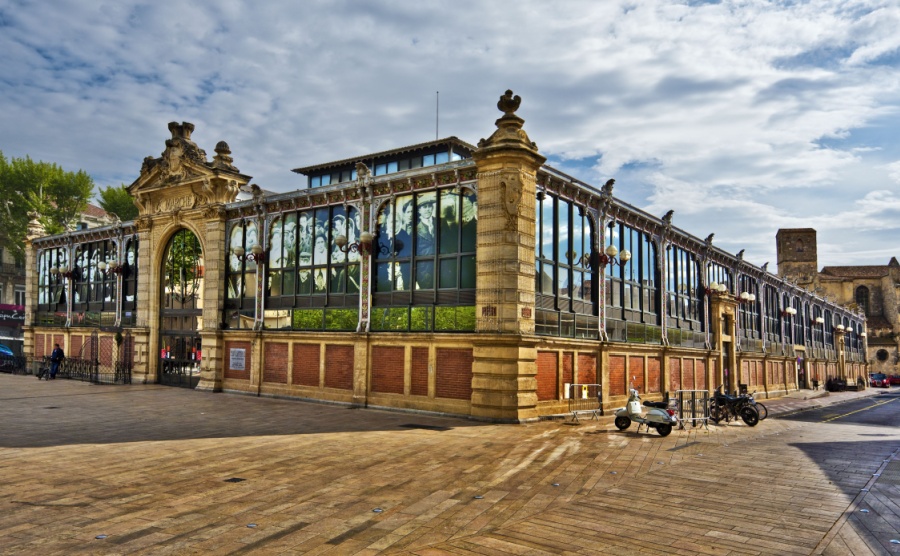
One of my own favourite indoor markets is Les Halles de Narbonne. This delightful and expansive space is home to many traders and never fails to impress with its colourful displays. I can remember the first time I saw the cheese stall and being in awe at its incredible variety.
In Les Halles, you can choose a cut of meat from one stall and take it over to another to be cooked fresh while you enjoy a drink and soak up the buzz of the market. This is a complete joy and something people look forward to.
But there is more to French markets than just food. Another favourite is the market at Olonzac, a small town in the Aude where each Tuesday the whole town becomes a market. You can shop for clothes, homewares, fabrics and knick-knacks of all kinds as well as traditional food. You can also find local specialities such as Toulouse sausages, essential for making cassoulet, and numerous types of mushroom.
I have often thought that one could quite easily only ever shop at markets and rarely go into a proper shop in France. Markets really are part of the French fabric of life.
Market etiquette and need to knows
For those new to French markets, it is easy to worry about doing something wrong. In reality, markets are welcoming places, but there are a few unwritten rules that help everything run smoothly.
At most stalls, it is best not to touch the produce unless invited to do so. Traders take pride in their displays and usually prefer to select items for you, especially fruit, vegetables, cheese and fish. Pointing and asking politely is perfectly acceptable, even with limited French. A simple bonjour when approaching a stall is important and goes a long way; it signals courtesy and respect, and conversations rarely begin without it.
Queues can appear informal, but they do exist. Locals tend to keep a mental note of who arrived when, and it is fine to ask quietly who is next if you are unsure. Markets can be busy and noisy, particularly in summer, but patience is expected and rarely tested.
Cash is still widely used, especially at smaller stalls, although many traders now accept cards. It is also worth knowing that prices are usually fixed, unlike in some other countries. Haggling is not customary and can feel awkward for both sides, although traders will often suggest a better value option if you are buying larger quantities.
Finally, markets are social spaces as much as places to shop. Regulars stop to chat, exchange local news and comment on the quality of the produce. Taking a little time, even just to observe, helps newcomers feel at ease. Once you understand the rhythm, the market quickly becomes less intimidating and far more enjoyable.