

Thinking about owning a Canadian mountain home? This guide breaks down where to buy, what you’ll pay and how you can realistically make a living in some of Canada’s best-known alpine regions.
Canada draws you in with its wide-open spaces and high-altitude living, but the reality of buying here goes beyond the view. You’ll need to balance property prices, job opportunities and access to year-round amenities. In this guide, you’ll find a clear look at three key regions – British Columbia, Alberta and Quebec – along with specific towns that work well for overseas buyers who already know the country and want to take the next step.
Download the Canada Buying Guide
Contents
Canadian mountain home locations across British Columbia, Alberta and Quebec
Canada is not uniformly mountainous, so choosing the right province matters. The main alpine property hotspots sit in the west and parts of eastern Canada. Each region offers a different mix of pricing, employment and lifestyle – something you’ll have noticed quickly if you’ve travelled here before.
| Region | Average property price | Key industries |
|---|---|---|
| British Columbia | $942,686 | Tech, clean energy, healthcare, tourism |
| Alberta | $616,686 | Healthcare, retail, finance, IT, hospitality |
| Quebec | $549,424 | Manufacturing, healthcare, engineering, hospitality |
British Columbia mountain property and lifestyle
If you’ve driven between Vancouver and the Rockies, you already know how varied British Columbia feels. The route stretches roughly 850km and gives you a sense of just how accessible mountain living can be if you base yourself correctly.
Property prices here are the highest of the three regions, with averages sitting around $942,686 as of mid-2025. This reflects strong demand, limited supply in mountain towns and a steady influx of both domestic and international buyers.
Work opportunities tend to cluster around Vancouver and larger hubs, so many buyers treat smaller mountain towns as weekend bases rather than full-time residences.
Where to buy in British Columbia
Golden sits within reach of Kicking Horse Mountain Resort and works well if you’re happy to commute or split your time. With a small population, it suits buyers who prioritise access to skiing and quieter surroundings.
Squamish has become a practical choice if you want a balance between outdoor living and employment. Positioned between Vancouver and Whistler, it offers easier access to jobs while still delivering that mountain setting. It’s also developed a stronger food and social scene over recent years, which makes long stays more realistic.
Alberta mountain homes with better value
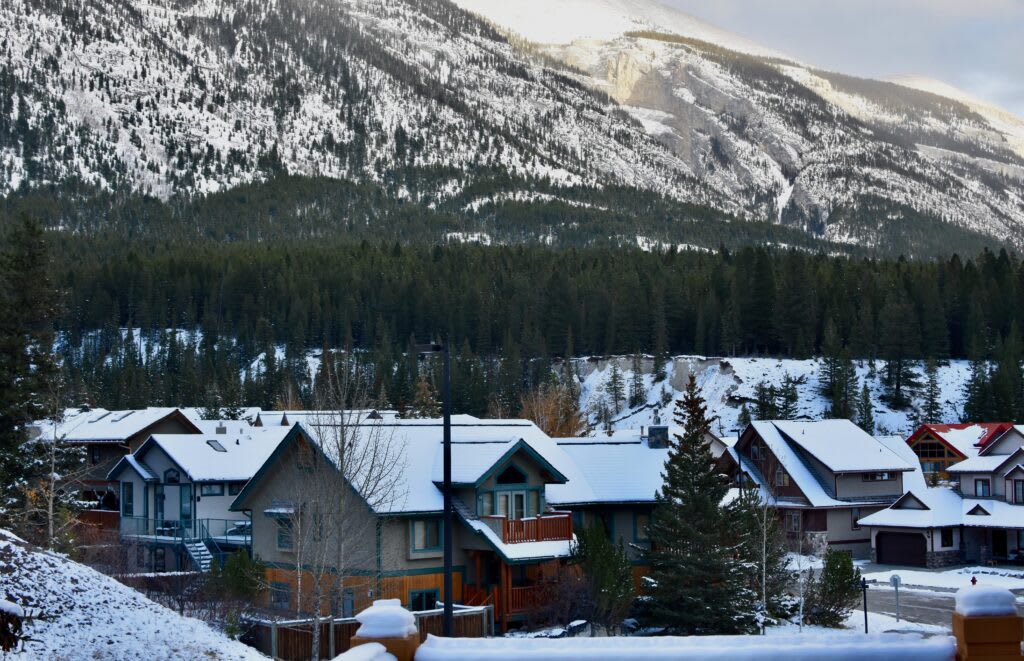
Alberta is often where buyers start to see better value without losing access to the Rockies. Many of the iconic lake and mountain views associated with Canada are found here, particularly along the province’s south-western edge.
Average property prices sit closer to $616,686, offering a noticeable step down from British Columbia. That difference can be the deciding factor if you’re buying a second home or planning a longer stay.
Employment demand is broad, with roles in healthcare, retail, finance and technology regularly listed on official provincial job sites.
Where to buy in Alberta
Crowsnest Pass offers a more understated entry point into mountain living. Located near the US border at over 1,300 metres elevation, it has shifted from a mining base to a tourism-led economy. That transition is worth noting if you’re considering rental income.
Jasper works differently. As a key town within Jasper National Park, it has a steady tourism economy. Many residents work in retail or hospitality, which can suit buyers looking to combine lifestyle with seasonal or flexible work.
Quebec mountain homes for lower entry prices
If you’ve spent time in eastern Canada, Quebec’s mountain regions may already be on your radar. The terrain is less dramatic than the Rockies but still offers year-round appeal, particularly if you value accessibility and lower purchase costs.
Average property prices are around $549,424, making this one of the more accessible entry points into the Canadian mountain market.
The job market is varied, with demand across healthcare, engineering, administration and hospitality roles.
Where to buy in Quebec
L’Anse-Saint-Jean offers a quieter setting with access to forests, rivers and fjord landscapes. It’s further from major cities – around 250km from Quebec City – so it suits buyers who are comfortable with a more remote base.
Mont Tremblant is a more established option. Within two hours of Montreal and Ottawa, it works well if you want regular access without committing to full-time city living. It’s also a year-round destination, which helps if you’re considering rental income outside the ski season.
Canadian mountain home rules for foreign buyers
Before you get too far into planning your purchase, you need to understand Canada’s rules on overseas buyers. The Prohibition on the Purchase of Residential Property by Non-Canadians Act, introduced in 2023 and extended to 2027, restricts many foreign nationals from buying residential property in certain areas.
In practice, this doesn’t mean you’re locked out completely – but it does mean you need to check each location carefully rather than assuming the same rules apply everywhere.
Some mountain destinations are exempt. Places such as Jasper and Mont Tremblant are generally outside the scope of the ban because they fall into areas considered less urban or are structured around tourism. That makes them more accessible if you’re buying from abroad.
Others require more caution. Towns within commuting distance of major cities – such as Squamish, which sits within reach of Vancouver – may fall under tighter restrictions. In these cases, your eligibility can depend on factors such as residency status, visa type or whether the property meets specific criteria.
The key takeaway is simple: don’t rely on general guidance. You should confirm the current legal position for your chosen town and property type before making any financial commitment. A local lawyer with experience in overseas buyers will help you avoid costly mistakes and delays.
What to consider before buying a Canadian mountain home
Buying in Canada isn’t just about choosing a location. You’ll need to think about how often you’ll use the property, whether you’ll rent it out and how you’ll manage costs during quieter periods.
Access is another key factor. Some mountain towns look close on a map but become harder to reach in winter. If you’re planning extended stays, proximity to a major airport or city can make a significant difference.
Finally, think about your income strategy. Many buyers either maintain remote work, commute periodically or rely on tourism-related roles. Matching your property choice to your working pattern is what makes the purchase sustainable.