




Spain has just made a significant move to ease post-Brexit red tape. British professionals can now work in Spain for up to 90 days without needing a visa.
If you’ve spent years working in Spain on short-term contracts and found the visa process slow, costly and frustrating, Chancellor Rachel Reeves’ announcement on 18 March 2026 will be welcome news. The Spanish government has confirmed it will exempt British nationals from the visa requirement for work stays of fewer than 90 days, in what the UK government has described as “a positive step that will make a real difference for UK businesses and professionals.” [1]
Download the Spain Buying Guide
Contents
What is Spain’s new work visa waiver?
Until now, any British national heading to Spain to work – even for a short assignment – needed to obtain either a C-type (short-stay) or D-type (long-stay) work visa from a Spanish consulate before travelling. That process came with paperwork, fees, waiting times and, for many, considerable uncertainty.
Under the new arrangement, that requirement is gone for stays of fewer than 90 days. British professionals can travel to Spain to carry out paid work, business meetings, training, consulting and certain specialist services without applying for a visa in advance.
Who does the waiver apply to?
The waiver is aimed primarily at skilled service professionals. While neither government has published an exhaustive list of qualifying roles, the sectors most likely to benefit include:
- IT and telecoms
- Legal and financial services
- Consultancy and management advisory
- Accountancy
- Architecture and engineering
- Film and TV production crews
- Certain seasonal specialist roles in agriculture and hospitality
The move will also benefit nationals from other non-EU countries, including the US, Canada and Australia, not just UK passport holders.
It’s worth noting what the waiver does not cover. It is not designed for permanent employment, long-term self-employment or full-time relocation. If you’re planning to move to Spain permanently or work there as your primary base, you’ll still need to look at Spain’s dedicated visa routes.
How does this fit with existing Spanish visa options?
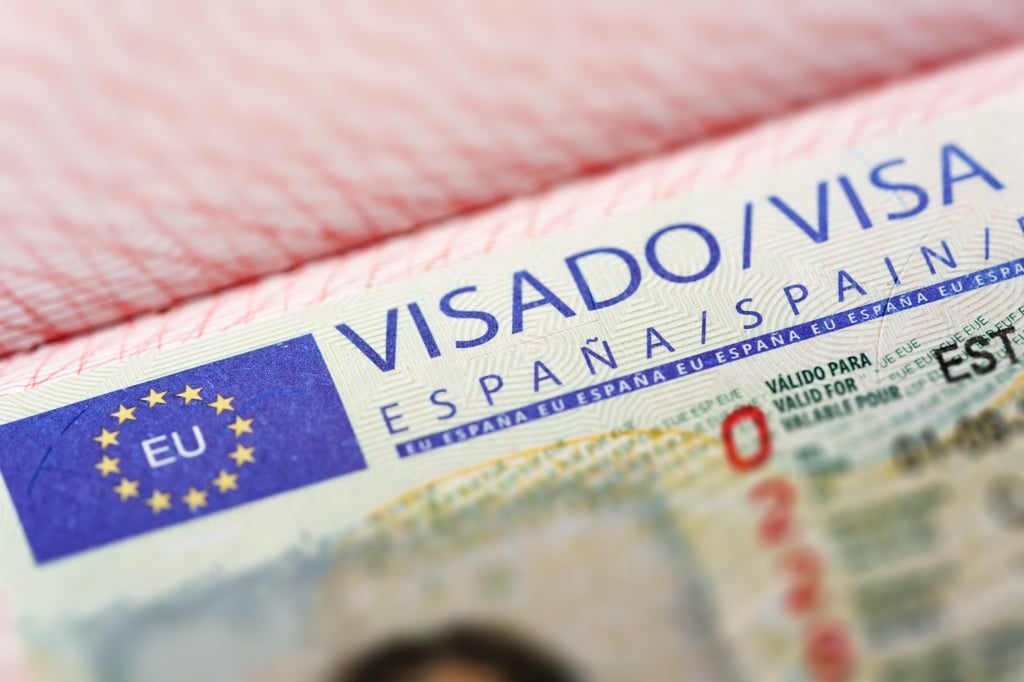
If the 90-day waiver isn’t right for your situation, Spain already offers a range of visa routes for longer-term stays. It’s worth understanding how they compare.
The Digital Nomad Visa is Spain’s dedicated route for remote workers. Introduced under the Startups Law, it allows non-EU nationals to live in Spain while working for employers or clients based outside the country. As of 2026, you’ll need to earn at least €2,850 per month (approximately £2,440), hold a university degree or have at least three years of professional experience, and prove your employer has been operating for at least a year. The visa is valid for one year if applied for abroad, or three years if you apply from within Spain, and can be renewed for up to five years.
The Non-Lucrative Visa (NLV) is aimed at those who want to live in Spain without working at all – typically retirees or those with sufficient passive income. As of 2026, Spanish consulates require proof that you have ceased working before applying, and demand an official retirement certificate or employment termination letter. It’s not an option for remote workers.
What does this mean if you’re thinking of relocating to Spain?
For many people who work across both countries – whether on short contracts, consulting assignments or regular business trips – you can now do so without the cost and delay of a visa application each time.
The UK Treasury estimates the waiver could be worth around £250 million in additional exports for British businesses over five years. [1] That’s a measure of the scale of professional activity between the two countries – and a signal that the relationship between Spain and the UK is moving in a more practical direction.
For those at the point of making a bigger decision – buying a property in Spain, registering as a resident, setting up as an autónomo (self-employed) – the waiver is a step forward, but it won’t replace the need for proper legal and immigration advice. Tax residency rules, social security obligations and the 183-day rule all still apply, and getting those details right from the start will save you considerable headaches down the line.
Speak to a Spain property expert
What to watch out for
There are a couple of important caveats to keep in mind.
First, the UK government’s guidance page on travelling to Spain for work was updated on 19 March 2026 to note that it “is currently being updated to reflect a recent announcement made by the Spanish government.” [2] The full practical details – including exactly which roles qualify and what documentation you’ll need to carry – are still being confirmed.
Second, the EU’s Entry/Exit System (EES), which began its phased rollout in October 2025, digitally records the entries and exits of non-EU nationals and replaces passport stamps. Any time you spend working in Spain under the 90-day waiver will count against the standard 90-in-180-day Schengen rule. If you’re in Spain for other reasons – holidays, property viewings, personal visits – those days count too. Keeping track of your time carefully is more important than ever.
ETIAS, the EU’s pre-screening authorisation system for visa-exempt travellers, is also expected to launch in late 2026, adding another step to cross-border travel planning.
A changing landscape for British professionals in Spain
For years, many British nationals living in Spain have navigated a post-Brexit bureaucratic landscape that made short-term professional activity genuinely difficult. This waiver won’t solve every challenge, but it’s a meaningful shift.
“No country can face the challenges of this era alone,” said Spanish Economy Minister Carlos Cuerpo when the deal was announced. “The answer is more cooperation with trusted partners, not less. And the United Kingdom is, and will remain, one of Spain’s most important partners.” [3]
Whether you’re a consultant who works across both countries, a freelancer considering Spain as a base, or someone who’s been putting off a move because the paperwork felt too daunting, this news is worth paying attention to.
Summary
Spain has scrapped the visa requirement for British professionals working there for fewer than 90 days. Announced in March 2026, the waiver covers a wide range of skilled service roles and forms part of a broader UK-Spain economic agreement. It doesn’t replace longer-term visa routes but removes a significant barrier for those working across both countries.
Sources
[1]: Chancellor lands major investment with Spain as she prioritises closer ties with Europe – GOV.UK
[2]: Travel to Spain for work – GOV.UK
[3]: Spanish government scraps VISA requirement for short term British workers