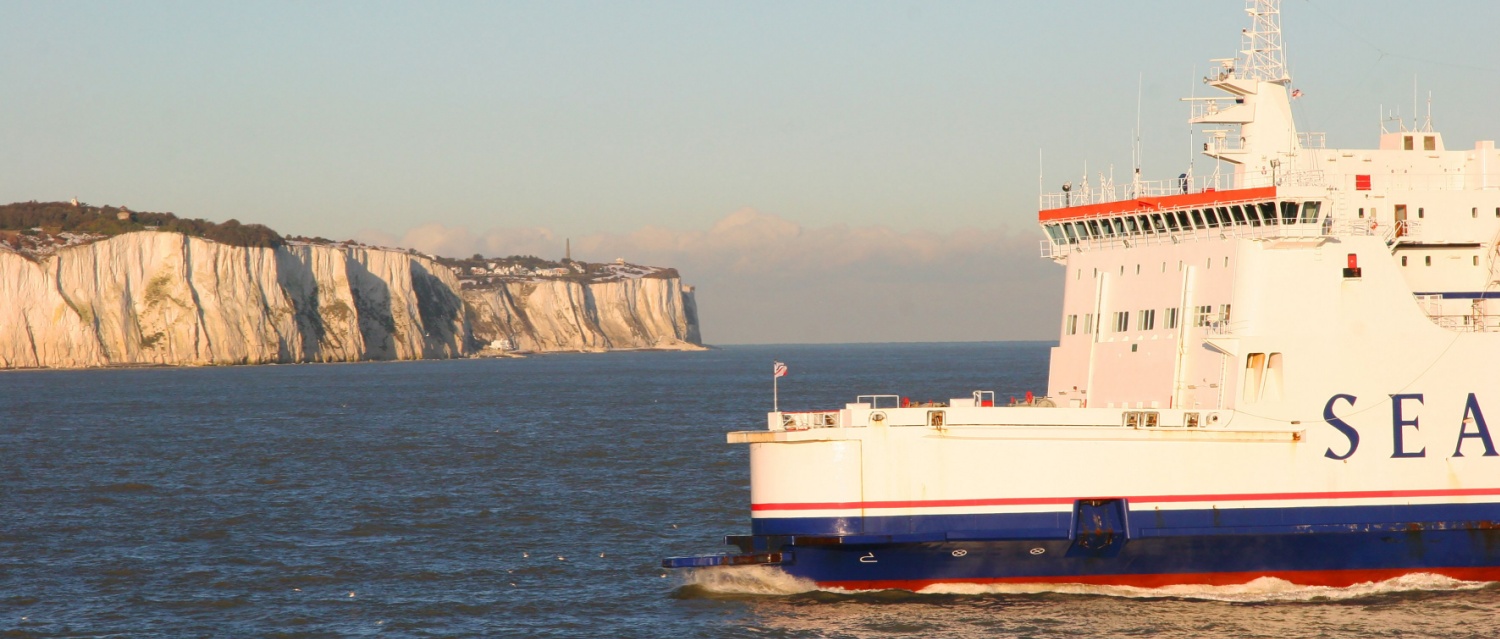


Hop on a train to Dover, or throw a bag in the car and drive to Folkestone, and within 90 minutes you can be in France. No airports, no arguing with airline staff about the size of your bag – just sea air, French markets and a welcome change of pace.
You’re in the Opal Coast (Côte d’Opale), so close to the Kent coast that you can see it, but different in so many ways too.
While many of us motor straight out of the ferry port and through to the Dordogne or Provence, this part of north-east France offers beautiful towns, sweeping coastlines and remarkably good value property, all within very easy reach of home. For English buyers in particular, this region can make more sense as a weekend bolthole or low-maintenance second home.
But where to start your search? In this article, discover five beautiful towns and villages to buy property in the Pas de Calais, easy to reach and even easier to fall in love with.
Contents
Property prices in the Pas de Calais
One of the great surprises for British visitors is just how affordable parts of Pas-de-Calais can be compared to southern England.
- In smaller inland towns such as Ardres or St Omer, traditional townhouses can start from around €140,000–€180,000 (£120,000–£155,000).
- In coastal resorts like Wimereux, expect apartments from around €200,000 (£170,000) and villas from €450,000 (£385,000), depending on proximity to the sea.
- In Le Touquet, the most prestigious resort in the area, prices are higher – apartments typically start around €300,000 (£255,000) and family villas can exceed €1 million (£850,000), especially near the golf courses or beach.
- In Montreuil-sur-Mer, charming stone townhouses and character homes can often be found between €200,000 and €400,000 (£170,000–£340,000), with larger country properties beyond that.
Check out property for sale in north-east France.
For context, in many parts of Kent or Sussex, similar period homes would often be double these figures. For buyers selling in the South East, northern France can feel refreshingly attainable.
Who might your neighbours be?
In many of these towns, particularly along the Opal Coast, you are likely to find:
- Parisians with elegant second homes, especially in Le Touquet and Wimereux
- Lille-based professionals escaping for weekends
- Belgian families from just over the border
- A steady but smaller British presence than further south
This mix gives the region a distinctly French atmosphere – you are less likely to find large expatriate enclaves and more likely to be immersed in everyday French life. For many UK buyers, that is part of the appeal.
And because Paris is only around two hours away by car or train (and Lille under 90 minutes), the area attracts affluent urban second-home owners, helping maintain restaurants, markets and cultural life year-round.
What are seaside towns like out of season?
Unlike Mediterranean resorts that can feel shuttered in winter, Opal Coast towns remain lively.
Le Touquet and Wimereux, in particular, are genuine working towns as well as resorts. Out of season you will find:
- Local bakeries and food shops still open
- Weekend markets throughout the year
- Long, blustery beach walks with barely another soul in sight
- Cosy brasseries serving moules-frites and local seafood
Winter can be windswept and dramatic rather than sun-soaked, but many British visitors enjoy this familiar coastal atmosphere. Spring and autumn are often the sweet spots – bright light, fewer visitors and excellent walking weather.
How might you spend your time?
One of the attractions of northern France is variety within short driving distances.
Within an hour or so you – and any guests who visit you – can enjoy:
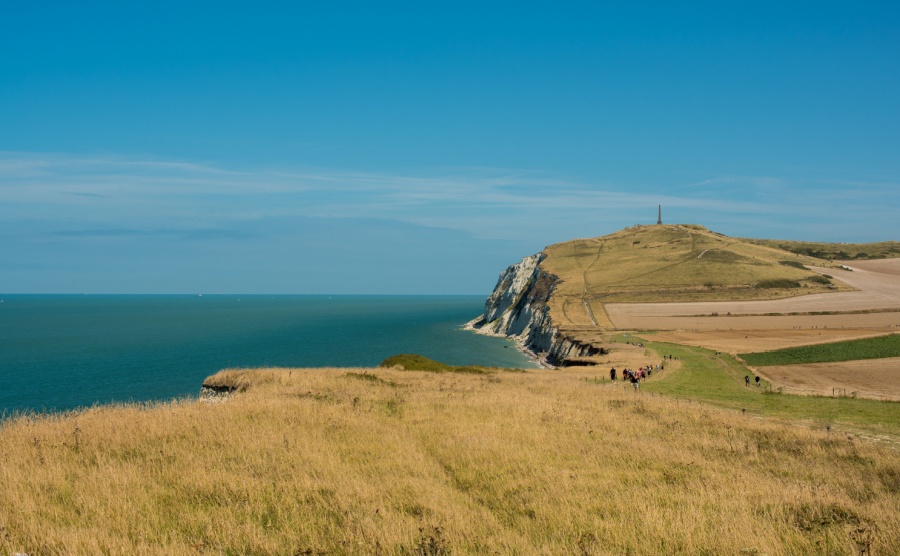
- Coastal walks at Cap Blanc-Nez and Cap Gris-Nez
- Cycling through quiet rural lanes or la Velo Maritime.
- Exploring the Seven Valleys countryside
- Visiting Boulogne’s historic old town and aquarium
- Day trips to Lille (around 90 minutes) for shopping and galleries
- Even Paris for a long day or overnight stay
For retirees or semi-retired buyers, the region offers manageable travel times, strong food culture, accessible outdoor activities and the reassurance that the UK is only a short ferry crossing away.
You are also close to the valley of the Somme river, the scene of the British sector of the Western Front in the First World War, so history buffs can visit the museums, war memorials and remains of the trenches.
Wimereux
Around 30 minutes south-west of Calais (and even closer to Boulogne-sur-Mer), Wimereux was the first resort along the Opal Coast.
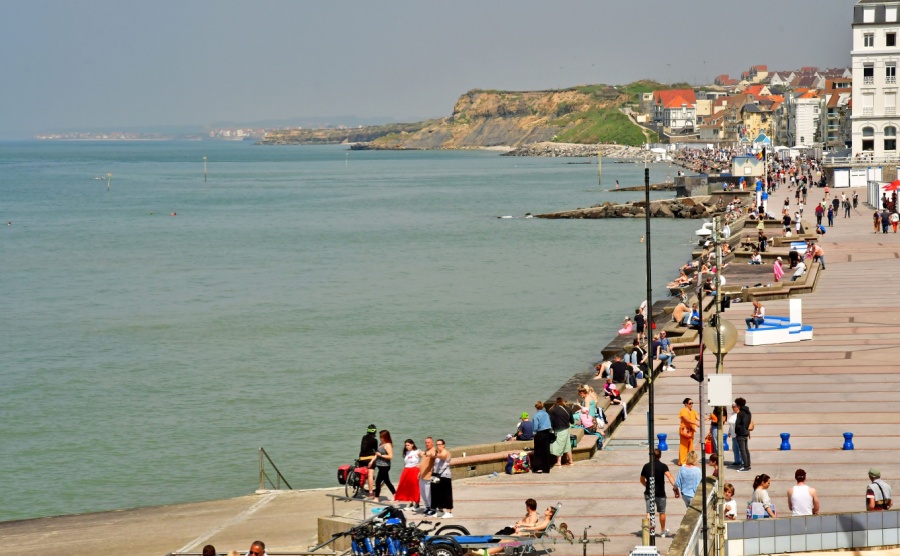
It is known for its Belle Époque villas painted in soft pastels, lining the promenade. The architecture gives the town a slightly faded elegance that many British visitors adore.
There is an 18-hole golf course overlooking the sea, sailing and sand-yachting clubs, and easy access to the dramatic Cap Gris-Nez and Cap Blanc-Nez headlands – protected natural sites with spectacular coastal walks.
Property here includes:
- Sea-view apartments in period buildings
- Renovated townhouses near the promenade
- Detached villas with gardens on the hills above town
It is lively in summer but still attractive in winter, when long beach walks and stormy skies create a bracing coastal escape.
Getting to Wimereux
Approx 30 km from Calais.
Drive time: ~30 minutes via A16
By train: Around 18 minutes, direct (cheapest ~€7).
Ardres
Just 20 minutes south of Calais, Ardres is an unspoilt historic town of around 4,500 people, centred around a large lake.
The lake offers sailing, paddleboarding, fishing and lakeside walks. There is also a bird sanctuary and landscaped public gardens, making it ideal for buyers who enjoy outdoor pursuits. The weekly market is a genuine community event rather than a tourist attraction.
Property here tends to be traditional brick townhouses, detached village homes and the occasional farmhouse on the outskirts. It appeals to buyers seeking peace and value rather than beachfront glamour.
For walkers and cyclists, the surrounding countryside is gentle and accessible, and you are only 25 minutes from the beaches of the Opal Coast.
Getting to Ardres
Around 15 km south of Calais.
Drive time: ~20 minutes.
St Omer
Around 40 minutes south-east of Calais, St Omer offers history, architecture and a strong sense of place.
The Gothic cathedral dominates the skyline, while the 17th-century Place Foch is lined with Flemish-style buildings. The town is also famous for the Marais Audomarois – a UNESCO-listed marshland criss-crossed by canals. You can explore by small boat in summer or walk the paths year-round.
For British buyers, St Omer offers:
- Larger townhouses at sensible prices
- Easy rail links (including towards Lille and Paris)
- A year-round population, giving it more depth than a pure resort
It also played an important role during both world wars, adding to its historical interest for UK visitors.
Getting to St Omer
Roughly 45 km from Calais.
Drive time: ~40minutes via the A26 and local roads.
By train: Around 30 minutes, direct (cheapest ~€11).
Le Touquet
Le Touquet-Paris-Plage, to give its full name, lies about an hour south of Calais.
This is the most polished and affluent town on this stretch of coast. Established in the late 19th century, it became fashionable with French and British aristocracy. Today it retains that smart, understated feel.
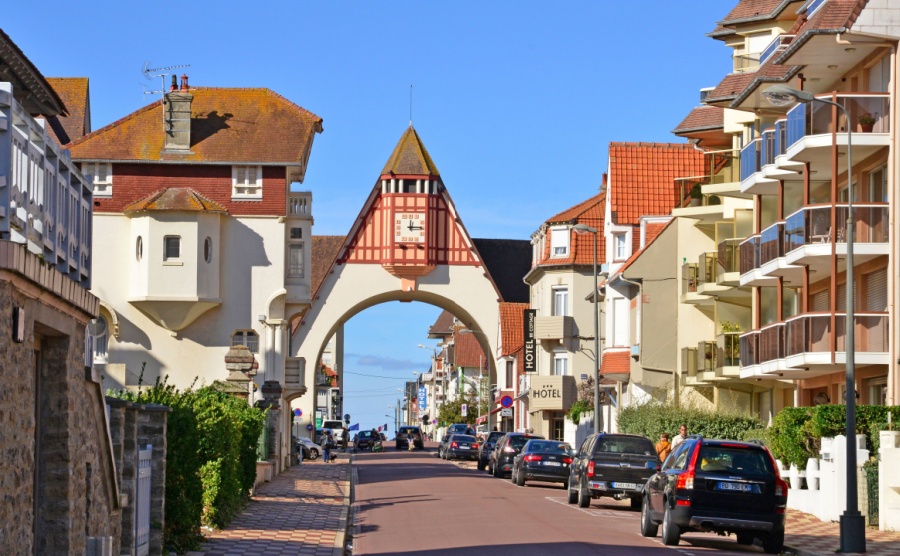
Expect:
- Excellent restaurants
- Smart boutiques
- A large covered market
- Multiple golf courses
- Tennis clubs and an equestrian centre
The town is surrounded by pine forest, making it ideal for cycling and walking. The beach is vast and windswept, stretching for miles.
It is busy in July and August – with excellent rental appeal for holiday home owners – but spring and autumn have all the beauty and a calmer atmosphere. Many second-home owners use their properties year-round, so it never feels abandoned.
Getting to Le Touquet
About 66 km from the Eurotunnel/Calais area.
Drive time: ~1 hr.
By train: Around 50 minutes, direct (cheapest ~€13).
Montreuil-sur-Mer
Despite its name, Montreuil-sur-Mer no longer sits directly on the sea, but it remains one of the most charming towns in northern France.
Around 20 minutes inland from Le Touquet, Montreuil is a beautifully preserved walled town with cobbled streets, artisan shops and excellent restaurants. It is famous as a setting in Victor Hugo’s Les Misérables. Indeed, he wrote sections of the book while staying at the Hotel de France in the centre of the town and it’s all brought to life every siummer in a wonderful son et lumiere.
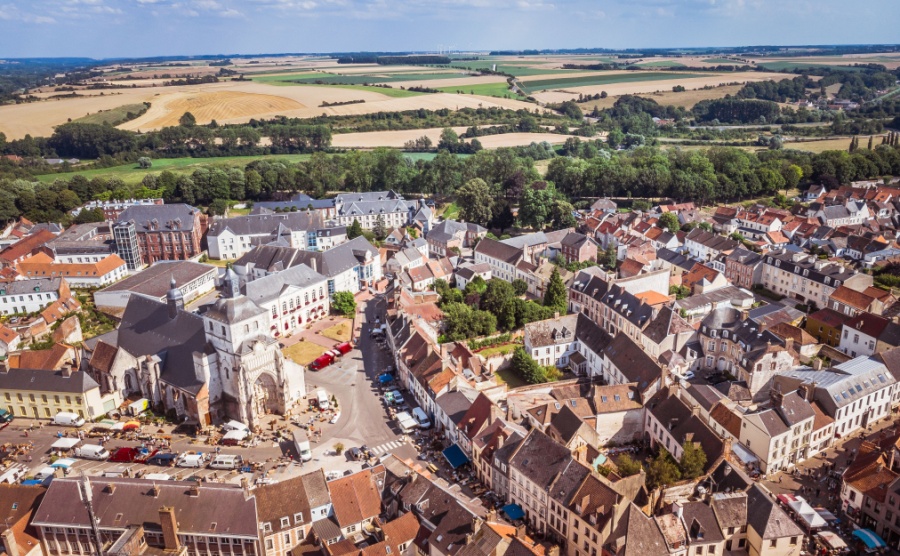
The weekly market fills the main square, and there is a strong food culture, with several highly regarded restaurants drawing visitors from Paris and Lille.
Property includes:
- Stone townhouses within the ramparts
- Elegant period homes
- Country houses in the surrounding rolling countryside
For buyers who want culture and character without beachfront exposure to winter winds, Montreuil is particularly appealing.
Getting to Montreuil-sur-Mer
About 70 km by road from Calais.
Drive time: ~45–50 minutes.
By train: Around 1 hr 40 min with changes (cheapest ~€12–€28).
Getting to the Pas de Calais from Kent
The train from London to Dover takes around an hour and 20 minutes, while the drive from London to either Dover or Folkestone takes less than two hours. From there you have two options:
Eurotunnel:
On Le Shuttle You can take your car from Folkestone to Calais in just 35 minutes, although the total check-in time plus travel is 60 to 90 minutes. Prices are from just £59 return, although £200 is the more normal starting price for a return. It’s easy to take pets, from around £24 each way.
Of course you miss out on the pleasures of sailing, but the main benefit is there being no risk of weather delaying a crossing or of getting seasick.
Ferry:
You have two route options. The most popular is Dover to Calais, with some 30 to 40 sailings per day in peak season and a typical crossing time of 90 minutes. The other option is Dover to Dunkirk (Dunkerque) with a slightly longer crossing time. With a car you can pay from £90, but that may be in the middle of the night – £200 return is generally more common. As a foot passenger (including with a bicycle) you’ll pay from around £45 return.
To compare:
| Route | Operator(s) | Time (approx) | Typical Cost (return) |
|---|---|---|---|
| Dover → Calais Ferry | P&O / DFDS / Irish Ferries | ~1h 30m | £90–£280 (car + passengers) |
| Eurotunnel (Folkestone → Calais) | Eurotunnel LeShuttle | ~35m (train) | From ~£59 (car, early return) |
| Dover → Dunkirk Ferry | DFDS Seaways | ~2h | Usually slightly higher |
A realistic and attainable bolthole
Northern France may not offer guaranteed sunshine, but it does provide something arguably more valuable for UK buyers: accessibility.
You can leave home after breakfast and be opening the shutters of your French house before lunchtime. For those who want a genuine French experience without the commitment of long-haul travel, this corner of France is increasingly hard to overlook.
And as many British owners quietly discover, what begins as a weekend escape can easily become something more permanent.