




Italian culture and customs shape how you live day to day – from how you greet your neighbour to how you spend Sunday lunch. If you are buying in Italy, understanding these habits will help you settle in faster and feel part of the community.
If you already spend months at a time in Italy, you will know that daily life in Puglia feels different to Piedmont, and Milan moves at a different pace to Palermo. Yet across the country there are shared values – family, food, faith and formality – that influence everything from property renovations to planning permission meetings. When you buy a home here, you are not just investing in bricks and mortar. You are stepping into a social code that rewards respect and participation.
Contents
Italian culture and customs in everyday life
Learning Italian culture and customs is not about memorising rules. It is about reading the room. In smaller towns, especially, how you behave will shape how you are received as a new homeowner.
Greetings and social etiquette
When you meet someone for the first time, a firm but brief handshake and “buongiorno” or “buonasera” is appropriate. “Ciao” is reserved for friends and younger acquaintances. In more formal settings, particularly if you are meeting a professional such as a notaio or geometra during your purchase, “molto lieto” shows courtesy.
You are expected to greet people when entering a small shop, café, waiting room or lift. A simple “buongiorno” on arrival and “arrivederci” when leaving marks you out as polite rather than aloof. Titles matter, especially with older residents – Dottore, Avvocato or Signora followed by the surname.
Among friends and family, two light kisses on the cheeks are common. It is more a brushing of cheeks with a kissing sound than an actual kiss. As a property owner integrating into a village community, you will quickly see how this small ritual builds familiarity.
Family at the centre of life
Family remains a cornerstone of Italian society. According to Istat, Italy’s national statistics institute, family networks continue to play a central role in welfare and daily support structures, particularly in southern regions where intergenerational proximity is common. Adult children often live close to parents and grandparents, and Sunday lunch can involve three generations around the table.
As a homeowner, you may notice that properties are bought with children in mind, even if they are still young. It is common for families to renovate an upper floor for a married son or daughter. If you buy a large townhouse in Umbria or Sicily, do not be surprised if neighbours ask who will eventually live in it with you.
Religion and its influence
Roman Catholicism has historically shaped Italy’s art, architecture and calendar. Vatican City sits within Rome, reinforcing that legacy. Istat data shows that a minority of Italians attend religious services weekly, although cultural identification with Catholicism remains widespread.
Religious festivals still structure local life. Patron saint days can mean processions, fireworks and temporary road closures. If you own property in a historic centre, you will find that these events are not tourist displays – they are deeply local. Planning renovations around feast days is sensible, as builders and suppliers may close.
Public holidays and local traditions
Italy observes major Christian holidays such as Christmas and Easter. Easter Monday – Pasquetta – is traditionally marked with picnics and countryside outings. Liberation Day on 25 April is a national holiday commemorating the end of Fascist rule and Nazi occupation.
On 1 November, All Saints’ Day, families visit cemeteries with flowers. On 6 January, Epiphany is celebrated with La Befana, a folkloric figure who brings sweets to children. In Naples, the Feast of San Gennaro on 19 September remains a significant religious and civic event.
If you own a home in a small town, these dates matter. Shops close. Roads may be blocked. Fireworks may last well into the night. These local traditions shape the community you are joining.
Dress, presentation and first impressions
Italians generally dress with care. Beachwear stays at the beach. In many churches, covered shoulders and appropriate attire are expected. In higher-end restaurants, smart casual is the minimum.
As a property owner attending a condominio meeting or meeting local tradespeople, presentation counts. Respect is shown through effort. Humour at someone else’s expense rarely lands well, so keep conversations warm rather than sarcastic.
Food culture and daily routines
Italian cuisine is regulated in part by tradition and, in some cases, by law. The EU’s quality schemes, including PDO and PGI, protect regional products such as Parmigiano Reggiano and Prosciutto di Parma. This protection underlines how seriously food heritage is taken.
Popular dishes and regional differences
Pasta shapes and sauces are paired with intent. In Bologna, ragù is served with tagliatelle, not spaghetti. In Rome, cacio e pepe relies on pecorino romano and black pepper, not cream. Pizza varies too – in Naples, locals take their pizza seriously, with time-honoured techniques that define what a true Neapolitan base should be.
Beyond pasta and pizza, you will see seafood dominating menus along the coasts, game in inland regions and offal in cities such as Florence and Rome. Vegetables are often integrated into dishes rather than served separately.
Breakfast, lunch and dinner
Breakfast is light – a cornetto or fette biscottate with coffee. Cappuccino is typically a morning drink. You will rarely see locals ordering one after 11am.
Lunch has traditionally been the main meal, often eaten between 12pm and 2:30pm depending on the region. A full meal may include antipasti, a first course such as pasta or risotto, a second course of meat or fish with vegetables, dessert and espresso. In practice, during the working week many people opt for a single course or a panino.
Dinner is usually lighter, unless it is a social occasion or pizza night. If you are renovating or managing a build, remember that many tradespeople still break for a proper lunch.
Coffee, wine and aperitivo
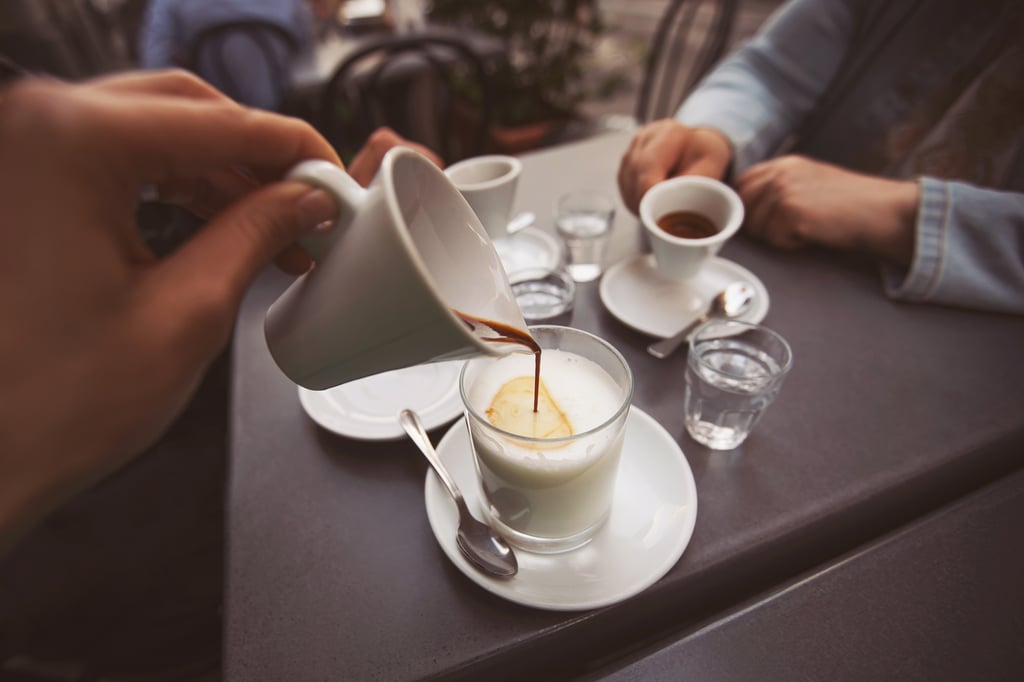
Espresso is a daily ritual. Many Italians drink several small coffees a day. Aperitivo, usually between 6pm and 8pm, is a social pause before dinner. A glass of wine, beer or a cocktail such as a Negroni is served with snacks.
Italian wine production is among the largest in the world. According to the International Organisation of Vine and Wine, Italy consistently ranks as one of the top global wine producers by volume. As a homeowner, exploring local vineyards is not just leisure – it is a way to connect with your region.
After dinner, a digestif such as limoncello in the south or nocino in the north is common.
Tipping and service
A service charge, often called “coperto”, is usually added to the bill and listed on the menu. It typically ranges from one to three euros per person. Rounding up the bill is customary but large tips are not expected.
Fitting in like a local
If you want to feel part of the community rather than like a visitor, here is a snapshot of customs to get right from the start:
| Situation | What to do | Why it matters |
|---|---|---|
| Entering a small shop or café | Say “buongiorno” or “buonasera” when you walk in and “arrivederci” when leaving | Greeting people is seen as basic courtesy and helps you integrate locally |
| Meeting professionals during your purchase | Use formal titles such as Dottore, Avvocato or Signora with surname | Shows respect, especially in formal or business settings |
| Church visits or religious festivals | Dress modestly and follow the lead of locals | Religious tradition still shapes community life in many areas |
| Restaurant bills | Check for “coperto” or service charge and round up modestly | Large tips are not expected and over-tipping can feel out of place |
| August holidays | Expect closures around Ferragosto on 15 August | Many businesses shut, which can affect renovations and legal processes |
Why this matters when you buy property in Italy
Understanding Italian culture and customs helps you avoid friction. You will know why August slows to a standstill, why your neighbour expects a greeting every morning and why builders disappear during Ferragosto on 15 August, a national holiday established in Italian law.
When you respect local rhythms, you build goodwill. That goodwill can make planning permissions smoother, neighbourly disputes easier to resolve and your overall life in Italy more rewarding.
Frequently asked questions
Common customs include greeting people formally in shops and public spaces, two-cheek kisses among friends, large Sunday family lunches and celebrating patron saint feast days with processions. National holidays such as Liberation Day on 25 April and Ferragosto on 15 August are widely observed.
Italian culture is best known for its food heritage, regional wines, art and architecture shaped by centuries of history and the influence of the Roman Catholic Church. UNESCO lists 61 Italian World Heritage sites, one of the highest totals globally, reflecting the country’s cultural significance.
Italy’s cultural depth stems from layers of history – Etruscan, Roman, medieval, Renaissance and modern. Its cities house globally recognised art and architecture, while living traditions such as Neapolitan pizza-making are protected as intangible heritage by UNESCO. Strong regional identities also preserve dialects, recipes and festivals that continue to shape daily life.