


Spain’s vineyard towns offer a slower pace, strong local connections and access to some of the country’s most respected wine regions. If you’re searching for a new home beyond the coast, these inland locations combine value, community and a more grounded way of life.
There is so much more to Spain than you imagine. Of course, the Costas are popular, and the mountainous regions but what lies between them? In some areas arid land, in others, sentinel rows of olive trees and elsewhere, vineyards stretching as far as the eye can see.
Living in vineyard country is a joy, not only because of the wine produced there but also for the landscape, nature, work possibilities and the friendliness of local people. It offers a different lifestyle from the busy coastal towns, with time to breathe and slow down, except of course in harvest season.
Here are five towns very much in the centre of vines that are worth considering if you seek an alternative life in Spain.
Download the Spain Buying Guide
Contents
1. Laguardia, La Rioja Alavesa
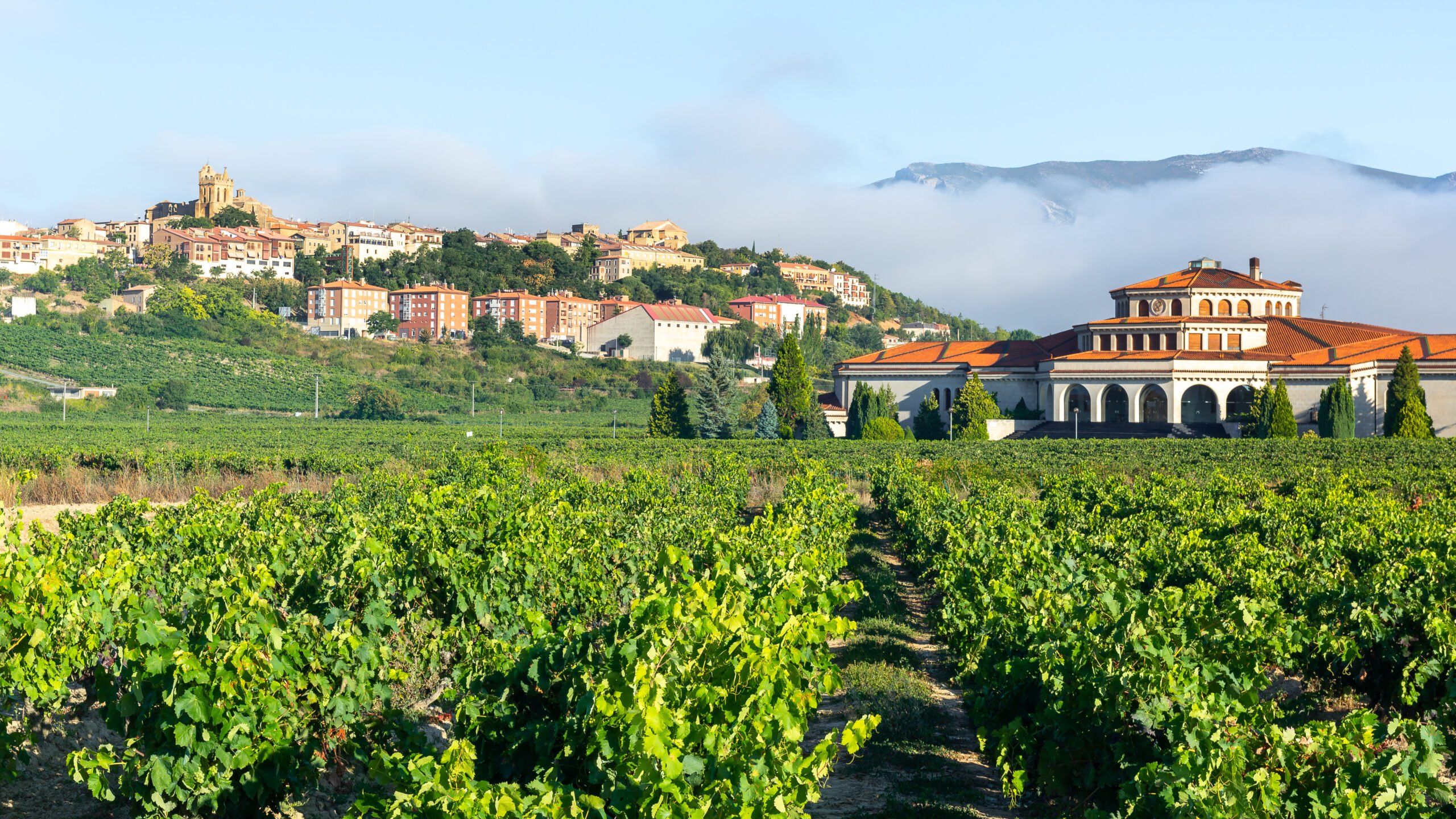
A medieval walled village set among the vineyards of La Rioja Alavesa, Laguardia sits above a network of wine cellars carved into the rock, with leading bodegas like Ysios and Marqués de Riscal nearby.
The population is around 1,500, so if you rely on cafés for remote working, options are limited. Rental property is also limited but affordable, from around €500 a month, often in beautiful stone buildings with wine cellars underneath. Connectivity is improving, but check fibre broadband availability, which can be patchy. Bilbao, under an hour away, is a serious cultural and culinary city for when you need an injection of metropolitan vibes. Winters can be cold, but the silence, the views, and the cost of a good bottle of Rioja will make up for it. A car is essential. The closest airport is Bilbao, 60 minutes away, or Vitoria, 30 minutes away.
2. Vilafranca del Penedès, Catalonia
Set within one of Spain’s most productive wine regions, Vilafranca del Penedès offers a practical base near Barcelona, with vineyards on all sides and a strong reputation as the centre of Cava production. It has good connections and Barcelona El Prat airport is under 45 minutes away.
The town has a proper local market, independent shops, and a pace of life that doesn’t require you to compete with tourists. Catalan is the dominant language here, so a little effort goes a long way socially. The locals also speak Castilian Spanish. Rental prices are a fraction of the city, and you’ll have vineyards on three sides. Familia Torres, producer of the well-known Mas La Plana wine, is based here, with Torres wines selling all over the world.
For families, the Penedès sits in a genuinely useful position as there are 48 international schools in Catalonia, mostly clustered around Barcelona but several within commuting distance, including British and American curriculum options. Public schools here teach almost entirely in Catalan.

3. Peñafiel, Ribera del Duero
Overlooking the Duero River, Peñafiel is defined by its hilltop castle and surrounding vineyards, at the heart of one of Spain’s most respected red wine regions.
Ribera del Duero has more than 300 wineries and is known for high-quality, complex Tempranillo reds. The closest airport is Valladolid, 45 minutes away, while Madrid is 90 minutes away.
Property costs are among the lowest in Spain, which means the money you’re not spending on rent can go directly into the local wine. Valladolid is close enough for coworking spaces, a university crowd and a decent night out, before coming back to the silence. The landscape, the light on the meseta in the late afternoon, and the complete absence of anyone trying to sell you something are the things people move here for.
4. Ronda, Andalusia
Perched above a dramatic gorge, Ronda combines historic architecture with a growing wine scene, where small-scale producers are bringing new attention to this part of inland Andalusia.
Descalzos Viejos is set within a restored 16th-century convent with frescoed walls, just below the Ronda gorge, and is one of the area’s most distinctive bodegas. Ronda itself makes a striking first impression. The El Tajo gorge divides the 15th-century new town from the old town, with its Moorish buildings, although the settlement dates back to Palaeolithic times.
It has a proper expat community already in place, which makes settling in considerably less lonely. Málaga airport is under an hour away. The altitude means summers are bearable when the coast is sweltering. Coworking options are emerging, cafés have decent Wi-Fi and it’s cosmopolitan enough that English isn’t an obstacle. The wine scene is boutique and growing, with small producers – organic, and not yet overpriced.
5. Cambados, Galicia
On Spain’s Atlantic coast, Cambados is closely tied to Albariño production, with a long winemaking history and a town centre shaped by vineyards, seafood and local tradition.
The Fefiñanes Palace occupies half of the main square of Cambados, and part of the beautiful 17th-century estate houses the winery, one of the oldest and most legendary producers of Albariño, still bottled with the same label as its first vintage in 1928. Here you have history, architecture and exceptional wine all in one place.
Galicia is greener and wetter than most of Spain on the Atlantic coast in every sense. Cambados itself is a small, handsome town with a strong local identity and no particular interest in performing for tourists. Santiago de Compostela and Vigo airports are both under an hour. Internet infrastructure in Galicia has improved markedly. The pace is slow, the seafood is exceptional and a glass of Albariño with lunch is more or less mandatory.
Cambados is the kind of place where children disappear outside after school and come back for dinner. The town is small, safe and genuinely oriented around family life. Galicians who spent their working lives abroad have returned in numbers, which makes the place quietly welcoming to newcomers. An interest in the wine, the food, or the local history goes a long way. For those done with commuting, Galicia offers tranquillity, safety and affordable healthcare in a setting that doesn’t require you to compete with tourists for a table. The Atlantic keeps summers cool and winters mild, so you’ll need a good coat.
Summary
Five towns, five completely different versions of the same idea: that living well in Spain doesn’t require a city postcode or a coastal premium. What they share is a rhythm built around the land, a glass of something local that costs less than it should and the particular pleasure of knowing your neighbours aren’t just passing through. The vineyard view is the obvious selling point. Everything else is the reason people stay.