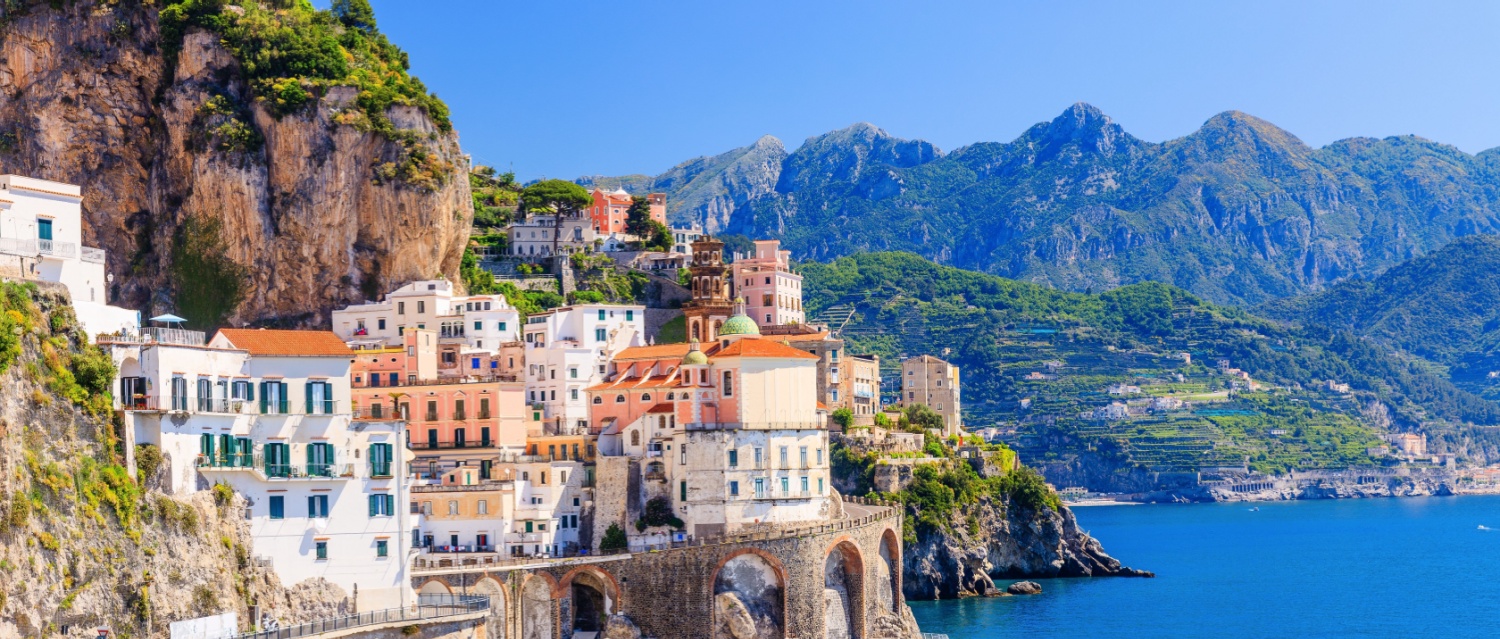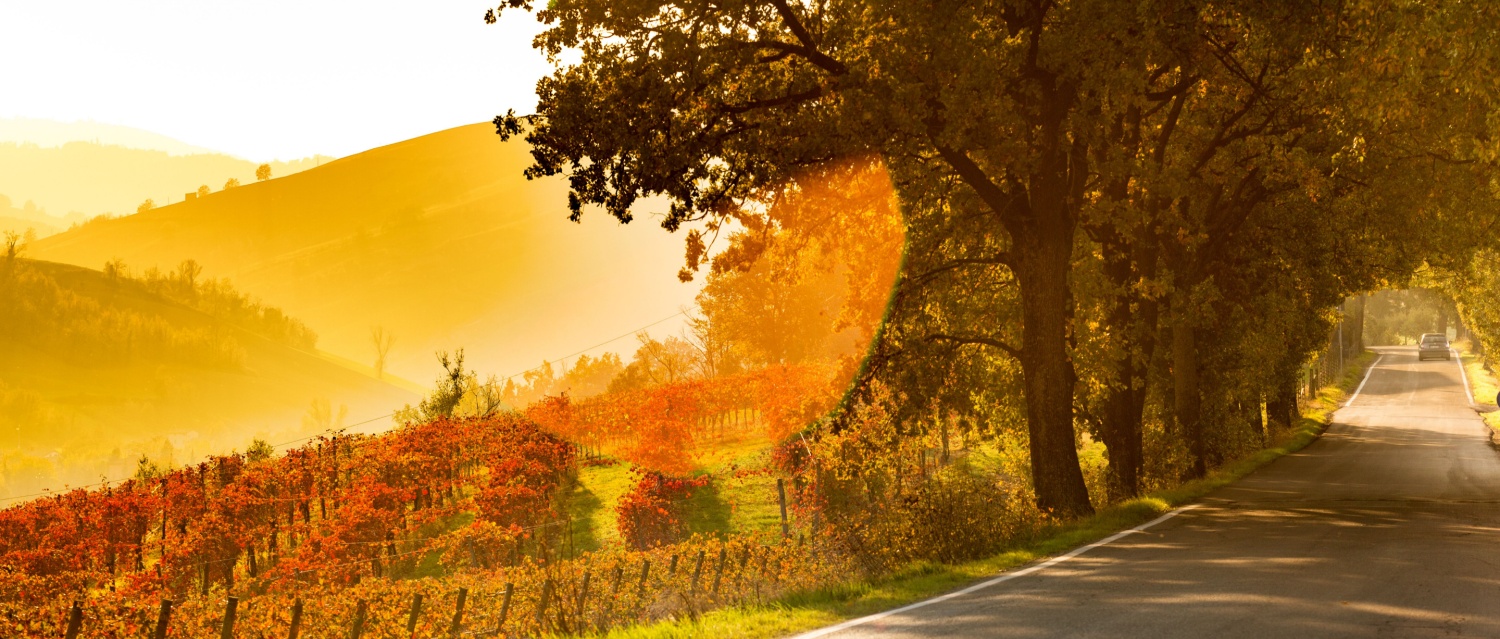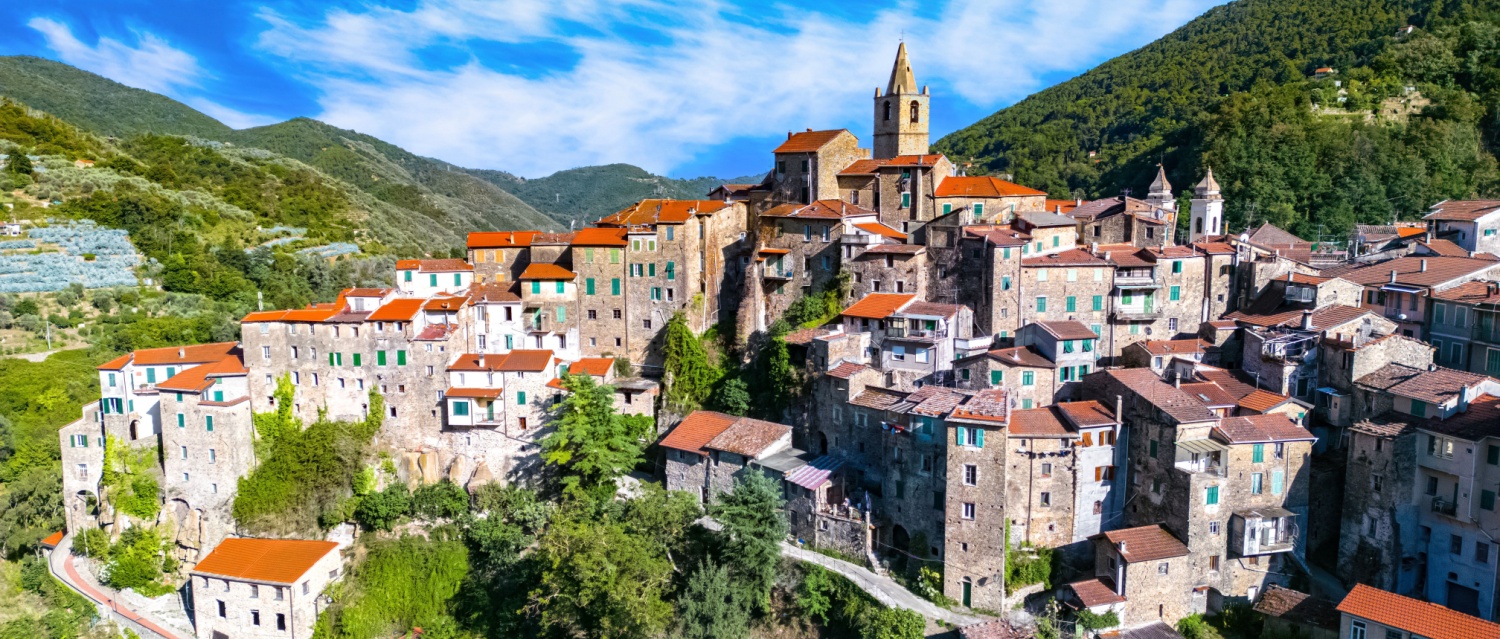
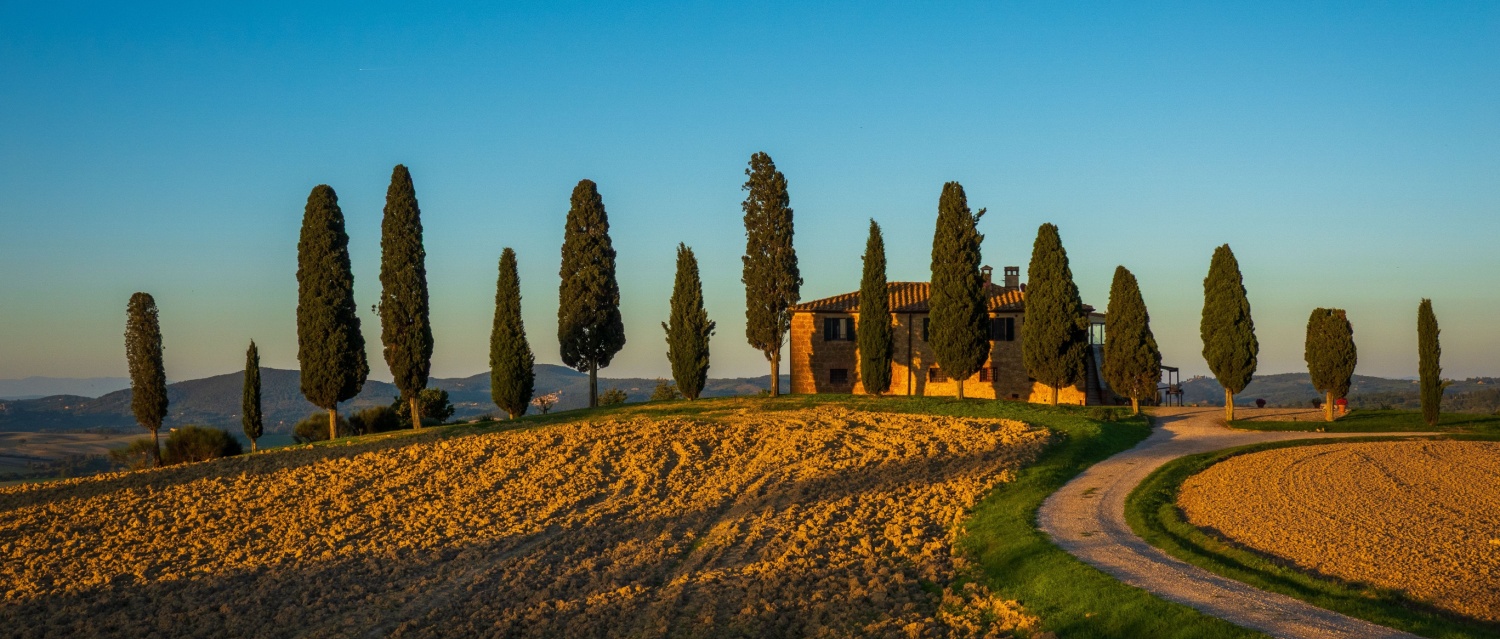

It’s the dream. A country home in Italy with a bit of land and a view. A village with shops and a restaurant within walking distance (or at least a short electric bike ride away). At least that’s what our readers said in our last survey, with 71% wanting a garden.
But what is the reality of having a large garden – maybe even an acre or two of land? An Italian home with space to grow your own food, maybe have a dog or even a horse and enjoy a tranquil lifestyle?
For me, when I close the gate at the end of our drive I am shutting out all the worries of the world. When you are surrounded by greenery, birds singing and blue skies, you feel the clouds lift from your shoulders and an overwhelming sense of peace.
It’s sounds like an idyllic lifestyle, doesn’t it? Each morning you will watch the sunrise as you sip coffee on the terrace, then collect eggs from your chickens.
But what’s involved in maintaining land? Many town dwellers dream of a house in the Italian countryside, but then become nervous about the cost and work involved in maintaining it. It’s the thought of taking that green wellington boot step into the unknown. So, let’s look at what is involved in buying a property with land.
Can I buy a house with land in Italy?
Yes you can, up to a point. Anyone can buy property in Italy (barring some Russians and others sanctioned for now). Italy works on a reciprocal basis, so if Italians can buy in your country, you can buy in Italy.
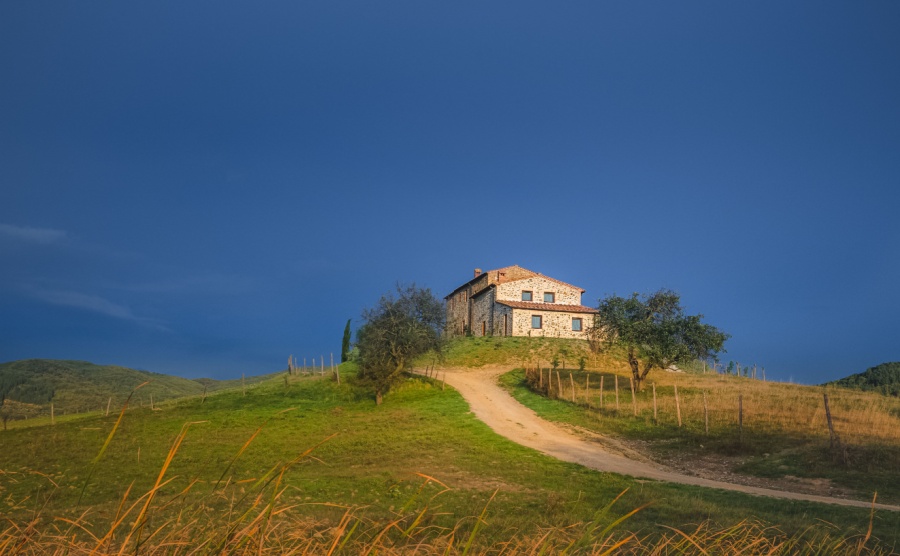
However, if the farm is a business that you want to run yourself, you will need legal permission to live and work in Italy. EU citizens have free rights to settle, but non-EU citizens may need a specific visa or residence permit for working self-employed on the land.
Can I afford a house with land in Italy?
Italy offers a great many choices when you search for houses with land. Prices vary greatly depending on the attractiveness of the location, the condition of the house, and the size of the plot.
There is something to suit most budgets. In general, the further you travel from amenities and travel links the cheaper it gets. However, in Puglia you can still find plots of land with a small stone building within 20 minutes drive of an airport and city for €60,000. But, they are small and need renovating.
Does the neighbour get first refusal?
Yes, when buying agricultural land (terreno agricolo) neighbouring land owners and any farmer that has been leasing the land has the legal right of first refusal. This is called “Prelazione Agraria” (Argicultural Pre-emption Rights).(Legal source: Legge 14 agosto 1971, n. 817, Articolo 7.)
Once you have made an offer that is considered acceptable to the seller. The next step is for the seller to formally notify the neighbours/tenants by registered post with details of your proposal. They then have 30 days to exercise their right to match your offer. If they aren’t notified there could be problems down the line.
What is the tax payable on buying land in Italy?
If there is a lot of land with the property, then 15% is payable on the value of the land. Just as the cadastral value of a house is usually lower than its purchase price, the land value is also likely to be significantly lower than its sale price. Therefore that 15% won’t work out as expensive as you might initially have thought.
Another scenario might be that you choose a farmhouse with an existing working farm, such as an olive farm, wine estate or agriturismo. If it’s owned by a farming company (Azienda agricola) the taxes on purchase could be considerably lower, because you will be buying an existing farm as a company, rather than as an individual.
It is recommended to seek the advice of a tax accountant in Italy, to weigh up the options best suited to your own circumstances, as tax is also related to whether you intend to live there as your main residence or not.
Which Italian region would suit me best?
Consider what you would like to see growing on your land. The soil and weather conditions vary across the country. Therefore, you should check the area you are interested in is suitable for that crop. Depth of soil, irrigation and flooding could be other issues.
Properties in the southern regions such as Puglia are often less expensive. One can find great deals in this area. For example, the town of Manduria isn’t considered touristy but it is famous for it’s Primativo wine and is less than 15 minutes’ drive from excellent beaches.
What type of property comes with land?
In many regions, particularly north and central Italy, farmhouses are generally built with stone or brick with roman tiled roofs.
In Puglia, the cheaper buildings with land are often either a trullo (cone-shaped roof of stone), a Saracen trullo (low-domed roof), a lamia (square stone walls with fairly flat roof and vaulted stone ceilings) or a single floor villa.
If you want a big Puglian farmhouse with land, you should follow the lead of actress Helen Mirren and buy a Masseria (Fortified L-shaped farmhouse with courtyard. Walls and star vaulted ceilings built with sandstone).
Where are the safest places to live in Italy?
Sardinia is considered the safest region in Italy, due to its low crime rate and distance from major cities.
Basilicata is a very rural region with mountains, gorges and quiet peaceful countryside. Travellers usually arrive via Bari airport in Puglia.
Abruzzo’s countryside between the coast and mountains offers farmhouses that can be some distance from any major city.
What is grown on land in Italy?
Land that is already being used for agricultural use, will be registered as such. Typical crops include olives, grapes, fruit, nuts and durum wheat (used for pasta). In the north you might also come across maize, rice, soybeans, wheat, and livestock.
Smaller plots may have a combination of these, just enough to share with family. In fact, there are still many small land plots in Italy, where a family could become fairly self-sufficient. It can be very satisfying to prepare a meal using your own olive oil, wine, herbs and vegetables. With a combination of home grown and local produce from the market you’ll soon be “cooking like a local”.
Questions to ask when viewing property with land
- What is the soil type and how deep is it?
- Is the crop/livestock being looked after.
- Has the crop suffered from any viruses, diseases, fungi or climate related problems? For example, damage from extreme weather or the bacterium Xylella fastidiosa, which has killed many olive trees in Puglia.
- Do the current owners maintain it themselves?
- How often does it require ploughing, pruning, weed control etc. ?
- What equipment is needed if done by the owner? Eg. Tractor with attachments, olive bins, containers, olive nets, chainsaw, etc. And can they be purchased with the property?
- If the owner gets outside help with the land, how often is it done? How much does it cost? And do they have reliable people they can recommend?
- Does the owner receive an EU subsidy?
- Where do they sell the crop? And roughly how much are they paid for it. Eg. Olive press, winery, cooperative farm shop, market.
- Ask to see a plan of the plots and boundaries and ensure it matches with what you see. (A piece of land may be made up of several smaller numbered plots.)
- Is the boundary fence/wall in good order?
- What are the buildings and plots registered as? Eg. Residential, agricultural. If you are thinking of changing the usage, extending the property or building a pool, get professional advice from a local Geometra to ascertain if this will be allowed.
- What are the local rules and restrictions on fire breaks, hunting, and building on the land?
- Where does the water supply come from and is it adequate? Eg. Artesian well. Do they need to pay for extra water to be delivered for a pool?
- Where does black water go if not on mains sewage? Eg. Pozzo nero (a tank for black water which needs to be emptied) or fossa settica (septic tank) or fossa biologica ( a tank where waste decomposes).
- Are there outbuildings for storage of farm equipment, and livestock? If so was it legally built?
- What wildlife is in the area? Eg. Wild boar, foxes, mice, snakes, birds of prey?
- Can you get a good internet and mobile phone signal?
- Is there an electricity supply to the site?
EU subsidies for land in Italy
To receive an EU subsidy to help with the cost of farming your land you need to be a permanent resident and the land must be in the farm register “Fascicolo Aziendale”. Applications and the handling of documentation is done by local agents at Agricultural Assistance Centres (CAA). An eight-acre plot could receive in the region of €900 a year spread over two instalments.
What equipment will I need?
If you are a small holder, either a small tractor or rotovator can be very useful. These can be found on facebook market place local to your area. The tractor will also need various attachments.
Changing your daily routine
Another thing to consider is how the weather affects your daily routine. When you have plants and animals to take care of in the heat of summer, they will be counting on you for water. Walking around with a watering can at 6am isn’t everyone’s cup of tea, but I do thoroughly recommend it.
To see the sunrise, and get things done before it get’s too hot, then, take a nap after lunch and go out in the evening. It’s really as idyllic as it sounds!
Hired help
There are many farm machinery contractors, and people you can hire to plough, pick, and prune. Some will do jobs in exchange for a share of the crop or wood. Get recommendations from Italian neighbours.
Farmers looking to graze their cattle, sheep, goats and horses may ask to put some on your land. This can help keep the grass down, but watch out for any plants you don’t want them to eat, and the flies and mess they might leave behind.
Make useful contacts
As you become more proficient in managing your land you will build up a network of contacts you can trust, from the man who fixes chainsaws to the tractor engineer.
In rural areas there are sometimes fairs on 1st May with trade stalls and livestock on sale. Here you will find horses, cows, pigs, sheep, poultry and farm equipment. You will also meet other local famers at events celebrating local products and produce.
A workshop
Owning land, especially with outbuildings, is great for anyone who enjoys activities such as woodworking, metalwork, crafting, tinkering with cars, making music, or simply wants a separate space to keep tools, gardening equipment, and furniture.
When your neighbours are some distance away, you can even work outside without worrying to much about disturbing them. Although you should be aware that in open countryside sound does carry well, and so you should be careful not to disturb other people.
Keeping your land and property safe
If your property looks like it houses something worth stealing, make sure it is secure. The view people see from the road shouldn’t scream “We are wealthy” and you should be careful who you invite in or tell where you live.
The land needs to be properly fenced in for the safety of your animals, equipment and plants. In some parts of the country wild boar love to find a nice vegetable patch. Alarms, night lights and cameras are good, as well as strong locks on gates, windows and doors. Make sure your chicken house is fox proof and always lock up at night or when you go out.
Can we live self-sufficiently in Italy?
You can be self-sufficiently in Italy, without feeling that you need to exist like a medieval peasant! Many property owners in the countryside are at least partially self-sufficient while enjoying a modern and enviable lifestyle. Here are a few tips on how to do it.
Hot water and heating
Solar panels for heating water are commonplace and firewood used in fireplaces are from pruning your own trees. You can heat radiators and water from a woodburning stove, or consider ground- or air-source heat pumps.
Electric
Most homes are connected to an electricity provider, but more and more house owners are now investing in photovoltaic panels with batteries to store electricity. You may also be able to install a small wind turbine.
Water
In rural areas, houses aren’t connected to a mains water supply or sewage pipes. Therefore, water either come from an artesian well or is delivered. They might also collect rainwater for watering plants.
Grow your own food
Growing enough food for your needs can be the most difficult part of self-sufficiency. Weather and soil conditions can limit what will grow at certain times of year. If you have enough land for some livestock you face a few bureaucratic challenges, but having the heart when it comes time to slaughter may be more of a worry.
Income
Even if self-sufficient in all the above, you will need cash to pay bills and enjoy yourself. You will in any case need sufficient income for your visa and health insurance. Rental income is one of the most popular ways of doing so, albeit within the strict rules. See our guide to renting out a property in Italy here.
12 benefits of owning land in Italy
- Being surrounded by nature.
- Privacy.
- Peace and quiet.
- Feeling safer away from cities.
- Not being surrounded by buildings or overlooked by neighbours.
- Low pollution.
- Being able to have a dog, a cat, a horse, chickens, ducks and other animals that bring joy to your life.
- Space outside for the family to walk, play and eat together.
- Eating fruit and vegetables straight from the garden. A fig straight from the tree and still warm from the sun, can’t be bought in any shop.
- Saving money through being self-sufficient in many areas.
- Countryside properties have lower bills on things not provided by the town. Eg. Refuge collection.
- If you are fortunate, you might also find a house with an amazing panoramic view.