

Ireland may not be famous for its weather, but it’s not as grey as you might think. If you’re planning to move to Ireland, where you buy can make a noticeable difference – with some areas enjoying more sunshine, less rain and milder temperatures than others.
Ireland’s climate has a reputation for unpredictability. You’ve probably heard the line about ‘four seasons in one day’. Yet when you look at the data, the picture is more nuanced. Temperatures are generally mild, snowfall is rare and regional differences are significant. If you’re choosing where to buy property in Ireland, understanding those regional weather patterns will help you make a smarter long-term decision.
Below, you’ll find the locations that stand out for sunshine, lower rainfall and warmer average temperatures, along with what that means for you as a homeowner.
Download the Ireland Buying Guide
Contents
What Ireland’s weather means for you as a buyer
Ireland’s climate is shaped by the Atlantic Ocean, which keeps temperatures relatively mild year-round. Thanks to the warm North Atlantic Drift, winters are generally cool rather than severe, and summers are moderate rather than hot.
What defines Irish weather isn’t extremes – it’s changeability. Weather systems moving in from the Atlantic bring a familiar pattern of rain followed by clearer, brighter conditions. That’s why you can see several shifts in a single day.
Rainfall varies significantly by region. Western counties facing the Atlantic receive far more rain, while the east and south-east are noticeably drier due to shelter from higher ground. Snow is possible in winter but rarely lasts long, especially near the coast.
For you as a buyer, this means lifestyle differences. In the west, you trade higher rainfall for dramatic Atlantic scenery and slightly milder winter temperatures. In the east and south-east, you gain more sunshine and drier conditions, often with easier access to major cities and transport links.
1. For the most sunshine when you move to Ireland: Rosslare County Wexford
If sunshine is high on your list, Rosslare in County Wexford deserves serious attention. The south-east is often referred to as the ‘sunny south-east’ for good reason.
The south-east coast averages around 1,500–1,600 hours of sunshine per year, roughly 300 hours more than some western locations. In summer, you can expect long, bright evenings with daylight stretching towards 10pm in June.
Rosslare Strand sits close to Rosslare Europort, one of Ireland’s main ferry gateways to the UK and continental Europe. If you plan to split your time between Ireland and Britain, this proximity makes it easy to travel between the two. Ferries connect to Pembroke and Fishguard in Wales, with crossing times of just over three hours depending on route.
The beach at Rosslare Strand frequently holds Blue Flag status, awarded under strict environmental and water quality criteria managed in Ireland by An Taisce. That matters if you want clean bathing water on your doorstep and strong appeal for holiday lets.
From a property perspective, you’ll find traditional seaside homes, newer developments and opportunities suited to short-term rental. Tourism remains a key employer locally, alongside port-related work and hospitality. If you are considering rental income, the combination of sunshine, beach access and ferry links supports consistent demand during peak months.
2. For less rainfall: Dublin
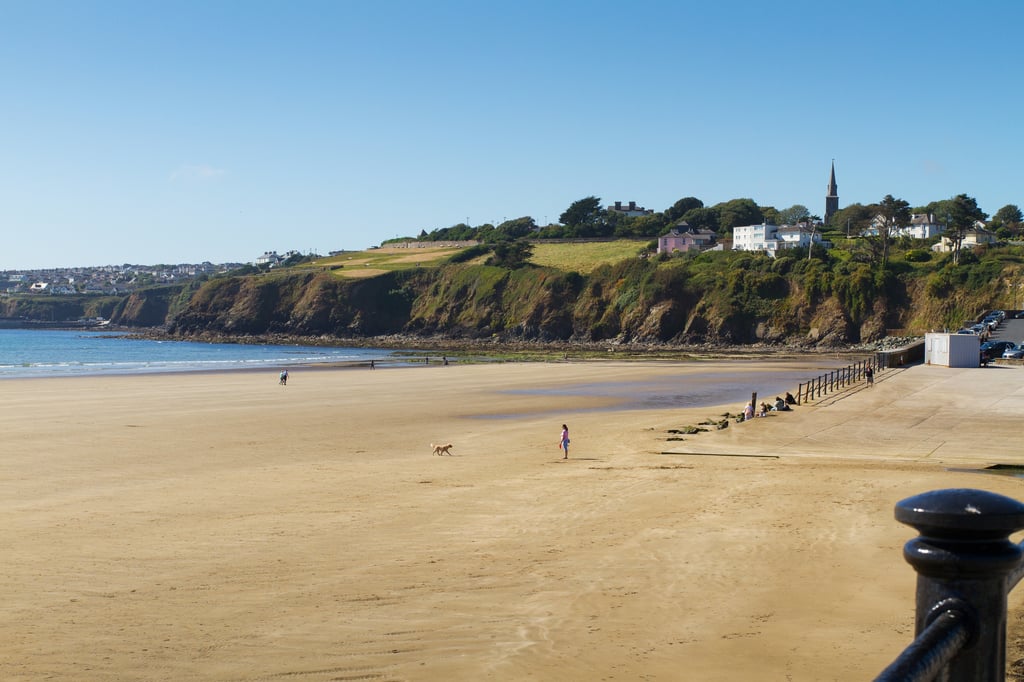
If your priority when you move to Ireland is avoiding heavy rainfall, Dublin and the surrounding east coast is where you’ll find your best options.
Dublin Airport records approximately 750mm–800mm of rainfall per year, significantly lower than western counties such as Mayo or Kerry, where totals can exceed 1,500mm–2,000mm annually. Rain tends to be spread fairly evenly through the year rather than concentrated in one season.
Temperature averages in Dublin typically range from around 5°C–7°C in January to 15°C–16°C in July. You are unlikely to face prolonged freezing conditions and snowfall is infrequent.
As Ireland’s capital, Dublin gives you the broadest employment base, with strong concentrations of multinational firms in technology, pharmaceuticals and financial services. If you intend to work after relocating, this significantly widens your options.
You also benefit from infrastructure. Dublin Airport is the country’s largest, while rail and motorway links connect you to the rest of Ireland. Coastal suburbs such as Blackrock and Bray offer sea views within commuting distance of the city centre.
One overlooked advantage is proximity to countryside. The Wicklow Mountains National Park lies just south of the city, giving you hiking and open landscapes within about an hour’s drive.
3. For the warmest average temperatures: Valentia Island County Kerry
It may surprise you that the warmest annual average temperatures in Ireland are often recorded in the south-west. Valentia Observatory in County Kerry reports a long-term mean annual temperature of approximately 10.9°C–11°C, among the highest in the country.
However, warmth comes with higher rainfall. Annual totals in parts of Kerry can approach or exceed 1,500mm–2,000mm depending on micro-location. If you are comfortable with Atlantic weather systems rolling through, you benefit from relatively mild winters.
Valentia Island sits off the Iveragh Peninsula and is connected to the mainland by bridge at Portmagee, with a seasonal car ferry also operating. With a population of just over 600, you can enjoy a quieter pace of life. The island’s location places you within reach of the Ring of Kerry driving route and wider south-west tourism market.
Fishing, boating and wildlife watching are central to daily life. If you plan to let your property seasonally, positioning near established visitor routes can help maintain occupancy during the warmer months.
Choosing the right location for your lifestyle
When you move to Ireland, weather is only one part of the equation. Access to healthcare, transport links, employment opportunities and community all matter.
The important thing is aligning climate with how you plan to live. Will you be gardening year-round? Do you want to swim locally? Are you commuting or retiring? Each region delivers a different answer.
Before committing to buy, spend extended time in your shortlisted area during different seasons. What feels appealing in July can feel different in January. Viewing properties outside peak summer also gives you a more realistic sense of local conditions.
*Weather statistics based on Met Éireann 1991–2020 climate averages.
You might also like: