



If you’re planning a move to Spain, understanding local food culture matters. Explore why jamón is central to life in Spain, how millions of hams are cured each year and what makes each type distinct, with expert tips on tasting, buying and enjoying this celebrated Spanish food.
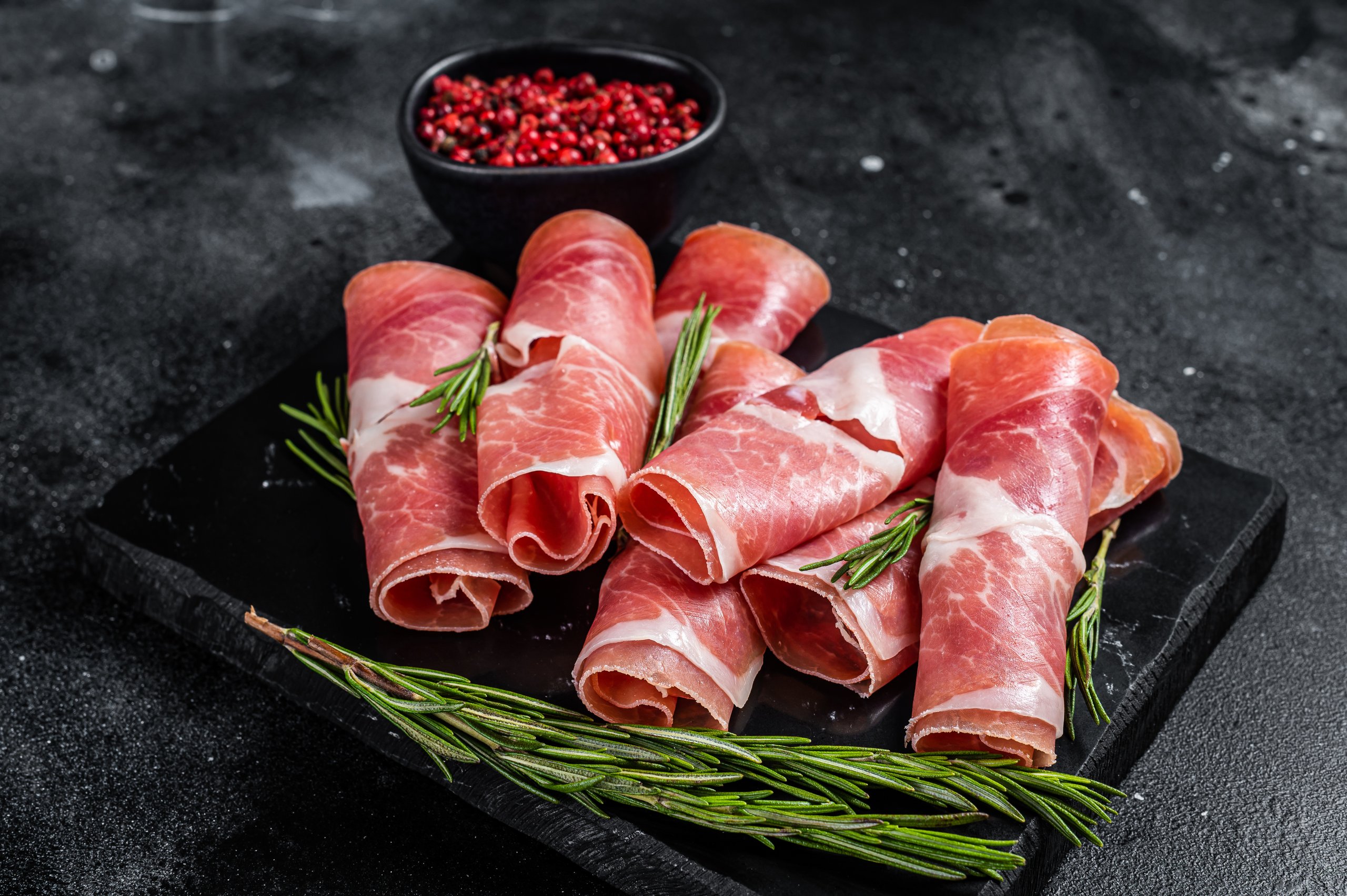
Spain’s love affair with ham is woven into daily life, from bustling city markets to small village kitchens. Whether it’s a delicately cured slice enjoyed with a glass of wine or a hearty cut served in a rustic stew, Spanish hams come in a wide range of flavours, textures and traditions. Each region brings its own approach to salting, curing and ageing, creating an array of hams that showcase the country’s remarkable culinary diversity.
In this guide, you’ll learn how this iconic meat is made, how to tell great jamón from the rest, where it comes from region by region and why Spain produces such an astonishing number of hams each year.
Download the Spain Buying Guide
Contents
Why is ham so popular in Spain?
Geography
Much has to do with Spain’s geography. It’s the second-most mountainous country in Europe after Switzerland and the lack of green pasture lends itself to rearing pigs, animals that require less upkeep than other livestock, eat almost anything and survive well in the Mediterranean climate.
History
Historically, pork was banned during the Moors’ occupation, from 711 AD to 1492 AD and was reinstated by King Ferdinand and his Queen, Isabella.
Since pigs were easy to keep, they provided inexpensive protein for poor farmers and their families. The whole animal is used for food so there is no waste.
Nowadays
Today, the Spanish follow the tradition of years gone by and consume a fair amount of ham and pork. It is a comparatively inexpensive meat and very versatile. Supermarkets sell various types of ham, but you will find the best hams in butchers’ shops and delicatessens.
Spain is a major producer of ham, with annual production of around 47 million hams a year. It is also an important exporter; in 2024, a total of 60,846 tons were sent abroad, with a value of around €735 million.
How is ham cured?
Ham is cured in three ways:
- Wet cure – immersed in brine, salt, sugar and flavourings.
- Dry cure – daubed with salt, sugar and seasoning, then air-dried for a lengthy period.
- Smoked – cured ham is smoked to enhance flavour and boost preservation.
Types of Spanish ham
Jamón Serrano
Probably the best-known and most widely used ham in Spain. It is the least expensive, coming from white pigs which have not been fed on acorns. Generally used for sandwiches and other basic meals.
Jamón Ibérico
Comes from black pigs or crossbred pigs, which are 75% Iberian. Their main food is acorns and the best jamón ibérico is from pigs that have eaten plenty of them!
Jamón Pata Negra
Pata Negra means “Black foot” and until recently this has meant genuine ham from this Spanish breed of pig. It is not only Iberian pigs that have black feet and legs, so unfortunately, these days you can’t be sure that the jamón pata negra is really from black-foot Iberian pigs.
Jamón Jabugo
Ham specifically from pigs reared in the Jabugo region of southern Spain. Considered the best example of air-dried ham due to the climate.
Jamón Bellota
The crème de la crème of Spanish ham. It comes from 100% Iberian black pigs, which forage for acorns, and is the most expensive ham. It is delicious!
Where to buy your cured ham
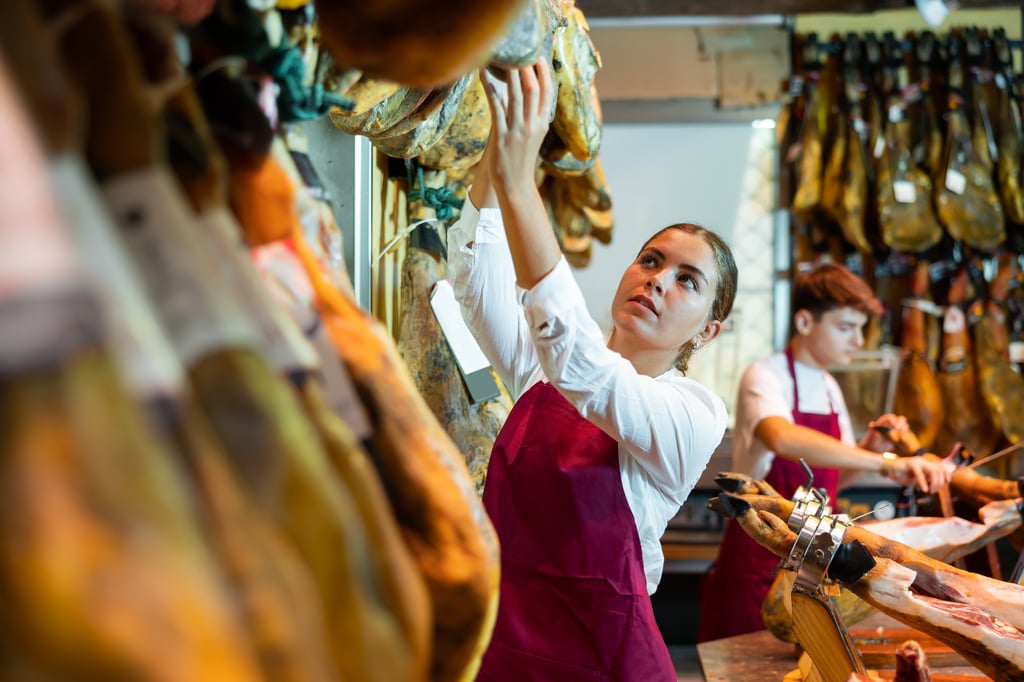
You can find prepacked ham in all supermarkets but it is better to buy your ham from a butcher or delicatessen, where it will be freshly sliced for you. I keep a prepacked Iberico ham for unexpected guests but prefer to buy it from my local butcher or the cold meats counter in a good supermarket. You don’t need to keep it in the fridge as cured ham will last well on the kitchen counter. You will often see whole hams cradled in a ham rest and these last for months. It’s best to cover it with a tea cloth if you have it on your worktop.
The Spanish especially buy whole hams at Christmas but you can buy them year-round. Good ham isn’t cheap but worth buying. I pay €25 per kilo for Serrano ham, 50% duroc reserva, but you can find cheaper Serrano ham. When I push the boat out, I will buy Bellota ham. It costs in the region of €110 a kilo – definitely one for special occasions.
Different hams are labelled like this:
| Grade label | Pig breed purity | Raising method |
|---|---|---|
| Etiqueta Negra | 100% Iberian pig | Free-range, fed on acorns and natural foods |
| Etiqueta Roja | 50% or 75% Iberian pig | Free-range, fed on acorns and natural foods |
| Etiqueta Verde | Over 50% Iberian pig | Free-range, fed on pasture and feed |
| Etiqueta Blanca | Over 50% Iberian pig | Confined, fed on feed |
What are the health benefits of Spanish ham?
Eaten in moderation, cured ham is not unhealthy and provides protein, B vitamins, minerals and oleic acid (like olive oil), which is good for the heart. On the other hand, it has a high salt content and is processed food, which is why you shouldn’t eat too much. I like to enjoy ham with melon or figs, which offer a healthy balance of protein and fruit.
Now that you have read all about Spanish ham, you can enjoy it while knowing what you are eating. Each region’s ham has its own characteristic and it’s fun to try different hams from various sources – with a glass of Spanish wine, of course!
You might also like: