



When you first arrive in Spain, everything feels different and it’s easy to feel out of place. With a few simple changes to your daily routine, though, you can quickly fit in like a local and enjoy everyday life in Spain.
Contents
- Start with the language
- Living with Spanish timing
- Adapting to Spanish meal times
- Take a Siesta: the Spanish power nap
- Queueing like a local in Spain
- The evening Paseo: Spain’s social stroll
- Carry a lightweight scarf
- Enjoying drinks the Spanish way
- Spanish punctuality: relaxed but respectful
- To tip or not to tip in Spain?
- Becoming part of everyday life in Spain
Start with the language
I’ve lived in four foreign countries: Italy as a child, California for a year, France for 12 years and Spain for the past 20. Children adapt quickly to new cultures and copy local habits with ease. Adults often find it harder to blend in, even after researching the culture and learning the language. Surprisingly, California was the hardest place for me to fit in. Although the language was similar to British English, my accent and vocabulary always gave me away.
When I first moved to Spain, my Spanish wasn’t perfect but I used it everywhere — in local bars, shops and at the post office. Many locals replied in English, which was frustrating. Over time, I realised my Spanish sounded too formal and not natural enough for everyday conversation.
So I focused on learning common Spanish expressions used in daily life. Words like “ostras!” (similar to “blimey!”), “qué chulo” (“cool”) and “porfa” (short for “por favor”) helped me sound more relaxed and approachable.
Language is not all, though, to fit in like a local, so here are a few tips and guides to help you become a local in Spain.
Living with Spanish timing
One of the biggest adjustments for newcomers from the UK, the USA and northern Europe is Spain’s later daily schedule. The day tends to start later and end much later than many people expect. Offices rarely open before 9:30am, while shops often open at 10am or later — especially in southern Spain. Many locals don’t go to bed before midnight. I confess this timing suits me well, but I understand that for many, it takes some getting used to.
This rhythm shapes Spanish mealtimes and family life. Lunch is the main meal of the day and is usually eaten between 2pm and 4pm. Dinner is lighter and can be anytime from 8pm to 11pm, depending on the region and season.
Schools often finish around 5pm. After school, children may attend sports clubs or language classes before returning home around 8pm to complete homework. For many families, the evening continues well into the night.
Whereas in the UK, the evening meal is the main meal of the day, here in Spain, it is lunch and a light supper is taken unless you are going to a restaurant. Tapas are enjoyed after work and before the evening meal – a way to wind down after a day’s work.
Let’s not forget the “second breakfast”. Most people have a very quick breakfast before leaving home, coffee and perhaps a piece of bread and ham. By 10:30-11am, they leave the office or shop and go for a second breakfast in a local café. This might be a café con leche and a tostada (toasted baguette) with olive oil, tomato, and jamón, a pincho de tortilla (slice of potato omelette), or small pastries like croissants.
Adapting to Spanish meal times
So, how to adapt? Cereals are rarely eaten in Spain, but if that is what you are used to, have a smaller portion than usual. Go for your second breakfast at a nearby café where you can get to know the owner. Enjoy a croissant, which will keep you from hunger pangs until lunch. Begin with having lunch at 1.15pm and then gradually make it a little later, so that you more or less fit in with Spanish lunchtime.
Tapas bars don’t open until 7pm at the earliest, so perhaps have a snack (merienda) at 6pm, fruit or a biscuit. Go out for a few tapas. You won’t do this every day but a couple of times a week to start with. Finally, have some soup or yoghurt and fruit or another light meal from 9pm. Well done – you are now fitting in perfectly with the Spanish day!
Take a Siesta: the Spanish power nap
Short midday naps, or siestas, are often seen as beneficial for health and concentration when kept brief. In Spain, the siesta remains part of everyday life in many regions. Doctors in the UK generally view short, midday naps as beneficial for health, cognitive function and cardiovascular health, provided they are kept to under 30 minutes.
Keep naps short, around 20 to 30 minutes, to avoid disrupting nighttime sleep. A quick rest after lunch can help restore energy levels and improve productivity. Siestas are particularly helpful during hot summers in southern Spain, when outdoor activity may be limited until the cooler evening hours. Learning to rest during the day is another small step towards embracing the Spanish lifestyle and fitting in like a local.
Queueing like a local in Spain
I didn’t expect to be queueing so much! Queueing in Spain may look informal at first, but there is a simple system locals follow. When joining a queue, it’s polite to ask, “¿Quién es el último?” (“Who is last in line?”). This helps everyone keep track of their turn without confusion.
You’ll hear this phrase in banks, post offices, small shops, cinemas and supermarkets. Many government offices and hospitals use numbered ticket systems displayed on screens. Understanding this custom helps you navigate daily life smoothly and avoid awkward moments.
The evening Paseo: Spain’s social stroll
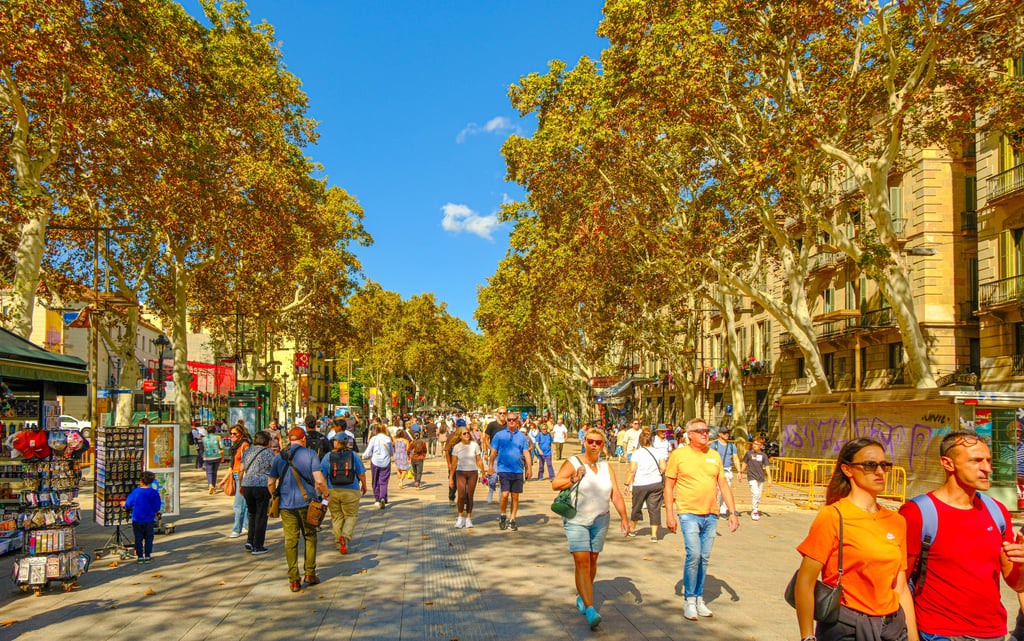
In many Spanish towns and cities, the evening paseo, a stroll through the neighbourhood, is a cherished tradition. Locals walk along promenades, through town squares or around local streets, meeting friends and catching up after the working day.
The paseo is about more than exercise; it’s a social ritual and a chance to relax. Many people stop at a bar for a glass of wine, cava or beer along the way. Changing into casually smart clothes is common, and regular strolls help you become a familiar face in your community. A simple smile and a “buenas tardes” is often enough to start conversations, even if your Spanish is still developing.
Carry a lightweight scarf
One small detail you’ll notice in Spain is that many women carry a lightweight scarf or shawl. It’s practical for sudden breezes, cool café terraces or strong sunshine. Pretty scarves are easy to find in local markets and quickly become a useful everyday accessory – another subtle way to blend into Spanish street style and fit in like a local.
Enjoying drinks the Spanish way
Wine and beer are part of Spanish social life, but drinking to excess is uncommon. Locals often enjoy alcohol alongside food, tapas, lunch or small snacks, rather than drinking heavily on an empty stomach.
It’s common to see people choose mineral water with meals or share a small carafe of wine. While alcohol is relatively inexpensive in Spain, locals tend to savour a glass or two rather than drink large quantities. Following this relaxed, moderate approach helps you fit naturally into Spanish bar culture.
Spanish punctuality: relaxed but respectful
The idea that Spanish people are always late is a myth. Professional settings, schools and businesses generally run on time. Social occasions, however, are more flexible. Arriving 15-30 minutes after the stated time is often perfectly acceptable. When I lived in the Gers in France, there was something called Le Gascon quinze minutes, “the Gascon 15 minutes,” and this also applies to Spain
If you’re invited to a Spanish home, avoid arriving exactly on time or early. For an 8pm invitation, arriving around 8:20pm feels natural to many locals. While punctuality is strongly emphasised in some cultures, Spain’s social timing is more relaxed, another small adjustment that helps you fit in like a local.
To tip or not to tip in Spain?
Tipping culture in Spain is modest. In bars and cafés, tipping isn’t expected — rounding up the bill with a few coins is enough. For example, on a €3.85 bill, leaving €4 is perfectly acceptable.
In restaurants, a small tip is appreciated for good service but not obligatory. In casual eateries, €1–€2 is typical, while €5 may be suitable in more upmarket venues if the service has been excellent. Visitors from countries with strong tipping cultures often overtip, but modesty is the local norm.
Becoming part of everyday life in Spain
Adapting to life in Spain doesn’t mean abandoning who you are; it simply means understanding the local rhythm and embracing small cultural habits. Over time, greeting neighbours in cafés, adjusting to Spanish mealtimes, joining the evening paseo and relaxing into the slower daily schedule become second nature.
You may never be mistaken for a local, and that’s perfectly fine. What matters is embracing the Spanish way of life and showing respect for local customs. Adjusting to Spanish mealtimes, greeting people warmly, understanding queueing etiquette, joining the evening paseo and even taking a short siesta all help you feel more connected to your community.
With time, these small changes become second nature, and Spain begins to feel not just like a destination — but like home.