




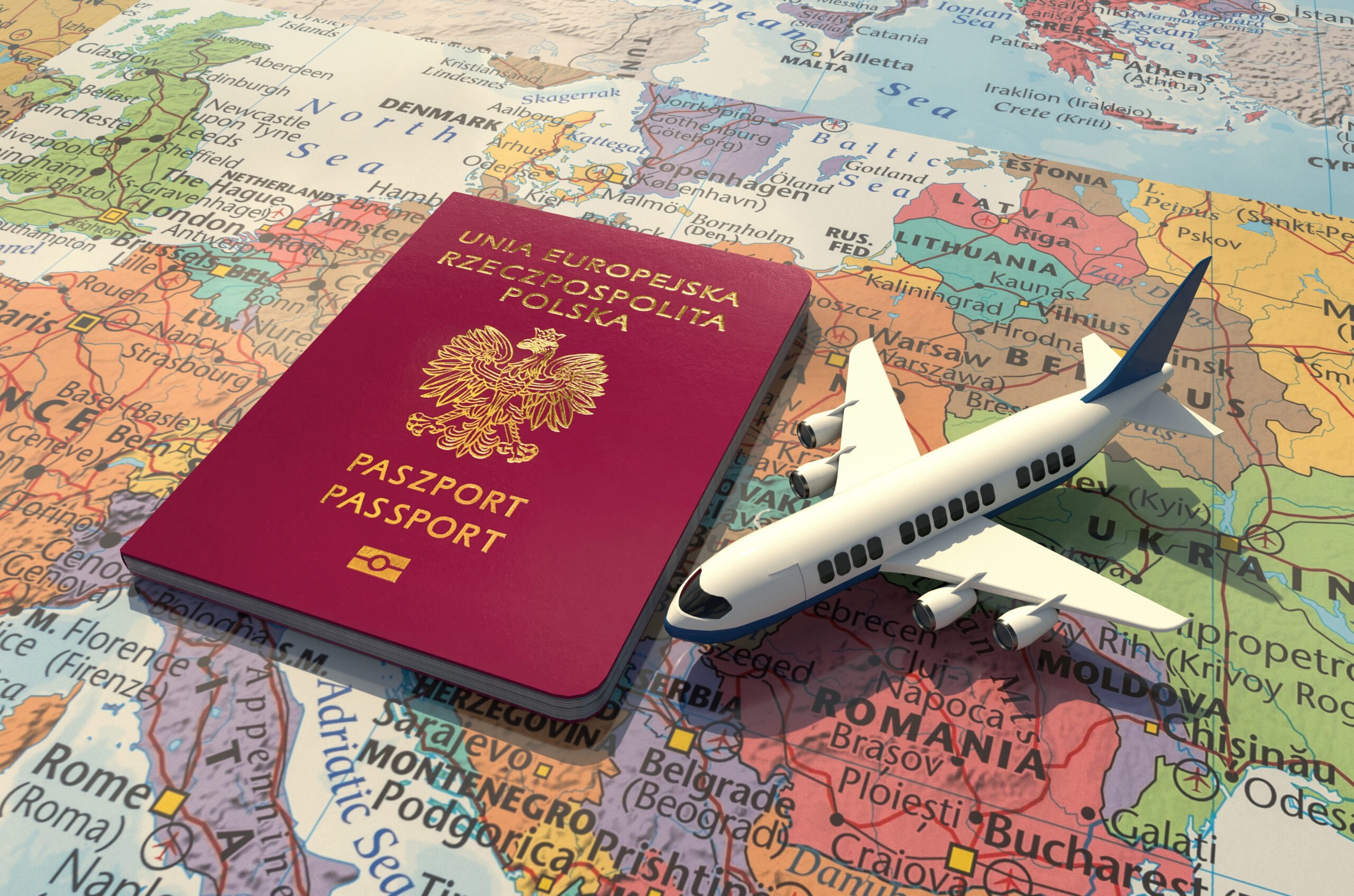
Poland’s citizenship laws mean you may be eligible for an EU passport if you have Polish ancestry – giving you the freedom to build a new life across Europe.
For many people with roots in Eastern Europe, a Polish passport is a hidden opportunity. It grants full EU citizenship, meaning you can live and work anywhere in the Union – from Poland itself to Portugal or Greece.
Contents
The advantages of a Polish passport
With Polish citizenship, you gain the right to live in any EU member state. That could mean retiring affordably in Poland’s countryside, working in a German city or setting up a business in Spain. It also comes with the ability to access healthcare, education and pension systems across the bloc.
Property and investment potential
A Polish passport allows you to buy property in Poland without restrictions. Warsaw and Kraków have lively markets, while rural areas offer excellent value. More importantly, as an EU citizen, you can buy in any member state with ease – opening doors to homes in Spain, France or Italy too.
Who is eligible?
Poland recognises “citizenship by descent”. If you can prove that a parent, grandparent or sometimes great-grandparent was Polish and did not renounce their citizenship, you may be entitled to apply. Given the migration of Polish people over the last century, many descendants abroad qualify without realising it.
How to apply
If you qualify through ancestry, the first step is applying for Polish citizenship. You’ll need to provide a range of official documents, typically including birth and death certificates, photo identification and evidence that neither your parent nor grandparent renounced their Polish nationality.
All documents must be translated into Polish by a certified translator or processed through a Polish consul. The review process can take around a year, depending on the complexity of your case.
Once citizenship is granted, you can apply for your Polish passport. Applications are made in person at the nearest Polish embassy or consulate, with a current fee of around £90 ($129).
What if I can’t get a Polish passport?
If applying for Polish citizenship isn’t possible, there are still other ways to achieve your goal of living and buying property in Europe.
Some people may qualify for another EU passport through ancestry – Irish, Spanish, Italian, German and other nationalities can all provide the same EU-wide rights. If that isn’t an option, residency schemes across Europe offer alternative routes.
Many EU countries have visa programmes designed to attract foreign residents and property buyers, including:
- Non-lucrative visas
- Digital nomad visas
- Business and investment visas
While these visas don’t grant the automatic rights of EU citizenship, they can still provide a secure, long-term path to live, work and own property across Europe.
FAQs
A Polish passport gives you full EU citizenship. That means freedom of movement across all EU member states, with the right to live, work, study and retire without visas or time limits. It also offers strong global travel access and the security of EU rights that many UK citizens lost after Brexit.
Yes. As a Polish citizen, you can live in any EU country, as well as Iceland, Liechtenstein, Norway and Switzerland under EU freedom of movement rules. You don’t need a residence visa and you have the same rights as local citizens when it comes to employment, healthcare access and buying property.
The Polish passport is consistently ranked among the world’s strongest, allowing visa-free or visa-on-arrival access to around 180 countries worldwide. This includes the Schengen Area, the UK and many destinations in the Americas and Asia, making it valuable for both relocation and travel.