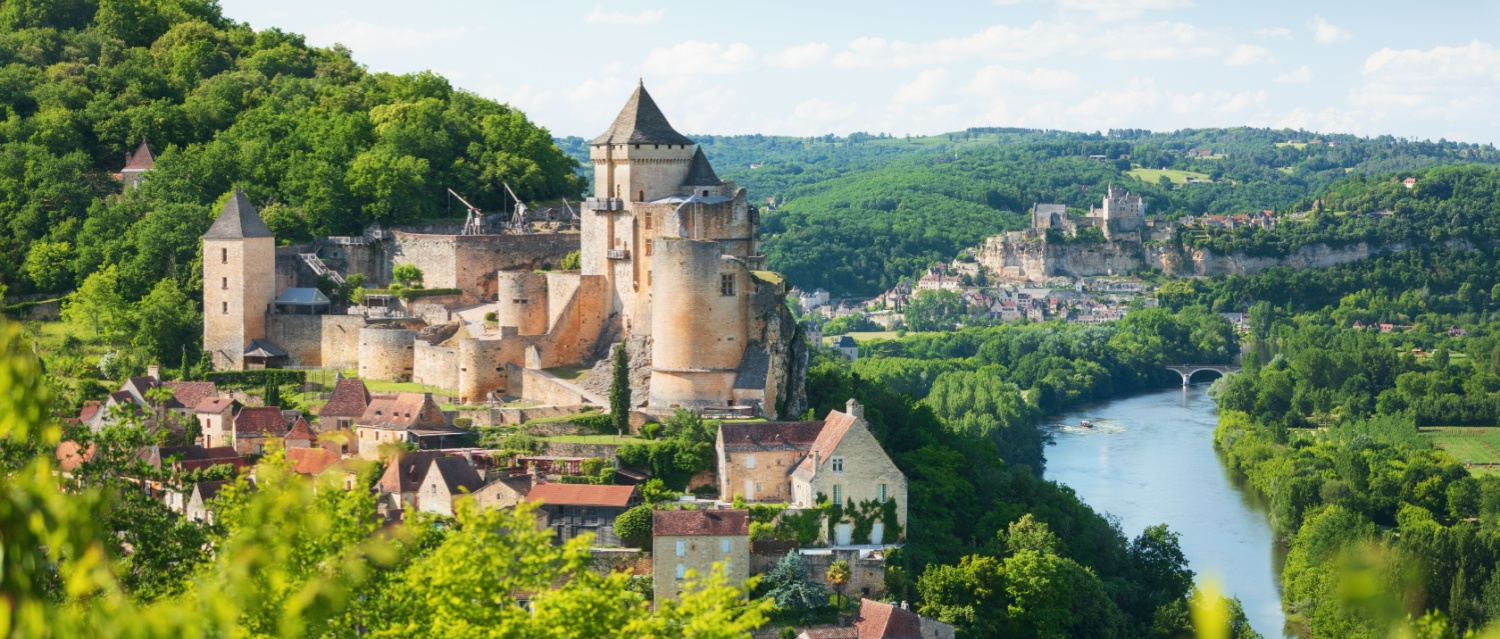


Courchevel is one of the world’s most famous ski resorts, but looking past the headlines about VIPs and palaces reveals a massive, diverse ski area with a strong community feel. While the highest village, Courchevel 1850, is known for high prices, the resort is actually made up of five distinct villages, each with its own character and price point.
Part of Les Trois Vallées – the largest linked ski area in the world – Courchevel delivers 600km of slopes, exceptionally reliable snow, and a season that stretches from early December to late April. Beyond the skiing, it is a working year-round community with excellent infrastructure, from the Aquamotion wellness centre to a busy summer events calendar.
For property buyers, the choice isn’t just about luxury; it’s about finding the right altitude and atmosphere. From the tree-lined pistes of La Tania to the traditional streets of Le Praz, Courchevel offers a wide range of Alpine living.
It’s not all winter sparkle. Courchevel’s summer season is growing, with hiking, biking and spa retreats giving it serious year-round appeal. Combine this with strong rental demand, stable price growth, and seamless access from Geneva and Lyon, and it’s easy to see why Courchevel remains one of the most desirable property destinations in the Alps.
Let’s explore what makes it so exceptional.
Download the France Buying Guide
Contents
Why you should be buying property in Courchevel
There are many reasons to buy property in Courchevel. One of the most compelling is that the resort combines world-class skiing with a stability that is rare in the property market. As part of the Three Valleys, it offers access to an immense ski area that caters to every level, from wide, gentle greens to steep couloirs.
What sets Courchevel apart for owners is the infrastructure. The resort invests heavily in its lift system and snowmaking, ensuring that even in leaner snow years, the skiing remains excellent. This reliability protects property values and ensures consistent rental demand if you choose to let your home.
It is also a true dual-season resort. The summer brings a different crowd for hiking, mountain biking, and events like the ski jumping world cup in Le Praz. With fast access from Geneva and Lyon (roughly 2 to 2.5 hours), it is an easy resort to visit for long weekends, making it a practical choice for second-home owners who want to maximise their time on the mountain.
Limited new development and strict planning regulations have helped protect the market’s exclusivity. Even smaller apartments hold their value well, while prime chalets are often reserved long before construction is complete.
Whether you want a trophy home, a dual-season base for your family, or a high-yield investment, Courchevel offers rare stability in a sector known for volatility. It’s also exceptionally well connected, with fast routes from Geneva, Lyon and even a private altiport for those arriving by helicopter or jet.
This is Alpine real estate at its most prestigious.
What kinds of property can you buy?
Courchevel’s property market is far more diverse than its glitzy reputation suggests. While the headlines focus on the ultra-prime market where prices exceed €30,000 per square metre, a significant portion of the stock caters to a broader range of buyers, particularly in the lower villages.
The apartment market offers the widest choice, spanning from functional 1970s studios to expansive, contemporary residences. Older properties frequently occupy the best ski-in/ski-out locations and represent a smart investment for those willing to renovate; modernizing interiors and improving energy ratings (DPE) can add significant value. In villages like Moriond (1650) and Village (1550), these resale apartments provide access to the same world-class ski area at a fraction of the price of property in 1850.
Chalet buyers will find two distinct markets. In Courchevel 1850, detached chalets are rare trophy assets, but in Le Praz and La Tania, the market is grounded in traditional, family-sized homes. These villages offer genuine year-round communities where chalets often come with gardens and private parking—amenities that are virtually impossible to find at higher altitudes.
For those looking for new builds, inventory is limited by strict planning rules designed to protect the landscape. Most new stock arises from the redevelopment of older hotels or barns. These properties are particularly attractive as they meet stringent modern energy efficiency standards and often qualify for a 20% VAT rebate on the purchase price for owners who commit to rental agreements, offering a tax-efficient route into ownership.
Off-plan developments and renovation projects are limited but do exist, especially in the lower villages. For investors, fully managed leaseback residences can offer guaranteed income with minimal maintenance.
Whatever your style or budget, Courchevel delivers quality and lasting value across its property spectrum.
Best places to buy in Courchevel
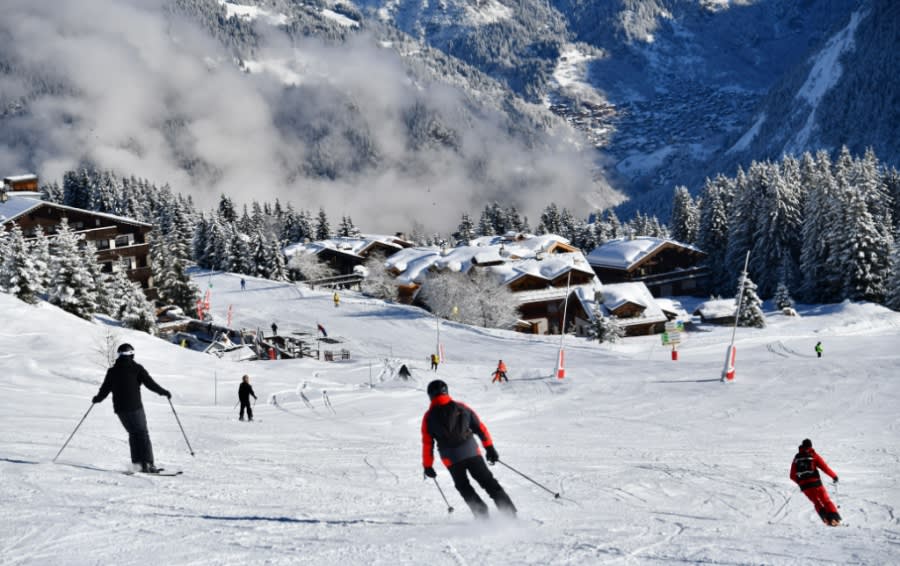
Each of the five villages functions as a separate market.
Courchevel 1850 The highest and most famous village. It has the quickest access to the very top of the ski area and the highest density of luxury amenities. However, it is also the most expensive, with premium service charges and living costs.
Courchevel Moriond (1650) Moriond is famous for being the sunniest part of the resort. It has a relaxed, sporty atmosphere and is very popular with families. The ski runs here are wide and gentle, and the town centre is lively without being pretentious. Prices here are generally more accessible than 1850, often ranging between €15,000 and €22,000 per square metre for prime stock.
Courchevel Village (1550) Located directly below 1850 and connected by a fast chairlift and gondola, Village offers rapid access to the main ski area at a significantly lower price point. It has a quieter, more residential feel and is home to the Aquamotion centre, making it a strategic spot for buyers who value wellness and water sports.
Courchevel Le Praz (1300) Le Praz is an authentic Savoyard village with narrow streets, a village square, and residents who live there year-round. It doesn’t look like a purpose-built resort; it looks like a mountain village. With the new fast gondola linking it directly to 1850 in under six minutes, it has become one of the most desirable spots for buyers who want charm and convenience. Prices for chalets here can offer far better value than higher up.
La Tania Purpose-built for the 1992 Olympics but designed to blend into the forest, La Tania is a car-free resort that is fantastic for families. It offers great value for money and sits right in the middle of the Three Valleys, allowing easy skiing over to Méribel. It is often the most affordable entry point into the Courchevel market.
Lifestyle and year round appeal
Life in Courchevel is about the outdoors. In winter, the focus is naturally on the slopes, but non-skiers are well catered for with snowshoeing trails, a toboggan run from 1850 to 1550, and the Aquamotion centre, which features indoor surfing, climbing walls, and spa facilities.
The dining scene is diverse. Yes, there are Michelin stars, but there are also plenty of mountain refuges serving hearty fondue, pizzerias in Moriond, and local bistros in Le Praz where you can enjoy a plat du jour at a reasonable price.
Summer is increasingly popular. The lifts open for mountain bikers and hikers, and the lake in Le Praz becomes a hub for fishing and paddleboarding. The resort holds the “Famille Plus” label, ensuring a packed calendar of activities for children, from magic shows to forest adventure camps.
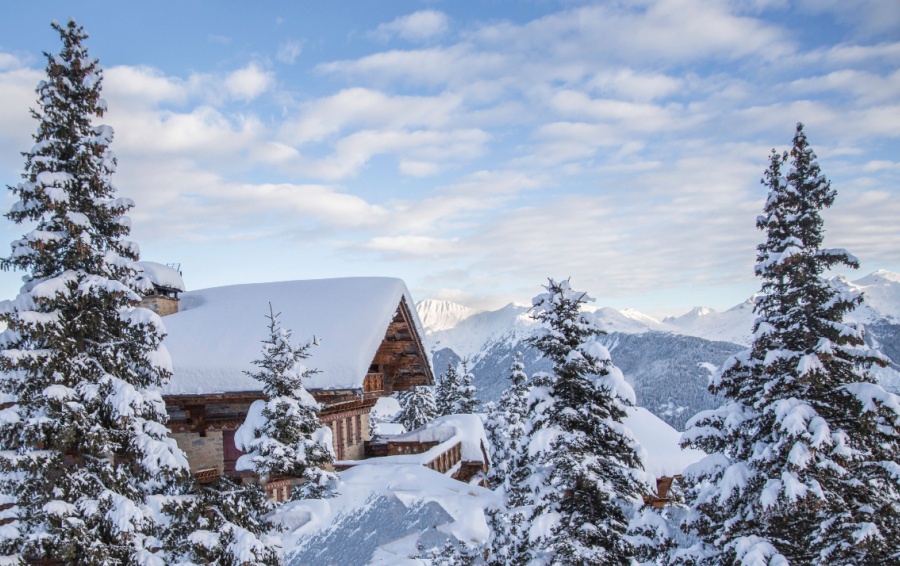
Courchevel’s climate adds to its appeal as a dual-season destination. In winter, high altitudes and north-facing slopes ensure excellent snow conditions and cold, dry days perfect for skiing. Snow typically falls from late November and lasts until mid-April, with many pistes sitting above 2,000 metres for reliable coverage throughout the season.
Summer brings a different kind of beauty. Temperatures average a comfortable 20°C in July and August, with clear skies and fresh Alpine air. The resort shifts into outdoor adventure mode, attracting hikers, mountain bikers, and nature lovers. The same chairlifts used for skiing carry mountain bikes up to panoramic trails that descend through forest and meadow.
If you’re considering a ski property you can use beyond the winter months, Courchevel is a standout choice. Its dual-season appeal enhances both lifestyle value and rental potential, making it one of the most complete Alpine destinations on the market.
Ownership costs and ongoing expenses
Property in the French Alps is a solid asset, but it comes with running costs. When calculating your budget, you should expect to pay notary fees—which include stamp duty—of around 7-8% for resale properties. However, if you are buying a brand-new property (VEFA), these fees are significantly lower, typically reduced to approximately 2-2.5%.
Ongoing taxes are another consideration. You will be liable for taxe foncière (land tax) annually. While taxe d’habitation is generally being phased out for main homes, it still applies to second homes. Note that furnished rental properties often fall under different tax structures, so consulting an accountant is advisable.
Finally, if you buy an apartment, you must factor in the charges de copropriété (service charges). These cover building maintenance, heating (which is often collective), and snow clearing. Be aware that in Courchevel 1850, these costs can be high due to concierge services and premium facilities, whereas in Le Praz or La Tania, they are usually much lower.
If you rent out your property, professional management fees, maintenance, and insurance are additional costs to factor in. Many owners offset these with strong seasonal rental income – especially in ski-in/ski-out locations. Energy costs are typically higher due to altitude and weather, though newer chalets often include eco-efficiency upgrades.
For a breakdown of expenses across France, visit our guide to the costs of buying property in France.
How to buy property in Courchevel
Buying in Courchevel follows the standard French property process. Once you’ve found a property, you’ll sign a preliminary contract (compromis de vente) and pay a deposit, usually 5–10%. A notaire (public official) handles the legal checks and contract formalities, with completion typically taking 2–3 months.
Because of Courchevel’s prestige, many properties are marketed off-plan or discreetly through agencies. Working with a local expert is essential – especially if you want a ski-in/ski-out chalet or a high-demand rental investment.
Most foreign buyers purchase through a French mortgage or by releasing equity at home. If you’re financing locally, it’s worth engaging a specialist – start with our guide to finding a mortgage broker in France.
Courchevel properties can attract buyers from around the world, so having your finances, documents, and currency exchange strategy in place is key.
Ready to buy in Courchevel?
The buying process in France is strictly regulated and secure. It begins once your offer is accepted, at which point you will sign a compromis de vente (preliminary contract) and typically pay a 5-10% deposit, which is held safely by a Notaire. Following this signature, you benefit from a 10-day cooling-off period during which you can change your mind and withdraw from the purchase without penalty.
The road to completion usually takes 2-3 months. During this time, the Notaire conducts all necessary legal searches to ensure the property is unencumbered. If you are obtaining a French mortgage, the contract will include a standard suspense clause, protecting you by invalidating the sale if your finance is refused.
Before you begin your search, it’s worth familiarising yourself with the buying process in France and comparing options across the country with our region-by-region guide to where to buy in France.
If you’d like expert guidance on finding your ideal ski property – from off-plan opportunities to luxury chalets with concierge service – book a free consultation with our specialist advisors. We’ll help you define your goals, understand the market, and connect with trusted local professionals.
FAQs about buying property in Courchevel
Yes. Courchevel offers exceptional investment potential thanks to consistent rental demand, strong year-round appeal, and limited supply. High-end chalets, particularly in Courchevel 1850, hold their value well and attract affluent tenants.
It depends on your priorities. Courchevel 1850 offers unmatched luxury and prestige. Moriond (1650) suits families with great access and sun. Village (1550) and Le Praz (1300) offer more traditional settings. La Tania is quieter, affordable, and ideal for rental income.
Yes, there are no restrictions on foreigners buying property in France, including Courchevel. However, working with a notaire and specialist advisors is essential to navigate the process smoothly.
Expect to pay 7–10% in additional costs, including notaire fees, registration charges, and agency fees. Luxury properties may also have higher annual running costs, especially in managed residences with concierge services.
Yes. Courchevel thrives in both winter and summer. From world-class skiing to hiking, mountain biking, golf, and wellness, it offers a vibrant dual-season lifestyle ideal for permanent residents and holidaymakers alike.
No. While Courchevel 1850 has a reputation for high glamour, the wider resort is remarkably accessible. The “real” villages like Le Praz, La Tania, and Courchevel Village are filled with normal families, season workers, and passionate skiers, creating a vibe that is sporty and friendly rather than exclusive.
Daily life does not have to be expensive either. You will find standard supermarkets like Spar and Carrefour with normal prices across the resort, making it entirely possible to self-cater on a standard budget. On the slopes, beginners can often use several lifts at the bottom of the ski area for free, reducing the cost of a family holiday. The resort even provides heated “picnic rooms” on the mountain where you can eat your own packed lunch in warmth—a great way to avoid expensive mountain restaurants.
Buying here is an investment in a lifestyle that prioritises sport, nature, and family time, and there are entry points into the market for a range of budgets, not just the ultra-high-net-worth.